Welcome back. In our last lesson, we explored the Baader-Meinhof Effect, a cognitive illusion where our perception of frequency is skewed by newfound awareness. We saw how this can create phantom trends in fashion and biased views of social groups. Today, we turn from the perception of frequency to the perception of events themselves.
This lesson focuses on the Rashomon Effect, the principle that the same event can be described in contradictory yet equally plausible ways by different people. Our goal is to apply this effect to analyze how a single bra fitting session can be perceived differently by the fitter and the client, and how a significant event in a Vee relationship can be narrated differently by each partner involved. This moves us from biases of attention to the fundamental subjectivity of experience.
Understanding the Rashomon Effect
Named after Akira Kurosawa's 1950 film Rashomon, the effect describes a situation where multiple witnesses to an event produce substantially different but internally consistent accounts. Crucially, this isn't simply about people lying. It's about how our individual roles, motivations, prior experiences, and emotional states act as filters, fundamentally shaping how we experience and remember reality. Each person's story is their truth, even if it conflicts with another's.
As a social researcher, you are well acquainted with the challenges of reconciling disparate participant accounts. The Rashomon Effect gives this phenomenon a name and a framework for analysis, focusing not on finding the "one true story" but on understanding why the stories diverge.
Application 1: The Bra Fitting Session
A bra fitting is a seemingly objective process of measurement and evaluation. However, it is also a deeply personal interaction where technical precision meets emotional vulnerability. This makes it a perfect setting for the Rashomon Effect to manifest. The fitter and the client often enter the session with entirely different goals and frames of reference, leading to two very different stories about the same 30 minutes.
An academic paper from Oxford Brookes University explores this exact dynamic in the context of professional coaching, which shares many parallels with a fitting session. It provides a robust framework for understanding these perceptual divides.
[PDF] Rashomon effect in coaching sessions - Oxford Brookes University
This research paper by Myers and Bachkirova investigates why clients, coaches, and third-party observers have wildly different assessments of the same coaching session. Its findings are directly applicable to the fitter-client dynamic.
Please read the following sections from the PDF: Start with the Introduction (first paragraph) to see how the authors frame the problem of assessing "quality" from different standpoints. Jump to the Main Findings section. Read the summary of the three inter-related themes that explain the discrepancy: the three themes. Then, focus your attention on the detailed explanation of the third theme, Differing frames of reference (from that subheading to the end of the section), as this is the core of the Rashomon Effect. Finally, read the first two paragraphs of the Discussion (first two paragraphs). This part synthesizes the findings and explicitly states that each party uses different benchmarks for evaluation.
The paper reveals that clients, coaches (fitters), and observers all have their own criteria for what constitutes a "good" session. Let's apply this to a specific lingerie scenario.
The Scenario: A client visits you for a fitting. Her goal is to get a bra that creates significant cleavage for a low-cut dress. She is currently wearing a 36B. You measure her and determine her technical size is 34D. You fit her in a 34D balconette bra. The band is firm and parallel, the gore tacks perfectly against her sternum, and there is no spillage.
Here's how the two narratives might unfold:
-
Your Narrative (The Fitter): "The client's 36B was providing no support. I moved her to a 34D, which was a perfect technical fit. It corrected the band issue and fully encased the breast tissue, providing excellent support and shape. From a professional standpoint, the fitting was a complete success." Your frame of reference is technical correctness and anatomical health. Your benchmark for quality is adherence to established fitting principles.
-
The Client's Narrative: "The fitter didn't listen to me. I said I wanted cleavage, and she put me in this bra that separated my breasts and made them look smaller. It felt tight and constricting. I left feeling frustrated and disappointed." Her frame of reference is aesthetic outcome and emotional satisfaction. Her benchmark for quality is achieving the desired look and feeling confident.
Both accounts are valid. You succeeded based on your criteria; she experienced failure based on hers. The Rashomon Effect here isn't about deception; it's about a fundamental conflict in perspective and goals. The paper's finding that "everyone is using different benchmarks" is the key insight. Recognizing this allows a designer and fitter to proactively address both the technical and the emotional-aesthetic frames of reference during a consultation.
Application 2: The Vee Relationship
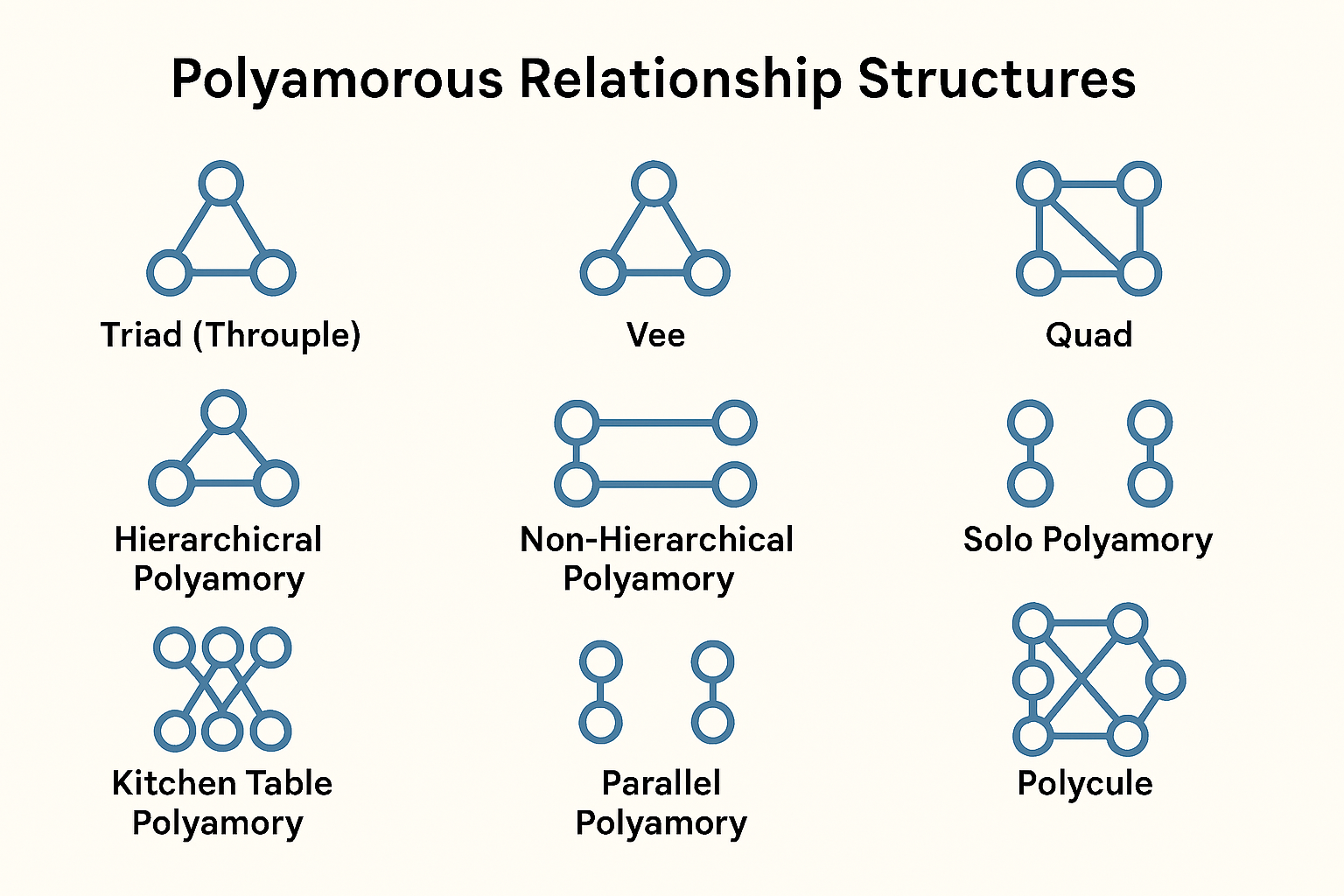
Nowhere is the Rashomon Effect more potent than in personal relationships, where events are saturated with emotional significance. In a polyamorous Vee structure, the different roles naturally create different perspectives.

Let's consider our Vee: Alex (husband), Bella (wife and hinge), and Charles (Bella's lover).
A classic advice column letter provides a powerful case study of a "Relationship Rashomon," where the writer presents a narrative that is completely at odds with how others likely experienced the same events.
Our Friendship Is Ruining His Relationship. Is That My Problem?
In this column from "Ask Dr. Nerdlove," a woman details her side of a conflict involving her, her male friend, and his girlfriend. The columnist's response masterfully deconstructs her narrative to reveal the other, conflicting perspectives.
First, read the letter in its entirety (the full letter). Pay close attention to how the writer frames her actions, intentions, and the reactions of others. This is one "truth." Next, read the columnist's response under the heading Relationship Rashomon (to the end of the analysis). Notice how he validates her feelings but then introduces the likely perspectives of the friend and his girlfriend, revealing a completely different story.
The article demonstrates how one person's "harmless flirting" is another's "inappropriate boundary crossing," and one person's "justified outburst" is another's "cruel power play." Let's apply this to an event within our Vee.
The Scenario: After a weekend trip with Charles, Bella returns home to Alex. She had a wonderful time and is eager to share her experience, believing this is a key part of ethical non-monogamy.
Here are the three conflicting, yet subjectively true, narratives:
-
Bella's Narrative (The Hinge): "The trip with Charles was amazing, and I felt so much compersion and love for Alex. I couldn't wait to get home and share all the details to honor our commitment to transparency. When I was telling him about it, he got quiet and withdrawn. I don't understand why he was being so cold when I was trying to connect with him." Bella's story is about connection, honesty, and compersion.
-
Alex's Narrative (The Supportive Husband): "I was looking forward to Bella coming home. But as soon as she walked in, it was all about Charles. She went on for an hour about their inside jokes and deep conversations. I was trying to be happy for her, but I felt like a spectator in my own marriage. I needed connection with her, not a detailed report of her connection with someone else. I shut down because I felt erased." Alex's story is about insecurity, loneliness, and feeling replaced.
-
Charles's Narrative (The Lover, heard later from Bella): "Bella told me Alex was a bit distant after she got back. That's a shame. I know she really values being open with him about us. Hopefully he just had a long day. It's important to me that their relationship is strong." Charles's story is one of concerned, but detached, observation.
No single person is the villain. Bella is enacting a script about "good polyamory." Alex is reacting to his own emotional reality. Charles is operating on limited information. The Rashomon Effect teaches us that to resolve the conflict, the goal isn't to argue about "what really happened," but for all three to acknowledge that multiple, different emotional events happened simultaneously.
Conclusion
The Rashomon Effect is a powerful lens for understanding human interaction. It reminds us that objective reality is often less important than subjective experience.
Key Takeaways:
- The Rashomon Effect explains how the same event can lead to multiple, conflicting, yet subjectively true narratives due to differing perspectives, roles, and emotional states.
- In lingerie fitting, the fitter's technical frame of reference can clash with the client's emotional and aesthetic one, leading to divergent assessments of the session's "success."
- In a Vee relationship, each partner's unique position and emotional needs will shape their perception of shared events, meaning a single event is experienced in multiple, distinct ways. Acknowledging this is a crucial step in navigating conflict.
In our next lesson, we will explore the Mandela Effect. We will shift our focus from the conflicting realities of individuals and small groups to the strange phenomenon of large groups of people sharing the same, specific, false memory.