Welcome to our final lesson in the "Foundations of Mindfulness" module. Over the past three sessions, we have built a solid theoretical understanding. We defined mindfulness, explored its core components of intention, attention, and attitude, and most recently, distinguished between mindfulness as a practice, a state, and a trait. You learned that engaging in specific practices induces temporary states of mindfulness, which, over time, can cultivate an enduring trait of mindful awareness.
Today, we transition from the "why" to the "how." The focus of this lesson is entirely experiential. You will put the theory into action and perform your first formal mindfulness exercise: a basic breath-awareness meditation for 5 to 10 minutes. This practice, known in the Buddhist tradition as Ānāpānasati (mindfulness of breathing), is the cornerstone of many contemplative paths and is the perfect starting point for our journey.
Why the Breath?
Before we begin, you might wonder: why focus on the breath? Of all the things we could pay attention to, the breath is chosen for several key reasons:
- It's always with you: Unlike a mantra or a visual object, your breath is a constant companion from birth to death. You don't need any special equipment.
- It's neutral: The physical sensation of breathing is generally simple and doesn't carry strong emotional charges, making it a stable anchor for attention.
- It reflects your inner state: The rhythm of your breath is intimately connected to your nervous system. When you are agitated, it is often shallow and rapid; when calm, it is slow and deep. By observing the breath, you are observing a direct reflection of your mind.
- It's in the present: You cannot breathe in the past or in the future. Focusing on the breath automatically brings your awareness into the present moment.
The Vietnamese Zen Master Thich Nhat Hanh speaks beautifully about the power of this simple practice to unify the mind and body.
Mindful Breathing Meditation with Thich Nhat Hanh
In this short video, listen to Thich Nhat Hanh's introduction to mindful breathing.
First, watch his simple instruction on identifying the in-breath and out-breath. Then, pay close attention to his explanation of how this simple act is a "miracle" that stops the thinking and brings the mind and body together, allowing you to be truly present.
As he explains, the simple act of knowing "I am breathing in" and "I am breathing out" is a profound practice that brings you back to yourself and back to life, right here, right now.
Preparing for Your Practice: The Setup
Setting up your environment and posture correctly is like preparing your workspace before starting a complex coding task. A good setup minimizes distractions and supports the work you are about to do. Here are the essential steps.
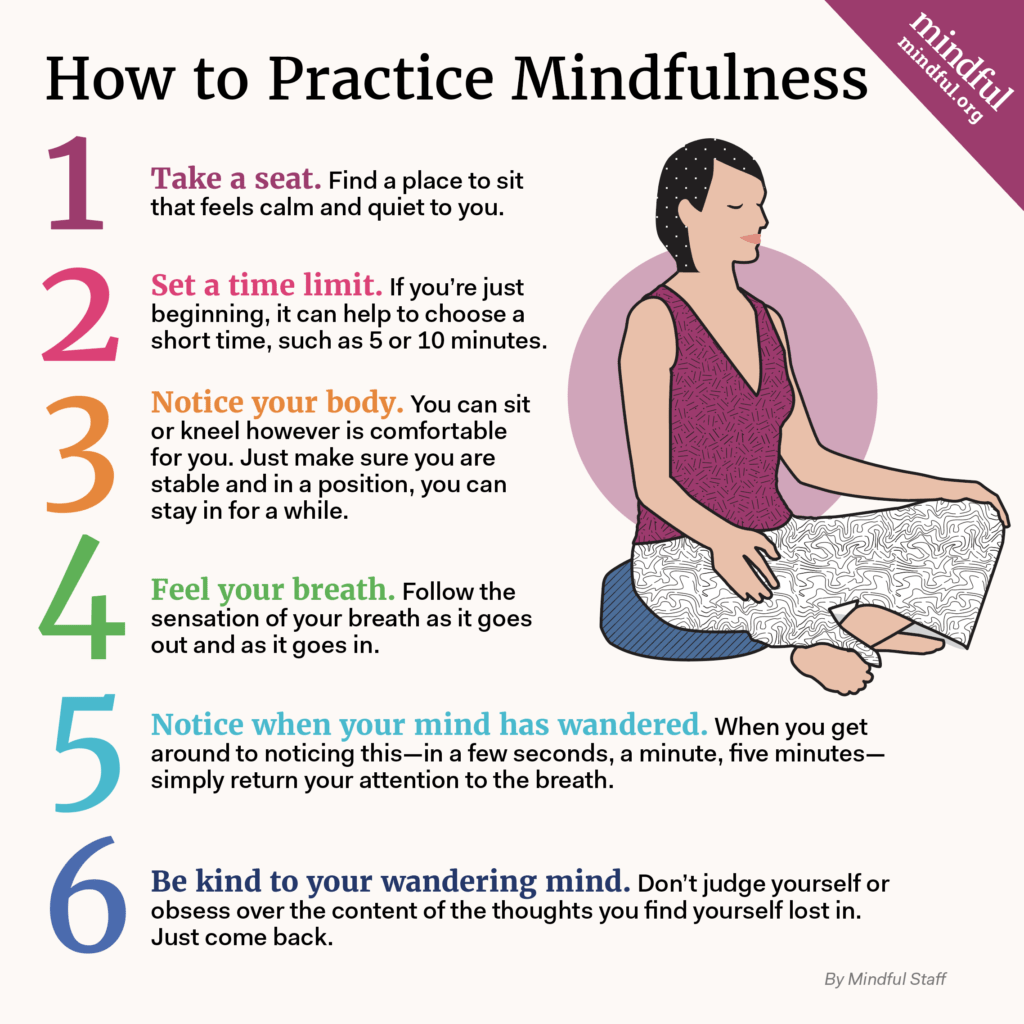
1. Set a Time and Place
Choose a time when you won't be interrupted and a place that feels relatively quiet and calm. For your first session, just 5 or 10 minutes is perfect. You can set a gentle timer.
2. Find a Stable and Dignified Posture
How you sit matters. The goal is a posture that is both stable and alert. You can sit on a chair or on a cushion on the floor.
A 6-Minute Breathing Meditation To Cultivate Mindfulness - Mindful.org
This article from Mindful.org provides simple, accessible instructions for getting started.
Read the first point under "How to do it," which describes how to find a good posture. The key is to keep your back upright but not stiff.
For those interested in a more traditional and sustainable sitting posture for longer sessions in the future, establishing a good foundation with cushions is very helpful.
Instructions on Ānāpānasati Meditation for Beginners - Medium
This article gives more detailed advice on setting up a traditional sitting arrangement.
Read the sections titled Sitting Cushion and Sitting Posture. The suggestion to use a small cushion under your buttocks to tilt the pelvis forward is a key tip that can make sitting upright much more effortless. You don't need to adopt this now, but it's valuable information for your ongoing practice.
Once you're seated comfortably, let your hands rest in your lap, close your eyes gently, and take a moment to notice your body. Feel the points of contact with the chair or cushion.
Your First Guided Meditation (10 Minutes)
Now it is time to practice. The best way to begin is by following a guided meditation. Jon Kabat-Zinn, whom you'll encounter again in a later module, is a pivotal figure in bringing secular mindfulness to the West. His voice is a calm and steady guide for millions.
Find your posture, get comfortable, and when you're ready, play the video below. There is no need to watch the screen; just close your eyes and follow the instructions for the full 10 minutes.
10 MIN GUIDED MINDFULNESS MEDITATION - JON KABAT ZINN
This is your primary practice for today's lesson. Jon Kabat-Zinn will guide you through a 10-minute breath-awareness meditation.
Simply press play and allow his guidance to support your practice from start to finish. Your only task is to listen and follow along as best you can.
Welcome back. Take a moment before you move. Notice how you feel. There's no right or wrong way to feel after a session. The only goal was to stay with the practice for the duration, and you have done that.
Deconstructing the Experience: The Core Loop
What you just practiced can be broken down into a simple, repeatable loop. Understanding this loop is key to seeing that you can't "fail" at meditation.

The process, as guided by Jon Kabat-Zinn, follows this pattern:
- Anchor Attention: You intentionally place your focus on the physical sensations of the breath.
- Mind Wanders: Inevitably, your mind gets pulled away by a thought, a sound, or a feeling. This is not a mistake; it's what minds do.
- Notice the Wandering: There is a moment of "waking up" where you realize your attention is no longer on the breath. This moment of noticing is a moment of mindfulness.
- Gently Return: Without judging or scolding yourself, you gently and kindly guide your attention back to the breath.
This loop—wandering, noticing, returning—is the essence of the practice. The training is not in keeping the mind perfectly still, but in the repeated, compassionate act of returning.
Common Challenges and Refinements
As you continue this practice, you will encounter common challenges. Here are some tips drawn from traditional and modern sources to help you navigate them.
- The Wandering Mind: As Jon Kabat-Zinn noted, the mind will wander. The instruction is simple: notice it and return. The most important part of this instruction is the attitude you bring to it.
Instructions on Ānāpānasati Meditation for Beginners - Medium
This article provides a very clear and direct instruction on how to handle thoughts.
Read the section titled Wandering Thoughts. Notice the emphasis on ignoring the thoughts and gently bringing the mind back.
- Physical Discomfort: You may have noticed aches, pains, or numbness. This is normal. The first step is to simply observe the sensation without reacting. If it becomes too strong, however, it is wise to mindfully adjust your position.
Instructions on Ānāpānasati Meditation for Beginners - Medium
This resource offers a philosophically rich and practical way to work with pain.
Read the sections from "Pain and Numbness" to the end of "Change Posture If the Pain Disturbs One’s Natural Focus." The idea of reframing pain as an opportunity to practice patience (khanti) connects our practical exercise back to your goal of a deeper philosophical understanding.
- Trying Too Hard: A common beginner tendency, especially for those who are driven and productive, is to apply too much effort. In meditation, this can be counterproductive, leading to tension or headaches.
Instructions on Ānāpānasati Meditation for Beginners - Medium
This article offers crucial advice on effort and expectation.
Please read the sections from "Not Too Much Effort" to the end of "Focus on the Natural Breath, and Do Not Control the Breath." The key is to let go of desire and expectation, and to trust the natural process of breathing, simply adding awareness to it.
Conclusion
Congratulations on completing the first module and your first formal meditation practice. You have successfully moved from theory to direct, embodied experience.
Key Takeaways:
- Breath-awareness meditation (Ānāpānasati) is a foundational practice that uses the natural breath as an anchor for attention in the present moment.
- The essential steps are to establish a stable posture, focus on the sensation of breathing, and when the mind wanders, notice it without judgment and gently return your focus to the breath.
- The practice is not about stopping thoughts or achieving a blank mind. The "work" happens in the moment of noticing you are lost and kindly escorting your attention back.
You now have a complete introductory toolkit: a definition of mindfulness, an understanding of its core components, a framework for state vs. trait, and a basic practice you can do anytime, anywhere.
In our next lesson, we will begin our second module, "The Buddhist Philosophical Framework." We will take a step back to explore the original context from which these practices emerged, starting with the Four Noble Truths, the foundational diagnosis of the human condition that mindfulness was developed to address. This will provide the deep philosophical grounding you are seeking for your practice.