Hello! Welcome to the final lesson of our course.
Congratulations on making it to the end. Over the last eleven lessons, you have built an impressive set of foundational skills. We started with core Linux commands and filesystem navigation, moved through process and user management, and then tackled the full lifecycle of a penetration test:
- Reconnaissance & Scanning: Finding targets and enumerating services.
- Gaining Access: Exploiting vulnerabilities to get a foothold.
- Post-Exploitation: Escalating privileges and, in our last lesson, establishing persistence to maintain that access.
You've learned the how of hacking. This final lesson is about the why and the what now. We will discuss the single most important topic that separates a professional penetration tester from a criminal: ethics and responsibility. Gaining the skills to break into systems is only half the battle; knowing when, how, and why to do it legally and ethically is what defines a true professional in this field.
This lesson will cover the ethical responsibilities of a penetration tester and the formal process for reporting vulnerabilities, known as responsible disclosure.
1. The Ethical Foundation of a Penetration Tester
You've learned a lot of powerful techniques. The line between using these skills for good and using them for harm is defined entirely by your ethical framework and adherence to the law. An ethical hacker operates with explicit permission, a clear scope of work, and unwavering integrity.
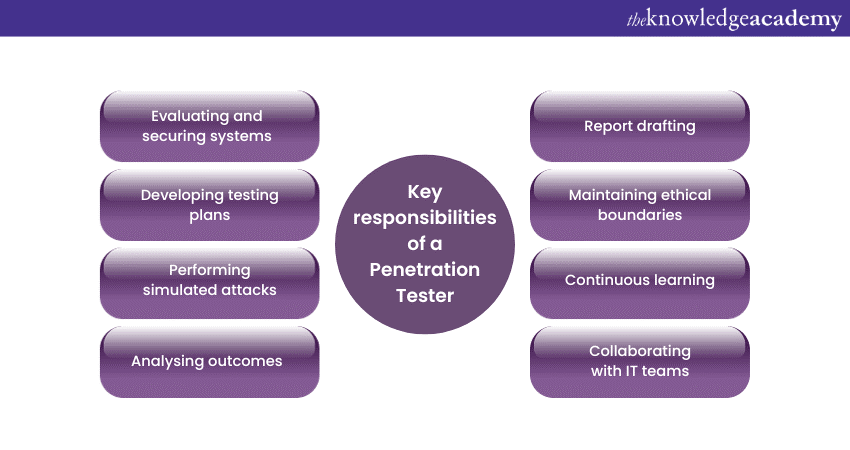
This image neatly summarizes the dual nature of a penetration tester's responsibilities: the technical execution and the professional/ethical conduct that guides it.
One of the most challenging ethical situations you can face is pressure from a client. After you've done your work and found vulnerabilities, a client might disagree with your findings or ask you to downplay the severity of an issue to make their report look better. This is where your integrity is tested.
Watch This Before You Become a Penetration Tester
The video 'Watch This Before You Become a Penetration Tester' by Kyser Clark provides a candid look at this exact issue. It's a crucial perspective on the real-world pressures you might face.
Watch the segments from 01:06-01:20 and 04:27-05:48. Pay close attention to the discussion about why a client might argue findings and why it is unethical and harmful to lower your standards to please them.
As the video explains, your credibility—and the security of your client's customers—relies on your honest and accurate reporting. This principle is the bedrock of a career in cybersecurity.
2. Responsible Disclosure: The Rules of Engagement
When you discover a vulnerability, whether during a formal penetration test or through independent research, you can't just post it online for everyone to see. Doing so would give malicious actors a roadmap to exploit the flaw before the developers have a chance to fix it. This is where responsible disclosure comes in.
Let's start with a clear definition and the steps involved.
Why You Need Responsible Disclosure and How to Get Started
This article from HackerOne, a leading bug bounty platform, provides a concise definition and a step-by-step breakdown of the responsible disclosure process.
Read the sections 'What Is Responsible Disclosure?' and 'What Are the Benefits of a Responsible Disclosure Program?'. Focus on the five steps of the process and the benefits this collaborative approach provides.
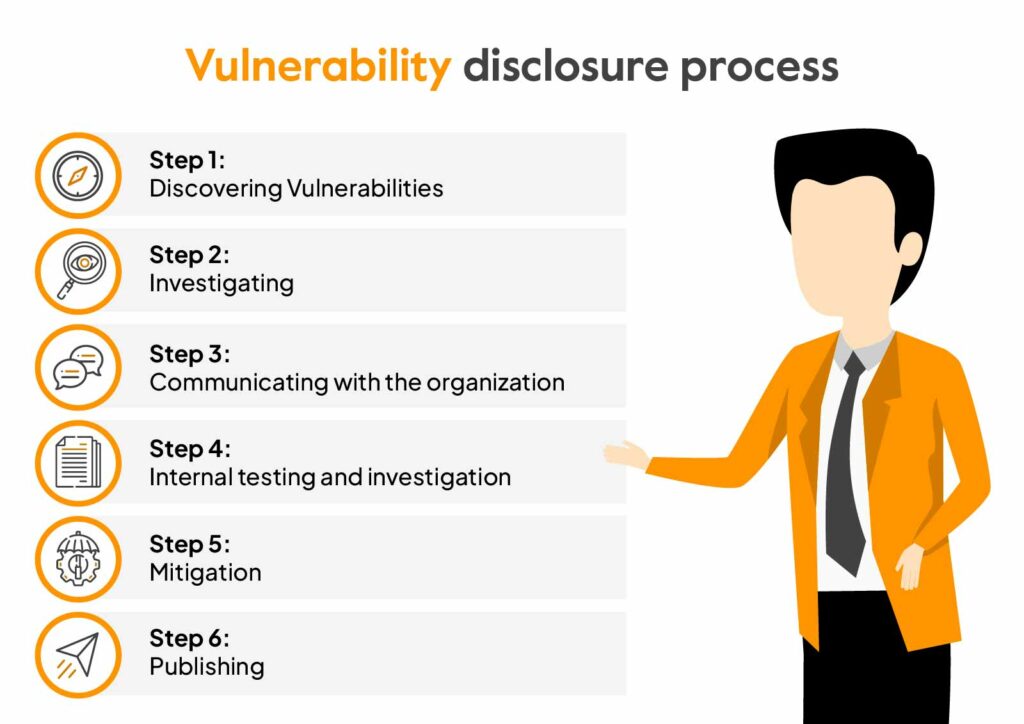
The process can be visualized as a clear sequence of events aimed at minimizing harm.
Disclosure Models: Not All Are Created Equal
Responsible disclosure (also called Coordinated Disclosure) is the industry standard, but it's helpful to understand the other models to see why it's preferred.
Vulnerability Disclosure - OWASP Cheat Sheet Series
The OWASP (Open Web Application Security Project) Vulnerability Disclosure Cheat Sheet is an authoritative guide on this topic. It clearly outlines the different models of disclosure.
Read the section 'Methods of Disclosure'. Pay close attention to the descriptions of 'Private Disclosure', 'Full Disclosure', and 'Responsible or Coordinated Disclosure'. Understand the pros and cons of each.
As you can see, responsible disclosure strikes a balance: it protects users by giving vendors time to create a patch, but it also ensures the vulnerability eventually becomes public knowledge, which pressures companies to act and helps other defenders learn.
3. The Practicalities of Reporting a Vulnerability
So, how do you actually report a vulnerability you've found? It's not always as simple as sending an email. Acting professionally and following a clear process is key.
This process is often incentivized through bug bounty programs, which offer financial rewards to researchers for finding and reporting vulnerabilities according to the organization's rules.
Penetration Testing - CompTIA Security+ SY0-701 - 4.3
Professor Messer provides a quick, clear explanation of how responsible disclosure works in practice, and how bug bounties encourage this behavior.
Watch from 04:39 to 06:21. Notice the emphasis on the timeline—it can take weeks or months for a patch to be ready, which requires patience from the researcher.
Now, let's dive into a detailed guide on the steps a researcher should take.
Vulnerability Disclosure - OWASP Cheat Sheet Series
Let's return to the OWASP Cheat Sheet for a step-by-step guide on reporting vulnerabilities. This is an incredibly practical resource that you may want to bookmark for the future.
Read the section 'Reporting Vulnerabilities'. Pay special attention to the subsections: 'Finding Contact Details', 'Initial Report', and 'Ongoing Communication'. Note the warning about legality—this is not legal advice, and you must understand the laws in your jurisdiction.
A few key takeaways from that guide:
- Be professional and non-threatening. Your goal is to help, not to extort.
- Provide clear, reproducible details. Make it as easy as possible for the developers to understand and fix the issue.
- Be patient. Fixing, testing, and deploying a patch in a large organization takes a significant amount of time.
- Never demand payment. If there's a bug bounty program, follow its rules. If not, demanding money can be seen as extortion.
4. Legal Protection: Safe Harbor
You might be wondering: "If I'm probing a company's systems, even with good intentions, isn't that illegal?" This is a valid concern. To address this, the concept of a "Safe Harbor" policy was developed.
A Safe Harbor clause in a company's disclosure policy is a promise that they will not take legal action against researchers who find and report vulnerabilities, as long as they follow the rules and act in good faith.
The HackerOne article you read earlier touches on this. Organizations like HackerOne advocate for companies to adopt a "Gold Standard Safe Harbor" (GSSH) statement to provide this legal protection, encouraging more researchers to participate and ultimately making everyone safer.
Conclusion and Your Journey Forward
This lesson, and this course, has been about building the foundation for a career. You've learned not just the tools and techniques, but also the mindset and professional obligations that come with them.
Key Takeaways:
- An ethical hacker is defined by their integrity, professionalism, and adherence to legal and ethical boundaries. Your responsibility is to report findings truthfully, even under pressure.
- Responsible Disclosure is the standard process for reporting vulnerabilities. It involves private notification, allowing the vendor time to patch, followed by coordinated public disclosure.
- The process requires patience, professionalism, and clear communication.
- Bug bounty programs incentivize responsible disclosure, and Safe Harbor policies provide legal protection for researchers acting in good faith.
You have successfully completed a comprehensive introduction to the foundational skills of ethical hacking. You started with the basics of the command line and have now seen the entire process through to its ethical conclusion.
What's Next on Your Journey?
Your learning has just begun. The world of cybersecurity is vast, but you now have a solid map and a compass. Here are some recommended next steps:
-
Practice, Practice, Practice:
- Platforms: Sign up for platforms like TryHackMe (great for guided learning) and Hack The Box (great for real-world challenges).
- Your Lab: Continue building out your virtual lab. Download other vulnerable machines from sources like VulnHub.
-
Deepen Your Knowledge:
- Specialization: Pick an area that interests you and go deep. This could be web application security (learning the OWASP Top 10), network security, or even binary exploitation and reverse engineering.
- Certifications: When you feel ready, consider pursuing an industry certification. The CompTIA PenTest+ is a great starting point, and the Offensive Security Certified Professional (OSCP) is a highly respected, hands-on certification.
-
Stay Curious:
- Follow security researchers on social media, read blogs, and listen to podcasts. This field changes daily, and continuous learning is non-negotiable.
You have the tools, the foundational knowledge, and the right ethical framework. Your goal of becoming "very good at hacking" is well within your reach. Thank you for your commitment to this course. Now, go and build on what you've learned. Good luck