Hello! Welcome back to our module on AI-Assisted Treatment Planning.
In our last lesson, we focused on the foundational step of how AI automates cephalometric landmark identification. We saw that by transforming a slow, subjective task into a near-instantaneous and objective one, AI provides the crucial data needed for orthodontic analysis.
Today, we'll build directly on that foundation. Now that the AI can "see" and measure the patient's anatomy, how does it help with the next critical steps? Our goal is to answer that question as we explore how AI assists in orthodontic treatment planning and predicting outcomes. We will move from data gathering to the exciting realm of AI-powered decision support and simulation.
1. The Conceptual Workflow: From Data to Prediction
Before we look at specific software, let's establish a clear conceptual framework for how this process works. AI doesn't just present raw data; it transforms that data into actionable insights and visual forecasts.
How AI Predicts Orthodontic Treatment Outcomes - Complete Smiles
To understand this workflow, let's read a section from the article 'How AI Predicts Orthodontic Treatment Outcomes' from Complete Smiles. It breaks the process down into three logical stages.
Please read the section titled 'How AI Orthodontic Simulation Software Works'. Focus on understanding the three key stages: data collection, AI algorithm processing, and simulation/forecasting.
As the article explains, the process unfolds as follows:
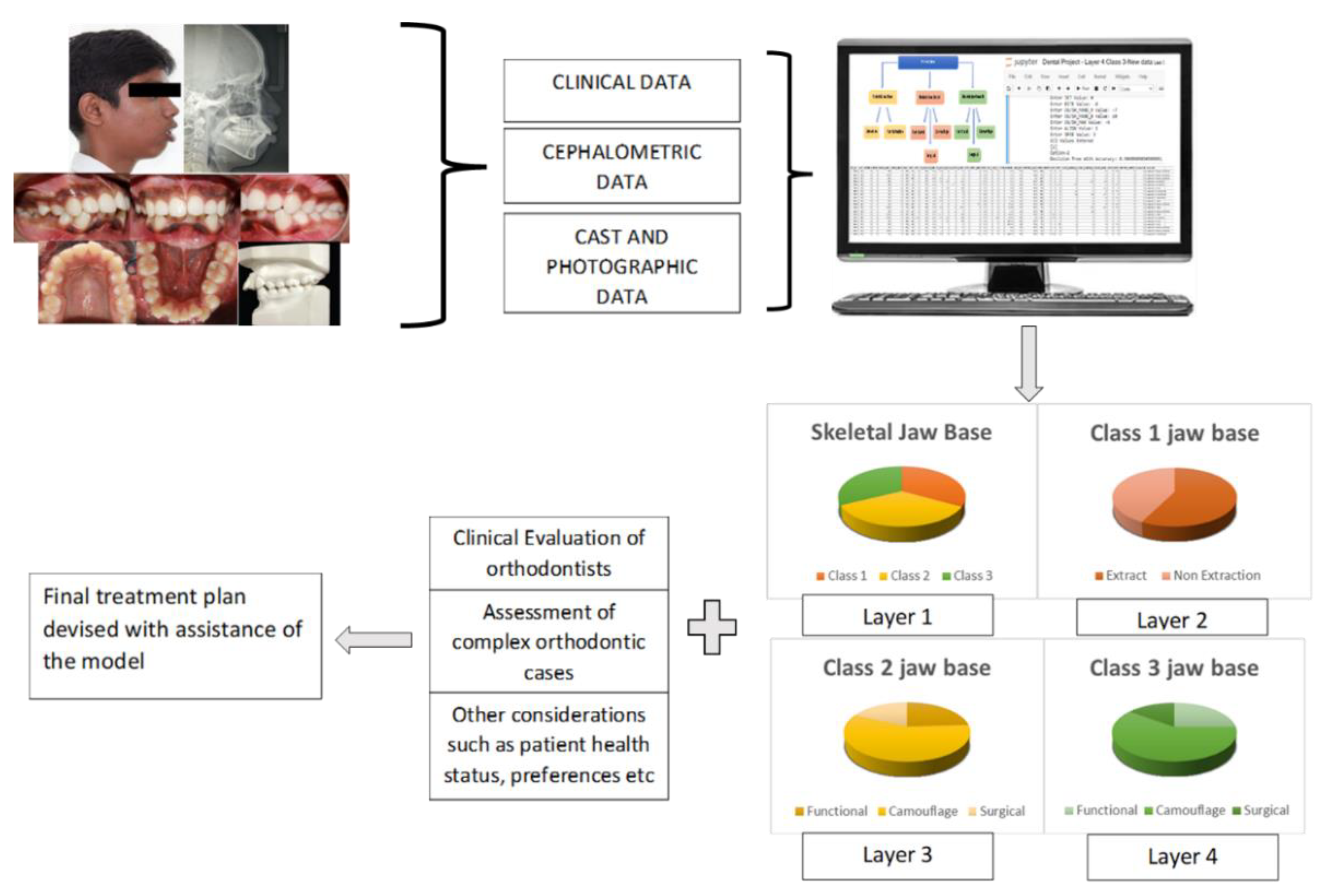
- Data Collection: This is where our previous lesson fits in. The system gathers comprehensive digital records: 3D scans, high-resolution photos, and radiographs (like cephalograms) where landmarks are automatically identified. This creates a detailed digital twin of the patient.
- AI Algorithms in Action: This is the core of the "intelligence." The AI model, trained on thousands of previous orthodontic cases, analyzes the patient's data. It identifies complex patterns and relationships between the patient's skeletal structure, tooth positions, and how these are likely to respond to different treatment mechanics (e.g., extractions, elastics, surgery).
- Simulation and Forecasting: Based on the patterns it has learned, the AI generates one or more visual predictions of the treatment outcome. This is not just a simple animation; it's a data-driven forecast of how the teeth and, crucially, the soft tissue profile will change.
This workflow positions the AI as a powerful decision-support tool. It processes vast amounts of information to provide a forecast, which the clinician then interprets and uses to finalize the treatment plan. The diagram below illustrates this collaborative process.
2. Assisting with Key Treatment Decisions
One of the most significant ways AI assists in planning is by helping with pivotal decisions that can define the entire course of treatment. Two classic examples in orthodontics are deciding whether to extract teeth or whether to pursue orthognathic surgery.
These are complex decisions that even experienced clinicians can find challenging in "borderline" cases. AI can provide an objective, data-driven recommendation based on what it has learned from a vast library of successfully treated cases.
AI in Orthodontics: Revolutionizing Diagnostics and Treatment ...
This scientific review, 'AI in Orthodontics', delves into the research behind using AI for these specific decisions. It provides evidence for the accuracy of these systems.
Please read the two sections: '3.2.5. Extraction Decision Making' and '3.2.6. Orthognathic Surgery Decision Making and Planning'. Focus on the reported accuracy rates and the concept of AI providing a second opinion that agrees with expert consensus.
As the review highlights, studies have shown that AI models can achieve 80-95% agreement with expert panels on decisions regarding extractions and surgery. This doesn't replace the orthodontist's judgment, but it offers a powerful tool for validation and support, helping to standardize care and build confidence in the proposed plan.
3. AI in Action: Simulating Treatment and Predicting Outcomes
Now, let's see these concepts come to life in a real-world application. WebCeph, a cloud-based orthodontic platform, heavily integrates AI into its workflow. The following video demonstrates how the platform moves from analysis to simulation.
How cloud and artificial intelligence technologies can change our clinical practice
This video, presented by the founder of WebCeph, provides a practical walkthrough of AI-driven treatment planning and outcome prediction.
Please watch the segment from 00:29:05 to 00:32:39. This is the core demonstration of the treatment simulation features. As you watch, pay close attention to the following steps: AI Alignment: The software automatically aligns the patient's facial photo with the cephalometric tracing. Treatment Simulation: The clinician simulates treatment by digitally moving the teeth and jaw (e.g., retracting incisors, performing a genioplasty). Outcome Prediction: Observe how the software automatically morphs the soft tissue outline to predict the final facial profile. Visualization: Notice the animated results and side-by-side comparisons, which are powerful tools for both the clinician and the patient.
This demonstration powerfully illustrates the learning outcome. You can see how the AI assists in:
- Planning: By providing an interactive "sandbox" where the clinician can test different approaches (e.g., "What if I retract the incisors by 3mm?") and immediately see the likely anatomical consequences.
- Predicting Outcomes: By generating a visual forecast of the final result, particularly the soft-tissue changes, which are of primary concern to the patient.
This ability to create a visual treatment objective (VTO) is invaluable. It helps in two main ways:
- For the Clinician: It refines the treatment plan by making the goals concrete and allowing for detailed planning of the mechanics needed to achieve the predicted result.
- For the Patient: It drastically improves communication and informed consent. Showing a patient a dynamic simulation of their potential new smile and profile is far more effective than describing it verbally. This helps manage expectations and increases patient motivation.
4. Benefits, Limitations, and the Clinician's Role
While incredibly powerful, AI in treatment planning is not infallible. Its effectiveness is built upon the data it was trained on, and it requires clinical expertise to be used responsibly.
How AI Predicts Orthodontic Treatment Outcomes - Complete Smiles
Let's return to the 'Complete Smiles' article to get a balanced view of the pros and cons of these AI simulation tools.
Please read the sections 'Benefits and Limitations of AI Orthodontic Simulations', 'AI vs Standard Planning Methods' (review the table), and 'Accuracy and Ethical Use of AI in Orthodontics'. Focus on the contrast between AI's strengths (speed, consistency) and the continued need for human oversight.
The key takeaway from this reading is the symbiotic relationship between the AI and the clinician.
AI Excels At:
- Precision & Consistency: Applying biomechanical principles uniformly across cases.
- Speed: Generating complex simulations in minutes.
- Personalization: Tailoring plans based on a patient's unique anatomy.
- Visualization: Creating clear, compelling 3D simulations.
Clinician Oversight is Essential For:
- Handling Complexity: AI may struggle with atypical cases or rare anatomical variations not well-represented in its training data.
- Considering Biological Factors: Accounting for patient-specific factors like bone density, periodontal health, and patient compliance, which may not be fully captured in the AI model.
- Ethical Responsibility: Ensuring the treatment plan is safe, clinically appropriate, and truly in the patient's best interest. The AI is a tool; the clinician is the professional responsible for the patient's care.
Conclusion
In this lesson, we've seen how AI moves beyond simple data automation to become an active partner in orthodontic treatment planning and outcome prediction. By learning from vast datasets of past treatments, AI can offer evidence-based suggestions for key decisions and provide remarkable visual simulations of the expected results.
Key Takeaways:
- AI assists in treatment planning by helping with critical decisions, such as tooth extractions and orthognathic surgery, with high levels of agreement with expert consensus.
- It predicts treatment outcomes by generating dynamic visual simulations that show how the teeth, jaws, and facial profile will change.
- These AI-powered simulations are invaluable tools for refining treatment plans and dramatically improving patient communication and informed consent.
- Despite its power, AI is a decision-support tool. The orthodontist's expertise remains indispensable for managing complex cases, considering all biological factors, and ensuring ethical and patient-centered care.
Preview of the Next Lesson
The principles of using AI for 3D analysis and planning are not limited to orthodontics. In our next lesson, we will shift our focus to another area of dentistry that relies heavily on precision planning: implantology. We will describe AI applications in surgical implant planning using CBCT data, exploring how similar technologies are adapted for a different, but equally complex, clinical challenge.