Hello! Welcome to the next lesson in our final module, "Sustainable Social Engagement for Introverts."
In our last session, we built your recovery toolkit. You learned to assess your "social battery," recognize the signs of a "social hangover," and use specific strategies to recharge. This was about reacting effectively to social energy depletion.
Today, we shift from a reactive to a proactive stance. The learning outcome is to strategically plan social engagements to align with your personal energy cycles. Instead of just recovering from energy crashes, you'll learn to prevent them by making deliberate choices about how, when, and with whom you socialize.
Given your background in applied economics, you can think of this as moving from damage control to strategic resource management. Your social energy is a finite resource. Our goal today is to develop a framework for allocating that resource efficiently to achieve your goals—building charisma and deeper connections—without going into "energetic debt."
1. The Economics of Social Energy
A fundamental shift in mindset is to stop viewing social activities as inherently "good" or "bad" and instead see them through the lens of cost and benefit. Every social interaction has an energy cost. The key is to decide if the "return on investment"—in terms of connection, fun, or professional development—is worth the expenditure.
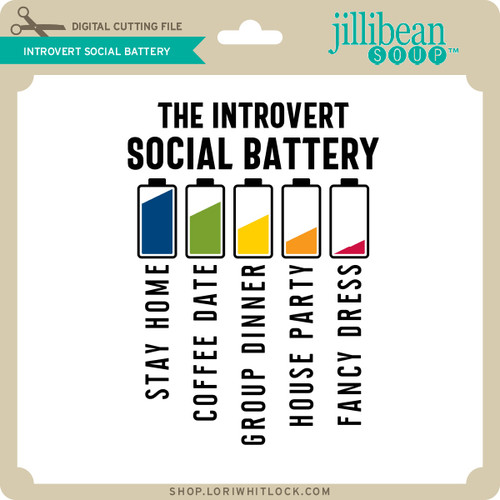
This idea of analyzing the "cost" of an interaction is a powerful tool for making guilt-free decisions. Let's hear from author and speaker Simon Sinek, who is also an introvert, on how he applies this principle.
Why Socialising Feels Exhausting for Introverts? | Simon Sinek | Be Well Moments
In this clip from 'Why Socialising Feels Exhausting for Introverts?', Simon Sinek explains his decision-making process. Pay close attention to how he moves away from thinking in terms of 'right' or 'wrong' and towards analyzing the 'cost structure' of a social event.
Watch from 04:51 to 06:27. Focus on how he weighs the cost of an activity and how vocalizing his energy levels is a form of negotiation and compromise.
By adopting this "cost structure" mindset, you can evaluate social invitations with the objectivity of an economist analyzing an investment, rather than feeling personal guilt or obligation.
2. The Social Energy Audit: Gathering Your Data
To create an effective energy budget, you first need data. You can't manage what you don't measure. In the previous lesson, you started tracking your energy on a 1-10 scale. Now, let's refine that process by looking at a case study of someone who did this systematically.
I tracked my social energy for 6 months as an introvert
This post from a product manager on Reddit provides a fantastic, data-driven approach to understanding personal energy patterns. It will likely resonate with your analytical way of thinking.
Read the sections titled 'What I tracked:' and 'The insights that changed everything:'. Notice the specific metrics the author used and the clear, actionable patterns that emerged from the data.
The key insight here is that your energy crashes are not random. They are predictable outcomes based on specific variables: the type of event, the people involved, the duration, and your starting energy level. By tracking these, you can start to build a predictive model for your own social energy.
Test your understanding!
Based on the Reddit post, which of these insights is most directly applicable to planning your week?
a) Introversion is a limitation you have to manage.
b) If your morning energy is low, any social event that day is a high-risk "investment."
c) You should only socialize with your 2-3 closest friends.
d) Tracking data is only for product managers.
Show answer
The correct answer is b) If your morning energy is low, any social event that day is a high-risk "investment."
This is a key predictive insight from the post ("Morning energy predicted everything"). It gives you a crucial data point at the start of each day to inform your social decisions, which is the essence of strategic planning. The other options are misinterpretations: a) The post's conclusion is the opposite, that it's an energy pattern to optimize. c) While close friends were 'energy givers' for the author, this doesn't mean you should only socialize with them. The point is to identify your own energy givers and drainers.
3. Creating Your "Energy Budget": A Practical Framework
Once you have some initial data, you can move on to the core of today's lesson: creating and managing your weekly "social energy budget." This involves proactively deciding how you will spend your energy, rather than just reacting to invitations as they come.
Why Am I Exhausted After Being Around People I Love? ...
The article 'Why Am I Exhausted After Being Around People I Love?' provides a set of therapist-approved practices that form an excellent framework for energy budgeting.
Please read the following practices from the section '15 Therapist-Approved Practices to Reduce Introvert Fatigue...': Practice #5: 'Define Your “Social Capacity” for Each Week...' Practice #1: 'Build a “Social Buffer Zone”...' Practice #3: 'Practice “Soft No’s”...' Practice #14: 'Differentiate Between “I Don’t Want to” and “I Don’t Have Capacity To”' Focus on how these four practices work together to create a sustainable plan.
Let’s organize these concepts into a clear, four-step planning process:
-
Set Your Weekly Budget (Practice #5): Determine your total social capacity for a typical week. For example, you might decide your budget is one large social event and two smaller one-on-one interactions per week. This is your baseline.
-
Schedule the "Non-Negotiables" (Practice #1): Before you even accept invitations, block out your recovery time. Schedule "social buffer zones" before and after events, and ensure you have at least one or two "social-free" days or evenings in your calendar. Treat this time with the same importance as a meeting or appointment.
-
Evaluate and Allocate (Practice #14): When an invitation arrives, assess it against your budget and your current energy levels. Ask yourself: "Do I have the capacity for this?" This separates the decision from preference or guilt. A "no" isn't a rejection of the person; it's a statement about your available energy resources.
-
Execute with Clear Communication (Practice #3): If you need to decline, use a "soft no." This allows you to protect your energy while preserving the relationship. For example: "I don't have the capacity this week, but I'd love to catch up next week one-on-one."
4. Strategic Navigation: Optimizing Energy During an Event
Planning doesn't stop once you've decided to attend. You can also strategize to make the experience itself less draining. This is about designing your participation to fit your needs.
Let's return to Simon Sinek for some clever tactics.
How to Leverage Being an Introvert | Simon Sinek
In 'How to Leverage Being an Introvert,' Sinek shares practical strategies for navigating social events once you're there. He also introduces a simple but powerful analogy for an introvert's energy.
Watch from the beginning to 01:19. Listen for the 'five coins' analogy, which is a great way to visualize your daily energy budget. Then, pay attention to his two specific strategies: attending parties with an extrovert and taking on a defined role (like being the chef).
Taking on a role (like helping with drinks, taking photos, or being the "chef" at a BBQ) is a brilliant strategy. It gives you a clear purpose and structures your interactions, which is far less draining than navigating unstructured small talk. It allows you to be present and contributing without being the center of conversational attention.
This approach is a form of setting "micro-boundaries," a concept mentioned in the KMA Therapy article you read earlier. You're not leaving the event; you're simply adjusting your mode of participation to conserve energy.
5. Application: Map Your Social Energy Cycle
Now it's time to apply these concepts to your own life. This reflective activity will help you translate theory into a personalized, actionable strategy.
Why Am I Exhausted After Being Around People I Love? ...
We will use the 'Guided Reflective Activity' from the KMA Therapy article to create the first draft of your personal energy plan. This is a crucial step in building self-awareness.
Read the four steps under the heading 'Guided Reflective Activity: Mapping Your Social Energy Cycle.'
Your Action Step (15 minutes):
Take a notebook or open a document and work through the four steps from the activity you just read. Be as specific as possible.
- Step 1: Identify Your High-Energy Social Times: When do you feel most capable of socializing? (e.g., Saturday afternoons, weekday lunches). What kinds of people and settings are less costly for you? (e.g., one-on-one with a close friend, a structured club meeting).
- Step 2: Recognize Your Fatigue Timeline: For different types of events (e.g., impromptu speaking practice, a large party, a family dinner), how long does it typically take before you feel your energy drop significantly?
- Step 3: Map Your Recovery Needs: After those events, how long does it take to feel "normal" again? What specific recovery activities (from our last lesson) are most effective for you?
- Step 4: Create a Weekly Rhythm: Based on your answers, draft a "rule of thumb" for your ideal social week. For example: "No more than two social evenings per week, with one being a low-cost activity. Never schedule social events on back-to-back nights. Always block out Sunday as a recovery day."
This map is not meant to be rigid, but a guiding strategy to help you make better decisions.
Conclusion
Today, you've developed a strategic framework for managing your most valuable social asset: your energy. By treating it as a resource to be budgeted and optimized, you can engage more effectively and sustainably, which is the foundation for becoming the charismatic communicator you aim to be.
Key Takeaways:
- Social energy is a finite resource. Frame your social decisions in terms of costs and benefits rather than guilt or obligation.
- A social energy audit helps you gather data on what drains and energizes you, allowing for better predictions.
- Energy budgeting is a proactive process of setting your social capacity, scheduling recovery first, and making deliberate choices about which events to attend.
- You can plan your participation during an event by taking on a specific role or setting micro-boundaries to conserve energy.
Preview of the Next Lesson:
We've talked about the cost of social events, but what adds to that cost? Often, it's the energy we spend trying to be someone we're not. In our next lesson, you will learn to identify personal social 'masks' and the energy cost associated with them. This will take our discussion of energy management to a deeper level, focusing on the power of authenticity.