Hello! Welcome to the next lesson in our module on "Developing Charisma and Presence."
In our last session, we focused on your voice, exploring how to use vocal variety—pitch, pace, volume, and pauses—to make your message more engaging and emotionally resonant. We covered how your vocal delivery not only influences your audience but also feeds back to affect your own energy levels.
Today, we'll expand our focus from the voice to the entire body. Our learning outcome is to project confidence and purpose through deliberate posture and movement. Just as your eyes signal presence and your voice conveys emotion, your body language is the canvas on which your confidence is painted. Mastering your physical presence is a cornerstone of charisma, helping you feel more centered and in control, which is directly relevant to your goal of managing your energy in social situations.
1. The Anatomy of Confident Body Language
Before you say a word, your posture and physical presence are communicating. People make snap judgments—a process psychologists call "thin slicing"—based on these nonverbal cues. A confident stance signals that you are open, relaxed, and authoritative.
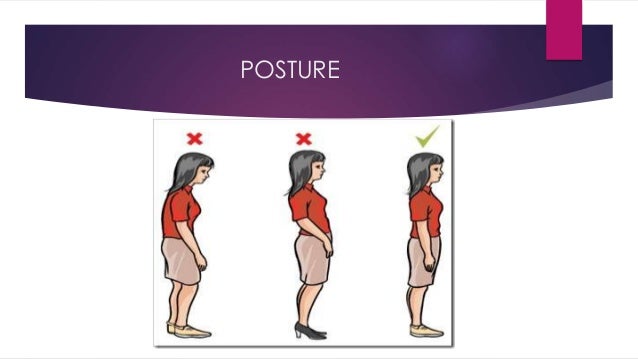
Let's begin by establishing a clear visual of what confident body language looks like.

The key takeaway from this image is that confidence is projected through a combination of cues. It's not just one thing, but a holistic presentation. A core principle here is maintaining open posture.
The article 'The Power of Body Language' from Toastmasters Magazine offers a great explanation of open versus closed body language and its impact on first impressions.
Please read the sections 'Body Language and “Thin Slicing”' and 'Importance of Synchronizing Nonverbals and Speech'. Focus on the advice for what to do before you even start speaking and the distinction David JP Phillips makes between 'open' and 'closed' body language.
As the article highlights, "closed" postures (like crossing your arms or hunching over) can signal defensiveness or discomfort. In contrast, "open" postures—keeping your arms uncrossed, your shoulders relaxed, and your chest and head high—communicate that you are receptive, confident, and in control.
2. Finding Your "Base Posture"
Knowing what good posture looks like is one thing; feeling it in your own body is another. Many common stances we adopt out of habit can inadvertently project nonchalance, aggression, or nervousness.
Let's watch a short, practical guide on how to identify common "bad" postures and find your own neutral, confident "base posture."
Make Body Language Your Superpower
This clip from a Stanford Graduate School of Business workshop is highly practical. It demonstrates what not to do and then walks you through a simple exercise to find your optimal standing position.
Watch the segment from 02:43 to 06:17. Pay close attention to the three 'bad positions'—hands in pockets, hands on hips, and the 'fig leaf'—and then follow along with the exercise to find your own 'base posture'.
The concept of a base posture is incredibly useful. Think of it as your neutral, ready position. It’s the stance you return to after making a gesture or moving. As the presenter notes, it may not feel the most comfortable at first if you're used to other stances, but it looks the most comfortable and confident to your audience. This is the physical foundation for projecting confidence.
3. Moving with Purpose and Control
Once you've established a confident posture, the next step is to ensure your movements project the same sense of purpose. Nervous energy often manifests as aimless pacing or fidgeting, which distracts your audience and undermines your authority. Confident individuals, by contrast, move deliberately.
Body Language Expert Explains How to Show Confidence | WIRED
Former FBI agent and body language expert Joe Navarro has an excellent way of describing this. In this video, he explains how confident movement is about being on a mission and controlling time and space.
Watch the video from 00:00 to 01:32 and from 02:28 to 03:12. Focus on the idea of walking 'as though we are on a mission' and the 'temporal aspect' of leadership—taking your time to move and respond.
Navarro's points are critical:
- Move as if you are on a mission: Your movement should have a clear start and end point. You are walking to the podium, or to greet someone. This intentionality eliminates nervous pacing.
- Command time: Confident people are not rushed. They take their time to walk, to turn, and to settle before speaking. This projects control.
To build on this, let's look at how to apply this idea of purposeful movement, especially in a public speaking or presentation context.
How to Command the Stage in Public Speaking
The article 'How to Command the Stage in Public Speaking' offers excellent strategic advice on using movement and stillness.
Read the sections 'How to Command the Stage with Confidence', 'The Power of First Impressions on Stage', and 'How to Use Movement on Stage to Enhance Your Message'. Pay attention to the advice on making a powerful entrance and balancing movement with stillness.
A key technique highlighted in both this article and the Toastmasters resource is to pause your speech before you move. If you want to walk to another spot, you should:
- Finish your sentence or thought.
- Pause.
- Walk to your new spot with purpose.
- Plant your feet and re-engage the audience.
- Resume speaking.
This separates the act of speaking from the act of moving, making each appear more deliberate and controlled. Stillness can be just as powerful as movement, especially when you are delivering your most important point.
Test your understanding!
Imagine you are in a debate. You've just finished making a point, and now you want to address a question from someone on the other side of the room. How would you use posture and movement to project confidence and control in this moment?
Show answer
Based on the principles we've discussed, a confident response would involve:
- Hold your ground: After finishing your initial point, remain in your strong 'base posture' for a moment of stillness. This gives your point weight.
- Acknowledge with your head: Turn your head to face the questioner first, making eye contact to show you are listening.
- Pause and pivot: After they've asked their question, take a deliberate pause. Then, pivot your whole body to face them. This shows you are giving them your full, undivided attention.
- Answer from a grounded position: Answer the question while standing still, maintaining that open, confident posture.
- Move with purpose (if needed): If you decide to move closer, you would do so after acknowledging the question and before starting your main answer, closing the distance with a steady, unhurried pace.
4. The Mind-Body Connection: Posture and Your Internal State
Your interest in neuroscience will find this aspect particularly relevant. The connection between body and mind is a two-way street. Not only does your internal state (feeling nervous or confident) affect your posture, but adopting a specific posture can influence your internal state. This principle is sometimes called embodied cognition.
By consciously holding a more confident and expansive posture, you can actually signal to your own brain to feel more powerful and in control. This is an invaluable tool for your goal of energy management.
Body Language Expert Explains How to Show Confidence | WIRED
Let's return to the WIRED video, where Joe Navarro shares a practical exercise he uses to change his physical and mental state before a presentation. This is a perfect example of embodied cognition in action.
Watch the segment from 12:20 to 13:12. Pay attention to how this simple physical action is designed to release tension and make him feel more powerful.
Navarro’s wall-push exercise is a quick, private way to physically prime yourself for confidence. By making your body feel strong and expansive, you can trigger a corresponding shift in your mental state. You don't have to wait to feel confident to act confident; you can act confident to start feeling confident.
Conclusion
Today we've deconstructed the nonverbal signals of confidence, moving from the static foundation of posture to the dynamic element of purposeful movement. By becoming more deliberate in how you stand and move, you project authority, presence, and purpose to others, while also reinforcing a state of confidence within yourself.
Key Takeaways:
- Open and Grounded Posture: A confident stance is upright, open, and stable. Find your "base posture" and return to it often.
- Purposeful Movement: Move with intention, as if on a mission. Avoid nervous, aimless pacing.
- The Power of Stillness: Balance movement with strategic stillness. Plant your feet when delivering key messages to add weight and authority.
- The Mind-Body Feedback Loop: Use your body to influence your mind. Adopting confident posture can help you feel more confident, which is a powerful tool for managing social energy.
Preview of the Next Lesson:
So far in this module, we've focused on projecting charisma through your own nonverbal signals: your eyes, your voice, and your body. In the next lesson, we will shift the focus outward. We will learn how to apply the 'spotlight' effect by making others feel valued and central to the conversation. This is where the elements of "power" and "presence" combine with "warmth" to create true charisma.