Hello! Welcome back to our module on "Developing Charisma and Presence."
In our last lesson, we focused on your physical presence—how to project confidence and purpose through deliberate posture and movement. We established that these outward signals of Power and Presence are not just for others; they also create a feedback loop that makes you feel more confident internally.
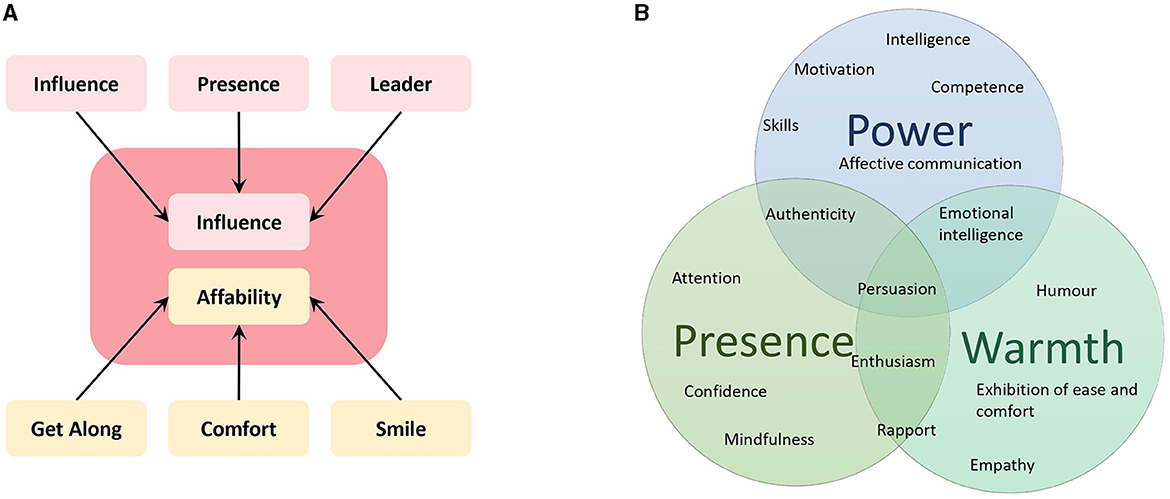
Today, we shift the focus from projecting your own state to influencing the state of others. Our learning outcome is to apply the 'spotlight' effect by making others feel valued and central to the conversation. This is where we add the crucial third ingredient of charisma—Warmth—to the Power and Presence you've been developing. Mastering this skill is fundamental to building the deeper bonds you're aiming for and, perhaps counterintuitively, can make social interactions less draining by taking the pressure off you to "perform."
1. The Charisma Equation: Presence + Power + Warmth
True charisma isn't just about being impressive; it's about making other people feel impressive. This is the essence of the spotlight effect. It's the conscious act of directing the conversational focus and positive attention onto the other person.
The book The Charisma Myth, which we'll refer to, breaks charisma down into three components. We've worked on Power (your ability to affect the world) and Presence (your ability to be "in the moment"). The spotlight effect is primarily an expression of Warmth (goodwill toward others) combined with Presence.
The Charisma Myth Book Summary
To understand the core principles, let's look at a summary of 'The Charisma Myth' by Olivia Fox Cabane. This will help define Presence and Warmth in this context.
Please read two short sections: 'Presence' (under Chapter 2) and 'Kindness Charisma' (under Chapter 6). Focus on the line in the 'Presence' section that says, 'When you are fully present, people feel they have your full attention and that they are the most important thing in the world to you at that moment.' This is the spotlight effect defined. Then, see how 'Kindness Charisma' is the style that most heavily relies on this effect.
As the reading suggests, the foundation of the spotlight effect is making the other person feel like they are the most important thing in the world to you in that moment. It's about radiating acceptance and making them feel not just heard, but cherished.
2. The Science of Being a Good Conversational Partner
Your background in applied economics has trained you to look at systems and outcomes. In relationships, the data is surprisingly clear: how you respond to someone's good news has a more significant impact on the relationship's long-term health than how you respond to their bad news.
This concept, from the field of positive psychology, is called Capitalization. It's the process where sharing a positive event enhances the positive feelings associated with it. When you actively help someone "capitalize" on their good news, you make them feel validated, understood, and closer to you.
The most effective way to do this is through Active Constructive Responding (ACR). Let's look at a framework that breaks down the four common ways people respond to news.

To see these in action, let's look at the scenarios provided in an article from PositivePsychology.com.
What is Active Constructive Responding?
The article 'What is Active Constructive Responding?' provides an excellent, clear breakdown of these four styles with a concrete example.
Please read the section with the four response types, starting from 'Active constructive:' and ending before 'What is Gaslighting?'. As you read, notice how the non-verbal cues and the content of the response change in each style. Then, read the section titled 'Capitalization Psychology' to understand why this works.
The key insight is that only the Active Constructive response genuinely builds the relationship. It’s not enough to be passively supportive ("That's nice, dear"). To apply the spotlight, your engagement must be authentic and energetic. This framework applies not just to big promotions, but to any idea, opinion, or feeling someone shares with you.
3. Practical Techniques for Applying the Spotlight
Knowing the theory is one thing, but applying it in the moment is what counts. Let's break down three practical ways to put the spotlight on others, using examples from masters of the craft.
Technique A: The Oprah Method - Deep Listening and Validation
Oprah Winfrey is a master of making her guests feel like the center of the universe. She does this through intense presence and validation.
Ask This Question To Make Someone Feel Truly Special
The YouTube channel Charisma on Command did an excellent breakdown of Oprah's techniques. We'll watch a few key clips that demonstrate how she applies the spotlight.
Please watch the following segments: 02:56 - 03:47: Notice her intense eye contact and active listening cues (squinting, furrowing brow). This signals 100% presence. 03:47 - 04:32: Pay attention to how she summarizes what her guest says. This is a powerful way to say, 'I heard you, and I understand.' 07:37 - 08:42: Observe how she leans into her guest's emotional expressions, sharing in their joy or pain rather than trying to diffuse it. This is ultimate validation.
To apply this:
- Listen with your whole body: Use your eyes, posture, and facial expressions to show you are engaged.
- Paraphrase and summarize: Briefly restate what you heard in your own words. "So what you're saying is..." or "It sounds like you felt..."
- Match their energy: If someone is excited, get excited with them. If they are thoughtful, become thoughtful with them.
Technique B: The Gift of Words - Compliments and Gratitude
Another way to shine the spotlight is to actively "gift" people positive feelings. This involves using language that acknowledges their value and makes them feel good about themselves.
PSYCHOLOGICAL TRICKS To Be More Charismatic & Confident TODAY! | Vanessa Van Edwards
In this interview, communication coach Vanessa Van Edwards explains the psychology behind making people feel good with words. It's about sparking positive neurochemicals like dopamine.
Please watch these segments: 28:35 - 30:30 (from 'here's the biggest one'): Focus on how using achievement-oriented words can prime people for success and the power of a simple compliment. 33:07 - 35:17: Listen to the concept of 'gifting' others their warmest and most competent selves through your descriptions and introductions. 01:35:57 - 01:38:00: Note the discussion on gratitude as a 'double effect' word that honors the other person while elevating your own state.
To apply this:
- Give specific compliments: Instead of "good job," try "I was so impressed with how you handled that difficult question. You were incredibly clear and composed."
- Attribute positive qualities: When introducing people or talking about them, use words that highlight their warmth and competence. "This is Sarah, she's the heart of our team and brilliant at what she does."
- Express genuine gratitude: Make a habit of saying "I appreciate you" or "I'm grateful for..." This directly tells people they are valued.
Test your understanding!
A friend from your public speaking organization tells you, "I finally gave that speech I was so nervous about, and it went pretty well!" Using the Active Constructive Responding framework and the techniques we've discussed, what would be an ideal response to put the spotlight on them?
Show answer
An ideal Active Constructive response would combine several elements:
- Enthusiastic opening (ACR): "That's fantastic news! I'm so happy for you!" (Shows high, positive energy).
- Acknowledge the struggle (Validation): "I know how much you were dreading that and how hard you worked. It's amazing that you pushed through." (Shows you remember their context and value their effort).
- Ask an open-ended follow-up question (Curiosity): "Tell me more! What was the best part? How did the audience react?" (Invites them to relive the positive experience and be the star).
- Specific compliment (Gifting value): "You've always been so dedicated to improving, it's really inspiring to see it pay off like this." (Attributes a positive quality to them).
This response validates their feelings, celebrates their success, and invites them to share more, firmly placing the spotlight on them.
Technique C: The Art of the Question
Ultimately, the person holding the spotlight is the one answering questions. To give someone the spotlight, you must ask questions that show you're interested in more than just surface-level facts. You're interested in them.
Ask This Question To Make Someone Feel Truly Special
Let's revisit the Oprah video for one last, crucial point: her philosophy on questions.
Please watch from 05:46 to 07:37. Notice the type of questions she asks. They aren't about 'what,' they are about 'how' and 'why'—they explore hardship, dreams, and emotion.
As the video and the Charisma Myth summary state: "Don’t try to impress people. Let them impress you, and they will love you for it." Asking questions about someone's motivations, their feelings, their challenges, and their dreams is the most direct way to show that you find them fascinating.
Conclusion
Today we've shifted our focus from self-projection to outward attention. The 'spotlight' effect isn't a trick; it's a mindset of genuine curiosity and goodwill that makes others feel seen, heard, and valued. By practicing these techniques, you not only become more charismatic but also build the foundation for the deeper, more meaningful connections you seek.
Key Takeaways:
- The Spotlight Effect = Presence + Warmth: It's about giving your full attention (Presence) with an attitude of goodwill (Warmth).
- Be Actively Constructive: Your response to others' good news is a powerful tool. Celebrate with them enthusiastically to build the relationship.
- Listen, Validate, and Appreciate: Use deep listening, verbal and non-verbal validation, specific compliments, and gratitude to make others feel valued.
- Ask Better Questions: Go beyond small talk. Ask questions that invite people to share their inner world—their feelings, motivations, and dreams.
Preview of the Next Lesson:
We've just covered the external behaviors of putting the spotlight on others. But to do this authentically, especially when you feel socially drained, your internal state must be aligned. In our next lesson, we will address this directly by learning how to manage your internal state to project genuine presence and focus on the other person. This will connect directly to your goal of "energy management" in social settings.