Hello! Welcome back to our module on Navigating Difficult Conversations.
In our last lesson, you learned how to recognize the verbal and nonverbal signs of conversational escalation. We looked at how a perceived threat activates the "survival brain," making people less rational and more reactive, and we identified specific conflict patterns like "The Stonewaller" or "The Critic."
Recognizing the signs is the diagnostic step. Now, we move to the treatment. This lesson is about what you do once you've spotted those signs. Our goal is to apply active listening and validation as primary de-escalation tools. Mastering this will not only help you manage potentially draining conflicts but also build the deeper connections you're aiming for by making others feel truly heard and understood.
1. The Cardinal Rule of De-escalation: Regulate Before You Educate
Before diving into techniques, we need to establish the core principle. In the last lesson, we saw that when someone is emotionally escalated, their "survival brain" is in charge, and their capacity for logic is severely diminished. Trying to problem-solve, argue facts, or explain your position at this stage is like trying to reason with a fire alarm. It's simply not the right time.
The first and only goal is to help the other person regulate their emotions.
Calming & De-escalation Strategies
This short clip from the Dartmouth Trauma Interventions Research Center, which we briefly saw last lesson, perfectly explains this principle. Pay attention to the concept of 'regulate/educate'.
Please watch the segment from 03:11 to 03:58. Focus on why it's ineffective to teach or problem-solve when someone is in distress and what the primary goal should be.
The key takeaway is that your job is not to fix the problem or win the argument, but to help create a calm atmosphere where the other person can shift out of that survival mode. Only then can a productive conversation happen. Active listening and validation are your primary tools for creating that atmosphere.
2. Active Listening: The Framework for Understanding
You cannot validate what you do not understand. Active listening is the systematic process of gathering the necessary emotional and factual data from the other person while simultaneously showing that you are engaged. It is the crucial difference between passively hearing words and actively processing a message.
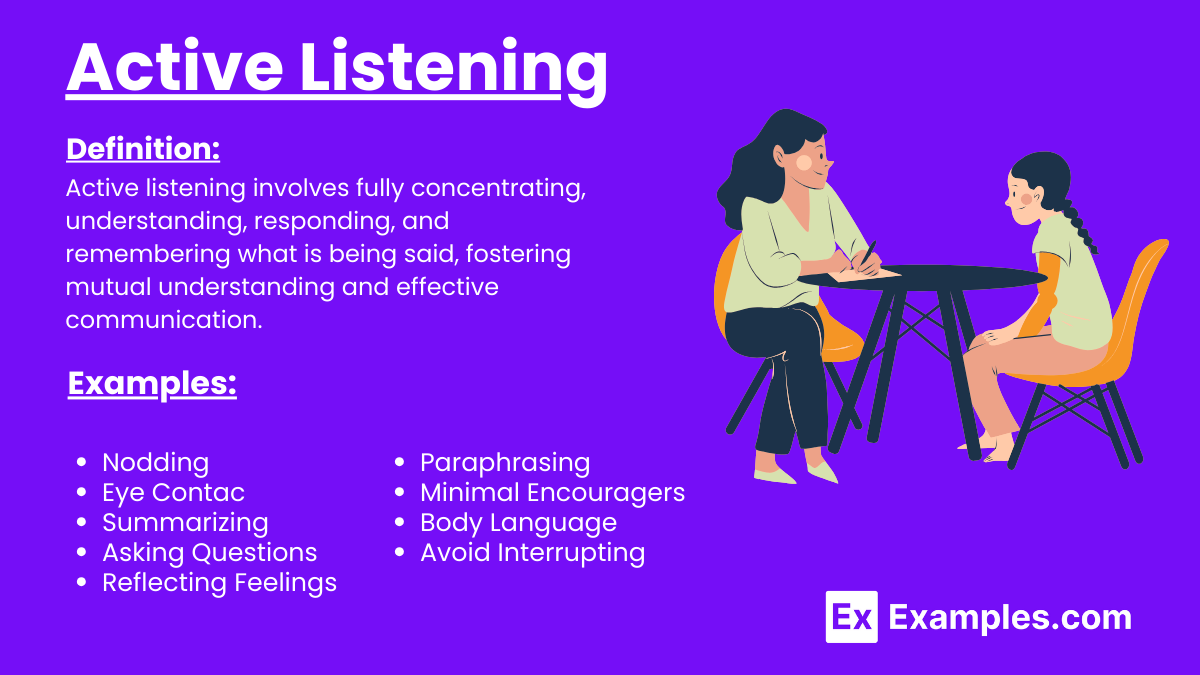
The document below, though designed for crisis intervention officers, provides an excellent and highly practical framework for active listening called "MORE PIE."
This training material from Bexar County's Crisis Intervention Team breaks down active listening into seven essential skills. We will use this as our toolkit.
Please read the sections that introduce the 'MORE PIE' acronym and provide detailed explanations for each skill. You'll find these starting with the header 'There are 7 essential skills...' and continuing through the detailed breakdowns of Emotional Labeling, Paraphrasing, etc. Focus on understanding the purpose of each technique.
The MORE PIE acronym stands for:
- M - Minimal Encouragers (
"uh-huh," "go on") - O - Open-Ended Questions (
"What happened next?") - R - Reflecting/Mirroring (
"So, you felt completely ignored.") - E - Emotional Labeling (
"It sounds like you're feeling frustrated.") - P - Paraphrasing (
"So if I understand correctly, the main issue is...") - I - "I" Messages (We will cover this in depth in a future lesson)
- E - Effective Pauses (Strategic silence)
These aren't just tricks; they serve a specific de-escalation purpose. Minimal encouragers and pauses invite the person to talk more, allowing for "ventilation." Paraphrasing and reflecting check your understanding and show you're trying to get it right. Emotional labeling and open-ended questions help you uncover the core of the issue.
3. Validation: The Engine of De-escalation
If active listening is the tool to gather information, validation is how you use that information to calm the emotional storm. Validation is the act of acknowledging and accepting another person's feelings and experience as understandable, without necessarily agreeing with their actions or their interpretation of the facts.
This distinction is critical and is often misunderstood. To explore this, let's start with a clear definition of what validation is and isn't.
Learn to validate others and transform your relationships
This excellent article from Psyche, 'Learn to validate others and transform your relationships', clearly distinguishes validation from similar concepts and explains its power.
Please read the section titled 'What validation is – and what it isn’t'. Pay close attention to the distinctions between validation and praise, problem-solving, and agreement. This is a foundational concept.
As the article notes, you can validate the emotion even if you believe the thought behind it is based on misinformation. For example: "I can understand why you'd be anxious if you believe that, even if I see the situation differently." This leaves nothing for the other person to fight against.
So, when do you know your validation is working?
In this clip, crisis and violence de-escalation expert Dr. Christian Conte explains the ultimate test of effective validation.
Watch the segment from 00:42 to 02:40. The key point here is that validation isn't complete until the other person feels validated. Look for his description of the 'release' of tension.
This "release"—a sigh, a drop in the shoulders, a change in vocal tone—is the nonverbal signal that you have successfully shifted the person out of their reactive state.
The Validation Ladder
To give you a structured way to apply this, the Psyche article outlines a "validation ladder" with increasing levels of depth.
Learn to validate others and transform your relationships
Let's return to the Psyche article to learn the specific techniques of validation, which are organized into three levels of skill.
Please read the sections 'Be mindful of the other person: Attend and Copy', 'Show that you understand: Contextualise, Equalise, and Propose', and 'Demonstrate empathy: Take Action, Emote, and Disclose'. This will give you a full spectrum of validation tools, from simple to advanced.
Here is a summary of the ladder:
- Mindfulness Skills (Level 1): Simply showing you're paying attention. This includes Attending (nodding, eye contact) and Copying (repeating their key words). This is where your active listening skills are directly applied.
- Understanding Skills (Level 2): Showing you see the logic in their reaction. This includes Contextualizing ("Given your past experience with this, it makes sense you'd be wary") and Equalizing ("Anyone in your shoes would feel the same way").
- Empathy Skills (Level 3): Sharing in their experience. This includes Emoting (expressing your own feelings in response, e.g., "I'm so sorry that happened to you") and Disclosure (sharing a similar personal experience, carefully).
In a heated moment, you'll mostly operate at Levels 1 and 2.
4. A Practical De-escalation Sequence
Let's put this all together into a practical sequence you can use.
Step 1: Manage Yourself First.
Before you can de-escalate someone else, you must be calm. Use the "low and slow" technique. Lower your tone of voice, and slow down your speech and movements. Keep your body language open and non-threatening (uncrossed arms, visible hands).
Step 2: Listen to Understand (Use MORE PIE).
Let the person speak. Use minimal encouragers, effective pauses, and reflecting to draw out their story. Your only goal here is to understand their perspective and what emotion is driving them.
Step 3: Validate the Emotion (Climb the Ladder).
Start with Level 1 and 2 validation.
- Emotional Labeling: "It sounds like you're feeling incredibly frustrated."
- Contextualizing/Equalizing: "I can see why you're so frustrated. You were told this would be done by noon, and now it's late. I would be upset too."
Step 4: Watch for the "Release."
Look for the signs Dr. Conte mentioned: a sigh, shoulders relaxing, a change in tone. This tells you the emotional regulation is working. If you don't see it, they don't feel heard yet. Go back to Step 2 and listen more.
Step 5: Pivot to Problem-Solving (Only When Calm).
Once the emotion has subsided, you can transition. A simple way is to ask: "What would you like to see happen now?" or "How can we work together to fix this?"
Test your understanding!
Let's revisit the scenario from our last lesson. You're in a team meeting, and you suggest moving a deadline. Your colleague, Sarah, says flatly, "Sure, whatever works," while crossing her arms and staring at her laptop (stonewalling).
Using the de-escalation sequence, what could you say or do to address this? Provide a specific example of a validating statement you might use.
Show answer
Here's one possible approach following the sequence:
-
Manage Yourself: You would maintain a calm, neutral tone and open posture. Avoid mirroring her defensive posture.
-
Listen/Observe: You've observed her nonverbal cues (crossed arms, avoiding eye contact) and heard her flat, disengaged verbal response. You hypothesize she might be feeling pressured, unheard, or concerned about the change.
-
Validate the Emotion (Level 2): You would address the mismatch between her words and actions gently. A good validating statement would be an Emotional Label combined with a Proposal (from the Psyche article).
- Example Statement: "Sarah, I hear you say it works, but I get the sense you might be concerned about the new timeline. It sounds like this might be putting a lot of pressure on you."
This statement doesn't accuse her. It labels a potential emotion ("concerned," "pressured") and offers it as a hypothesis ("I get the sense," "it sounds like"). This invites her to correct you or confirm, opening the door for a real conversation instead of letting the conflict simmer.
-
Watch and Wait: After your statement, you would pause and give her space to respond, watching to see if her posture softens or if she engages.
Conclusion
Today, we've moved from diagnosing conflict to actively treating it. You've learned that de-escalation isn't about magic words; it's a structured process of managing yourself and making another person feel seen and heard.
Key Takeaways:
- Regulate Before You Educate: The primary goal in a conflict is to calm the emotions, not to solve the problem immediately.
- Active Listening is the Tool: Use the MORE PIE framework to gather information and demonstrate engagement.
- Validation is the Goal: Acknowledge and accept the other person's emotions as understandable, even if you don't agree with their facts or actions.
- The Sequence Matters: Manage yourself -> Listen -> Validate -> Wait for the release -> Then problem-solve.
Preview of the Next Lesson:
De-escalating a situation by validating the other person is a powerful way to manage the emotional climate. But what about your own needs and perspective? In the next lesson, we will focus on the next step in a constructive conversation: "Use 'I-statements' to express personal feelings and needs without assigning blame." This will equip you to voice your side of the issue without re-escalating the conflict.