Welcome back. The previous lesson explained why NSAIDs often relieve primary menstrual cramps more effectively than paracetamol and why starting early can help. Effective does not automatically mean suitable or safe. This lesson is about checking an over-the-counter plan against the exact product label, other medicines, health conditions, and the possibility of pregnancy.
Allow about 35–40 minutes, including the readings and a close look at a sample package. The package is a US example, not a dosing instruction for every country or every person.
Read the product, not just the medicine name
“Take ibuprofen” leaves out several facts needed to assess a plan: the amount in each tablet, the age range on the package, the time between doses, the maximum in a 24-hour period, and the warnings. A combination product may also contain a pain medicine that is easy to overlook.
The US Food and Drug Administration explains how its standardized Drug Facts label organizes that information.
The Over-the-Counter Drug Facts Label | FDA
Read the FDA’s guide to learn where an over-the-counter label puts the information needed for a safety check.
Under “Always Read the Label,” read the introduction, stopping before “What’s On The Label.” Then, under “What It Means,” read the explanations from “Active Ingredient(s)” through “Directions.” Focus on the distinction between an active ingredient, a warning, and a dosing direction.
On any pain-relief product, find Active ingredient first. “Ibuprofen 200 mg” identifies both the drug and the amount per tablet; the brand name alone does neither. Next find Directions, including the age category, dose interval, and maximum. Finally, read Warnings for circumstances in which the plan needs to change or professional advice is needed. Check every product in the plan, including cold-and-flu or “period relief” combinations.
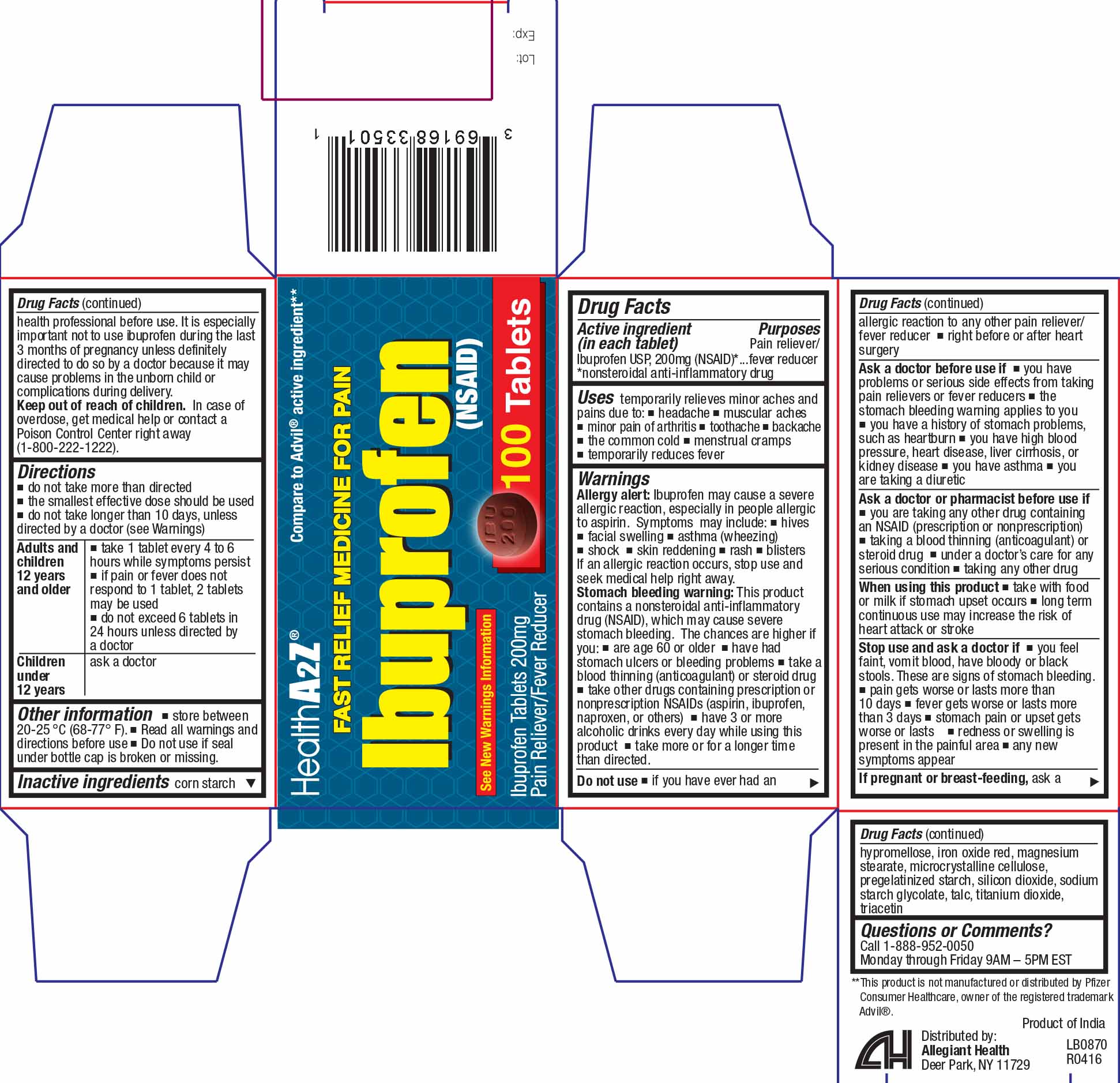
The pictured label says that adults and children 12 years and over take one 200 mg tablet every 4 to 6 hours while symptoms persist; if one tablet does not relieve pain or fever, two may be used. It limits use to six tablets in 24 hours unless a doctor directs otherwise. For children under 12, it says to ask a doctor. Those are instructions for this pictured product, not permission to apply an adult dose to a younger child or to a different formulation.
Check intervals and totals separately
A plan can satisfy the maximum number of tablets yet still place doses too close together. Conversely, well-spaced doses can exceed the daily limit. Check both constraints, counting all doses in a rolling 24-hour window, not merely since midnight. For the pictured 200 mg tablets, six tablets contain mg of ibuprofen; a higher-strength tablet changes the arithmetic.
The NHS guidance provides a useful contrast in how another source describes common adult ibuprofen products.
Ibuprofen for adults: painkiller that also treats inflammation - NHS
Read the NHS adult dosing guidance to see why the formulation and the instructions supplied with it take priority over a remembered rule of thumb.
In “How to take common types of ibuprofen,” begin with the dosing guidance. Read the separate “200mg tablets and capsules,” “400mg tablets and capsules,” and “Important” subsections. Stop before “If you take too much ibuprofen.” Note both the minimum interval and the limit on how many times a dose may be taken.
For most 200 mg adult tablets and capsules, the NHS says one or two at a time, up to three times a day, at least four hours apart, and no more than six in 24 hours. Its instructions for 400 mg products are expressed differently. The pictured US package permits a different pattern of administrations: it says one tablet every four to six hours, with two if one does not work. Do not blend the most permissive parts of two sources into a new schedule. Use the current label for your age and locally purchased product, or follow a clinician’s specific instructions. If its wording is unclear, ask a pharmacist before taking it.
For either source, “start early” does not mean “take extra.” Use the smallest effective dose for the shortest necessary time. The pictured package says not to use ibuprofen for pain for more than 10 days unless directed by a doctor; persistent or worsening menstrual pain merits assessment rather than an extended series of self-directed doses.
Check the person and the other medicines
Ibuprofen’s effect on prostaglandins helps cramps, but prostaglandins also have roles in protecting the stomach and supporting kidney blood flow. That is why a correct dose is not a complete safety check. Stomach ulcers or bleeding can be serious; taking a tablet with food may reduce stomach upset but does not make ulcer or bleeding risk disappear.
Ibuprofen for adults: painkiller that also treats inflammation - NHS
Return to the NHS guidance for the risks that a dosing table cannot settle.
Under “Serious side effects,” read the risk description. Under “Who can and cannot use ibuprofen,” read the suitability guidance. Finally, under “Pregnancy and ibuprofen,” read the pregnancy advice; under “Taking ibuprofen with other medicines, food and drink,” read the interaction advice. Focus on which findings call for advice before taking another dose.
A history of an ulcer or stomach bleeding, a bleeding disorder, kidney disease, or an allergy to ibuprofen or another NSAID is a reason not to assume ibuprofen is suitable. Heart or liver conditions and some forms of asthma also warrant checking the label and seeking advice. In particular, avoid taking ibuprofen alongside another NSAID, such as naproxen or aspirin used for pain: combining them increases the risk of serious side effects. If aspirin has been prescribed for another reason, do not stop it yourself; ask a pharmacist or clinician how to manage the interaction.
Other medicines can change the decision too. The NHS flags anticoagulants (blood thinners), steroid medicines, some antidepressants, and blood-pressure medicines as possible interactions. These are prompts to check the specific medicines with a pharmacist or clinician, not a claim that every combination has the same risk.
Paracetamol (acetaminophen) needs its own check. Adults can sometimes take it with ibuprofen, but that does not lift either product’s dose limits or make the combination suitable for everyone. Paracetamol may be present in a cold-and-flu remedy as well as a standalone tablet. Count the ingredient from both labels against the applicable paracetamol limit; do not guess a universal tablet count. Excess paracetamol can seriously injure the liver, so liver disease, substantial alcohol use, an uncertain total dose, or other medicines warrant professional advice.
If pregnancy is possible, do not treat bleeding and cramps as proof that this is an ordinary period. The NHS advises avoiding ibuprofen during pregnancy unless a doctor or pharmacist advises it; paracetamol is usually preferred for pain during pregnancy, but suspected pregnancy with unusual pain needs assessment, not just a change of painkiller. Sudden severe or one-sided pain, fainting, or pain with possible pregnancy needs urgent medical assessment. Vomiting blood or passing black, tar-like stools while taking an NSAID also needs urgent help.
Screen a proposed plan from start to finish
Consider an adult using the pictured US 200 mg ibuprofen product. Their proposed ibuprofen doses are one tablet at 08:00, one at 11:00, two at 15:00, two at 19:00, and one at 23:00. They also plan to take naproxen at lunchtime and, later, both a cold remedy containing acetaminophen and a standalone acetaminophen product. They report a past stomach ulcer and take a prescribed blood thinner.
The label check finds several independent reasons not to follow this plan. The 08:00 and 11:00 ibuprofen doses are only three hours apart, rather than the pictured label’s four-to-six-hour interval. The ibuprofen total is seven tablets, or mg, within 15 hours—above that label’s six-tablet, 24-hour maximum. Naproxen adds a second NSAID. The two acetaminophen-containing products may duplicate an ingredient; without their labels and amounts, their combined dose cannot be cleared. The ulcer history and blood thinner raise concern even if the schedule is corrected.
The appropriate response is not simply to remove one tablet and proceed. The person needs a pharmacist or clinician to review the products, medical history, and other medicines before choosing a plan. If excessive doses have already been taken, seek prompt advice from a pharmacist, clinician, or local poison service rather than waiting for symptoms. If pregnancy is also possible, that needs to be raised during the assessment. A person with liver disease would need particular care before using the proposed acetaminophen products.
This illustrates the purpose of screening: it can identify a plan that is unsafe or cannot yet be verified. Passing the arithmetic checks alone cannot certify that a medicine is safe for a particular person.
Key takeaways
For any over-the-counter pain plan, use the age-appropriate label on each locally obtained product. Check the active ingredients; verify each dose, interval, and rolling 24-hour limit; then screen for duplicate ingredients, multiple NSAIDs, relevant conditions, interactions, and possible pregnancy. When information is missing or a warning applies, pause and seek professional advice rather than improvising a dose.
The next lesson moves from self-directed pain relief to clinician-guided hormonal treatments: how they can reduce menstrual pain and why suitability depends on medical history and individual preferences.