Introduction
Welcome back! In our last lesson, we traced the customer's path through your store, from their first glance at your window display to becoming a loyal advocate. We ended on the "Conversion" stage—the moment a browser becomes a buyer.
Today, we'll look at the financial side of that conversion. This lesson is all about understanding the economic engine of your beauty mini-market. We'll answer two fundamental questions: Where does the money come from (revenue drivers), and where does it go (cost structures)? This directly addresses the learning outcome: explaining the main revenue drivers and cost structures of a beauty mini-market.
Your background in digital marketing gives you a head start here. You're used to tracking metrics like Customer Acquisition Cost (CAC) and Return on Ad Spend (ROAS). In this lesson, we'll translate those principles to the world of physical retail, equipping you with the key performance indicators (KPIs) you need to build a business that is not only beautiful but also financially sustainable.
Part 1: Revenue Drivers - The Engine of Your Store
In e-commerce, revenue is often a function of website traffic, conversion rate, and average order value. Physical retail follows a surprisingly similar formula, but the inputs are different. Your store's revenue can be broken down with this simple equation:
Total Revenue = Foot Traffic × Conversion Rate × Average Transaction Value (ATV)
Let's look at what each of these components means in a physical store.
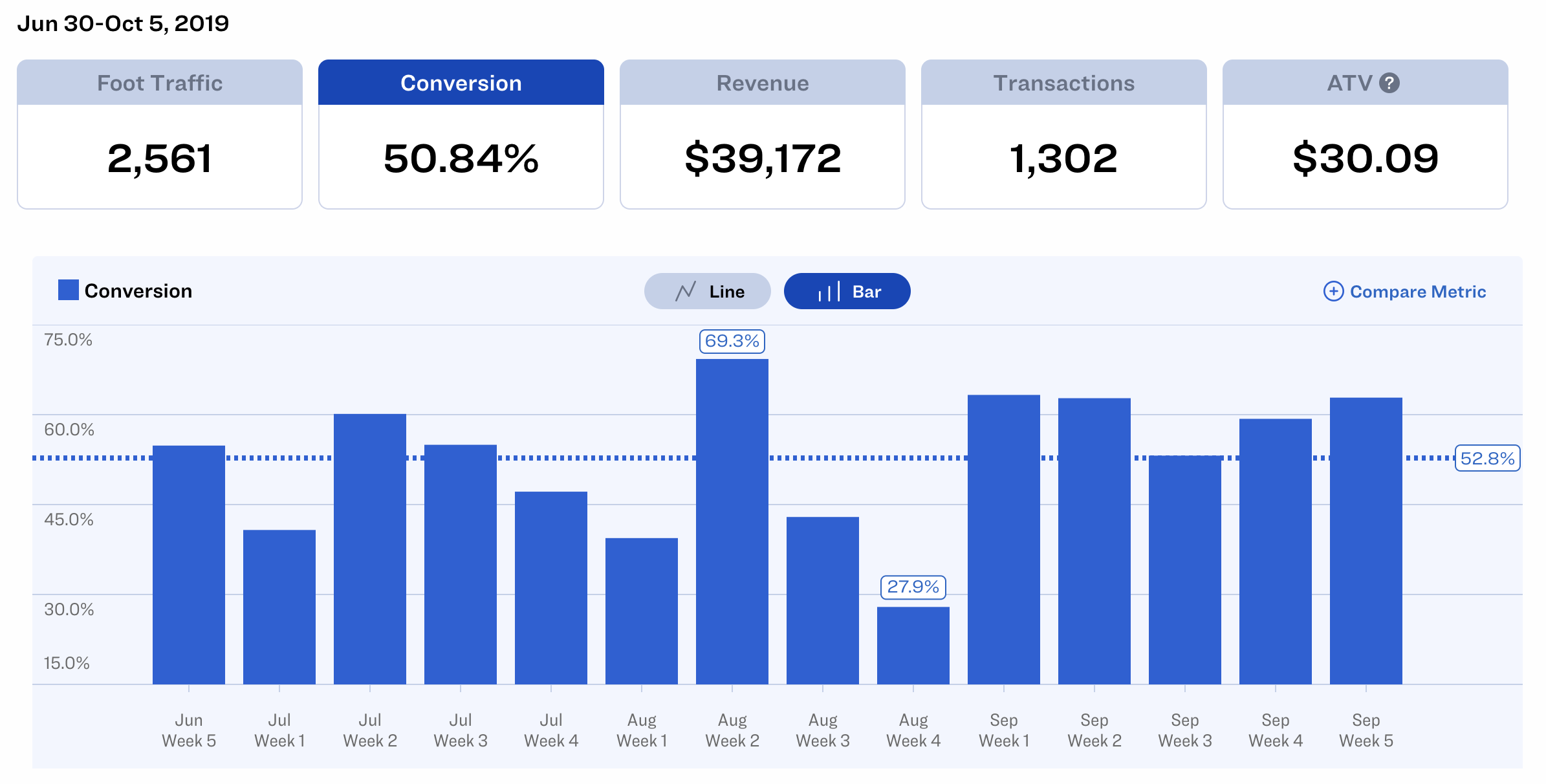
- Foot Traffic: The number of people who walk into your store. This is the result of your "Awareness" and "Consideration" efforts from the last lesson—a great location, an enticing window display, and local marketing.
- Conversion Rate: The percentage of those visitors who make a purchase. This is a direct measure of how well your in-store experience (layout, staff, product selection) turns interest into sales.
- Average Transaction Value (ATV): Also called Average Order Value (AOV), this is the average amount a customer spends in a single transaction.
To succeed, you need to manage all three of these levers. A key part of that is understanding profitability at the transaction level. For that, we need to explore two critical KPIs: Average Order Value and Gross Margin.
7 Essential Cosmetics Store KPIs
The following resource, '7 Essential Cosmetics Store KPIs', provides excellent, detailed definitions of key financial metrics. We'll focus on Average Order Value (AOV) and Gross Margin Percentage (GM%).
Please read the sections titled 'KPI 2 : Average Order Value (AOV)' and 'KPI 3 : Gross Margin Percentage (GM%)'. Pay close attention to the definitions, the 'How to Improve' tips, and the calculation examples.
A Note on Gross Margin
After reading the resource, you may have noticed the article mentions a target Gross Margin of "815%," which is mathematically impossible based on the standard formula it provides: GM% = (Revenue - COGS) / Revenue. This is almost certainly a typo. As the article's own example shows ($100,000 Revenue - $15,000 COGS results in an 85% margin), a realistic and healthy gross margin for specialty beauty retail is typically in the 50% to 70% range.
Your Gross Margin is the profit you make on the products themselves before paying for rent, staff, and other operational expenses. Protecting this margin by sourcing products smartly and pricing them strategically is fundamental to your store's financial health.
Part 2: Cost Structure - Where Your Money Goes
Now that we understand how you'll make money, let's look at the costs involved. We can group these into two main categories:
- Startup Costs: One-time expenses to get the store open.
- Operating Costs: Recurring expenses to run the store day-to-day.
Startup Costs (Capital Expenditures or CAPEX)
This is the initial investment required to turn your vision into a physical reality. The following video gives a fantastic, real-world overview of what these costs look like.
Starting Your Beauty Supply Store: What You Really Need to Know
In 'Starting Your Beauty Supply Store', The Retail Genius breaks down the initial budget into three core components. This will give you a practical sense of where your startup funds will go.
Watch from 04:47 to 09:33. The first part (until 08:25) covers the three main budget categories: inventory, build-out, and working capital. The second part (from 08:25) details other significant expenses like shelving, security, and POS systems.
As the video highlighted, the main startup costs are the physical build-out, the initial inventory, and a cash reserve called working capital. Let's get a more detailed breakdown. The following resource provides a checklist-style overview of these expenses.
Beauty Supply Store Startup Costs: $121K CAPEX Guide
The article 'Beauty Supply Store Startup Costs' offers a detailed table and explanations for each major startup cost category. This will help you create a comprehensive budget.
First, review the table in the section '7 Startup Costs to Start Beauty Supply Store' for a high-level summary. Then, read the detailed explanations for the two biggest items: 'Startup Cost 1 : Store Build-out and Renovation' and 'Startup Cost 3 : Initial Inventory Purchase'.
To summarize, your key startup costs will be:
- Store Build-out & Renovation: Electrical, plumbing, flooring, painting. As the video wisely suggests, finding a "second-generation space" that requires only cosmetic changes can save you a significant amount of money.
- Fixtures & Displays: Shelving, display cases, checkout counter, mirrors.
- Initial Inventory: The single largest expense after the build-out. This is the entire range of products you'll have on your shelves on opening day.
- Technology: Point-of-Sale (POS) system, credit card reader, security cameras.
- Pre-Opening Expenses: Business registration fees, licenses, initial marketing for the grand opening, and rent/utility deposits.
Ongoing Operating Costs (OPEX)
These are the recurring costs you'll pay every month to keep the business running. They are your "overhead." The most significant are:
- Cost of Goods Sold (COGS): The direct cost of the products you sell. This is a variable cost—it goes up as you sell more.
- Rent: Often the largest fixed cost.
- Payroll: Salaries, wages, and benefits for you and your staff.
- Marketing: Your budget for social media, local ads, events, etc.
- Utilities: Electricity, heating/cooling, internet, and phone.
- Software Fees: Monthly subscriptions for your POS, accounting, or email marketing software.
- Supplies: Shopping bags, cleaning supplies, and office materials.
The biggest and most important operating cost to manage is often labor.
7 Essential Cosmetics Store KPIs
Let's return to the KPI resource to understand how to measure and manage your largest ongoing expense: your staff.
Please read the section titled 'KPI 6 : Labor Cost Percentage'. Focus on how it's calculated and the tips for improving it.
Working Capital: Your Financial Safety Net
There's one more critical cost component that bridges startup and operating costs: Working Capital.
Working capital is the cash reserve you need to fund operations and cover expenses during the early months before your store generates enough revenue to support itself. You'll be spending money on rent and inventory before you make your first sale. Working capital is the fuel that keeps the business running until your revenue engine is fully up to speed.
Both the video and the articles stress its importance. The video suggests having 3-6 months of operating expenses saved. The article calculates a much longer timeframe (35 months), which is a very conservative estimate assuming a slow start. A safe approach is to plan for at least 6-12 months of working capital.
Putting It All Together
Understanding these revenue drivers and cost structures allows you to track the financial health of your store using a handful of powerful KPIs.

Ultimately, all of this analysis leads to one critical question: when will the business become profitable? This is measured by the Breakeven Point, the moment your cumulative revenue finally surpasses all your startup and operating costs. While we won't do the full calculation today, every decision you make about revenue and costs will directly impact how quickly you reach that milestone.
Conclusion
In this lesson, we moved from the customer experience to the business's financial framework. You now have a clear model for how a beauty mini-market generates revenue and what it costs to run.
Key Takeaways:
- Your store's revenue is driven by three levers: Foot Traffic, Conversion Rate, and Average Transaction Value (ATV).
- Costs are broken into two categories: Startup Costs (one-time investments like build-out and initial inventory) and Operating Costs (recurring expenses like rent and payroll).
- Gross Margin is the core profitability of your products and must be high enough to cover all your operating costs.
- Working Capital is the essential cash reserve that allows your business to survive the initial period before it becomes self-sustaining.
Preview of the Next Lesson:
We've now covered the customer journey and the basic financial model. In our next lesson, we will get more specific by exploring the unique challenges and opportunities in the women's beauty retail segment. This will help you refine your business strategy to maximize your revenue drivers and manage your costs within your chosen niche.