Introduction
Welcome to the first lesson in our module on Pricing and Financial Management. In our last lesson, we used ABC analysis to categorize your products based on their value to your business. This gave you a powerful framework for prioritizing your inventory management efforts. Now, we'll build on that by tackling one of the most critical decisions for any retailer: how to price those products.
This lesson focuses on the learning outcome: to calculate product markup and retail pricing for beauty products. Setting the right price is fundamental to your store's profitability. It's not just about covering costs; it's about ensuring your business is financially sustainable and successful. A price that's too high might deter customers, while a price that's too low can cripple your ability to grow, or even stay in business.
Coming from a digital marketing background, you know that pricing can be a key part of a brand's positioning. The same is true in retail. We'll start with the essential formulas for calculating prices and then explore the strategy behind them, ensuring you can make informed decisions for your new beauty mini-market.
1. The Core Components: Cost, Markup, and Margin
Before we can set a retail price, we must understand three fundamental concepts: the true cost of your product, the markup, and the profit margin. Getting these right is the foundation of a sound pricing strategy.
What is Your True Cost?
Your cost is more than just the price you pay the supplier. To price for profit, you must calculate the Cost of Goods Sold (COGS), which includes all expenses directly related to getting a product onto your shelf.
A great starting point is the article "How to Calculate Your Profit Margin When Buying Wholesale Makeup," which is specifically tailored to the beauty industry.
How to Calculate Your Profit Margin When Buying Wholesale Makeup
This article from the Wholesale Makeup blog provides a clear, step-by-step guide to finding your true cost per unit.
Please read the section titled '1. Know Your Wholesale Cost'. Pay close attention to the example and the 'Important' note about including additional fees like shipping and taxes.
As the article explains, your true cost per unit is:
Forgetting to include these additional costs is a common mistake that can significantly eat into your profits.
Markup vs. Margin: A Crucial Distinction
The terms "markup" and "margin" are often used interchangeably, but they represent two different calculations. Understanding the difference is vital for clear financial planning.
- Markup is your profit relative to the cost of the item.
- Margin is your profit relative to the selling price of the item.
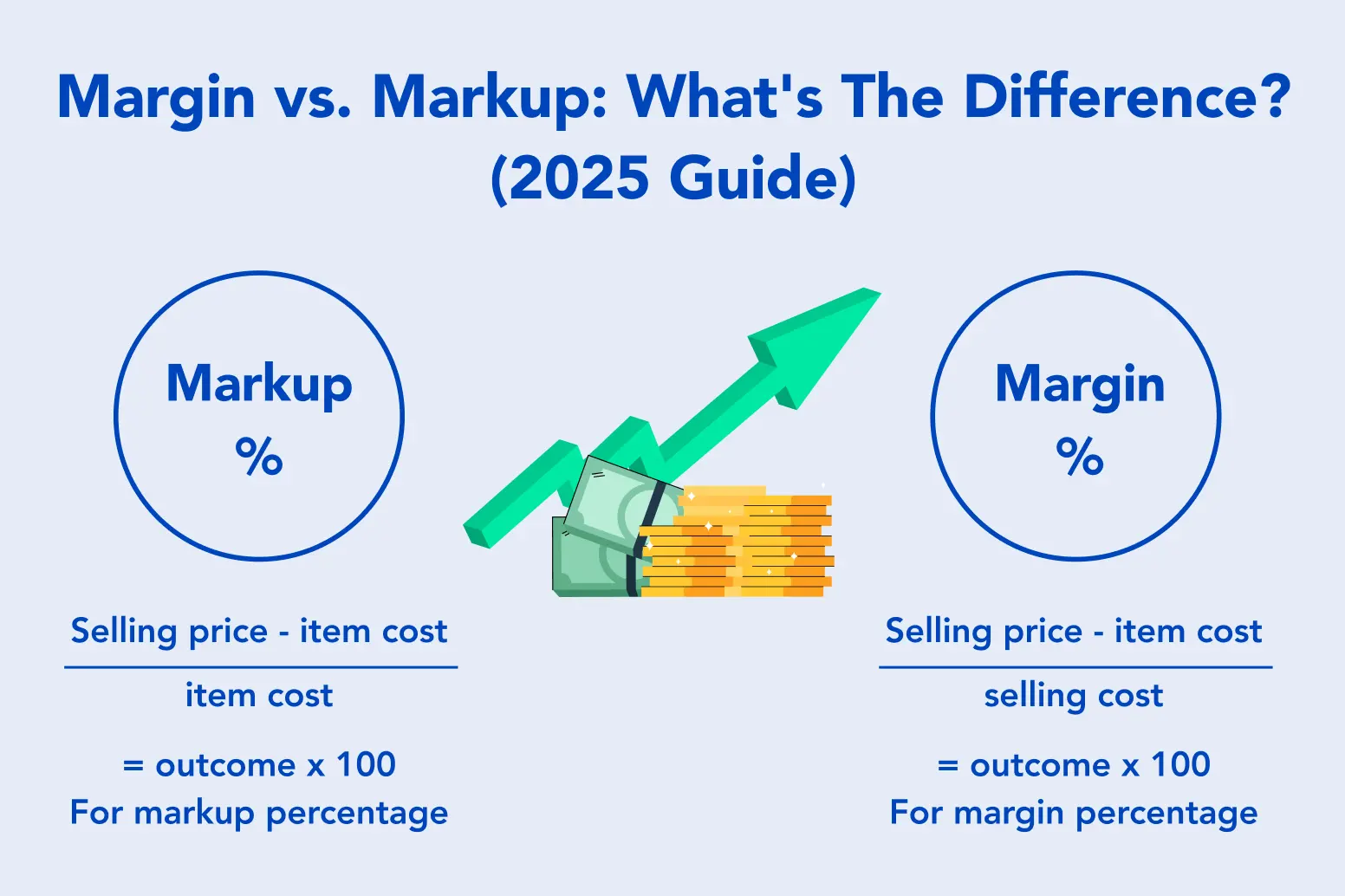
Let’s break down the formulas from the image:
- Markup % =
(Selling Price - Cost) / Cost * 100 - Margin % =
(Selling Price - Cost) / Selling Price * 100
Why does this matter? A 100% markup sounds impressive, but it translates to a 50% profit margin. Most retail goals and financial reports are based on profit margins, as it reflects what percentage of the revenue from a sale is actual profit. When discussing pricing goals, we will primarily focus on margin.
2. The Formulas: Calculating Your Retail Price
Now that we have the building blocks, let's look at two common methods for calculating your retail price.
Method 1: Cost-Plus Pricing (Based on Markup)
This is the most straightforward method. You simply decide on a desired markup percentage and add it to your cost.
Formula: Retail Price = Cost × (1 + Markup Percentage)
Example:
- Your true cost for a lipstick is $8.
- You want a 100% markup (a common starting point in retail, often called "keystone pricing").
Retail Price = $8 × (1 + 1.00) = $16
This method is simple but can be disconnected from market realities and strategic goals.
Method 2: Target Margin Pricing (Based on Desired Margin)
This is a more strategic approach where you determine the retail price based on a desired profit margin. This is the method most successful retailers use.
Formula: Retail Price = True Cost / (1 - Desired Margin Percentage)
Let's watch a short video that explains this concept well. The presenter uses the term "initial markup," but as you'll see from her calculation, she is referring to profit margin as a percentage of the retail price.
2 Retail Pricing Strategies Proven to Increase PROFIT
In this video, '2 Retail Pricing Strategies Proven to Increase PROFIT,' Cathy Donovan Wagner from RETAILMavens explains how to calculate a retail price based on a target margin.
Watch from 02:04 to 03:46. Focus on how she defines 'initial markup' and the formula she uses to calculate the final price for 55% and 60% targets.
Example:
- Your true cost for a face serum is $15.
- You are aiming for a healthy 60% profit margin, a good target for many beauty products.
Retail Price = $15 / (1 - 0.60) = $15 / 0.40 = $37.50
As the video also suggests, you might round this up to $38 or $39 for psychological pricing, which can improve the customer's perception of value.
3. Pricing as a Strategy
Calculating the price is the science. Deciding on the right price is the art. Your pricing should not exist in a vacuum; it needs to align with your brand, your target customer, and the competitive landscape.
Let's review an article that outlines these strategic pillars.
How to Price Your Cosmetics Products for Success
The article 'How to Price Your Cosmetics Products for Success' from Aurora Cosmetics provides a fantastic overview of the strategic factors you must consider.
Please read sections 1 through 4: 'Calculate Your Total Costs,' 'Research Competitor Pricing,' 'Understand Your Target Market,' and 'Choose a Pricing Strategy.' This will help you place the formulas we've learned into a broader business context.
Based on this reading, here are the key strategic questions to ask yourself:
- Brand Positioning: Is your beauty mini-market positioned as a budget-friendly store, a mid-tier convenience stop, or a curated luxury experience? Your prices are a primary signal of this positioning.
- Target Customer: What is your ideal customer's willingness to pay? Are they looking for value, or are they willing to invest in premium, high-performance products?
- Competitive Landscape: What are competing stores in your area charging for similar products? You don't have to match their prices, but you need to be aware of them to understand your position in the market.
- Perceived Value: Can you justify a higher price through unique benefits like expert advice, exclusive brands, sustainable packaging, or a superior in-store experience?
This is where your previous lesson on ABC Analysis can be useful.
- A-Items: For your high-value, top-selling products, you might use value-based pricing. Since these are your star performers, customers already see their value, and you may have more pricing power.
- C-Items: For low-cost, high-volume items (like cotton pads or makeup sponges), you might use competitive pricing to remain attractive for customers stocking up on basics.
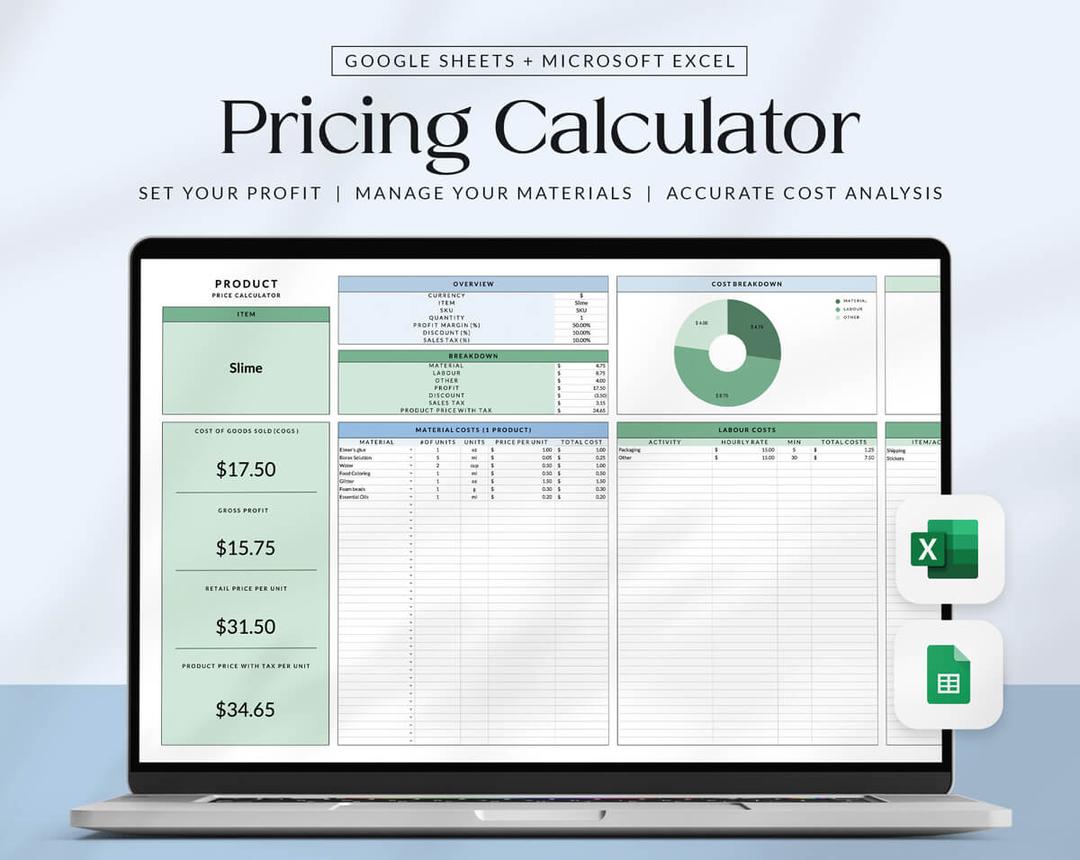
To bring all these elements together, many retailers use a simple spreadsheet to organize their pricing calculations.
Conclusion
Today, we've moved from inventory analysis to the core of your store's financial health: pricing. You now have the tools to calculate a profitable retail price for every beauty product you plan to sell.
Key Takeaways:
- Your product's true cost (COGS) must include the wholesale price plus all associated costs like shipping and taxes.
- Markup is profit relative to cost, while margin is profit relative to selling price. For setting retail goals, focusing on a target margin is generally more effective.
- You can calculate your retail price using a simple markup percentage or, more strategically, by working backward from a desired profit margin. The formula is:
Retail Price = True Cost / (1 - Desired Margin %). - Pricing is not just a calculation; it's a strategic decision influenced by your brand, target customer, and competitors.
Preview of the Next Lesson:
Setting the price for individual products is the first step in managing your store's finances. However, the profit from these sales needs to cover all of your other business expenses—rent, utilities, salaries, and marketing. In our next lesson, we will learn how to create a monthly operating budget for a beauty mini market, giving you a complete picture of your store's financial flows.