Introduction
Welcome back! In our previous lesson, you drafted a comprehensive job description to attract the perfect Beauty Advisor for your store. You focused on the essential A.S.K. framework—Attitude, Skills, and Knowledge—to define who you're looking for.
Now, we shift from the "who" to the "how." This lesson is about designing the playbook your new hire will use to create a consistently excellent experience for every customer. Our learning outcome is to design a customer service protocol for in-store interactions.
Think of this protocol as the choreography of customer engagement. Just as in digital marketing you map out a customer journey online with specific touchpoints, a service protocol does the same for the physical store. It's a clear, repeatable set of guidelines that ensures your brand's promise of a personal, empowering beauty experience is delivered every single time. By the end of this lesson, you will have created a structured draft of your store's unique service protocol.
1. The Foundation: What Do Customers Really Want?
Before we start writing rules and scripts, it's crucial to understand the fundamental psychology behind great service. A protocol isn't about robotic, scripted interactions; it's about consistently meeting core human needs.
Let's start with a video that breaks down the three psychological things every customer is looking for. Understanding these will be the foundation of your entire protocol.
What is customer service ? The 7 Essentials To Excellent Customer Service
This video, 'What is customer service ? The 7 Essentials To Excellent Customer Service,' outlines the core psychological needs of a customer. This will be the 'why' behind all the steps in our protocol.
Please watch from 01:22 to 02:56. Pay close attention to the three fundamental things every customer wants.
As the video explains, every customer wants:
- To be heard.
- To be understood.
- To be cared for.
Keep these three needs in mind as we build each stage of your protocol. Every step should be designed to fulfill one or more of these needs.
2. Structuring Your Protocol: The Customer Interaction Cycle
A customer's visit to your store is a journey with a beginning, middle, and end. To create a protocol that feels natural and comprehensive, we can model it on a standard interaction cycle. This gives your staff a clear, repeatable framework to follow.
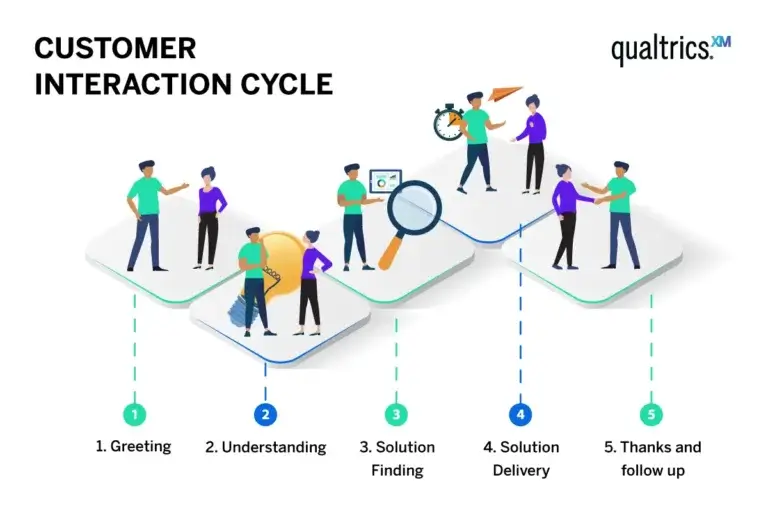
We will use this five-step cycle—Greeting, Understanding, Solution Finding, Solution Delivery, and Thanks/Follow-up—to structure your service protocol.
3. Stage 1: The Greeting - First Impressions Matter
The moment a customer walks through the door is your first and best chance to make them feel welcome and set a positive tone. A common mistake is to use closed-off, unhelpful greetings.
Let's watch a video that explains exactly what to do—and what not to do—in those first crucial seconds.
How to Greet Customers in Retail - Never Say This!
The video 'How to Greet Customers in Retail' by RETAILMavens offers fantastic, practical advice on crafting an effective opening. It explains the psychology behind why common greetings like 'Can I help you?' fail.
Watch from the beginning to 05:41. Focus on: Why customers often feel 'defensive' when entering a store. The immediate actions to take: acknowledge, smile, and then give them space. The difference between relationship-building conversation starters and 'useless questions.' The magic phrase: 'What brings you into the store today?'
Key takeaways for your protocol's Greeting stage:
- Acknowledge Immediately: Look up, make eye contact, and smile within seconds of a customer entering.
- Give Space: After the initial welcome, allow the customer a moment to orient themselves. Don't "pounce."
- Use Open-Ended Starters: Instead of "Can I help you?", try a friendly, open-ended question like, "What brings you into our store today?" or a sincere compliment.
- Build a Relationship, Not a Transaction: The goal is to start a human conversation, not a sales pitch. This relaxes the customer and makes them more receptive.
The article "Retail Customer Service" distinguishes between a basic and an exceptional greeting. A basic greeting is a simple "Hello." An exceptional one is a smiling associate saying, "Welcome to [Store Name]! We're so glad you're here." This is the standard to aim for.
4. Stages 2 & 3: Understanding Needs and Finding Solutions
Once you've made the customer feel welcome, the next phase is to uncover their needs and guide them to the right products. This is where your Beauty Advisor's expertise shines, moving from a simple salesperson to a trusted consultant.
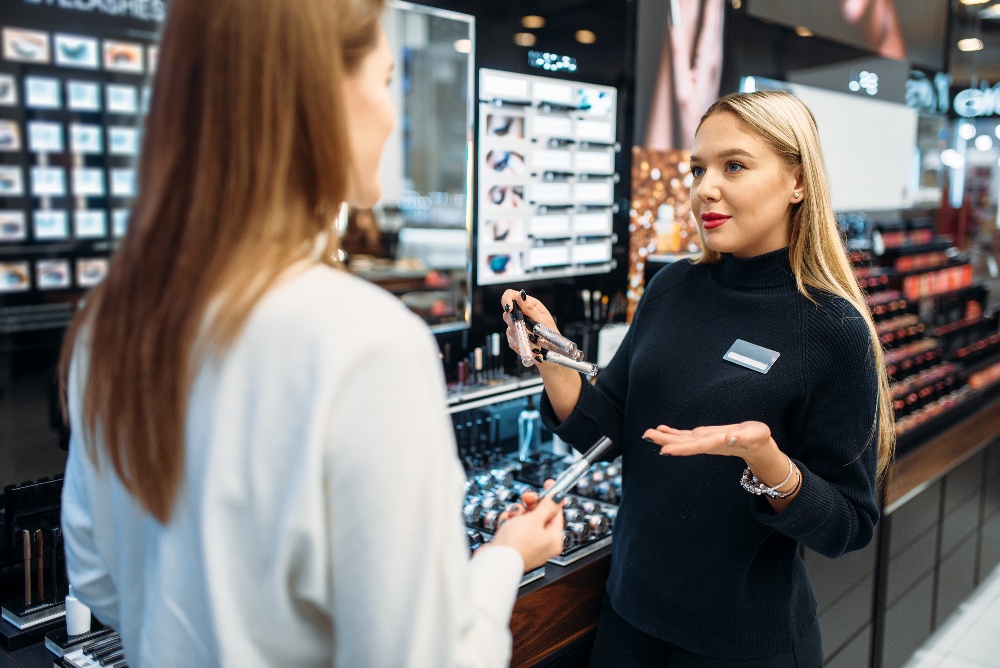
This stage is all about active listening and demonstrating deep product knowledge.
The Core Skills That Create Exceptional Experiences
The article 'Customer Service Training for Staff That Actually Works' is written for the beauty industry and offers a fantastic breakdown of the core skills needed for this stage. The table included is particularly useful.
Read the section 'The Core Skills That Create Exceptional Experiences.' Pay special attention to the table that breaks down skills like Active Listening, Empathy, and Product Knowledge into 'Why It's Important' and 'Example Training Activity.'
To guide your Beauty Advisor during this phase, your protocol should emphasize:
- Active Listening: Train staff to listen without interrupting, then summarize the customer's needs to confirm understanding ("So, it sounds like you're looking for a hydrating foundation that's good for sensitive skin. Is that right?"). This shows the customer they have been heard and understood.
- Asking Clarifying Questions: Use open-ended questions like:
- "Tell me a bit about your current skincare routine."
- "What results are you hoping to see?"
- "What have you tried in the past that you liked or disliked?"
- Providing Solutions, Not Just Products: Frame recommendations around benefits. Instead of "This is our Vitamin C serum," try "To help with the brightness you're looking for, I'd recommend this Vitamin C serum. It's great for creating a more even skin tone." This shows you care about their goals.
5. Stage 4: Solution Delivery & Handling Difficult Situations
This stage is about more than just processing the payment. It involves confirming the customer is happy with their choices and, crucially, knowing what to do when they are not. A strong protocol must include steps for conflict resolution.
10 strategies to improve retail customer service
The article 'Retail Customer Service [Strategies, Examples]' provides clear, actionable strategies for handling issues. The 'Basic' vs. 'Exceptional' examples are very helpful for defining what great service looks like.
Read the strategies #5 ('Swift issue resolution') and #7 ('Procedures for unhappy customers'). Notice how the exceptional examples focus on listening, apologizing sincerely, and offering a solution that exceeds expectations.
For handling unhappy customers, your protocol should include a simple de-escalation framework like L.A.S.T.:
- Listen: Let the customer explain their issue fully without interruption.
- Apologize: Offer a sincere apology for their negative experience, e.g., "I'm so sorry to hear you had that experience." This validates their feelings without necessarily admitting fault.
- Solve: Offer a clear, actionable solution. Empower your staff with some autonomy (e.g., ability to process a return or offer a sample) so they can solve problems on the spot.
- Thank: Thank the customer for bringing the issue to your attention, e.g., "Thank you for letting us know. Feedback like this helps us improve."
This framework ensures that even negative experiences can be turned into opportunities to demonstrate your commitment to customer satisfaction.
6. Stage 5: The Farewell & Follow-Up
The final interaction is as important as the first. A memorable farewell encourages a customer to return and builds long-term loyalty.
Your protocol's farewell stage should include:
- A Sincere Thank You: Thank the customer by name if you've learned it.
- An Invitation to Return: A simple "We hope to see you again soon!" makes a difference.
- Reinforce the Experience: If they seemed excited about a product, a final comment like "Enjoy your new serum, I think you'll love the results!" can enhance their post-purchase satisfaction.
The David Brownlee video you watched earlier also mentions following up. With your digital marketing background, this is a natural fit. You can integrate this into your protocol by having your Beauty Advisor offer to add customers to an email list for new product alerts, special events, or beauty tips—bridging the offline experience with online engagement.
7. Practical Application: Draft Your Customer Service Protocol
Now it's time to put it all together. Use the following template to create the first draft of your beauty mini-market's customer service protocol. This will be the document you use to train your team and ensure a consistent, high-quality brand experience.
[DRAFT TEMPLATE] My Store's Customer Service Protocol
Core Principle: Every customer should leave our store feeling heard, understood, and cared for.
1. The Greeting (The First 30 Seconds)
- Goal: Make the customer feel instantly welcome and relaxed.
- Key Actions:
- Stop current task (if possible), look up, and make eye contact.
- Offer a genuine smile.
- Greet warmly within 10 seconds of entry.
- Key Phrases to Use:
- "Welcome to [Your Store Name]! We're happy you're here."
- "Hi there, welcome in!"
- What to Avoid:
- "Can I help you?"
- Ignoring the customer or continuing a personal conversation.
2. Understanding Needs (The Consultation)
- Goal: Uncover the customer's needs and goals through conversation.
- Key Actions:
- Approach after they've had a moment to browse.
- Start with an open-ended question.
- Listen actively and summarize their needs back to them for confirmation.
- Key Phrases to Use:
- "What brings you in today?"
- "I see you're looking at the cleansers. Tell me a little about your skin type."
- "So, it sounds like you're looking for..."
- What to Avoid:
- Interrupting the customer.
- Immediately pushing a specific product.
3. Finding & Presenting Solutions (The Recommendation)
- Goal: Position yourself as a trusted advisor by recommending relevant products that solve their problem.
- Key Actions:
- Explain the benefits of a product, not just its features.
- Offer to let them test or sample the product.
- Provide 1-2 clear options to avoid overwhelming them.
- Key Phrases to Use:
- "Based on what you told me, I'd suggest this because..."
- "A lot of customers with similar skin concerns love this one."
- What to Avoid:
- Using too much technical jargon.
- A hard-sell or pushy approach.
4. Solution Delivery & Problem Solving (The Transaction & Beyond)
- Goal: Ensure a smooth final transaction and effectively resolve any issues that arise.
- Key Actions (for unhappy customers - L.A.S.T.):
- Listen patiently.
- Apologize sincerely for their experience.
- Solve the problem by offering a clear solution (e.g., exchange, refund, discount).
- Thank them for their feedback.
- Key Phrases to Use:
- "I completely understand your frustration. Let's see how we can make this right."
- "Thank you for your patience while I sort this out."
- What to Avoid:
- Becoming defensive or arguing.
- Saying "It's our policy" without offering a solution.
5. The Farewell (The Lasting Impression)
- Goal: End the interaction on a high note and encourage a return visit.
- Key Actions:
- Thank the customer for their purchase.
- Offer to add them to your email list for events and tips.
- Give a warm farewell and an invitation to come back.
- Key Phrases to Use:
- "Thank you so much for shopping with us today, [Customer Name]."
- "Enjoy your new products, and we hope to see you again soon!"
- What to Avoid:
- Rushing the transaction.
- Ending the interaction without a thank you.
Conclusion
Excellent work! You have now designed a comprehensive, five-stage customer service protocol for your beauty mini-market. By building on a foundation of customer psychology and structuring the interaction into clear, actionable steps, you've created an essential tool for your business.
Key Takeaways:
- Great customer service is about making customers feel heard, understood, and cared for.
- A structured protocol based on the customer interaction cycle (Greeting, Understanding, Solution, Delivery, Farewell) ensures consistency and quality.
- The initial greeting is critical; avoid generic questions and focus on creating a welcoming, low-pressure environment.
- Effective problem-solving using a framework like L.A.S.T. can turn a negative experience into a positive one.
Preview of the Next Lesson:
Having a protocol is the first step. The next is ensuring your team can execute it flawlessly. In our next lesson, we will focus on "Outline a training module on product knowledge for new sales associates." This will equip your Beauty Advisor with the confidence and expertise to be the trusted consultant your protocol envisions.