Hello! Welcome to your next lesson in the "Practical Application and System Design" module.
In our last session, we established the "what" by using a logical, protein-first framework to calculate your personalized macronutrient targets. You now have the specific gram amounts of protein, carbohydrates, and fat that align with your goals for healthspan and cognitive performance.
Today, we focus on the crucial first step of implementation. This lesson will equip you with a strategy to navigate the initial adaptation phase of the ketogenic diet. The learning outcome is to develop a strategy for managing the adaptation phase, including electrolyte and hydration needs. We will deconstruct the infamous "keto flu," understand its physiological underpinnings, and build a systematic approach to proactively manage it, ensuring a smooth and successful transition.
1. The Adaptation Phase: Deconstructing the "Keto Flu"
The first week of a ketogenic diet involves a significant metabolic shift. As your body transitions from using glucose to ketones as its primary fuel, you may experience a collection of temporary, flu-like symptoms. This is commonly known as the "keto flu." It is not an illness but a predictable response to carbohydrate restriction.

To build an effective management strategy, we first need to understand the root causes. There are three primary drivers behind these symptoms.
KETO Flu: Explanations & Strategies 2024
Dr. Ken Berry provides a clear, three-part model for why the 'keto flu' occurs. Understanding this model is the first step in designing a system to counteract it.
Watch the segment from 01:44 to 09:54. Focus on the three distinct physiological processes he outlines that contribute to the symptoms of the adaptation phase.
As Dr. Berry explains, the "keto flu" is a multi-faceted phenomenon driven by:
- Carbohydrate Withdrawal: Your body and brain are accustomed to a steady supply of carbohydrates. Removing them can lead to withdrawal-like symptoms such as irritability, cravings, and mental fog. This is a temporary adjustment period.
- Fluid & Electrolyte Shift: This is the most significant physiological factor. When you restrict carbs, your insulin levels drop. Low insulin signals your kidneys to excrete more sodium. As sodium leaves the body, water follows it, leading to rapid water weight loss and potential dehydration.
- Electrolyte Imbalance: The excretion of sodium disrupts the balance of other critical minerals, particularly potassium and magnesium. This trio of electrolytes is essential for nerve function, muscle contraction, and hydration.
This leads to a simple causal chain:
Low Carbs → Low Insulin → Kidneys Excrete Sodium (+ Water) → Imbalance of Sodium, Potassium, & Magnesium → "Keto Flu" Symptoms
Therefore, the core of our strategy will be to proactively counteract this fluid and electrolyte flush.
2. The Core Strategy: Proactive Electrolyte Management
Your primary tool for managing the adaptation phase is ensuring adequate intake of water and the "big three" electrolytes: sodium, potassium, and magnesium. Waiting for symptoms to appear is a reactive approach; a well-designed system is proactive.
Let's begin by establishing the general daily targets. Keep in mind these are higher than standard dietary recommendations precisely because of the diuretic effect of a low-carbohydrate diet.
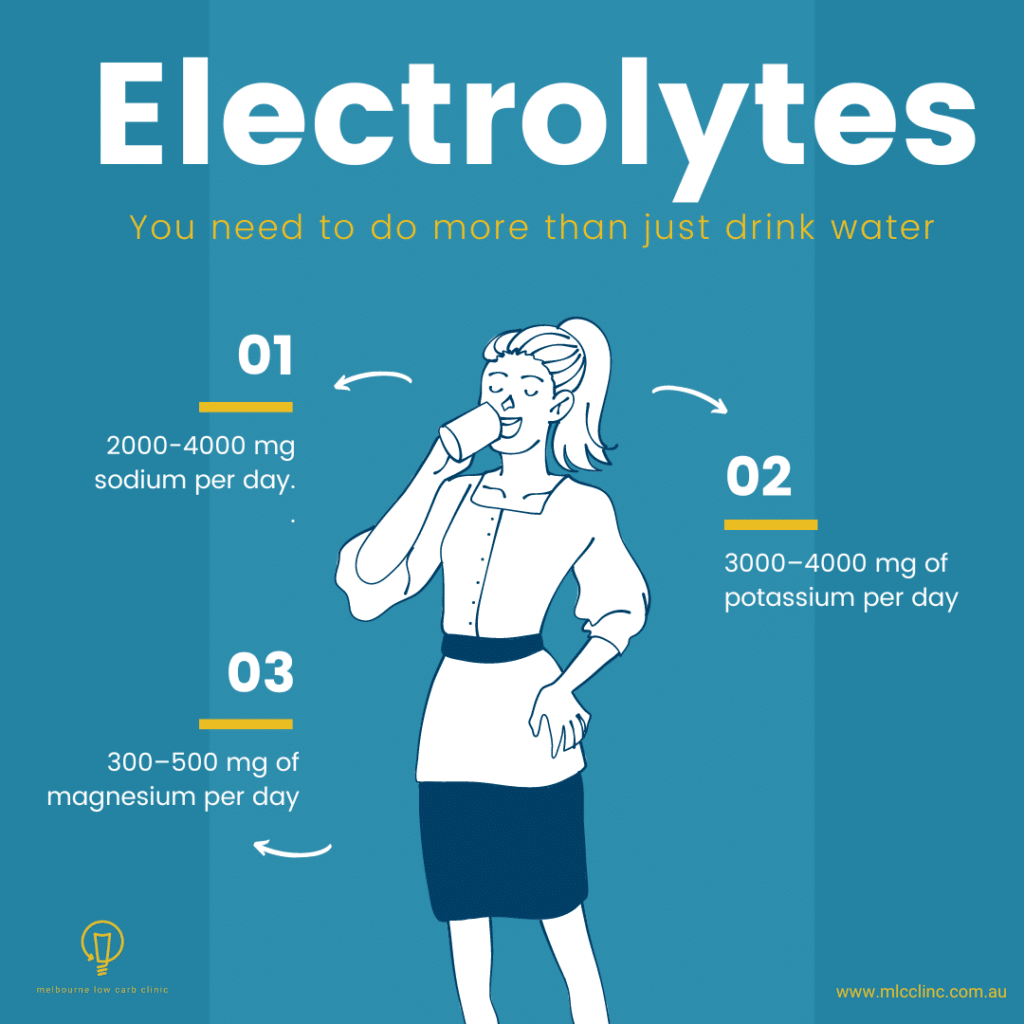
Now, let's look at the specifics for each electrolyte.
Do You Need Electrolyte Supplementation on a Keto Diet?
The article 'Do You Need Electrolyte Supplementation on a Keto Diet?' from Diet Doctor offers an excellent, evidence-based breakdown of each electrolyte's role, deficiency symptoms, and intake recommendations.
Please read the following sections from this article: Start with the table under 'Symptoms of electrolyte deficiency and what to do about them'. This gives a concise overview. Read the section on 'Sodium' to understand its critical role and the specific daily targets (3-7 grams). Read the section on 'Potassium', paying close attention to the list of keto-friendly food sources. Read the section on 'Magnesium', noting the different supplement forms and their properties.
Here's a breakdown of how to apply this information:
- Sodium (3,000–7,000 mg/day): This is the most critical electrolyte to manage. The range may seem high, but it's necessary to offset renal losses. Don't be afraid to salt your food to taste. Drinking 1-2 cups of broth or bouillon daily is a simple and effective tactic. A half-teaspoon of salt contains about 1,150 mg of sodium.
- Potassium (3,000–4,700 mg/day): It's best to get potassium from whole foods first. Excellent keto-friendly sources include avocados, spinach, mushrooms, and salmon. Because high-dose potassium supplements can be risky, a food-first approach is prudent.
- Magnesium (400 mg/day): Many people are deficient in magnesium regardless of diet. It plays a key role in preventing muscle cramps and promoting restful sleep. Good food sources include hemp seeds, pumpkin seeds, and dark chocolate. Supplementation is often beneficial. Forms like magnesium glycinate are well-absorbed and less likely to cause digestive issues.
3. Building Your Personal Protocol: A Practical Framework
Knowing the targets is one thing; implementing them is another. The goal is not to hit these numbers perfectly from day one but to develop a system of starting, monitoring, and adjusting.
Dr. Frank O'Neill provides a detailed personal example of such a system, which is highly relevant even though his context is fasting, as the underlying physiology is identical to keto-adaptation. His discussion on specific supplement forms, particularly for magnesium, directly relates to your goal of cognitive optimization.
The Power of Electrolytes During Fasting (And Preventing Keto Flu)
In this video, 'The Power of Electrolytes', Dr. O'Neill walks through his personal electrolyte strategy, including specific dosages, supplement forms, and the rationale behind his choices.
Watch the following two segments: 04:39 - 13:01: Pay close attention to his reasoning for his sodium intake, why he uses a smaller dose of potassium, and his choice of two different magnesium forms (glycinate for sleep, L-threonate for cognitive benefits). 15:53 - 17:29: This section provides the core framework for finding your own optimal dosage: 'start small and build up'.
Synthesizing this, here is a logical framework for your first week:
1. Establish a Baseline:
- Sodium: Start by adding 1 teaspoon of quality sea salt (e.g., Redmond Real Salt) to your daily intake. This is roughly 2,300 mg of sodium. You can dissolve it in a large water bottle to sip throughout the day or drink it in a glass of water (a "sole").
- Potassium: Intentionally include at least one high-potassium food daily. A large avocado (~1,000 mg) or a large portion of cooked spinach (~840 mg) are excellent choices.
- Magnesium: Consider a magnesium glycinate supplement (~200-400 mg) taken about an hour before bed. This can aid sleep and prevent muscle cramps.
- Hydration: Aim for at least 2.5-3 liters of water per day. Remember, true hydration is water plus electrolytes.
2. Monitor Your Body's Feedback:
- Pay close attention to the symptoms of deficiency: headache, fatigue, muscle cramps, dizziness, or brain fog.
- Also, be aware of signs of excess electrolyte intake, which typically manifest as digestive upset (diarrhea or nausea).
3. Adjust Based on Feedback:
- Feeling sluggish or have a headache? The most likely culprit is low sodium. Try another half-teaspoon of salt in water and see how you feel in 30-60 minutes.
- Experiencing muscle cramps, especially at night? This points towards magnesium or potassium. Ensure you're eating potassium-rich foods and consider your magnesium supplement.
- Feeling great? Your current protocol might be perfect. Maintain it.
- Experiencing digestive issues? You may have taken too much at once. Reduce the dose or spread it out more over the day.
This iterative process of "start, monitor, adjust" transforms electrolyte management from guesswork into a simple system of biofeedback.
Test your understanding!
On day 4 of your ketogenic diet, you feel mentally sharp in the morning but experience significant fatigue and a mild headache in the late afternoon after a stressful day at work. What is the most probable cause, and what is the most logical, immediate action to take?
Show answer
The most probable cause is a dip in sodium and hydration levels, potentially exacerbated by stress. The most logical first step is to consume about a half-teaspoon of salt dissolved in a large glass of water. This directly addresses the most common cause of "keto flu" symptoms and should provide relatively quick feedback on whether it's the correct solution.
4. Critical Considerations and Final Checks
Before you begin, a few final points are essential for a skeptical and safety-conscious approach.
- Who Needs to Be Cautious? If you have any pre-existing medical conditions, particularly high blood pressure, kidney disease, or heart failure, or are on any medication, it is imperative to discuss increasing your electrolyte intake with your doctor.
- Do You Need This Forever? The need for aggressive electrolyte supplementation is highest during the initial 1-4 week adaptation phase. As your body becomes "keto-adapted," your kidneys become more efficient at conserving sodium. Many people find they can reduce their supplementation over time, but paying attention to your body's signals remains key, especially around exercise or in hot weather.
- Integration with Intermittent Fasting: Since you're interested in IF, it's good to know that pure electrolytes (salt, potassium, magnesium powders without sweeteners or fillers) will not break a fast. This makes them a perfect tool to use during your fasting window to maintain energy and focus.
Conclusion
You now have a complete strategic framework for successfully navigating the initial phase of your ketogenic diet. By understanding the "why" behind the keto flu, you can proactively manage its drivers rather than just react to its symptoms.
Key Takeaways:
- The "keto flu" is a predictable and manageable set of symptoms caused by a fluid and electrolyte shift when insulin levels drop.
- The primary management strategy is proactive supplementation of sodium, potassium, and magnesium, along with adequate hydration.
- A "food-first" approach is valuable, especially for potassium, but direct supplementation of sodium and magnesium is often necessary and effective during adaptation.
- Your ideal electrolyte intake is personal. The most effective method to find it is to start with a conservative baseline, monitor your body's feedback, and adjust your intake accordingly.
Preview of the next lesson:
With your macro targets calculated and your adaptation strategy in place, you have the foundational blueprint to begin. In our next lesson, we will build on this by addressing long-term sustainability. We'll focus on "Formulate principles for food selection based on macronutrient content and nutrient density," ensuring your diet is not only ketogenic but also rich in the micronutrients essential for healthspan and peak performance.