Hello! Welcome to the penultimate lesson of our course.
In the previous lesson, we established a framework for internal troubleshooting—using a combination of subjective feedback and objective data to manage and optimize your own metabolic system. Now, we shift our focus outward. Your goal is to achieve mental sharpness and longevity, and to do that sustainably, you need to be able to navigate the constant stream of information and misinformation about nutrition.
This lesson will equip you with a robust framework for critically assessing nutrition research. Given your background and skeptical mindset, you will find this a natural extension of the logical principles we've applied so far. We will cover the hierarchy of scientific evidence, common biases like confounding variables and funding issues, and how to tell if a study's findings are truly meaningful. This directly addresses our learning outcome and prepares you for our final, practical application.
1. A Framework for Evidence: The Hierarchy Pyramid
The first principle of critical assessment is understanding that not all evidence is created equal. A single personal anecdote is not equivalent to a large, well-designed clinical trial. The "Hierarchy of Evidence" is a mental model used by scientists and clinicians to rank different types of studies by their reliability and their ability to establish a cause-and-effect relationship.
To get a clear, structured overview of this pyramid, let's watch a few key segments from the following video. It uses the question "Does drinking pop cause type 2 diabetes?" to walk through each level of evidence.
How to Study Studies, Explained by a Nutrition Scientist | Hierarchy of Evidence Series Episode 1
This video from Nourishable provides an excellent introduction to the hierarchy of evidence. It systematically explains each major type of study design and its position within the pyramid framework.
Please watch the following four segments in order: Introduction & The Pyramid (00:00:42 - 00:02:30): Introduces the concept and the pyramid structure. Prospective Cohort Studies (00:09:21 - 00:13:16): Explains this common type of observational study. Randomized Controlled Trials (RCTs) (00:13:16 - 00:16:30): Describes the 'gold standard' for establishing causation. Meta-Analyses (00:16:30 - 00:18:22): Explains the highest level of evidence, which combines data from multiple studies.
To solidify this concept, here is a classic visual representation of the pyramid. It's a useful reference to keep in mind as we move forward.
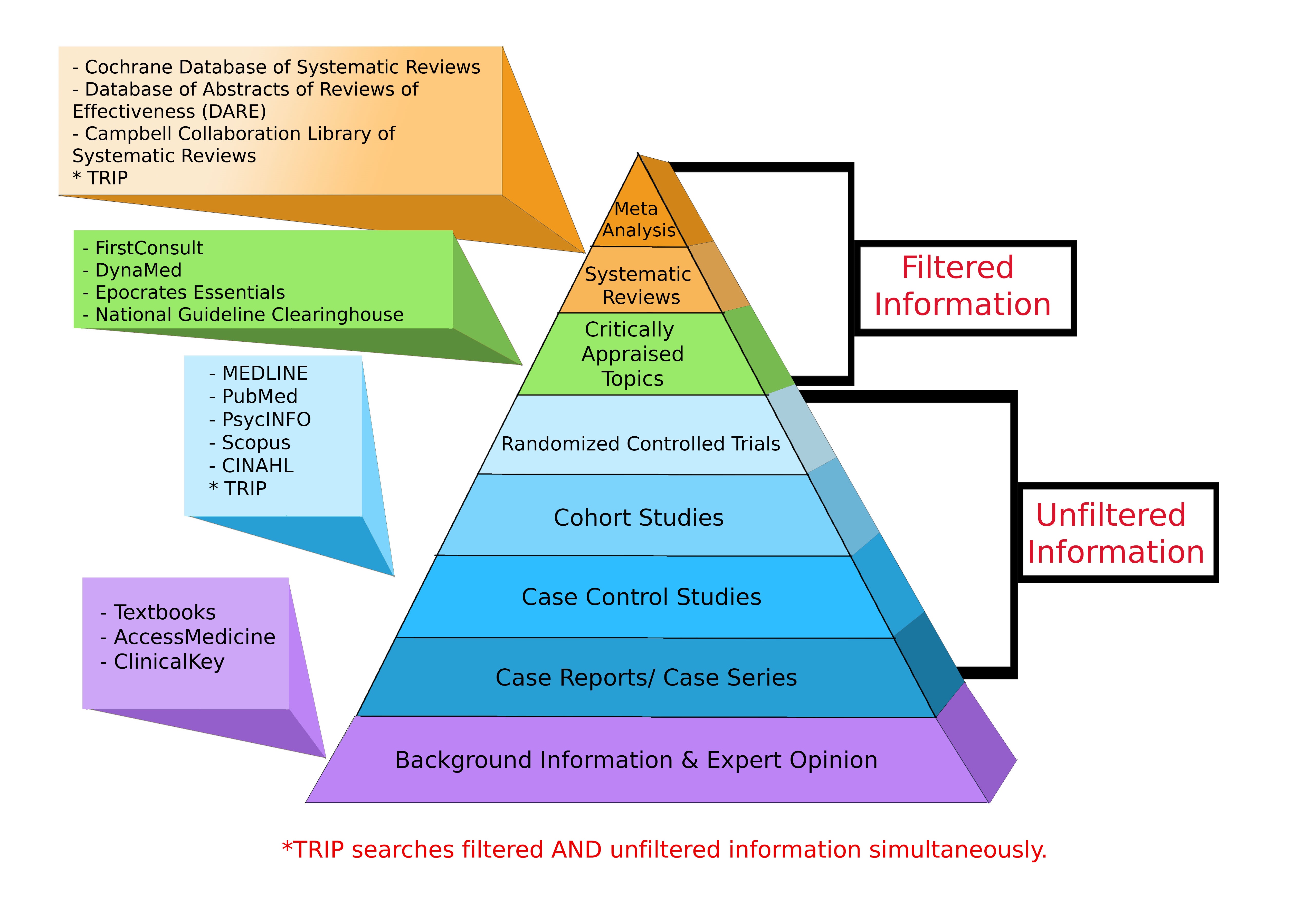
Summary of the Hierarchy:
- Top Tier (Systematic Reviews & Meta-Analyses): These studies collect and statistically combine the results of multiple independent studies, providing the most robust overview of the available evidence.
- High Tier (Randomized Controlled Trials - RCTs): The gold standard for determining cause-and-effect. By randomly assigning participants to a treatment or a control group, they isolate the effect of a single variable.
- Mid Tier (Observational Studies - Cohort, Case-Control): These studies observe groups of people over time (cohort) or look backward from a disease state (case-control). They are excellent for identifying correlations and long-term trends in the real world but cannot prove causation due to confounding factors.
- Low Tier (Case Reports, Animal/Cell Studies, Expert Opinion): These are valuable for generating hypotheses but are not strong evidence for making broad health recommendations for humans.
2. The Skeptic's Lens: Bias, Confounding, and Other Pitfalls
The evidence pyramid provides an ideal structure, but the reality of nutrition research is often far messier. Professor John Ioannidis, a renowned meta-researcher from Stanford, is famous for his work exposing the biases and flaws inherent in much of the scientific literature. His perspective is a vital counterbalance to over-optimistic headlines.
John Ioannidis: The role of bias in nutritional research
In this talk, Professor Ioannidis provides a sobering critique of nutritional research. His points will resonate with a skeptical and logical mindset, highlighting the systemic issues that can lead to unreliable findings.
Please watch these two clips: Summary of Biases (00:00:45 - 00:01:48): Ioannidis gives a rapid-fire overview of the key problems in nutrition research. Observational vs. Randomized Evidence (00:05:18 - 00:08:55): He explains why observational findings are so often refuted by later RCTs and why the classic criteria for causality often fail in nutrition.
From this critical perspective, we can identify several key issues to watch for:
Confounding Variables
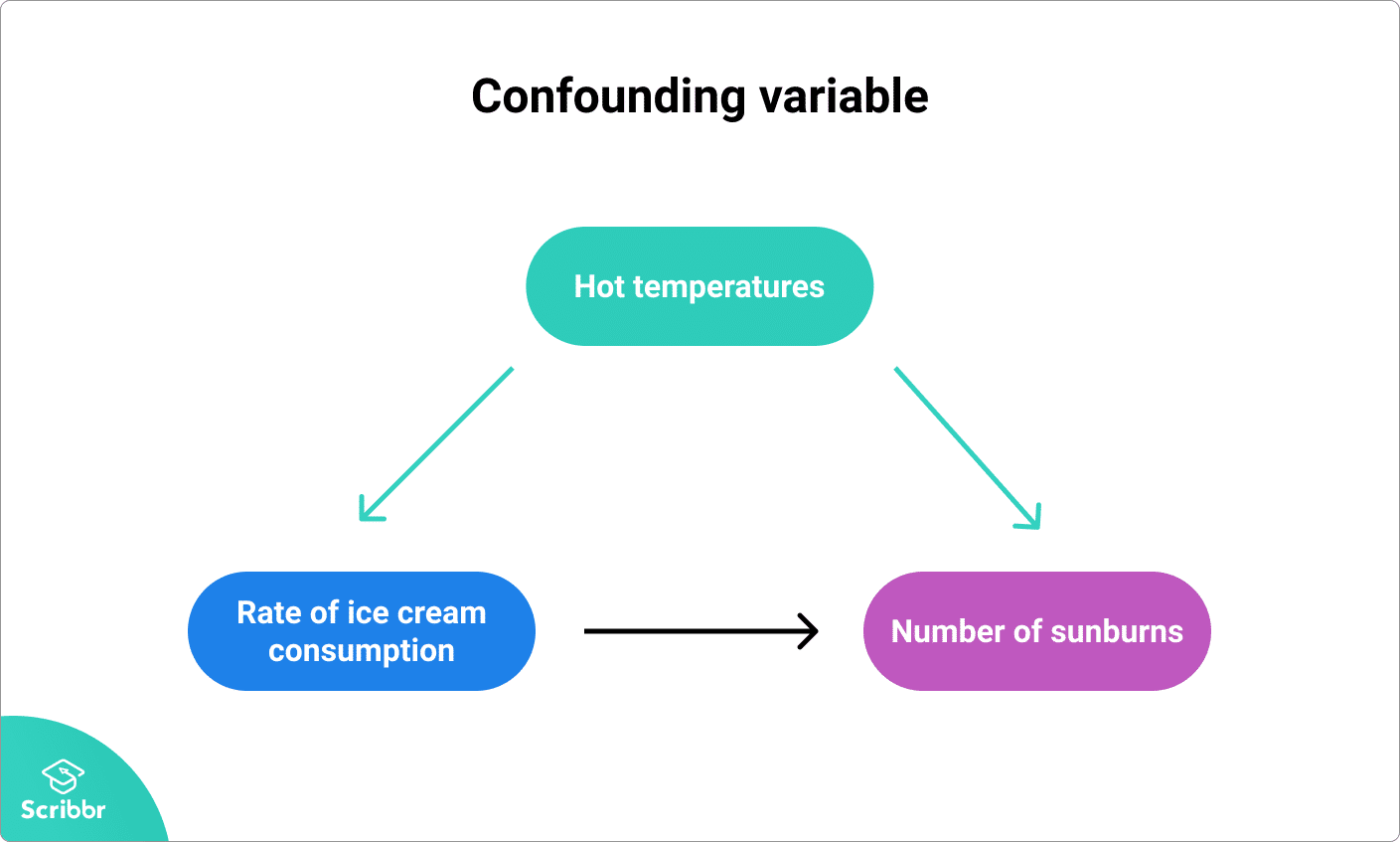
This is the single biggest weakness of observational studies. A confounding variable is a third factor that is associated with both the exposure (e.g., diet) and the outcome (e.g., disease), creating a spurious correlation. For example, people who eat a lot of red meat might also be more likely to smoke and less likely to exercise. Is it the meat, the smoking, or the lack of exercise that causes the health problems? Observational studies can't definitively say.
Measurement Error & Recall Bias
Most large-scale observational studies rely on Food Frequency Questionnaires (FFQs), where people are asked to remember what they ate over the past year. As Ioannidis points out, this data is notoriously inaccurate. People forget, misjudge portion sizes, or subconsciously report what they think they should have eaten.
Funding Bias and Conflicts of Interest
Research funded by industry groups (e.g., a dairy council funding a study on milk) has been shown to be more likely to produce results favorable to the funder's interests. This doesn't mean the science is fraudulent, but it can influence the research questions asked, the interpretation of results, and what gets published. Similarly, researchers who have written popular diet books have a non-financial conflict of interest in producing research that supports their public stance.
Statistical vs. Clinical Significance
A study might find a "statistically significant" result, meaning it's unlikely to be due to chance. However, the effect size might be so small that it's clinically meaningless. For example, a diet might lead to a statistically significant weight loss of 1 pound over a year. While technically a "real" effect, it has no practical, clinical relevance for an individual's health. Always look at the magnitude of the effect, not just whether it's "significant."
Test your understanding!
You read a headline: "New Cohort Study Shows Daily Avocado Consumption Reduces Risk of Heart Attack by 30%." The study followed 50,000 people for 20 years.
Using the framework we've just discussed, what are the first three critical questions you would ask before accepting this claim?
Show answer
- Causation vs. Correlation: Since this is a cohort study (observational), it cannot prove that avocados cause the risk reduction. It only shows a correlation.
- Confounding Variables: What other behaviors might people who eat avocados daily have in common? They might have higher incomes, be more health-conscious overall, exercise more, smoke less, and eat more fruits and vegetables in general. Any of these could be the true cause of the reduced heart attack risk. The researchers may try to statistically adjust for these, but it's never perfect.
- Effect Size (Relative vs. Absolute Risk): A 30% reduction sounds impressive, but it's a relative risk reduction. What is the absolute risk reduction? If the baseline risk of a heart attack in the non-avocado group was 1%, a 30% reduction means the risk in the avocado group is 0.7%. This is a tiny absolute risk reduction of 0.3%, which is far less dramatic than the headline suggests.
3. A Practical Checklist for Reading Research
To tie this all together, we can create a simple but powerful checklist to use whenever you encounter a new study or a media report about one. The article "A simple guide to reading—and understanding—nutrition studies" by Levels provides an excellent basis for this.
Here is a summary of key questions to ask, incorporating everything we've learned:
- What is the study design? (Where does it sit on the evidence pyramid?) Is it an RCT capable of showing causation, or an observational study showing only correlation?
- Who were the subjects? Were they healthy individuals like yourself, or people with a pre-existing disease? Findings in one group may not apply to another.
- How was the data collected? Was it based on unreliable food questionnaires, or were meals provided and controlled in a lab setting?
- Who funded the study? Check the "Funding" and "Conflicts of Interest" sections of the paper. Is there a potential for bias?
- What are the potential confounders? Did the authors acknowledge and attempt to statistically control for other lifestyle factors?
- Is the effect size clinically meaningful? Look past the p-values and "statistical significance." Is the absolute change in a health marker large enough to matter in the real world?
Conclusion
You now have a multi-layered framework for critically evaluating nutrition research. This is an essential skill for anyone looking to optimize their health based on evidence rather than marketing.
Key Takeaways:
- The Hierarchy of Evidence is your first filter: Use it to categorize the strength of a claim, with meta-analyses and RCTs at the top and observational studies further down.
- Maintain healthy skepticism, especially with observational studies: Always ask about confounding variables—this is where most headlines overstate their claims.
- Follow the money (and the bias): Be aware of funding sources and other conflicts of interest that could influence results.
- Distinguish between statistical noise and a meaningful clinical signal: A "significant" result isn't always a significant health benefit.
Preview of the final lesson:
In our final lesson, we will put this new critical thinking framework to the test. You will apply this assessment framework to a popular media claim about the ketogenic diet or intermittent fasting. This will be the capstone exercise for the course, solidifying your ability to act as your own discerning, logical health analyst.