Hello! Welcome back to our module on Longevity and Metabolic Health.
In our last lesson, we established a clear framework for how a ketogenic diet can powerfully improve insulin sensitivity—a major positive for long-term health. We saw that by reducing the carbohydrate load, the diet breaks the cycle of hyperinsulinemia and allows cells to regain their sensitivity.
Today, we'll examine the other side of the cardiovascular health equation. While improved insulin sensitivity is a significant benefit, a diet high in fat raises an obvious and critical question: what does it do to blood lipids? This is one of the most contentious topics surrounding ketogenic diets, and one that requires a skeptical and nuanced evaluation.
Our learning outcome for this lesson is to evaluate the evidence on ketogenic diet impacts on cardiovascular markers (LDL, HDL, and triglycerides). We will separate consistent findings from areas of active debate and build a framework to help you interpret your own response, should you choose to experiment.
1. The Standard Lipid Panel: A Quick Primer
Before we analyze the diet's effects, let's quickly define the key players in a standard lipid panel. You've likely encountered these in financial risk models; here, they are markers of biological risk.
- Triglycerides (TGs): These are fats circulating in your blood for energy. High levels are typically a result of the liver converting excess carbohydrates (sugar) into fat. In general, lower is better.
- High-Density Lipoprotein Cholesterol (HDL-C): Often called "good" cholesterol. HDL acts like a scavenger, collecting excess cholesterol from the arteries and transporting it back to the liver for disposal. In general, higher is better.
- Low-Density Lipoprotein Cholesterol (LDL-C): Often called "bad" cholesterol. LDL's job is to transport cholesterol from the liver to cells that need it. However, high levels are associated with the buildup of plaque in arteries (atherosclerosis).
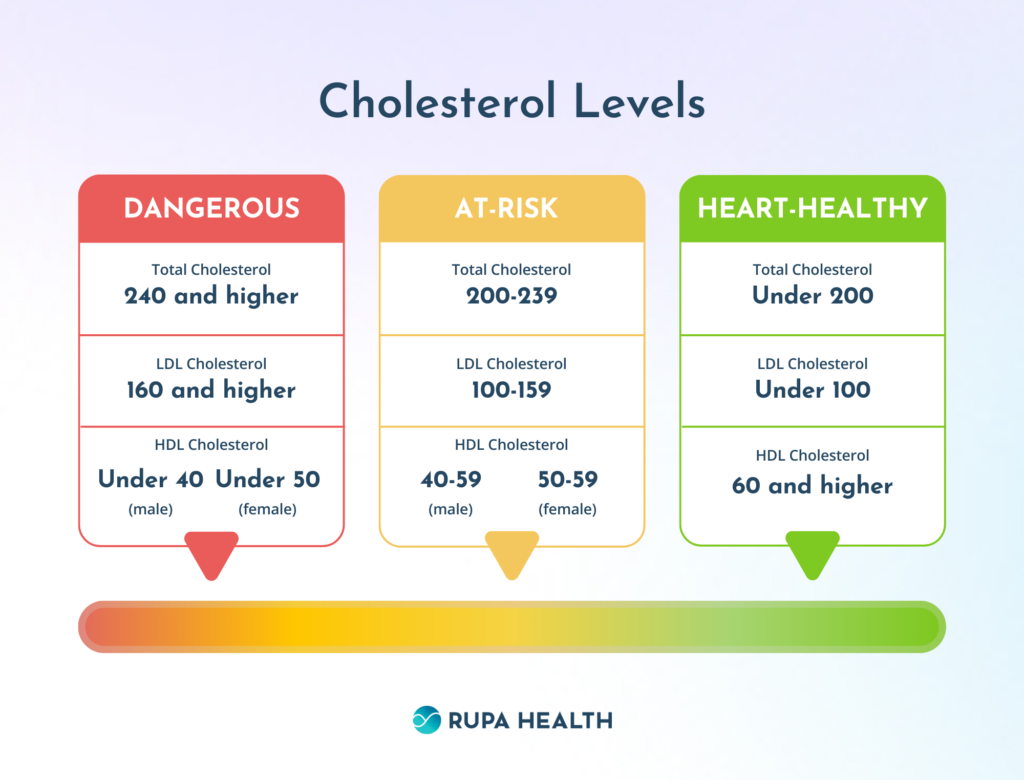
The conventional view holds that for optimal cardiovascular health, one should aim for low TGs, high HDL, and low LDL. Now, let's see how a ketogenic diet stacks up against these metrics.
2. The Consistent Findings: Triglycerides and HDL
On two of the three main markers, the evidence is strong and largely undisputed. Ketogenic diets tend to produce significant improvements in both triglycerides and HDL cholesterol.
The Ketogenic Diet: Clinical Applications, Evidence-based ...
This chapter from the National Library of Medicine's StatPearls collection provides a clinical overview of the ketogenic diet. It confirms the typical effect on TGs and HDL.
First, read the final sentence in the introductory section, starting 'Multiple randomized controlled trials...'. Then, in the 'Practical Counseling and Follow-Up Strategies' section, read the first sentence of the second paragraph, starting 'Meta-analyses show...'. Notice how both sections independently confirm the favorable changes in triglycerides and HDL.
The logic behind this is straightforward and connects to our last lesson:
- Lower Triglycerides: By severely restricting carbohydrates, you remove the primary substrate that the liver uses to create new triglycerides. Your body also becomes very efficient at burning existing triglycerides for fuel.
- Higher HDL: The mechanisms are complex, but a metabolism that is actively trafficking and using fat for energy appears to upregulate the systems that produce HDL particles.
These two changes are considered major improvements in cardiovascular risk profile. If the story ended here, it would be simple. But it doesn't.
3. The Great LDL Debate
The impact of a ketogenic diet on LDL cholesterol is where the controversy lies. This is not a simple story with a single outcome; the response is highly individual and depends heavily on your personal metabolic context.
The "Average" Response
Contrary to the popular belief that a high-fat diet must raise LDL for everyone, large-scale analyses often show a neutral or even beneficial effect on average, particularly in populations with pre-existing metabolic issues.
Keto Diet and Heart Disease: What New Research Reveals About Cardiac Risk with Dr. Bret Scher
In this video, cardiologist Dr. Bret Scher discusses a meta-analysis of 29 clinical trials looking at ketogenic diets in people with type 2 diabetes. Pay close attention to the overall finding for LDL cholesterol.
Watch from 02:07 to 04:55. Dr. Scher details the study's findings on markers like blood sugar, triglycerides, and HDL. The key point for our lesson is the conclusion regarding total cholesterol and LDL. Note his mention of other risk markers like ApoB and overall calculated cardiac risk.
The key takeaway is that in these studies, the significant improvements in triglycerides, HDL, blood pressure, and insulin resistance were not accompanied by a statistically significant increase in LDL. This challenges the simplistic assumption that fat-in equals cholesterol-up for everyone.
However, "on average" can hide significant variation. This leads us to a specific subgroup that is highly relevant to you.
The Lean Mass Hyper-Responder (LMHR)
A specific phenotype has been identified, primarily through citizen science efforts led by engineer-turned-researcher Dave Feldman. An LMHR is typically a lean, fit, and metabolically healthy individual who, upon starting a ketogenic diet, experiences a dramatic increase in LDL cholesterol, often to levels considered extremely high by conventional standards.
This might sound alarming, but the crucial question is: does this high LDL in this specific context carry the same risk? New research is beginning to challenge that assumption.
Sky High LDL and No Heart Disease? Results from Dave Feldman’s New Study
Dave Feldman recently co-authored the first study to specifically investigate the LMHR phenotype, using advanced heart scans (CT angiograms) to measure actual plaque. This interview with Dr. Bret Scher discusses the surprising results.
This is the core of the controversy. Please watch these three segments carefully: Study Design & Baseline (03:20 - 07:56): Understand who was studied (lean, keto-adapted, very high LDL) and the surprising baseline finding that there was no association between their LDL level and how much plaque they already had. ApoB vs. LDL & Primary Finding (07:56 - 11:41): Learn the difference between LDL-C and ApoB (a more modern risk marker) and the study's main result: no correlation between the level of LDL/ApoB and the progression of plaque over a year. Plaque Progression & Regression (21:26 - 28:10): Focus on the discussion of what did predict plaque growth (pre-existing plaque) and the fact that some participants saw plaque regress despite extremely high LDL.
This research is provocative. It suggests that in a metabolically healthy, low-inflammation context, high LDL may not be the primary driver of atherosclerosis. The strongest predictor of future plaque was the presence of existing plaque, not cholesterol levels. This is a paradigm-shifting finding, though it comes from a single, small study and needs replication.
The Observational Counterpoint
To maintain a balanced and skeptical perspective, we must consider conflicting evidence. A recent observational study presented at the American College of Cardiology conference garnered significant media attention for linking a "keto-like" diet to increased cardiovascular risk.
'Keto-Like' Diet May Be Linked to Higher Risk of Heart ...
This press release from the American College of Cardiology summarizes a large observational study from the UK Biobank that found a concerning link between a high-fat, low-carb diet and heart disease.
Read the following sections: Section starting 'For this study, Iatan and her colleagues defined...' The following section detailing the results. The section on the study's limitations. As you read, critically assess the methodology. How did they define who was on a 'keto-like' diet? What kind of relationship can an observational study show?
This study paints a very different picture. However, its limitations are significant:
- Observational: It can only show an association, not causation.
- Dietary Data: It relied on a single 24-hour dietary questionnaire to classify a person's diet over an average of 12 years. This is a weak method for assessing long-term dietary patterns.
- Lack of Context: It provides no information on the participants' overall metabolic health, insulin sensitivity, or triglyceride/HDL levels. We don't know if the group with high LDL also had high triglycerides and low HDL (a classic unhealthy pattern) or if they fit the LMHR profile (high LDL, low TGs, high HDL).
This contrast between Feldman's mechanistic study and the large observational study is a perfect example of why a critical, logical approach to nutrition science is essential.
Test your understanding!
A colleague who knows you're exploring this topic shows you the ACC press release ("Keto-Like Diet Linked to Higher Heart Disease Risk") and expresses concern. Based on the different types of evidence we've just discussed, what two or three key questions or critiques would you raise to put that single press release into a broader context?
Show answer
You could raise several points:\n1. Study Design: You could ask if the study proves causation or just an association. Since it's observational, it can't prove the diet caused the heart disease, only that they are linked.\n2. Dietary Assessment: You could question the reliability of using a single 24-hour food recall to define someone's diet for over a decade. Did these people eat this way consistently?\n3. Lack of Metabolic Context: You could point out that the study doesn't distinguish between different metabolic profiles. It doesn't tell us if the individuals with high LDL were metabolically healthy "Lean Mass Hyper-Responders" (with low triglycerides and high HDL) or metabolically unhealthy individuals. The Feldman study suggests this context is critical to understanding the actual risk.
Conclusion: A Framework for Evaluating Lipid Changes
We've covered a lot of complex and conflicting information. Let's distill it into a practical framework for evaluation. The impact of a ketogenic diet on your cardiovascular markers is not a one-size-fits-all phenomenon.
Key Takeaways:
- Consistent Benefits: Expect your triglycerides to decrease and your HDL to increase. These are both strong indicators of improved metabolic health and reduced cardiovascular risk.
- The LDL Variable: The LDL response is highly individual. It might stay the same, decrease, or, if you fit the lean and athletic profile, increase dramatically.
- Context is King: The central question is whether high LDL in the context of excellent metabolic health (low triglycerides, high HDL, low insulin) carries the same risk as high LDL in an unhealthy context. Emerging evidence suggests it may not, but this is not yet medical consensus.
- Evidence Hierarchy Matters: A small, mechanistic study with direct plaque imaging (like Feldman's) asks a different and potentially more precise question than a large observational study with weak dietary data. Both have a place, but they must be weighed accordingly.
For someone like yourself, this means that if you were to experiment, monitoring your full lipid panel—not just LDL in isolation—would be crucial. The key is to watch the pattern: are TGs going down and HDL going up as LDL rises? This "triad" gives a more complete picture than a single number.
In our next lesson, we will continue to focus on effects relevant to an already-fit individual. We will explain the effects of a ketogenic diet on body composition and muscle mass, another area where context is critical.