Introduction
Welcome back! In our previous lesson, you evaluated the three potential project directions—Flaky Test Detection, Technical Debt Prioritization, and Test Case Generation—using structured frameworks to align them with your goals, skills, and timeline. The objective was to make an informed choice about which project you will build throughout the rest of this course.
Now that you've chosen your path, this lesson tackles the immediate next step: translating that high-level project idea into a concrete, achievable plan. Your learning outcome is to define a Minimum Viable Product (MVP) scope for your chosen project.
An MVP is the smallest, simplest version of your product that still delivers core value and allows you to test your primary hypothesis. For your goal of "building and shipping" a tool in 1-2 months, a ruthlessly defined MVP is not just a good practice; it's essential for success. We will focus on defining the "thinnest possible slice" of functionality that you can build, test, and ship.
Why an AI MVP is Different
First, it's important to understand that building an MVP for an AI-powered product has unique challenges compared to traditional software. It's not just about building a minimal set of features; it's about validating that an AI model can genuinely solve a problem, even in a basic form.
How to Build an AI MVP: Step-by-Step Guide for 2025
To understand these distinctions, let's start with an article from Classic Informatics that clearly outlines why AI MVPs are a special category.
Please read the introductory section and the section titled 'Why AI MVPs Are Different'. Focus on the three key differences: data dependency, model development vs. software development, and the iterative nature of AI.
The key takeaways are that your MVP must be built around validating the AI's performance on real (or realistic) data, and it's designed to be the first step in an iterative cycle of improvement. It doesn't need to be perfect; it needs to be testable.
The Core Components of an MVP Scope
To define your MVP scope, you need to answer a few critical questions. A well-defined scope acts as your north star, keeping you focused and preventing "feature creep"—the tendency to add more and more features, which is the enemy of an MVP.
How to Build an AI MVP: Step-by-Step Guide for 2025
The same article provides a great breakdown of the essential components of an AI MVP. We will use this as the foundation for our scoping framework.
Read the section 'Key Components of an AI MVP'. Pay close attention to the five pillars: Problem Statement, Dataset, Model Choice, UX & Interface, and Evaluation Metrics.
Building on these components, we can create a practical template to define your MVP. This will be the main artifact you produce in this lesson.
A Framework for Scoping Your AI/QA Project
Here is a structured framework to guide you. For an MVP, your answers should be as simple and constrained as possible.
- Project Title: A clear, descriptive name for your tool.
- Problem Statement: A single sentence describing the pain point you are solving for a specific user.
- Core Job-To-Be-Done (JTBD): What is the one critical task your user "hires" your product to do?
- Core Functionality (The "Thin Slice"): Describe the simplest possible end-to-end workflow. What is the input, what does the tool do, and what is the output?
- Data Source: What specific, accessible data will you use for the MVP?
- Model Choice: What is the simplest possible model or heuristic that can power the core functionality? Hint: Often, the best MVP starts with a simple rule-based system, not a complex ML model.
- User Interface (UI): How will the user interact with the tool? For an MVP, this is often a command-line interface (CLI).
- Success Metric: What is the one measurable outcome that tells you the MVP is working and delivering value?
Example MVP Scopes for Your Project Ideas
To make this framework concrete, here are example MVP scopes for each of the three project directions. Notice how "minimum" they are. The goal is to get to a working, value-delivering state as quickly as possible.
Example 1: Flaky Test Detector MVP
- Project Title:
FlakeFinder CLI - Problem Statement: For a QA engineer in a project with a large test suite, it's hard to distinguish true code-breaking failures from random, flaky test failures in CI/CD, which erodes trust and slows down development.
- Core Job-To-Be-Done (JTBD): "Help me identify which tests in my suite are probably flaky so I can quarantine or fix them."
- Core Functionality (The "Thin Slice"): A CLI tool that ingests a directory of historical test reports (e.g., JUnit XML files), analyzes the pass/fail history of each test, and outputs a list of test names flagged as potentially flaky.
- Data Source: A collection of JUnit XML reports from a public open-source project's GitHub Actions runs (e.g., from a project like
pandasorscikit-learn). - Model Choice: A simple heuristic. No ML model initially. A test is flagged if it meets a simple condition, such as:
(number of status flips) / (number of runs) > 0.3. This allows you to build the entire data pipeline and UI before worrying about model training. - User Interface (UI): A CLI using Python's
TyperorClick.- Input:
python flake_finder.py --log-dir ./ci_logs - Output: A printed list of test names:
['test_api_connection', 'test_user_dashboard_rendering']
- Input:
- Success Metric: The tool correctly identifies at least 2 out of 5 known flaky tests in a sample dataset without flagging any stable tests (focus on precision first).
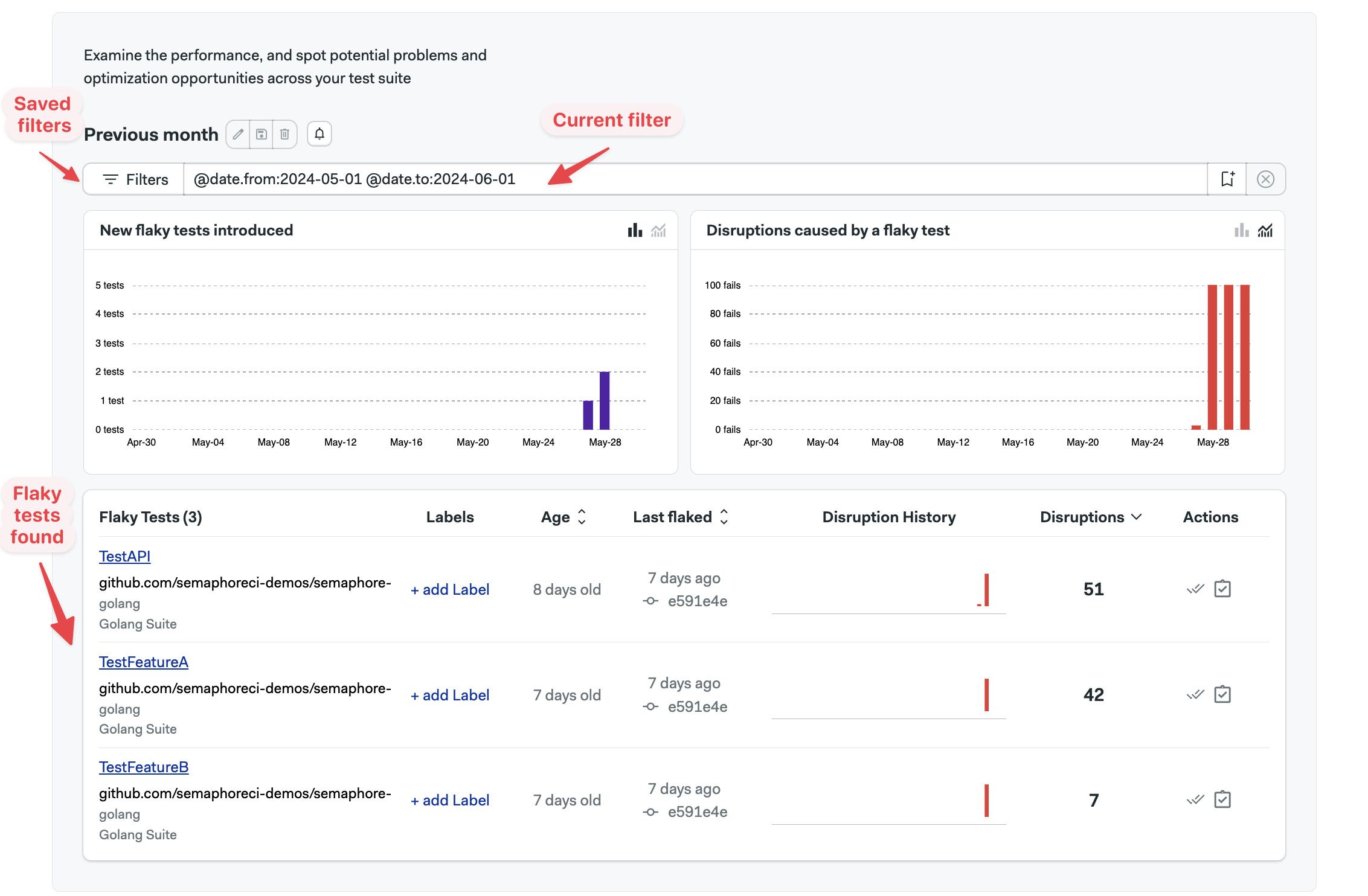
The MVP provides immediate value, and its output can be compared to the vision of a full-fledged tool.
Example 2: Automated Test Case Generation MVP
- Project Title:
TestGenie - Problem Statement: For a Python developer, writing boilerplate unit tests for simple, pure functions is a repetitive and time-consuming task.
- Core Job-To-Be-Done (JTBD): "Help me generate a starting point for a unit test for a specific Python function."
- Core Functionality (The "Thin Slice"): A CLI that takes a path to a Python file and a function name as input, calls an LLM API with the function's source code, and prints a single, executable
pytesttest case to the console. - Data Source: The source code of the target function itself (its signature, body, and docstring).
- Model Choice: A zero-shot API call to a readily available LLM like OpenAI's
gpt-3.5-turboor Anthropic'sclaude-3-haiku. The prompt will be simple and direct. - User Interface (UI): A CLI.
- Input:
python test_genie.py --file utils.py --func format_date - Output: A string of Python code for one
pytesttest function, printed to standard output.
- Input:
- Success Metric: For a set of 10 simple, pure utility functions, the generated test code is syntactically correct and runs without error for at least 8 of them.
Example 3: Technical Debt Prioritization MVP
- Project Title:
DebtRanker - Problem Statement: For a team lead, the tech debt backlog is overwhelming, and it's unclear which refactoring efforts will provide the most benefit in terms of reducing future bugs and maintenance overhead.
- Core Job-To-Be-Done (JTBD): "Help me find the files in my codebase that are the most urgent candidates for refactoring."
- Core Functionality (The "Thin Slice"): A CLI tool that scans a local Git repository, calculates a simple "debt score" for each
.pyfile based on complexity and churn, and prints a top-10 ranked list of files to inspect. - Data Source: The project's Git history (via
GitPython) and source code (for complexity analysis using a library likeradon). - Model Choice: A simple, weighted heuristic. No learning-to-rank model yet. The score is a simple formula, for example:
Score = (0.6 * Cyclomatic_Complexity) + (0.4 * Recent_Churn), where churn is the number of commits in the last 90 days. - User Interface (UI): A CLI.
- Input:
python debt_ranker.py --repo-path ./my_project - Output: A printed, ranked list:
1. models.py (Score: 88.5)\n2. api_views.py (Score: 76.2)\n...
- Input:
- Success Metric: A senior developer (or you, acting as one) agrees that at least 3 of the top 5 files identified by the tool are well-known "problem files" in the codebase.
Avoiding Common MVP Pitfalls
As you define your scope, it's tempting to add "just one more thing." Resist this temptation. The goal of an MVP is to learn as quickly as possible with the least amount of effort.
How to Build an AI MVP: Step-by-Step Guide for 2025
The 'How to Build an AI MVP' guide concludes with a list of common mistakes. Keeping these in mind will help you stay focused on what truly matters for your first version.
Read the section 'Common Pitfalls to Avoid'. Pay special attention to 'Overengineering the first version' and 'Building custom models too early'.
The most important takeaway for your project is to start with a simple heuristic or an off-the-shelf API. You have the skills to build complex models, but the MVP stage is about proving the end-to-end value proposition first. You can always swap in a more sophisticated ML model in version 2.
Your Task: Define Your MVP Scope
Now it's your turn. Based on the project you chose in the previous lesson, fill out the MVP scoping framework below. Be strict, be specific, and prioritize simplicity and speed. This document will become the blueprint for your work in the upcoming modules.
My Project MVP Scope
- Project Title:
- Problem Statement:
- Core Job-To-Be-Done (JTBD):
- Core Functionality (The "Thin Slice"):
- Data Source:
- Model Choice:
- User Interface (UI):
- Success Metric:
Conclusion
In this lesson, you've learned how to transition from a broad project idea to a tightly defined, actionable MVP scope. You now understand that an AI MVP's primary purpose is to validate the core hypothesis of your tool with minimal effort.
Key Takeaways:
- An AI MVP is distinct from a traditional software MVP; it prioritizes validating the model's value and is inherently iterative.
- A strong MVP scope is defined by a clear Problem Statement, a single Job-To-Be-Done, and a measurable Success Metric.
- The "thin slice" of functionality should be the simplest possible end-to-end workflow.
- For your first version, always prefer a simple heuristic or a pre-trained API over building a custom model from scratch. This allows you to build and test the surrounding pipeline first.
Preview of the Next Lesson:
With your MVP scope defined, you know what you're building. The next lesson, "Sketch a block diagram of the end-to-end data and model pipeline for the MVP," will focus on how you'll build it. You will translate your scope into a technical architecture, outlining how data flows from its source, through your tool, and to the final output.