Welcome to the fifth lesson in our course. We're now shifting from the world of documents into the physical reality of logistics. In the last lesson, you learned that the Commercial Invoice and Packing List are not just attachments; they are critical data sources for customs and physical handling. You saw how consistency between the B/L, CI, and PL is essential for a smooth "data-matching workflow" at the border.
Today, we'll connect another one of your past data entry tasks to tangible, real-world actions. We're going to decode Step 3 of your old workflow: "Creating the Container." You mentioned inputting whether a container was FCL or LCL, along with its dimensions, weight, and package quantity. By the end of this lesson, you'll understand how clicking "FCL" versus "LCL" in your system dictates two completely different physical journeys for a container and why the dimension and weight data you entered was the foundation for pricing, planning, and safety in warehouse operations.
FCL vs. LCL: The Fundamental Choice
The first piece of data you entered when creating a container file was likely its shipment type: FCL (Full Container Load) or LCL (Less than Container Load). This single choice determines the entire physical handling strategy for the cargo.
- FCL (Full Container Load): One shipper books an entire container for their exclusive use. Even if the container isn't completely full, they pay for the entire space. The container is loaded and sealed at the shipper's origin facility and is not opened until it reaches the final consignee's destination.
- LCL (Less than Container Load): Multiple shippers have cargo too small to fill a whole container. An NVOCC (like your former employer) consolidates these smaller shipments together into one shared container.
The business logic behind choosing one over the other often comes down to volume and cost. There's a "tipping point" where it becomes cheaper to book a full container even if you can't fill it. The following video provides an excellent comparison of FCL and LCL, including a concrete cost breakdown.
FCL vs LCL/ Full container load vs Less container load
This video from Avail Logistics clearly breaks down the FCL vs. LCL decision, focusing on the practical cost implications.
Watch the initial explanation of FCL and LCL, where the narrator defines the volume thresholds. Then, pay close attention to the cost breakdown example. This will show you exactly how the costs differ and why LCL isn't always the cheaper option for larger "small" shipments.
As you saw in the video, FCL costs are typically a flat fee per container, while LCL costs are based on the volume the cargo occupies, measured in Cubic Meters (CBM). This is why the 'dimensions' data you entered was so critical—it was used to calculate the billable volume for LCL shipments.
The LCL Reality: Consolidation and the CFS
While an FCL shipment follows a simple path (shipper -> port -> consignee), an LCL shipment involves a crucial extra step at both ends of the journey. This step takes place at a specialized warehouse called a Container Freight Station (CFS).
The CFS is the operational heart of LCL shipping. Your NVOCC likely operated its own CFS or had a contract with a third-party CFS.
- At Origin (Consolidation): The CFS receives individual LCL shipments from various shippers. Warehouse staff then plan and physically load ("stuff") these different cargoes into a single shared container. This process is called consolidation or groupage.
- At Destination (Deconsolidation): The container arrives at the destination port and is moved to the local CFS. Here, staff open the container and unload ("strip" or "devan") the cargo, separating the individual shipments for each consignee.
This infographic perfectly illustrates the central role of the CFS in the LCL journey.

When you created a file in your system and flagged it as "LCL," you were signaling that this cargo would not go directly to the final customer upon arrival. Instead, you were instructing the entire operational chain that it needed to be routed to a specific CFS for the critical deconsolidation process.
The following article explains the LCL process and the key cost components tied to these CFS operations.
LCL Shipping: Meaning, Cost & Shipping Rates | Freightos
This guide from Freightos provides a clear definition of LCL shipping and breaks down the associated costs, which are directly linked to the physical handling at the CFS.
First, read the section What is LCL shipping? to solidify the definition. Next, focus on the section LCL Shipping Costs, which lists the steps of the journey and highlights that the charges at the CFS for consolidation and deconsolidation can be very significant. Finally, read the comparison LCL or FCL, which explains the "tipping point" and the other benefits of FCL, like speed and reduced handling.
Inside the Warehouse: The CFS Workflow
Let's zoom in on what physically happens at the CFS. Your data entry of container type, cargo description, dimensions, and weight was the blueprint that the CFS staff used to do their job.
The following video from Flexport provides a superb visual walkthrough of the entire LCL journey, bringing the concepts of CFS, consolidation, and deconsolidation to life.
Ocean Freight 101 - What Does the LCL Shipment Journey Look Like
This video animates the LCL shipment journey, clearly explaining the key terms and stages.
First, watch the introductory segment that defines the key terms: CFS and consolidation/deconsolidation. Then, follow the journey from the shipper to the export CFS in the section on cargo pickup and consolidation. Finally, see what happens upon arrival in the section covering destination CFS and deconsolidation.
To complement the video, let's review a detailed, step-by-step description of the CFS workflow. This explains the specific actions taken by warehouse staff based on the data you provided.
How CFS Operations Work | Warehouse & 3PL Logistics Encyclopedia
This article from Racklify gives a fantastic backstage view of what happens inside a CFS.
Please read the step-by-step workflow, from booking and receipt of goods all the way to deconsolidation and delivery. As you read, picture how each step (e.g., quality check, consolidation planning, stuffing) relies on accurate data from the documents you processed. Also, review the Beginner tips for shippers, which reinforce why accurate weight and dimension data is so important to avoid extra charges and delays.
As you can see, the data you entered was not abstract.
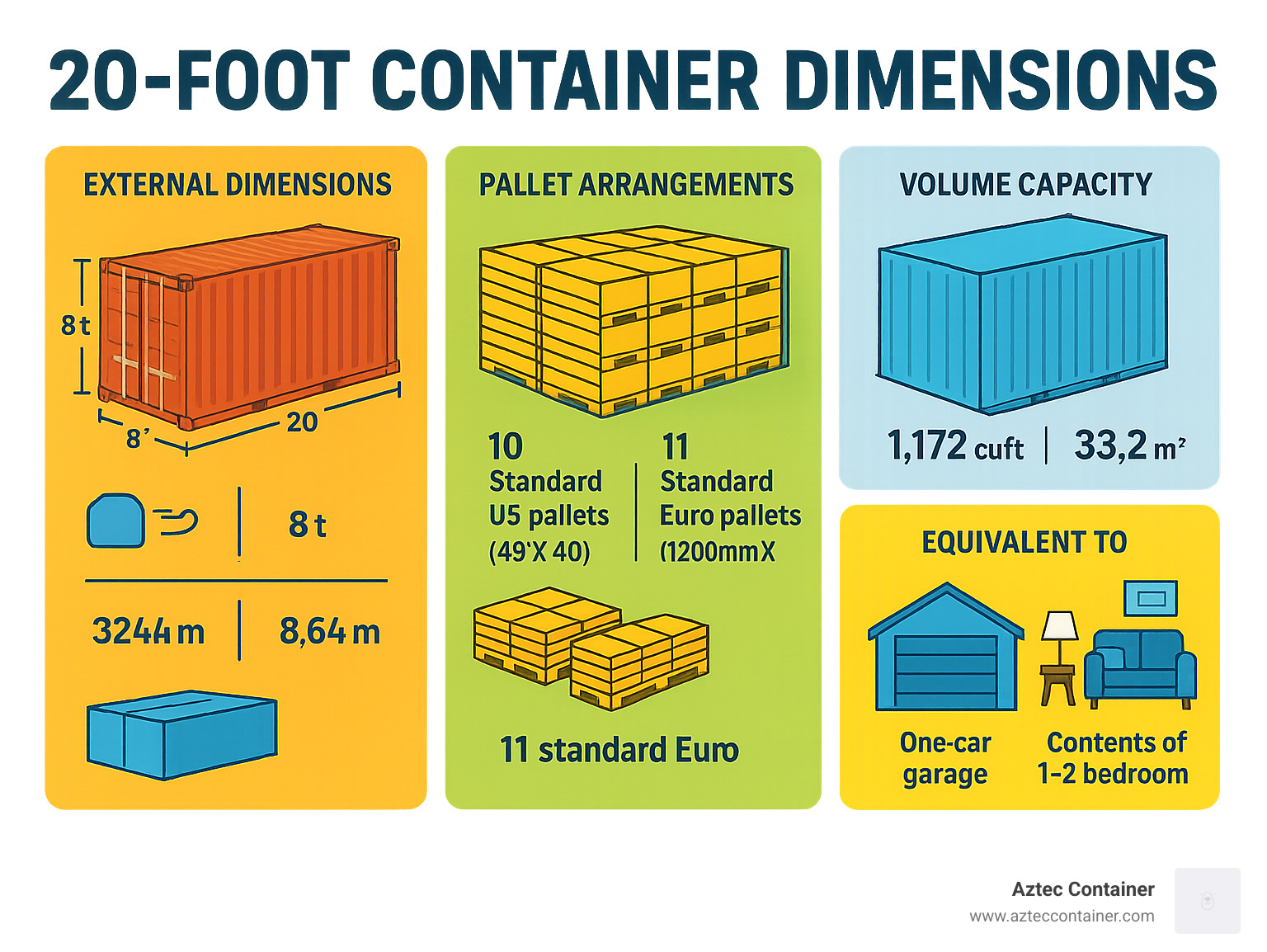
- Dimensions (Volume/CBM): This was used for LCL pricing and, critically, for the consolidation plan. CFS staff use this data to figure out how to load multiple shipments into one container efficiently, like a complex 3D puzzle. An incorrect CBM could mean space is wasted (losing the NVOCC money) or, worse, there isn't enough space for all the planned cargo.
- Weight: This was used for pricing, but more importantly, for safety and compliance. Every container has a maximum payload. The sum of the gross weights of all the HBLs in a consolidation must not exceed this limit. Your reconciliation task was a key safety check in this process.
- Package Quantity: This was used by the CFS staff during deconsolidation to verify that all the pieces of a shipment have been unloaded and accounted for before releasing them to the consignee.
Conclusion
You've now connected the data points from "Create the Container" to the complex physical world of warehouse operations. That seemingly simple choice between "FCL" and "LCL" in your ERP system was a pivotal command that dictated two vastly different logistical paths.
Key Takeaways:
- FCL vs. LCL Operations: An FCL container travels sealed from the shipper to the consignee. An LCL container makes mandatory stops at a Container Freight Station (CFS) at both origin and destination for consolidation and deconsolidation.
- The Role of the CFS: The CFS is the engine room for LCL shipping. It's where multiple small shipments are combined into one container (consolidation) and broken down again (deconsolidation).
- Data as a Blueprint: The data you entered—type, dimensions, and weight—was the operational blueprint for the CFS. It was used to calculate pricing (based on CBM for LCL), plan the physical loading of the container, and ensure compliance with weight safety limits. An error in this data could lead to financial losses, shipping delays, and safety hazards.
In our next lesson, we will continue exploring the connection between data and physical handling. We'll examine what happens when you check those special flags in the system—specifically, the ones for IMO (Dangerous Goods) and Quarantine cargo—and how those clicks trigger specialized, high-stakes procedures at the port and warehouse.