Introduction
Welcome to Module 3! In our last lesson, you did the crucial strategic work of formulating your Unique Selling Proposition (USP). You now know who you're serving (your persona) and why they should choose you (your unique value). Now, we need to give this budding brand a name.
This lesson is the first practical step in building your brand's identity. Our goal is to check brand name availability across relevant social platforms, domains, and marketplaces. This might seem like a simple task, but it's a critical checkpoint. Choosing a name that is already in use can lead to customer confusion, legal issues, and a costly rebranding process down the line. By being systematic now, you save yourself significant trouble later. Think of this as running a final check before committing your code—it ensures everything is clear to deploy.
1. The Importance of a Consistent Digital Footprint
Before you fall in love with a brand name, you need to ensure you can "own" it across the internet. A consistent name—or "handle"—across your website, future social media profiles, and e-commerce stores is essential for building a recognizable and trustworthy brand. When a customer can find you as @YourBrandName everywhere, it reduces friction and builds confidence.
Inconsistency creates confusion and can even make your brand appear unprofessional. Let's start with a short video that explains the real-world problems that arise when you don't check for name availability everywhere.
Brand social media handles and using namecheckr.com to find if your brand name is available.
The video 'Brand social media handles' from Rock Your Brand® clearly illustrates why checking for your name on social media is just as important as checking for the domain name.
Watch from the beginning to 01:34. Pay attention to the client's story and why simply owning the .com domain wasn't enough.
As you can see, securing your brand's name is about claiming your digital real estate across multiple key areas:
- Domain Name: Your website address (e.g.,
yourbrand.com). This is your home base. - Social Media Handles: Usernames on platforms like Instagram, X (Twitter), TikTok, and Pinterest. Even though you're not using them until after graduation, securing them now is vital for the future.
- Marketplace Usernames: Your store name on platforms like Gumroad, Payhip, and Creative Market, where you'll sell your products.
- Legal & Trademark: Checking for existing trademarks to avoid legal conflicts.
2. The Naming Toolkit: Systematic Availability Checks
Manually checking every single platform for every name idea would be incredibly tedious. Fortunately, there are tools designed to automate this process. The most popular one is Namechk. It allows you to enter a name and instantly see its availability across dozens of domains and social networks.
Let's see how it works in practice.
Brand social media handles and using namecheckr.com to find if your brand name is available.
The same video from Rock Your Brand® provides a quick, effective demonstration of two powerful name-checking tools.
Watch from 01:34 to 04:05. The presenter demonstrates how to use Namechk.com and a similar tool, Namecheck.com, to see availability at a glance. Notice how the color-coding (green for available, dim for taken) gives you instant feedback.
Now that you've seen it in action, take a moment to understand the tool's functionality directly from the source.
Namechk - Username and Domain Name Checker
The Namechk homepage provides a quick overview of how the tool works and what it checks. This will solidify your understanding of the process.
On the Namechk website, read the sections titled 'With Namechk, you can check the availability...' and 'How does Namechk work?'. This will only take a minute or two.
3. Strategies for Choosing a Great (and Available) Name
Checking for availability is only half the battle. You also need to make sure the name you choose is effective. What makes a brand name strong? It should be memorable, easy to say, and relevant to your brand.
The following video from The Futur, a channel you're interested in, provides an excellent, rules-based framework for naming.
Guide On How To Choose Domain Name & Brand Naming Strategies
In 'Guide On How To Choose Domain Name & Brand Naming Strategies,' The Futur outlines clear guidelines and common pitfalls for naming an online business.
Watch the following segments: 00:24 - 02:42: Focus on the basic rules for a good domain name (short, easy to spell, say, and remember). 02:42 - 07:13: Pay attention to the four strategies for developing name ideas and the pros and cons of using new domain extensions (like .design, .io, or .co). 08:57 - 10:07: Note the common pitfalls to avoid, such as using hyphens, numbers, or acronyms.
What If Your Name Is Taken?
It's very likely your first few ideas will be unavailable in some capacity, especially the .com domain. Don't get discouraged. This is a normal part of the process. Here are some systematic steps to take, drawn from the video and other expert resources.
Business Name Availability: How to Check It Before You Register
The article 'Business Name Availability' from Incorp.com offers a structured approach to the naming process, including what to do when your name is taken.
Read the section titled 'What to Do If Your Desired Name Is Taken.' It provides practical solutions like modifying the name or trying alternative domain extensions.
Summary of Strategies:
- Modify: Add a simple, relevant word. For example, if "Aura" is taken, try "Aura Labs," "Aura Design," or "Get Aura."
- Use a Different TLD (Top-Level Domain): If
yourname.comis taken, isyourname.cooryourname.designavailable? For a modern digital brand, these alternatives are often perfectly acceptable and can even add context. - Abbreviate: Could you use an abbreviation that is still intuitive? Be careful with this, as it can make the name harder to remember.
- Add a Location (Less common for digital products): E.g.,
yournameNYC. This is more for local businesses. - Start Over: Sometimes the best option is to go back to the drawing board with the knowledge you've gained.
4. Your Action Plan: The Brand Name Availability Checklist
Now it's time to put this into practice. Based on the USP and persona you've developed, brainstorm a list of 3-5 potential brand names. Once you have your list, run each name through the following checklist.
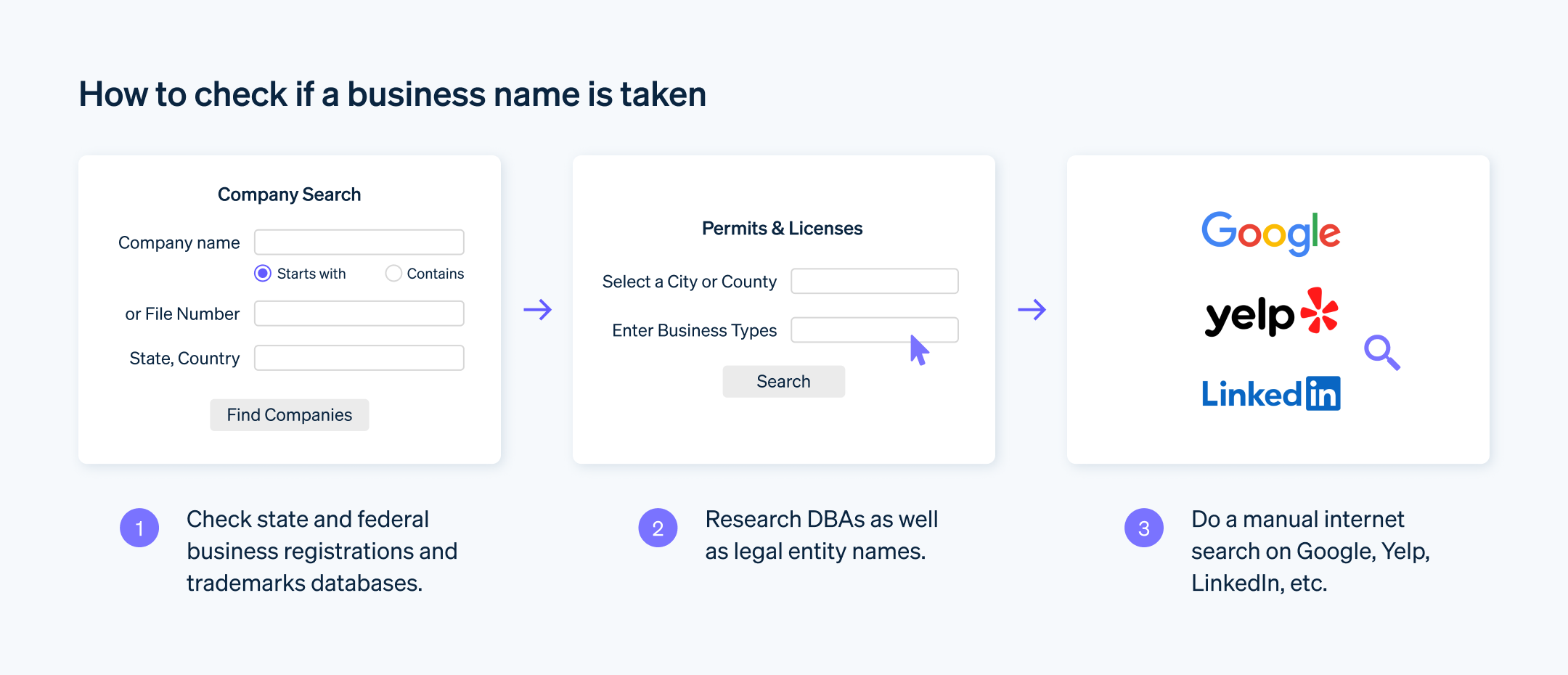
Step 1: The Broad Sweep (Domains & Socials)
- Go to Namechk.com.
- Enter your first brand name idea and hit search.
- Analyze the results. Is the
.comdomain available? How about key alternatives like.coor.io? Are the major social media handles (Instagram, TikTok, Pinterest, X) available? - Take a screenshot of the results for your records.
- Repeat for all your name ideas.
Step 2: Marketplace Check
Namechk doesn't cover e-commerce marketplaces, so you'll need to do this manually.
- Go to Gumroad, Payhip, and Creative Market.
- Try to sign up for a new account or search for creators using your desired name. See if the username or store URL is available.
Step 3: Federal Trademark Search (The Legal Check)
This is a crucial step to avoid serious legal trouble. A federal trademark can prevent you from using a name, even if the domain and social handles are free.
- Go to the USPTO's Trademark Search tool (TESS).
- Click on the "Basic Word Mark Search" option.
- Enter your brand name and search. Look for any "live" trademarks that are an exact or very similar match, especially if they are in a related industry (like software, design, or digital goods). If you find a direct conflict, it's best to avoid that name.
Step 4: The Final Google Search
- Search for your potential brand name in quotes (e.g.,
"Aura Labs"). - Does another business, even an informal one, already dominate the search results? If so, it will be difficult for you to rank and could cause customer confusion.
Step 5: Evaluate and Decide
After running your names through this process, you should have one or two clear frontrunners that are available across the board. To make a final decision, you can use an evaluation sheet to score them systematically.

Conclusion
Excellent work. You've just completed a critical, foundational step in building your business. By systematically verifying the availability of your brand name, you've protected yourself from future legal headaches and brand confusion, setting a solid foundation for everything to come.
Key Takeaways:
- Brand name consistency across all digital platforms is key to building trust and recognition.
- Use tools like Namechk to quickly perform broad availability searches for domains and social media.
- A complete check must also include manual searches on marketplaces (Gumroad, Payhip) and a legal check using the USPTO's trademark database.
- If your first choice is taken, use systematic modifications (e.g., adding a word, trying a new TLD) rather than giving up.
Preview of the Next Lesson:
Now that you have a name, it's time to infuse it with meaning. A brand is more than just a name and a logo; it's a set of beliefs that guide your actions and attract your target audience. In the next lesson, you will define 3 core brand values based on your target audience and market research.