Welcome back! In our last lesson, we explored the external and internal barriers that can disrupt communication, like distractions, assumptions, and our emotional states. Having established why messages can get distorted, we are now ready to turn the lens inward.
Today's lesson is all about self-reflection. Our goal is to help you identify your own default communication tendencies and habits. Understanding your starting point is the most critical step in any journey of improvement. Rather than just discussing this theoretically, we'll use practical self-assessment tools to give you a clearer picture of your natural communication style. This awareness is the foundation upon which all other communication skills are built.
Why Self-Awareness Matters: The Johari Window
Before we try to label our communication style, let's establish a framework for why this kind of self-reflection is so valuable. A classic psychological tool called the Johari Window can help. It illustrates that our self-awareness is split into four distinct areas based on what we know about ourselves and what others know about us.
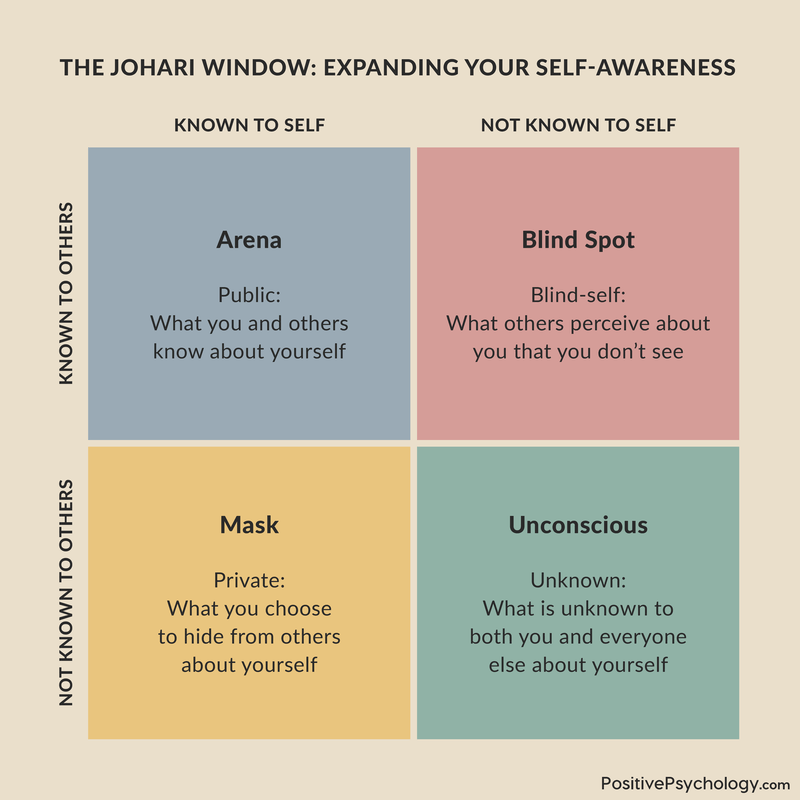
The four quadrants are:
- Arena (or Open Self): This includes behaviors, feelings, and information known to both you and others. Effective communication happens most easily here.
- Mask (or Hidden Self): This is what you know about yourself but choose not to reveal to others.
- Blind Spot: These are aspects of yourself that others can see, but you are not aware of. This is often where our default communication habits reside. A friend might see you as blunt, for example, while you believe you're just being honest.
- Unconscious (or Unknown Self): This contains information, feelings, and motivations that are unknown to both you and others.
The goal of developing self-awareness in communication is to expand your Arena. By identifying your default tendencies today, you begin to move information from your Blind Spot into the Arena. This gives you conscious control over your behavior, allowing you to choose how you communicate rather than falling back on unconscious habits.
The Four Common Communication Styles
Most models of interpersonal communication categorize tendencies into a few key styles. While many variations exist, they are often based on how we balance our own needs against the needs of others. A widely used framework includes four styles: Passive, Aggressive, Assertive, and Passive-Aggressive.
This image provides a great visual summary of the core differences between the first three.

As the image shows:
- Passive communicators put others' needs before their own. The underlying belief is "Your needs matter, mine don't."
- Aggressive communicators put their own needs before others'. The underlying belief is "My needs matter, yours don't."
- Assertive communicators balance their needs with the needs of others. The underlying belief is "Your needs matter, and my needs matter too."
A fourth style, Passive-Aggressive, is also very common. This style appears passive on the surface but has an undercurrent of aggression, often expressed through sarcasm, backhanded compliments, or indirect actions (like the "silent treatment").
Now, let's find out which style, or combination of styles, feels most familiar to you.
Activity 1: A Quick Video Quiz
Since you prefer a practical, hands-on approach, we'll start with an interactive quiz. This video will walk you through ten common scenarios and ask you to choose the response that feels most like you.
Quiz: What Your Communication Style Says About You (self-test)
This video from the popular psychology channel Psych2Go offers an engaging quiz to help you identify your primary communication style. It's a gentle and supportive introduction to these concepts.
Please watch the entire video. Take the quiz as you go, keeping a tally of your A, B, C, and D answers. The quiz consists of 10 questions about common social scenarios. Answer as honestly as you can. The results section will describe the four styles: Passive (Quiet), Aggressive (Bold), Passive-Aggressive (Indirect), and Assertive (Grounded). Pay close attention to the description that matches your highest score.
What was your result? Did it surprise you, or did it feel accurate? Hold onto that thought as we move to our next activity, which will allow for deeper reflection.
Activity 2: A Deeper Dive with Reflection
Now that you have a preliminary result from the video, let's reinforce it with another self-assessment. The following article provides a similar quiz but also includes excellent prompts for reflecting on how your style impacts your relationships.
Communication Styles: Exercises, Worksheets, Videos
This article from a resource on Dialectical Behavior Therapy (DBT) provides another excellent, straightforward tool for self-assessment. It uses the same four-style model and includes prompts for deeper reflection.
First, take the short quiz under the heading "Identify Your Communication Style". Simply check the statements in each of the four groups that resonate with you. Next, read the brief descriptions of each style to solidify your understanding. Then, focus on the section "Think About Your Communication Style." This part is crucial. It guides you to reflect on when you use this style, with whom, and whether it's effective in meeting your needs. Finally, if you find yourself using different styles in different situations, read the first question in the FAQ section, which addresses this common experience.
Putting It All Together
After completing both activities, you should have a clearer picture of your default communication tendencies. It's important to remember a few key points:
- No one is 100% one style. Most of us are a blend, and our style can change depending on the situation, our stress levels, and who we're talking to. You might be assertive at work but passive with family, for example. The goal is to identify your predominant style—your go-to habit, especially under pressure.
- There are no "bad" styles, only ineffective ones. Each style likely developed for a good reason, perhaps as a way to protect yourself or navigate a specific environment. The question isn't "Is my style bad?" but rather "Is my style getting me the results I want in my relationships?"
- Assertiveness is a skill, not a personality trait. While the other styles are often our default, assertiveness is something that can be learned and practiced. It's the style we will be aiming to develop throughout this course because it is the foundation for healthy, balanced, and respectful relationships.
Conclusion
In this lesson, we turned our focus inward to begin the crucial process of self-discovery. By understanding your own default communication habits, you've taken the first and most important step toward meaningful change.
Here are the key takeaways:
- Self-awareness is key: The Johari Window shows us that identifying our blind spots is essential for growth.
- There are four common communication styles: Passive, Aggressive, Passive-Aggressive, and Assertive. These are defined by how we balance our own needs with the needs of others.
- Identifying your style is about awareness, not judgment: Knowing your starting point allows you to make conscious choices about how you want to interact with others.
Now that you have a better understanding of your overall style, our next lesson will get even more specific. We will explore how your own body language, tone, and word choice shape the way your message is received. This will connect your newfound self-awareness to the concrete behaviors that bring your communication style to life.