Welcome to our third lesson. We began this journey by exploring Mary Oliver's call for deep, unwavering attention. We then turned to Rainer Maria Rilke, who argued that patience is an active and necessary condition for any meaningful work to come to fruition. These ideas have provided a strong foundation for a more deliberate approach to work and life.
Today, we will add a final, powerful element to our argument by turning to Eastern philosophy. We will delve into one of the most foundational texts of Taoism, the Tao Te Ching. Our goal is to explore how its ancient wisdom illustrates gentleness and yielding not as weakness, but as a surprisingly effective and resilient strategy. This will directly address your interest in finding a more "delicate" way of working with others, offering a profound counterpoint to the idea that force and speed are the only paths to success.
The Tao and the Underestimated Power of Softness
Before we dive into specific chapters, let's briefly touch upon the core ideas of Taoism. The Tao (pronounced "Dow") can be understood as the natural, underlying flow of the universe—the "way" things are. The Tao Te Ching, attributed to the sage Lao Tzu, is not a set of rigid commandments but a collection of poetic verses that guide us to live in harmony with this flow.
One of its most radical and insightful themes is the strength found in what is typically perceived as weakness: softness, flexibility, and yielding. The video below by Einzelgänger provides an excellent introduction to this counterintuitive yet powerful concept.
Taoism & The Underestimated Power of Softness
This video, "Taoism & The Underestimated Power of Softness," masterfully introduces the Taoist view that yielding can be more powerful than resisting.
Please watch the first two sections. Pay attention to how the video contrasts the common admiration for "strength" with the Taoist perspective on softness in the introduction. Then, watch the parable of the king who learns that ruling with virtue and integrity—a "soft" approach—is more durable than ruling by force and fear.
This idea that influence is more sustainable than control is a cornerstone of Taoist thought and has direct parallels in modern leadership and collaboration. A team that is inspired and respected will always outperform one that is merely managed and feared.
1. The Way of Water: Goodness Without Contention (Chapter 8)
The Tao Te Ching frequently uses metaphors from the natural world to explain its principles. The most famous of these is water. In Chapter 8, Lao Tzu states, "The highest good is like water." This simple phrase contains a wealth of strategic wisdom.
Water embodies a paradoxical power: it is the softest, most yielding substance, yet it can carve canyons through solid rock over time. It gives life to all things without asking for anything in return, and it naturally settles in the lowest places, which others disdain. This combination of nurturing without striving, and humility without weakness, is the essence of the "way of water."
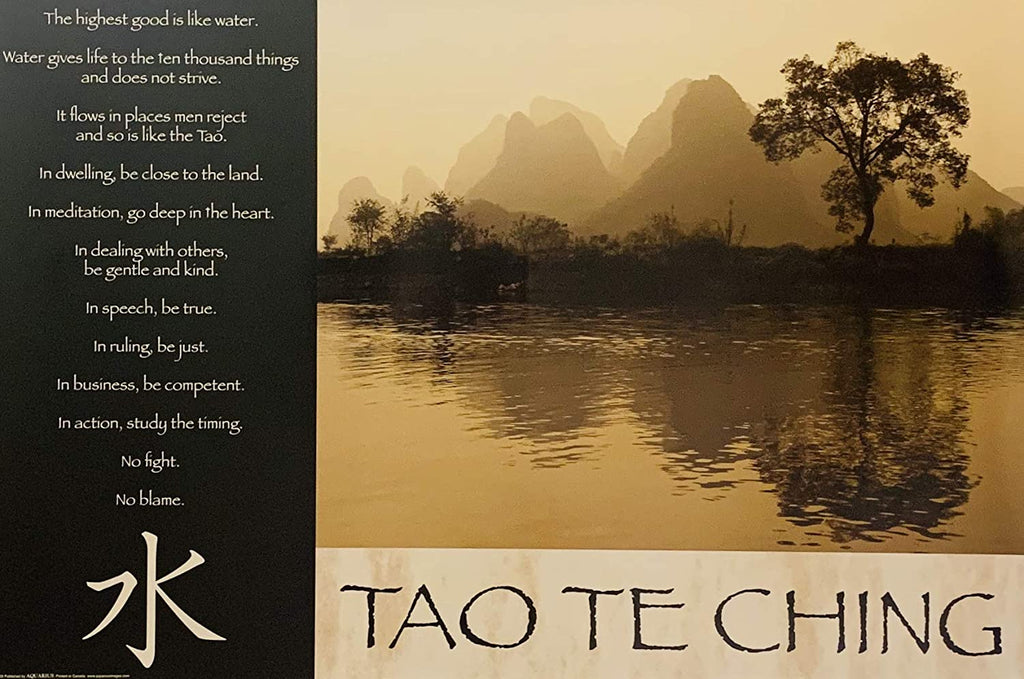
To fully appreciate this metaphor, let's examine the text and its detailed annotations from Derek Lin's translation.
[PDF] Tao te ching: annotated & explained
This PDF provides a clear translation of the Tao Te Ching with line-by-line annotations that clarify the meaning.
Please navigate to page 25 of the PDF to find Chapter 8. Read the short chapter itself, and then carefully read the accompanying annotations on page 26. Note how each quality of water is mapped to a specific human virtue.
The annotations for Chapter 8 break down the metaphor into practical principles for action:
- Humility: Water flows to the "lowest place." This is a powerful model for leadership and collaboration. Instead of asserting dominance, one can achieve more by taking a humble position, listening, and serving the needs of the team or the user.
- Generosity: Water "benefits myriad things without contention." It gives freely. In a work context, this translates to sharing knowledge, offering help, and contributing to a project's success without keeping a scorecard.
- Integrity: Water "reflects its surroundings" accurately. This points to the importance of honest communication and representing reality as it is, building trust.
- Adaptability: Water is "versatile" and "conforms to the shape of any container." This is perhaps the most relevant quality for your work in product design. A successful product, like water, must adapt to the "container" of the user's needs, market conditions, and technical constraints. A rigid, unyielding design is brittle and likely to fail.
2. The Mark of Life: Softness and Pliability (Chapter 76)
Lao Tzu reinforces the power of yielding with another potent metaphor in Chapter 76, contrasting the qualities of life and death.
He observes that living things—plants, trees, bodies—are soft and pliable. They can bend, adapt, and grow. In contrast, dead things are hard, rigid, and brittle. From this simple observation, he draws a profound conclusion: "That which is hard and stiff is the follower of death. That which is soft and yielding is the follower of life."
This directly challenges the "move fast and break things" ethos. In the Taoist view, things that are most likely to "break" are those that are already rigid and brittle—closer to death than to life. True strength and resilience come from the ability to bend without breaking.
[PDF] Tao te ching: annotated & explained
Let's return to the annotated Tao Te Ching.
Please find Chapter 76 on page 87 of the PDF. Read the chapter text and then the corresponding annotations on page 88. Focus on how this principle applies to both a tree and an army.
As the annotations explain, an inflexible army is easily outmaneuvered, and a tree that cannot bend in the wind is the one that cracks. The final lines are a powerful strategic summary: "The big and forceful occupy a lowly position, while the soft and pliant occupy a higher place." This suggests that aggressive, forceful tactics might seem dominant in the short term but ultimately lead to a position of disadvantage. A gentler, more adaptable approach, while appearing weaker, leads to a superior, more resilient position over time.
This principle is echoed in the video "The Strength of Softness," which uses the imagery of the oak and the willow.
The Strength of Softness | The Taoist Secret to Calm Confidence and True Power | Tao Dialogues
This video from Wu Wei Wisdom beautifully illustrates the concept of flexible strength.
Watch this short segment from this point. It contrasts the rigid oak, which snaps in a storm, with the willow, which "chooses cooperation without surrendering its roots."
This idea of "cooperation without surrendering its roots" is key. Yielding is not the same as capitulating. It is a strategic choice made from a place of rooted stability, not weakness. It is the core of a more delicate, yet powerful, way of engaging with challenges and with people.
Conclusion
In this lesson, we have uncovered a new dimension for our argument: the strength of yielding. By exploring Chapters 8 and 76 of the Tao Te Ching, we've seen how ancient Taoist philosophy uses powerful natural metaphors to advocate for a softer, more adaptable approach to action and collaboration.
Here are the key takeaways:
- The Way of Water: Water serves as a model for effective action through humility, generosity, integrity, and adaptability. It achieves great things not through force, but through persistence and its willingness to yield.
- Flexibility is Life: Softness and pliability are the marks of life and growth, while rigidity and hardness are precursors to brittleness and death. A strategy or design that cannot bend is destined to break.
- Yielding is a Strategy: In the Taoist view, yielding is not a sign of weakness but a sophisticated strategy. It allows one to overcome rigid obstacles, foster cooperation, and ultimately occupy a more resilient and influential position.
We have now examined attention, patience, and yielding. We have gathered ideas from a poet of nature, a poet of the inner world, and a sage of ancient philosophy. In our final lesson, we will synthesize these distinct threads into a cohesive argument, crafting a response to the "move fast" culture that integrates speed with the delicacy, patience, and wisdom we have explored.