Welcome to our final lesson. Over the past three sessions, we have curated a collection of powerful ideas to serve as a thoughtful complement to the modern drive for speed. We started with Mary Oliver, who invited us to practice deep attention. We then moved to Rainer Maria Rilke, who championed patience as a vital creative force. Most recently, we explored the Tao Te Ching, uncovering the strategic power of yielding and softness.
In this concluding lesson, our goal is to synthesize these three pillars—Attention, Patience, and Yielding—into a cohesive and practical argument. We will construct a framework that doesn't reject speed, but rather integrates it with delicacy and deliberation. This will directly address your goal of finding a path to achieving better results and a happier life in a professional world that often prizes velocity above all else.
The Foundation: Recapping Our Core Principles
Before we build our argument, let's briefly revisit the essential wisdom we've gathered from our three guides. Each offers a distinct but complementary perspective.
- Mary Oliver: Attention as Devotion
We began with Oliver's profound yet simple practice of paying close, unwavering attention to the world. In her poem "The Summer Day," the act of observing a grasshopper becomes a sacred and meaningful activity. As she explained in her interview with Krista Tippett, this is more than just neutral observation.
Mary Oliver — Listening to the World
In this clip from the On Being interview, Mary Oliver discusses the nature of attention.
Please listen to her distinguish between mere reporting and a deeper form of observation from this section. She notes that for attention to be meaningful, it requires empathy, culminating in her famous statement: "attention is the beginning of devotion."
For our purposes, Oliver teaches that true understanding—of a user, a problem, or a team dynamic—begins with this devoted, empathetic attention.
2. Rainer Maria Rilke: Patience as an Active State
Rilke, in his Letters to a Young Poet, reframed patience not as passive waiting, but as an active, internal process. He urged the young poet to embrace uncertainty and to trust that meaning and solutions will mature organically if given the space to do so.
Letters to a Young Poet / Rilke’s correspondence on love, art & solitude
This segment from the video summary of Letters to a Young Poet captures Rilke's core advice on patience.
Watch the part where the narrator explains Rilke's idea to cherish the questions themselves, like "closed rooms," and to "live the questions now," trusting that you will one day "live right into the answer."
Rilke’s wisdom shows that rushing for answers can foreclose more profound possibilities. Patience is the discipline of allowing the right solution to ripen.
3. Lao Tzu: Yielding as Strategic Strength
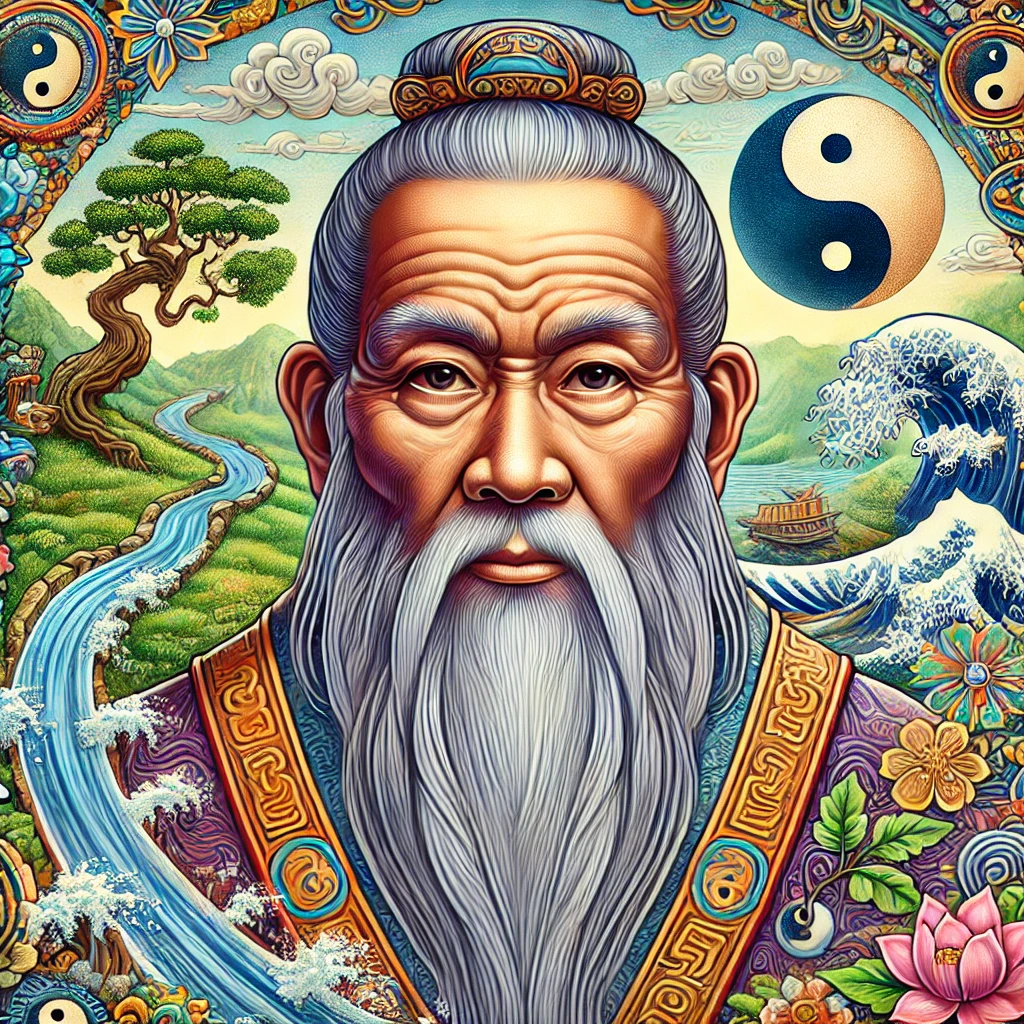
Finally, the Tao Te Ching offered a radical perspective on power. Through the metaphors of water (Chapter 8) and the pliable tree (Chapter 76), we learned that softness, adaptability, and yielding are not signs of weakness but marks of resilience and life itself. The concept of wu wei, or effortless action, flows from this. It's about aligning with natural forces rather than struggling against them.
Now, let's weave these three threads together into a practical framework for your work.
Constructing the Argument: A Framework for Deliberate Action
The "move fast" ethos is not inherently wrong; speed is a valuable asset. The danger lies in speed without direction, insight, or harmony. Our argument is that by integrating Attention, Patience, and Yielding, we can transform frantic motion into effective, sustainable progress. We can map this directly onto the product design process you know so well.
1. Discovery & Problem Framing → Apply Oliver's Attention
The "move fast" culture can tempt teams to rush through the discovery phase, grabbing onto surface-level user problems. This often leads to building elegant solutions for the wrong issues, resulting in immense waste.
Here, we apply Mary Oliver's principle of devoted attention.
- Think of user research not as a checklist to complete, but as an opportunity to "kneel down in the grass."
- When you observe a user, you are not just "reporting" on their behavior. You are practicing empathy, trying to understand their world through their "enormous and complicated eyes."
- This deliberate attention uncovers the deeper, unarticulated needs that lead to true innovation. It ensures the direction you decide to run in is the right one.
The Argument: Investing in deep, empathetic attention at the start isn't slowing down; it's preventing the wasted time and effort of building the wrong thing fast. It makes the entire subsequent process more efficient and impactful.
2. Ideation & Strategy → Apply Rilke's Patience
Once a problem is defined, the pressure is on to find a solution—now. This rush to converge can stifle creativity and lead to obvious, derivative ideas.
Here, we apply Rilke's wisdom of creative patience.
- Instead of forcing an immediate answer, "live the questions" posed by the user's needs and the business constraints.
- In your design practice, this translates to exploring divergent possibilities, embracing ambiguity, and allowing strategies to mature. It's the patience to hold multiple prototypes in your mind, to let a complex system reveal its own logic, rather than imposing a rigid structure on it prematurely.
- This doesn't mean indefinite delay. It means trusting that a more elegant, robust solution will emerge if you cultivate the right conditions—a state Rilke would call a "courtship" with the idea.
The Argument: Strategic patience in the creative phase doesn't mean inaction. It is an active, disciplined process of exploration that leads to more innovative and resilient solutions, avoiding the costly trap of pursuing the first idea that comes to mind.
3. Execution & Collaboration → Apply Lao Tzu's Yielding
The final push to build and ship is often where forceful, rigid thinking dominates. Roadmaps become inflexible, stakeholder disagreements turn into battles, and team members are driven by pressure rather than purpose.
Here, we apply Lao Tzu's strategy of yielding as strength.
- The "way of water" provides a powerful model for leadership and collaboration. Water doesn't fight obstacles; it flows around them, adapting its shape while never losing its essential nature and direction.
- In a team setting, this means influencing rather than commanding, listening to technical constraints instead of fighting them, and adapting the plan without compromising the core vision. It's about being flexible on the how to remain resolute on the why.
- This approach is beautifully captured in the concept of wu wei, or strategic non-action. Sometimes the wisest move is to wait for the "mud to settle" so the water can become clear, allowing the right action to arise by itself.
An ancient Chinese principle can help you get comfortable with doing less—and make you happier, too
This article from Quartz provides an excellent modern interpretation of wu wei and its practical application. The author, Ephrat Livni, connects it directly to career uncertainty and decision-making.
Read the full article. Pay close attention to how the author defines wu wei as "not forcing" and how she used periods of deliberate stillness to conserve energy and make more effective moves in her career.
As Livni's experience shows, this soft, yielding approach is not about passivity. It is a highly effective strategy for navigating complexity, fostering a positive environment, and achieving goals with less friction. It directly contributes to a happier, more sustainable way of working.
Conclusion: Synthesizing the Argument for Effective Speed
We have arrived at the end of our journey. We set out to find a delicate, more positive way to work that complements the demand for speed. By weaving together the wisdom of a poet, a philosopher, and a sage, we have constructed a powerful, integrated argument.
Here are the key takeaways, synthesized into a single framework:
- Effective speed is not just about velocity; it's about deliberate momentum. It combines the forward motion of "fast" with the wisdom of attention, patience, and yielding.
- Attention ensures you are moving in the right direction. (Oliver)
- Patience ensures you find the most robust path. (Rilke)
- Yielding ensures you navigate the journey with harmony and resilience. (Lao Tzu)
This is not an argument against speed. It is an argument for a more intelligent, humane, and ultimately more effective form of it. Rushing to solve a poorly understood problem with a half-baked idea executed by a burned-out team is not speed; it is waste.
By practicing devoted attention, you will define better problems. By cultivating creative patience, you will design more elegant solutions. And by embracing strategic yielding, you will lead teams that are not only more effective but also more aligned and fulfilled.
You began this course seeking support for the idea that "doing things with a positive attitude can lead to better results and a happier life." The framework we've built provides exactly that. It is a practical philosophy for transforming your work—and your relationship to it—from a frantic race into a deliberate, meaningful, and joyful journey.