Introduction
Hello! Welcome to the next phase of our course. Over the past nine modules, you have built a strong foundation in English pronunciation, covering everything from individual sounds and the IPA to the rhythm, stress, and flow of connected speech. You've learned the theory, and now it's time to put it all into practice in a way that directly supports your career goals.
In this lesson, we will begin the first of our "Application" modules. Your goal is to construct a 30-second professional self-introduction script. This is often called an "elevator pitch," and it is one of the most important tools you will use in job interviews and professional networking. We will focus purely on the content and structure of your script today. The next lesson will be dedicated to perfecting its delivery.
1. What is a Professional Self-Introduction?
Before we start writing, let's clarify what a 30-second self-introduction is and why it's so important. Imagine you step into an elevator and find yourself next to a hiring manager from your dream company. You have only the time it takes to get to their floor—about 30 seconds—to make a great first impression. This short, powerful speech should quickly explain who you are, what you offer, and what you're looking for.
To get a better sense of this, let's watch a short video.
The PERFECT Elevator Pitch - Introduce Yourself In 30 Seconds Or Less (EXAMPLE INCLUDED)
Professor Heather Austin explains what an elevator pitch is and why every professional needs one. This will give you a clear idea of the goal.
Watch the first 1 minute and 25 seconds of the video. Focus on her definition of an elevator pitch: a quick snapshot of 'who you are, who you help, and how you help them'.
As you can see, a good elevator pitch is clear, confident, and memorable. It's your verbal business card.
2. The Key Ingredients of Your Script
A strong self-introduction script generally has three main parts. We'll use a simple, effective structure that you can adapt to any professional situation.
Let's look at a visual guide that breaks this down.
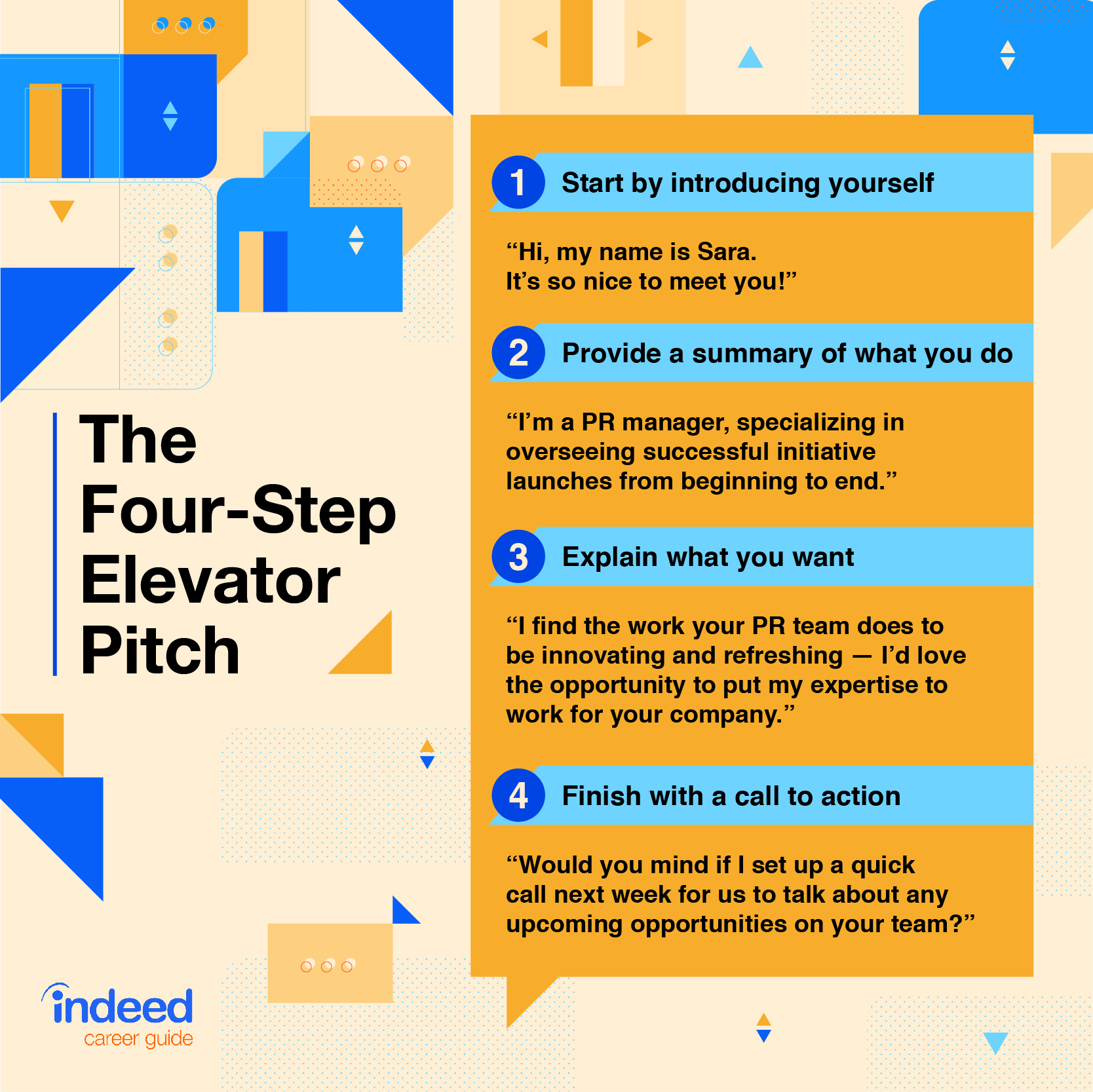
Based on this, here are the three essential components for your script:
- Who You Are: Start with your name and your current professional identity. Since you are starting your career, this could be your target field (e.g., "an aspiring data analyst," "a motivated marketing professional").
- What You Offer (Your Value): This is where you highlight your unique strengths. Since you don't have formal work experience, you can focus on:
- Passion: What excites you about this field?
- Skills: What have you learned through self-study, online courses, or personal projects?
- Qualities: Are you a quick learner, a creative problem-solver, or very detail-oriented?
- What You Want (Your Goal): Connect your skills and passion to the specific opportunity or company. State what you are looking for (e.g., an entry-level position) and show that you've done your research.
This structure helps you tell a compelling story about yourself quickly and professionally.
3. How to Write Your Script: A Step-by-Step Guide
Now, let's get practical and start writing. We'll use a guide that is specifically designed for someone beginning their career.
How to Introduce Yourself in an Interview: Examples & Tips - BetterUp
The article 'How to Introduce Yourself in an Interview' from BetterUp provides excellent examples and phrases. We will focus on the advice for beginners.
Read the section titled 'How a beginner can introduce themselves in an interview'. Notice how it focuses on motivation, skills, and goals instead of past job titles. Also, review the 'Example phrases to use in an interview introduction' section for useful building blocks.
Using the structure from the BetterUp article and the previous section, let's build a template you can use.
Template for Your 30-Second Introduction
Fill in the blanks below to create your first draft.
-
Part 1: Who You Are
- Greeting: "Hello, my name is [Your Name]. It's a pleasure to meet you."
- Identity: "I am an aspiring and motivated [Your Target Field, e.g., 'Software Developer', 'Customer Service Specialist']..."
-
Part 2: What You Offer (Your Value)
- Passion & Skills: "...with a strong passion for [A specific interest, e.g., 'creating clean and efficient code', 'helping people solve problems']. I have been actively developing my skills in [List 1-2 key skills, e.g., 'Python and SQL', 'communication and conflict resolution'] through [Mention how you learned, e.g., 'online courses and personal projects', 'volunteer work']."
-
Part 3: What You Want (Your Goal)
- Connection to the Company: "I've been following [Company Name]'s work, and I particularly admire [Mention a specific project, value, or achievement of the company]."
- The Ask: "I am eager to bring my skills and enthusiasm to an entry-level role where I can contribute to your team and continue to grow professionally."
Example for a Fictional Aspiring Graphic Designer:
"Hello, my name is Rohan. It's a pleasure to meet you. I am an aspiring and motivated Graphic Designer with a strong passion for creating clean and impactful branding. I have been actively developing my skills in Adobe Illustrator and Photoshop through online courses and have built a portfolio of personal projects. I've been following your company's work, and I particularly admire your recent campaign for 'Brand X'. I am eager to bring my skills and enthusiasm to an entry-level role where I can contribute to your team and continue to grow professionally."
This script is about 85 words, which should take roughly 30-35 seconds to say at a natural pace.
4. Your Turn: Draft Your Script
Now it's your turn. Use the template above to write your own professional self-introduction.
- Fill in the blanks with your personal information, target career, and skills.
- Do a little research on a company you admire so you can fill in that part of the template.
- Read your script aloud a few times to see how it sounds. Don't worry about perfect pronunciation yet—just focus on making sure the sentences flow well and the total time is around 30 seconds.
- Write down your final script. You will need it for our next lesson.
Conclusion
Great work today! You have taken a huge step toward your goal of succeeding in job interviews by learning how to structure and write a compelling professional self-introduction.
Key Takeaways:
- A 30-second self-introduction, or "elevator pitch," is a vital tool for making a strong first impression.
- A powerful script includes three parts: who you are, what you offer (your value), and what you want (your goal).
- Even without formal experience, you can highlight your passion, skills, and motivation to create a memorable introduction.
Preview of Next Lesson:
Now that you have the written content of your introduction, our next lesson will focus entirely on delivery. We will take your script and mark it up for stressed words, sentence rhythm, linking, and intonation to make sure you sound as confident and professional as your words are.