¡Hola! Welcome back.
In the last few lessons, we’ve covered all the essential hands-on skills for your new controller. You now know how to connect your gear, navigate DJUCED, load tracks, use playback controls, and—most importantly—use your headphones to cue up the next song in secret. Your setup is ready for action, but your music library is probably feeling a little empty.
This lesson addresses that final, crucial piece of the puzzle. We'll focus on how to identify reputable sources for acquiring your first few tracks legally. Building a music collection is one of the most exciting parts of being a DJ; it's the first step toward finding your own unique sound and starting to play the music you love, whether it's the deep grooves of Hernán Cattaneo or the driving power of Charlotte de Witte.
Three Paths to Building Your Music Library
For a modern DJ, there are three main ways to get music. Each has its pros and cons, and most DJs use a combination of them.
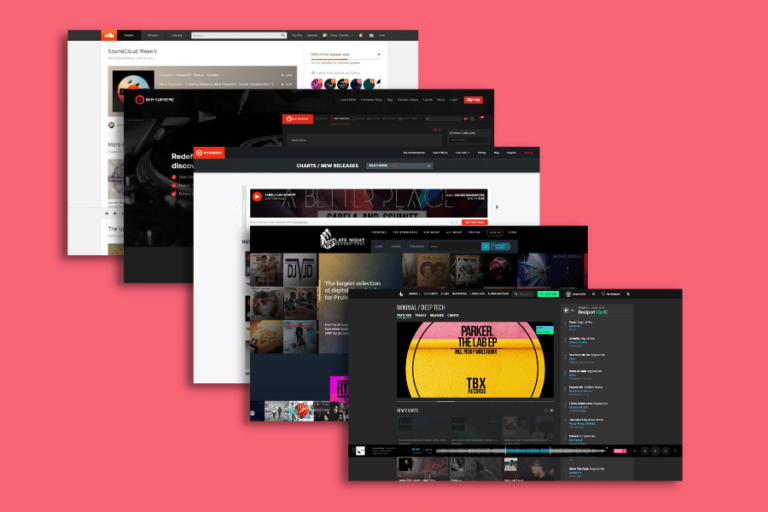
- Buying & Owning Tracks: You purchase and download digital files (like MP3s or WAVs). The track is yours to keep forever.
- Streaming Services: You pay a monthly subscription to "rent" access to a massive library of music, which you can play directly through your DJ software.
- DJ Record Pools: You pay a subscription to download a large number of tracks, usually focused on new releases and special DJ-friendly edits.
Before we explore these, it's important to understand the core difference between owning and streaming.
- Owning your music means it's stored on your computer. It's reliable—you don't need an internet connection to play it, and no one can ever take it away from you. This is the foundation of a solid, professional library.
- Streaming your music offers incredible flexibility and is a fantastic way to discover new genres and artists. However, it almost always requires a stable internet connection and an ongoing subscription to maintain access.
As a beginner, a great strategy is to start with a small, owned collection of free and purchased tracks, and perhaps supplement it with a streaming service for exploration.
Your First Tracks: Free & Legal
The best way to start is by grabbing some high-quality tracks for free. This lets you practice all the skills you're learning without any financial commitment.
Your controller's manufacturer, Hercules, provides an excellent resource for this. They offer free, royalty-free tracks that are perfect for beginners.
DJControl Inpulse 200 MK2 – Importing Music - English
This video from Hercules shows you exactly how to get your first practice tracks from their official website. These tracks are a great starting point because they come ready for DJing.
Watch from 00:17 to 01:16. The video will walk you through finding the 'Official Music' section on the Hercules website and downloading a pack of 'DJ Ready' tracks.
Besides the Hercules site, here are two other fantastic places to find free music legally:
- Bandcamp: Many artists and labels on Bandcamp use a "Name Your Price" model. You can often enter "0" to download a track for free, though it's always great to pay something if you can to support the artist.
- SoundCloud: This is a huge community of producers. Many will offer free downloads of their tracks, remixes, or edits. Look for a "Free Download" link in the track description.
Buying Music: Building Your Core Collection
When you find a track you truly love and know you'll want to play for years, buying it is the way to go. This is how you build your permanent, personal collection. For the electronic music you're interested in, two stores are essential.
Beatport
Beatport is the world's largest and most important online music store for electronic music DJs. If a track by Carl Cox or another major techno/house artist is released digitally, it will be on Beatport.
Let's learn a bit more about what makes it the industry standard.
15 Best Music Download Websites for DJs
This article from The DJ Revolution gives a great overview of the top music sites. We'll focus on its description of Beatport.
Read the section titled '1. Beatport (Paid)'. Focus on its role as the market leader for electronic music, the different file formats it offers (MP3, WAV), and how it's organized by genre.
Bandcamp
We mentioned Bandcamp for free music, but it's also a phenomenal place to buy music. It's known for its artist-friendly approach, meaning more of the money you spend goes directly to the musician. It's a fantastic place to discover independent artists and labels that might not be on the bigger stores.
15 Best Music Download Websites for DJs
Let's return to the same article to understand why Bandcamp is so valued by artists and music enthusiasts.
Now, read section '5. Bandcamp (Paid/Free)'. Notice its focus on community and how it empowers artists to set their own prices.
Other great stores to explore as you develop your taste include Traxsource (which has a strong focus on all varieties of house music) and Juno Download.
Streaming: An Infinite Record Bag
The idea of having millions of songs ready to play is very appealing, and your DJUCED software can do just that by connecting to a streaming service. This is an amazing tool for practicing, exploring genres, and taking requests.
This video explains how streaming works within your specific software.
DJControl Inpulse 200 MK2 – Importing Music - English
The same Hercules video we watched earlier also has a great section explaining how to connect and use streaming services with DJUCED.
Watch from 02:24 to 04:51. Pay close attention to which services are compatible (Beatport Streaming, TIDAL, SoundCloud Go+) and the important note that you need a separate, paid subscription for them. Crucially, DJUCED does not support streaming from Spotify or Apple Music.
Test your understanding!
You're asked to DJ at a friend's barbecue in a park where there's no reliable Wi-Fi. Which music source would be the safest choice for your set: your TIDAL streaming subscription or the MP3 files you've purchased and downloaded from Beatport?
Show answer
The purchased MP3 files from Beatport would be the only safe choice. Streaming services require a stable internet connection to load and play tracks. Without Wi-Fi, you wouldn't be able to access your TIDAL library. Your downloaded MP3 files are stored locally on your computer and are always available.
What About DJ Record Pools?
You will often hear DJs talk about "record pools." These are subscription services (like BPM Supreme or DJcity) where you pay a monthly fee for unlimited downloads of new music, often with special intros and outros designed for easier mixing.
While they are a powerful tool, they are generally aimed at working/professional DJs who need a constant flow of the latest commercial tracks. For now, as you're just starting and discovering your personal taste, focusing on buying individual tracks you love and using free sources or streaming for exploration is a more effective and economical approach.
Conclusion
You now have a map to the vast world of digital music. Building a great collection is a marathon, not a sprint, and is one of the most rewarding parts of DJing.
Key Takeaways:
- You can get your first tracks for free and legally from the Hercules website, Bandcamp, and SoundCloud.
- Beatport is the most important store for buying electronic music, while Bandcamp is fantastic for supporting independent artists.
- Owning your key tracks (as MP3/WAV files) is crucial for reliability.
- Streaming services (like Beatport Streaming or TIDAL) integrate with DJUCED and are amazing for discovery, but require an internet connection and a subscription.
For your next step, I encourage you to go to the Hercules website and download one of the free music packs. Then, load those new tracks into DJUCED and get a feel for them. This will set you up perfectly for our next module.
Speaking of which, this lesson concludes our first module on fundamentals and setup. You've come a long way! In our next lesson, we will begin a new module, "The Language of Dance Music." We'll start by learning how to define BPM (Beats Per Minute) and analyze the tempo of your new tracks, which is the first step toward making them mix together seamlessly.