Hello! Welcome back to our course on affiliate marketing with ClickBank.
In our last few lessons, we've built a solid foundation. You learned how to navigate the ClickBank marketplace and interpret key product metrics like Gravity and average conversion values. Then, you mastered the essential technical skill of generating and testing your unique affiliate HopLink.
Today, we're going to connect those pieces. You'll often find several promising products in the same category, all with good-looking stats. How do you choose the best one to invest your time and effort in? This lesson will teach you how to compare two ClickBank product listings and select the stronger offer based on a combination of metrics and sales page quality.
This is where data analysis meets strategic judgment. A strong offer can convert visitors into buyers much more effectively, making your job as an affiliate significantly easier and more profitable.
Part 1: Comparing the Metrics Side-by-Side
Let's start with the data. When you're comparing two products, the first step is to place their key metrics side-by-side.
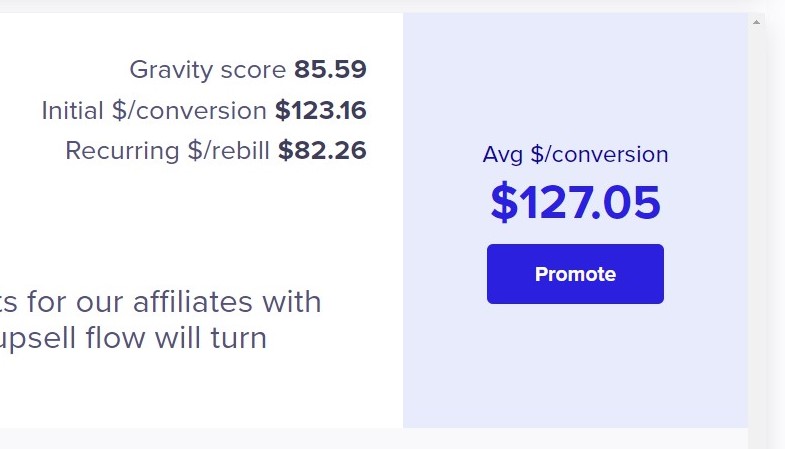
The three most important metrics to compare are:
- Gravity Score: How many distinct affiliates have earned a commission from this product recently.
- Initial $/conversion: The average commission you earn from the first sale to a customer.
- Avg $/conversion: The average total commission earned per customer, including any subsequent upsells or rebills.
But what numbers should you look for? And how do you interpret them in a competitive context?
How to Make Money with ClickBank in 2026 (Complete Beginner Tutorial)
The official ClickBank team provides some excellent rules of thumb for new affiliates. This clip from their beginner tutorial will give you a solid starting point for evaluating these numbers.
Watch from 12:51 to 13:53. The presenter gives practical advice on what constitutes a good average payout and what Gravity score range is the 'sweet spot' for newer affiliates.
As the video suggests, a Gravity score between 20 and 100 is often a great place for beginners. It proves the product sells, but it isn't so popular that you'll face overwhelming competition from expert marketers with huge advertising budgets.
If you want a more detailed breakdown of these metrics, the following guide from Affilorama is an excellent resource to bookmark.
How to Find ClickBank Products That Sell
This article, 'How to Find ClickBank Products That Sell', provides a thorough text-based explanation of Gravity and other product metrics.
Read 'Step 2: Filter by Gravity' and 'Step 3: Review Product Metrics'. This will reinforce your understanding of what each number signifies and how they relate to each other.
When comparing two products, pay close attention to the gap between Initial $/conversion and Avg $/conversion. A large gap suggests the vendor has an effective sales funnel with upsells, which can significantly increase your overall earnings per customer.
Part 2: Analyzing the Sales Page
The metrics tell you that a product is selling, but they don't tell you why. The "why" is found on the sales page. This is the landing page your audience will see after clicking your HopLink. Your success depends on this page's ability to persuade them to buy.
You must evaluate it critically. Does it look professional and trustworthy? Would it convince you or your target audience?
How to Find ClickBank Products That Sell
Let's return to the Affilorama article, which has an excellent section on what to look for.
Read 'Step 4: Check Out The Sales Page'. The author provides a great checklist of things to consider, from sales videos to page design and a memorable rule of thumb.
Here is a checklist you can use to evaluate any sales page:
- Headline & Opening: Does it grab your attention immediately? Does it clearly identify a problem or a strong desire?
- Professionalism: Does the page look modern and well-designed, or cheap and spammy? Are there spelling or grammar errors?
- Sales Copy / Video (VSL): Is the text or video script compelling? Does it tell a story, present a clear solution, and build desire for the product?
- Trust Signals: Are there testimonials from real people? Is there a money-back guarantee? Are there logos or mentions of credible sources?
- Clear Call-to-Action (CTA): Is it obvious what the visitor should do next? Is the "Add to Cart" or "Buy Now" button easy to find?
- Mobile Experience: How does the page look and function on your smartphone? A huge portion of web traffic is mobile, so this is critical.
A product with slightly lower metrics but a vastly superior sales page might be a better choice, as you can be more confident that the traffic you send will be treated to a professional sales experience.
Part 3: The Pro-Level Analysis: The Sales Funnel
Since you're looking to build a real business and want to understand the strategy behind what works, let's go one level deeper. The most successful product vendors are masters of conversion rate optimization. They don't just build a sales page; they build an entire sales funnel.
A sales funnel is the complete sequence of pages a customer sees, designed to maximize the total purchase value. This is how a $47 initial product sale can lead to an Avg $/conversion of over $100 for the affiliate.
A well-optimized funnel might include:
- Order Bumps: A small, relevant add-on offer presented on the checkout page.
- Upsells: A higher-priced, related product offered after the initial purchase.
- Exit-Intent Popups: A last-chance offer that appears if a user tries to leave the page without buying.
Spotting these elements is a sign that the vendor is a sophisticated marketer who knows how to maximize revenue—which is great news for you as their affiliate partner.
5 Tips on How to Choose Affiliate Products to Promote
This article from the ClickBank blog, written by a conversion optimization agency, is an insider's guide to identifying highly optimized funnels.
Read the sections 'How to Find Affiliate Program with Optimized Sales Funnels', '5 Best Ways to Evaluate a VSL Funnel', and the 'Conclusion'. This will give you a 5-point checklist to spot a high-performing funnel.
By pretending to be a customer (clicking the buy button and proceeding through the checkout process without entering payment info), you can often see these funnel elements in action. A vendor who has put this much work into their funnel is a strong partner to have.
Practical Exercise: Make Your Choice
It's time to put your new analytical skills to the test.
- Go to the ClickBank Marketplace.
- Choose a category you find interesting (e.g., "Home & Garden" or "Self-Help").
- Find two different products that meet the following criteria:
- Gravity Score between 20 and 100.
- Initial $/conversion of at least $25.
- For each product, perform your analysis:
- Metrics: Note the Gravity, Initial $/conversion, and Avg $/conversion.
- Sales Page: Click through and evaluate the sales page using the checklist from Part 2.
- Funnel (Optional Bonus): Click the "buy" button and look for an order bump on the checkout page. Try to close the sales page tab to see if an exit-intent popup appears.
- Based on your complete analysis, decide which of the two products is the stronger offer. Write down one or two sentences explaining your choice. Which factors were most important in your decision?
This exercise will transform product selection from a guessing game into a systematic process.
Conclusion
You now have a complete framework for selecting winning ClickBank products. It's not about finding a single "magic number," but about building a complete picture of an offer's potential.
Here are your key takeaways:
- Compare Metrics: Use Gravity, Initial $/conversion, and Avg $/conversion to create a shortlist of proven, profitable products in a competitive "sweet spot."
- Evaluate the Sales Page: Always analyze the sales page for professionalism, persuasiveness, and trust signals. This page does the selling for you.
- Analyze the Funnel: Look for evidence of a sophisticated sales funnel (order bumps, upsells). This is a strong indicator of a vendor who can maximize your earnings per click.
- Trust Your Judgment: The best choice is a product with a compelling combination of solid data, a high-quality sales page, and a well-optimized funnel.
Preview of the next lesson:
You've now completed the "Getting Started with ClickBank" module. You know how to find products, analyze them, and get your link. What's next? Deciding who you're going to promote these products to. In our next lesson, we will begin a new module by exploring one of the most important concepts in all of affiliate marketing: niche selection. You'll learn what a niche is and why choosing the right one is the fundamental first step to building a successful online business.