Hello! Welcome to the first lesson of our new module, "Building Your Affiliate Website."
In the previous module, we laid the essential groundwork for your affiliate business. You learned how to select a profitable niche, create a detailed customer avatar, and most importantly, listen to your audience's real problems in their own words. For our working example, we explored the "dog training" niche.
Now, it's time to move from research to action. Today, you will take the very first, tangible step in building your online home: registering a domain name relevant to your chosen niche. A domain name is your website's address on the internet, and choosing the right one is a crucial first decision that impacts your brand, memorability, and trustworthiness.
Let's get started.
What is a Domain Name?
Before we dive into choosing and buying a domain, let's clarify what it is and why it's so important. Think of it like a physical address for a house. Instead of a complex string of numbers (an IP address), a domain name provides a simple, memorable address that people and search engines can use to find your website.
How to Register a Domain Name in 2024 (Step by Step)
To start, let's watch a quick explanation of what a domain name is and the key factors to consider when choosing one.
Watch the first two segments of this video from Elegant Themes (from 00:25 to 01:37). Pay attention to the definition of a domain name and the initial tips provided, such as keeping it related to your brand, short, and using a .com extension when possible.
The Art of Choosing a Great Domain Name
Choosing a domain isn't just a technical task; it's a branding decision. The name you pick sets the first impression for your visitors. The main debate is often between a brandable name and a keyword-driven name.
- Keyword-Driven Domain: A name that includes the exact keywords people search for, like
bestdogtrainingguide.com.- Pro: Instantly tells visitors and search engines what your site is about.
- Con: Can sound generic, spammy, and limits your ability to expand into related topics later.
- Brandable Domain: A unique, memorable name that doesn't necessarily contain a keyword, like
PawsitivePath.com.- Pro: Sounds professional, builds trust, is memorable, and allows your business to grow.
- Con: Doesn't immediately describe your niche.
So, what's the best approach for an affiliate marketer? The sweet spot is a hybrid or partial-match domain: a brandable name that hints at your niche. For example, if your niche is dog training, a name like HappyHoundAcademy.com is both brandable and relevant.
Domain name for affiliate marketing: how to choose the right one
This article from OpenProvider gives an excellent breakdown of the difference between exact-match and brandable domains, and why a middle-ground approach is often best for long-term success.
Read the section titled 'Exact-match vs brandable domains for affiliate sites.' Focus on understanding the pros and cons of each type and the concept of 'The smart middle ground most affiliates use.'
Checklist for Your Perfect Domain
As you brainstorm ideas, use this checklist to guide your decision. A great domain name should be:
- Short and Memorable: If you can't say it easily over the phone, it's too long or complex.
- Ends in .com: This is the most trusted and recognized domain extension. While other extensions exist (
.net,.org,.co), people instinctively type.com. Only consider others if your perfect.comis taken and you can't find a good alternative. - Easy to Spell and Pronounce: Avoid hyphens, numbers, and words that have multiple spellings. You want word-of-mouth to work in your favor.
- Clearly Branded (or a Hybrid): It should sound like a legitimate brand, not a spammy, auto-generated name like
best-product-reviews-2024.com. - Not Too Niche:
PuppyLeashTraining.comis too specific. What happens when you want to write about barking or diet? A broader name likeTheGoodDogGuide.comgives you room to grow.
How to Choose a Perfect Domain Name for Your Website
For more detail on these principles, especially the importance of a .com and the balance between branding and keywords, this video from Wes McDowell is very helpful.
Watch the segment from 01:22 to 06:36. It covers why a short name is better, the strong case for using a .com, and a great discussion on finding the middle ground between a branded and a keyword-driven domain.
The Step-by-Step Process of Registering Your Domain
Once you have a few good ideas, it's time to see if they're available and register one. This process is straightforward.
You will use a domain registrar, which is a company accredited to manage and sell domain names. Popular examples include Namecheap, GoDaddy, and Google Domains.

Here's how it works in practice:
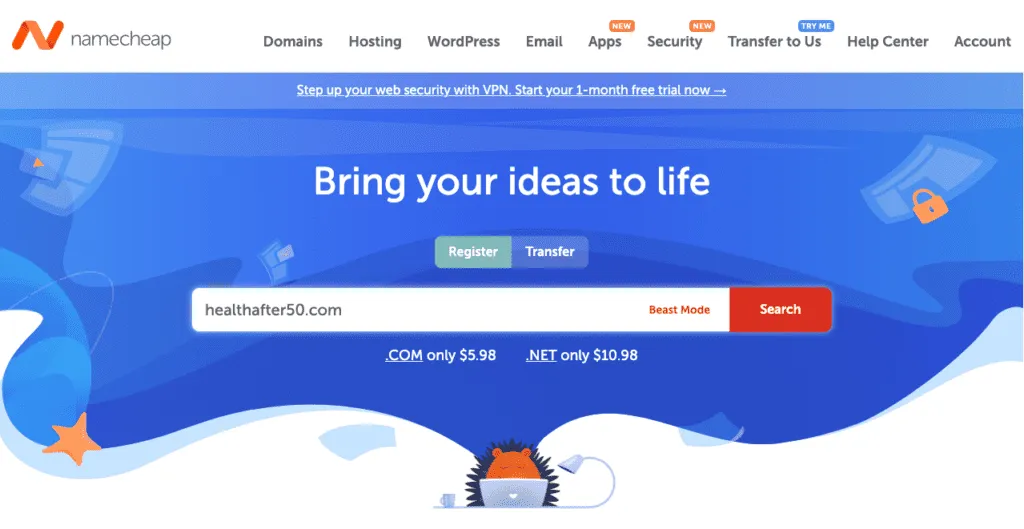
- Go to a Registrar's Website: We'll use Namecheap for this example, as it's user-friendly and recommended in several resources.
- Search for Your Domain: Use their search bar to type in your desired domain name. The site will immediately tell you if the
.comis available and suggest alternatives if it's not.
- Add to Cart and Purchase: If your domain is available, you can add it to your cart. A standard
.comdomain typically costs around $10-15 per year. - Add Domain Privacy (Optional but Recommended): During checkout, you'll be offered "Domain Privacy" or "Whois Protection." This service hides your personal information (name, address, email) from a public database. Many registrars, including Namecheap, now offer this for free. It's a good idea to enable it.
- Complete the Purchase: Follow the steps to create an account and pay for your domain. Congratulations, you now own your little piece of the internet!
How to Register a Domain Name in 2024 (Step by Step)
To see this process in action, watch this step-by-step walkthrough. It shows you exactly how to search for and purchase a domain using a registrar like Namecheap.
Watch the following two segments: Checking Availability (01:37 - 02:14): This shows how to check if your domain idea is available. Registering with a Registrar (03:43 - 04:37): This is a direct walkthrough of purchasing a domain through Namecheap. You can skip the section on getting a domain through a hosting provider for now, as we will cover hosting in the next lesson.
Exercise: Brainstorm and Check Your Domain
Now it's your turn. Let's stick with our dog training niche.
- Brainstorm 3-5 hybrid domain name ideas that follow the checklist we discussed (short, brandable, .com, etc.).
- Bad example:
bestsitstayreviews.com(too niche, sounds generic) - Good example:
CleverCanineGuide.com(brandable, hints at the niche, allows for growth)
- Bad example:
- Go to Namecheap.com (or another registrar of your choice).
- Check the availability of your ideas. Don't get discouraged if your first few are taken! This is a normal part of the process. Keep trying variations until you find an available
.comthat you like. - Register it! This is an exciting step. Once you complete the purchase, you have officially claimed your brand's online address.
Conclusion
You've just completed a foundational step in building your business. Choosing and registering a domain name transforms your idea from an abstract concept into a concrete digital asset.
Here are your key takeaways:
- A domain name is your website's human-friendly address and a core part of your brand.
- For affiliate marketing, a hybrid domain (brandable with a niche hint) is often the best strategy for long-term growth and trust.
- Always aim for a short, memorable, and easy-to-spell .com domain.
- The registration process is simple: search for your name on a registrar's site (like Namecheap) and purchase it if it's available.
Preview of the next lesson:
You now have an address (yourdomain.com), but you don't have the "land" to build your house on yet. In our next lesson, we will cover web hosting. You'll learn what hosting is, how to choose a provider, and how to connect it to the domain name you just registered.