Introduction
Congratulations on reaching the final lesson of your affiliate marketing course! You have built a solid foundation, from understanding the core concepts and navigating ClickBank, to building a website, creating content, driving traffic, and optimizing your performance. In our last lesson, you learned how to strategically evaluate complementary niches for expansion—a key step in long-term growth.
Now, we will tackle the final and most crucial element of scaling: outlining a strategy for reinvesting your affiliate earnings to grow from a side income to a full-time business.
This lesson is the capstone of the entire course. It will provide you with a financial and operational blueprint for taking your initial affiliate profits and using them to fuel a cycle of compounding growth. We will cover the mindset required for this transition, how to set your financial targets, and exactly where to reinvest your money to accelerate your journey toward building a sustainable, full-time affiliate marketing enterprise.
1. The Mindset Shift: From Earning to Reinvesting
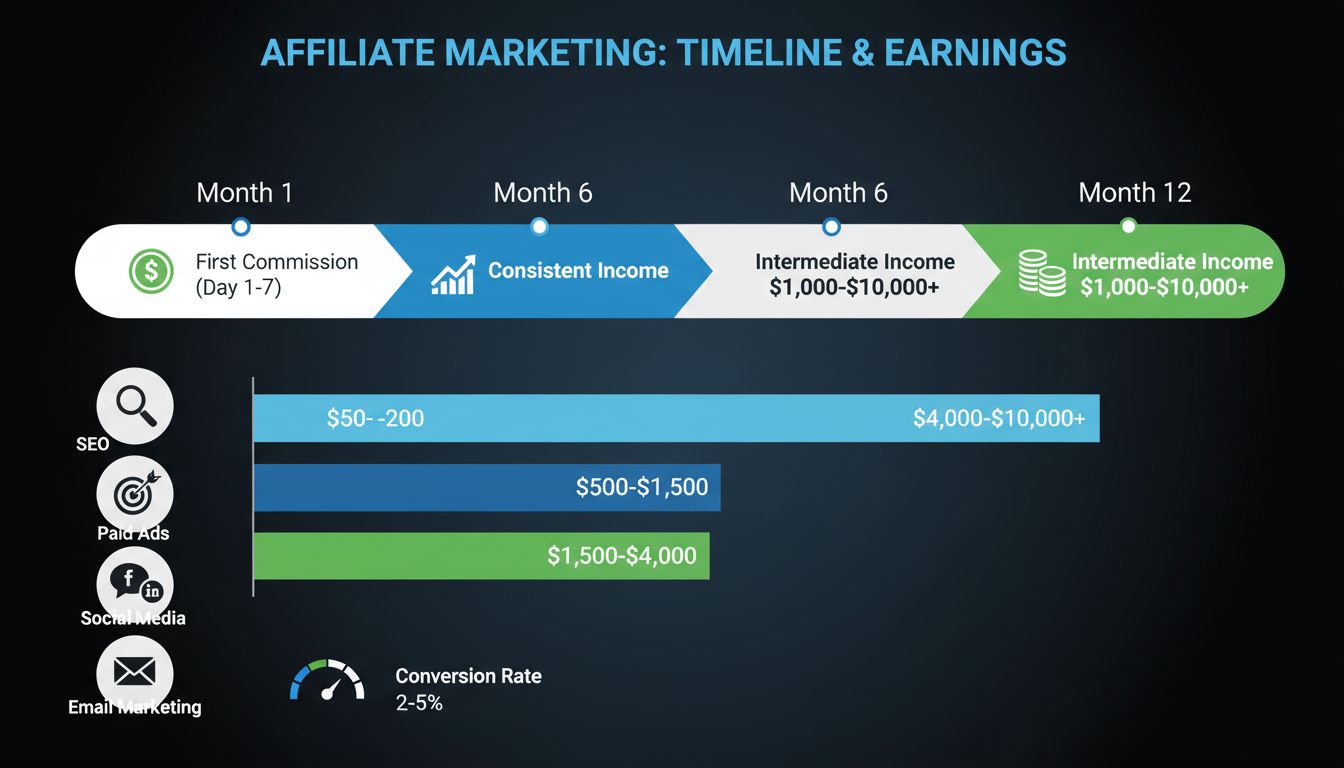
The single most important factor that separates affiliates who build a real business from those who remain stuck with a small side income is their mindset toward their first earnings. It's natural to want to enjoy the profits, but to truly scale, you must view your initial commissions not as disposable income, but as seed capital for your business.
Think of it as a flywheel: every dollar you reinvest into your business helps the wheel spin faster. A small push at the beginning (reinvesting early profits) leads to more traffic, which leads to more commissions, which gives you more capital to reinvest for even more traffic. This compounding effect is the engine of growth.
A powerful way to frame this is to see your work as an affiliate as paid market research. You are getting paid to learn what niches are profitable, what marketing angles work, and what traffic sources convert. This knowledge is an asset that you can leverage to grow exponentially.
This is How To Make REAL Money With Affiliate Marketing (Step By Step)
The video 'This is How To Make REAL Money With Affiliate Marketing' by Ross Minchev perfectly explains this strategic evolution. He reframes affiliate marketing as the ideal training ground for building a larger digital business.
Watch the segment from 01:00 to 03:39. Pay close attention to the concept of being an affiliate as 'getting paid to do market research' and the evolution from Phase 1 (being an affiliate) to Phase 4 (building an empire).
This mindset is your foundation. With every dollar earned, your first question shouldn't be "What can I buy?" but rather, "How can I reinvest this to earn two dollars back?"
2. The Financial Framework: Defining Your "Full-Time" Target
Before you can build a strategy to reach a full-time income, you need to define what that means for you in concrete financial terms. Without a clear target, you're just guessing. The process is straightforward: calculate the minimum income you need to cover your essential living costs.
How to start a Side Hustle without quitting your 9-5: My strategy
While you've mentioned you have no major time constraints, planning your finances as if you were transitioning from a job is a crucial professional discipline. The video 'How to start a Side Hustle without quitting your 9-5' by Nischa provides a clear and practical guide to calculating your financial target.
Watch the section from 07:11 to 09:20. Focus on the process of calculating your 'fixed monthly expenses' (rent, bills, etc.) to determine the baseline income your business needs to generate. This number is your first major milestone.
Your Action Step:
Take a moment to calculate your essential monthly expenses. This number is your "freedom number"—the amount your affiliate business needs to consistently generate in profit each month for it to be considered a viable full-time venture. Write this number down. It is now the primary goal you'll be working toward.
3. A Strategic Reinvestment Plan: Where to Allocate Your Capital
Once you start generating profit, you need a plan for how to deploy it. A common and effective strategy is to reinvest 30-50% of your profits back into the business. Where you invest this money depends on your current stage of growth.
The following article provides an excellent overview of scaling investments. Pay close attention to the budget allocation recommendations and common mistakes.
Should You Invest Money Your Affiliate Marketing Campaign?
The article 'Should You Invest Money Your Affiliate Marketing Campaign?' from PostAffiliatePro offers a structured look at the costs and strategies for scaling an affiliate business.
First, read the section titled 'Scaling Strategy & Budget Allocation' to understand when to scale and the recommended budget breakdown. Then, carefully review 'Common Investment Mistakes' to learn what pitfalls to avoid as you grow.
Synthesizing these principles, here is a phased reinvestment strategy:
Phase 1: Beginner Stage (Profits: ~$100 - $500/month)
At this stage, your focus is on strengthening your foundation and doubling down on what works.
- Top Priority: Content & SEO Tools. Reinvest in better content. If you're a good writer, spend money on a premium SEO tool like Ahrefs or SEMrush (even a one-month subscription) to do deep keyword and competitor research. If you're not a strong writer, consider hiring a freelance writer from a platform like Upwork for one or two articles to improve your site's quality.
- Secondary Priority: Premium Website Tools. Upgrade to a premium WordPress theme for better speed and design, or invest in premium plugins for caching (like WP Rocket) or SEO (like Yoast SEO Premium).
Phase 2: Growth Stage (Profits: ~$500 - $2,000/month)
You now have a consistent income stream. It's time to leverage it to buy back your time and scale your traffic.
- Top Priority: Content Delegation & Paid Traffic.
- Content: Begin to consistently delegate content creation. Hire a reliable freelance writer to produce 2-4 articles per month. This frees you up to work on your business (strategy, link building, new promotions) instead of just in it (writing).
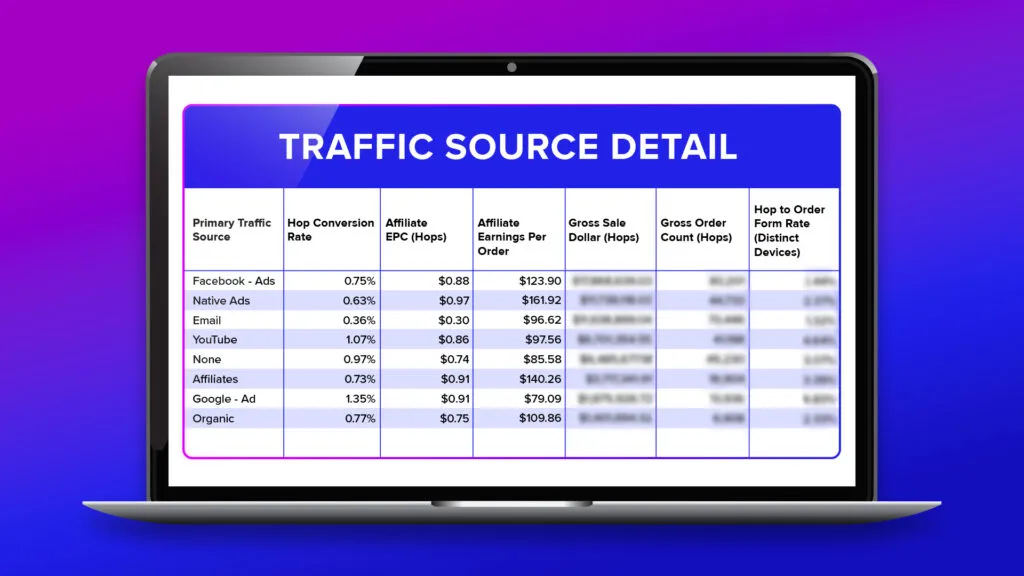
- Paid Traffic: Start experimenting with a small budget ($100-$300/month) on paid ads. Facebook Ads or Google Ads can be great places to start. The goal here is not immediate profit, but to acquire data. You want to learn which platforms drive the most effective traffic for your offers.
- Secondary Priority: Email Marketing. Upgrade your email marketing service to a more powerful platform that allows for better automation and segmentation. This will help you maximize the value of every subscriber.
Phase 3: Scaling Stage (Profits: >$2,000/month)
Your business is now a reliable income source, and you are nearing or have surpassed your "freedom number." The goal is now aggressive growth and systemization.
- Top Priority: Scale Paid Traffic & Build a Team.
- Paid Traffic: Identify your most profitable paid channel from Phase 2 and significantly increase your budget. What was a $300 experiment can now become a $1,500 monthly ad spend that generates a predictable return.
- Team Building: Hire a Virtual Assistant (VA) to handle repetitive tasks like formatting and publishing blog posts, managing social media schedules, or handling customer service inquiries. This is a massive leverage point.
- Secondary Priority: Niche Expansion & Education.
- Expansion: Use your profits to fund the expansion into the complementary niche you identified in the previous lesson. This could mean buying a new domain, hiring a writer specifically for that topic, or running test ad campaigns.
- Education: Invest in high-level coaching, masterminds, or advanced courses to learn skills that will take you to the next level (e.g., advanced media buying, conversion rate optimization).
This article provides more specific tactics for this scaling phase.
How Much Beginners Make in Affiliate Marketing 2026
The article 'How Much Beginners Make in Affiliate Marketing 2026' has a section that perfectly outlines the specific activities you should be investing in to break through the initial income plateau.
Read the section 'Scaling Beyond $1,000/Month'. This provides a concise checklist of where to reinvest, including paid traffic, content multiplication, and team building.
4. The Endgame: Graduating from Affiliate to Product Owner
Reinvesting to grow your affiliate income is the path to a full-time business. However, the ultimate form of scaling is to take all the market data you've collected and use it to create and sell your own product.
This is the final evolution of the strategy we discussed at the beginning. As an affiliate, you've discovered:
- A profitable niche.
- A hungry audience and their exact pain points.
- Marketing messages that convert.
- Traffic channels that work.
Why not create a product for that same audience and keep 100% of the revenue instead of a 50% commission? This is how you build a sellable asset and transition from generating an income to building long-term wealth.
This is How To Make REAL Money With Affiliate Marketing (Step By Step)
Let's return to the Ross Minchev video, which outlines this final, crucial step. He explains why this is the natural and most profitable conclusion to your affiliate marketing journey.
First, watch the 'four-step framework' from 06:08 to 08:30 to see a tactical plan for turning your affiliate skills into your own product. Then, watch the conclusion from 12:28 to 14:17, where he contrasts the 'affiliate treadmill' with the asset-building power of becoming a 'digital product CEO'.
This may seem like a distant goal now, but it's the logical destination on your map. Every piece of content you write, every ad you run, and every email you send is a step toward this ultimate goal.
Course Conclusion
Congratulations on completing the course! You started as a beginner and have systematically acquired the knowledge and skills to build a real business. From setting up your ClickBank account to crafting a long-term scaling strategy, you now possess a complete blueprint for success in affiliate marketing.
Key Takeaways from this Lesson:
- Mindset is everything: View your earnings as reinvestment capital, not just profit. Your affiliate work is paid market research.
- Know your target: Calculate your "freedom number" based on your essential monthly expenses to set a clear, motivating financial goal.
- Have a phased plan: Reinvest 30-50% of your profits strategically, focusing on content and tools first, then delegating and using paid traffic, and finally scaling aggressively with a team.
- Think long-term: The ultimate way to scale is to use the data you've gathered to create and sell your own product, transitioning from an affiliate to an asset owner.
You have the roadmap, the tools, and the knowledge. The path from a side income to a full-time business is a marathon, not a sprint. Be patient, be persistent, and apply the principles you've learned. The opportunities are immense, and you are now fully equipped to seize them. Good luck