Hello! Welcome to the final lesson of this module.
In our last two lessons, we've focused on analyzing your performance in the IELTS test, first for Listening and Reading, and then for Speaking. You learned how to identify your mistakes and understand your weaknesses by using the official assessment criteria. Today, we will take this powerful practice one step further.
This lesson is about turning your analysis into a systematic plan for improvement. Your learning outcome is to create and maintain a personal error log to track recurring mistakes. This technique is used by top-scoring students to transform their weaknesses into strengths. For a detail-oriented person like yourself, this structured approach can be incredibly effective for making measurable progress toward your Band 7 goal.
1. What is an Error Log and Why Is It So Powerful?
Simply put, an error log is a structured journal where you record your mistakes, analyze why you made them, and decide on a strategy to avoid them in the future.
Without one, many students find themselves stuck at the same score, repeating the same types of errors without realizing it. An error log breaks this cycle. It moves you from "practicing" to "deliberate practice," where every mistake becomes a valuable learning opportunity.
How to Build an IELTS Error Log that Boosts Your Band Score
Let's start with a clear definition. The article 'How to Build an IELTS Error Log that Boosts Your Band Score' from 700plus.club explains what an error log is and why it's so helpful.
Please read the short sections titled 'What is an IELTS Error Log?' and 'Why an Error Log Boosts Your IELTS Band Score'. This will give you a solid understanding of the core concept.
2. The Four Pillars of an Effective Error Log
While the idea is simple, the effectiveness of an error log lies in its structure. A great log doesn't just list what you got wrong; it forces you to think deeply about the root cause. Although the following video is for the GMAT exam, it presents a brilliantly simple and memorable framework that applies perfectly to IELTS.
How to Study for the GMAT: Your Most Important Tool, the Error Log
This video from PrepScholar GMAT introduces a simple yet powerful four-part framework for any error log. This will be the foundation for the templates we build today.
Watch the video from the beginning until 04:32. As you watch, focus on understanding the four key questions your error log should answer for every mistake: Which? (Which problem did you miss?) What? (What did you do wrong?) Why? (Why did you make that specific mistake?) How? (How can you avoid this error next time?) Also, pay attention to the benefits of using the log, as explained at the end of the clip.
This Which-What-Why-How model is the engine of your improvement. The "Why?" is the most critical step. Was it a vocabulary gap? Did you lose focus? Did you misunderstand a grammar rule? Identifying the true cause is the only way to find the right solution in the "How?" step.
3. Creating Your IELTS Error Log: Templates for Each Skill
Now, let's apply this framework to the four sections of the IELTS exam. The following resource is an incredibly detailed guide with templates you can adapt for your own use. You can create your log in a physical notebook, a spreadsheet, or a digital document—whatever works best for you.
IELTS Error Log Template: How to Track and Fix Weaknesses
The blog post 'IELTS Error Log Template' from BabyCode Blog provides comprehensive templates for each part of the test. We will use these as our models.
Please review the four templates provided in this article. You don't need to read every single word, but focus on the structure of the tables and the 'Error Category' examples for each skill: Complete Reading Error Log Template: Notice categories like 'Inference Error' and 'Synonym Trap'. Complete Listening Error Log Template: Look at categories like 'Concentration Lapses' and 'Accent Difficulties'. Complete Writing Error Log Template: See how errors are broken down by the official criteria, like 'Task Response' and 'Coherence and Cohesion'. Complete Speaking Error Log Template: Observe categories like 'Excessive Hesitation' and specific 'Pronunciation Errors'. This builds directly on our last lesson.
Let's look at a couple of examples in more detail.
Listening Log in Action
For listening, a key part of your log will be a vocabulary section. When you encounter a word that caused you to miss an answer, you don't just write it down. You analyze it.
Get BAND 9 After Using These Listening Tips
This video from IELTS Advantage demonstrates exactly how to create a vocabulary error log after a listening practice test. This is a perfect example of the 'How?' step in action.
Watch the section from 00:24:38 to 00:26:29. The instructor explains a five-step process for a vocabulary notebook. Notice how it involves not just the word and its meaning, but also pronunciation, synonyms, and example sentences. This deep processing helps the new vocabulary stick.
Writing Log Example
For your writing, a log helps you track feedback and connect it to specific areas for improvement. Here is a simple visual example of what a writing tracker might look like.
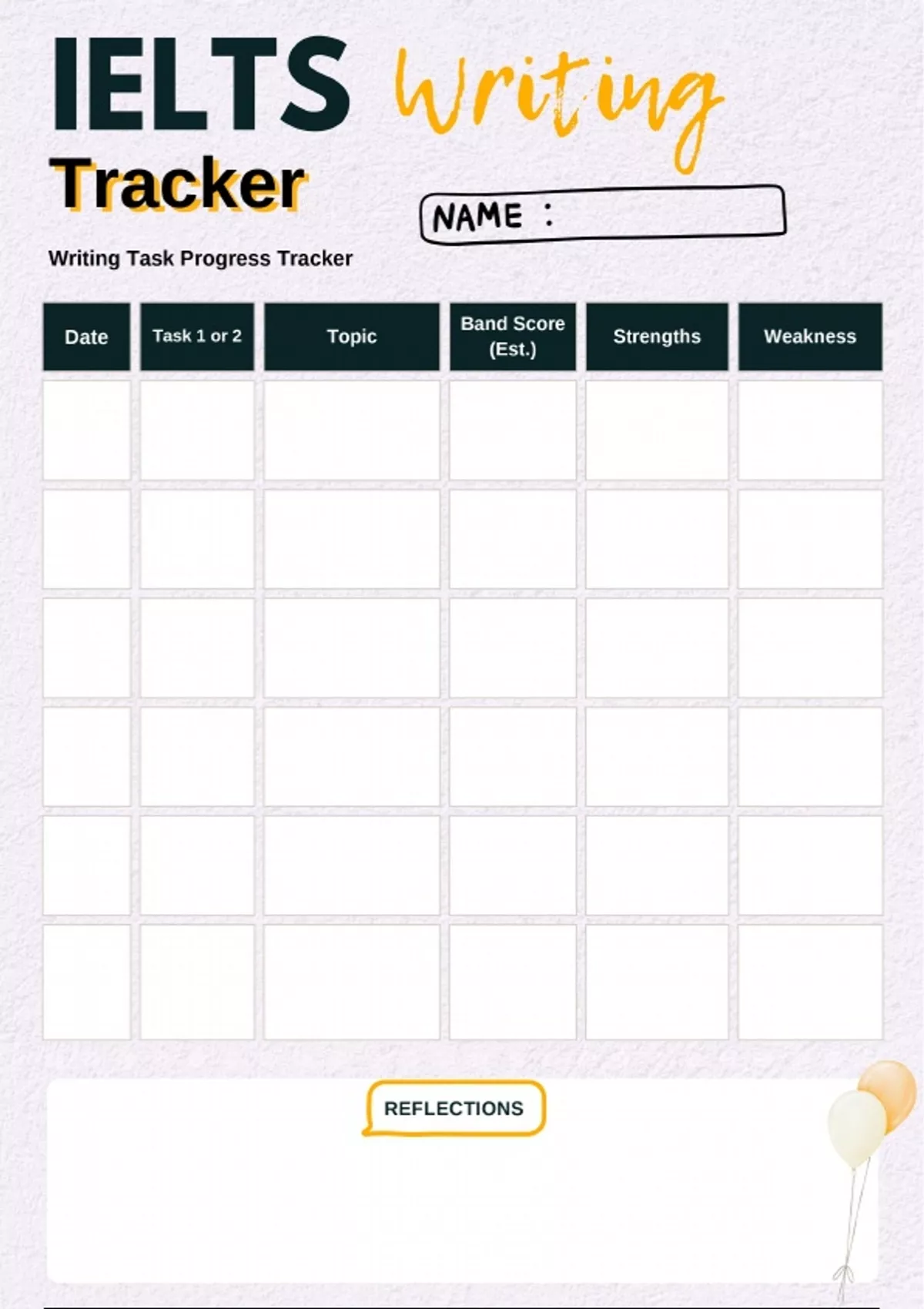
Your log can be as simple or as detailed as you like, as long as it helps you identify patterns. For example, if you see "Article Errors" appearing frequently in your writing log, you know you need to dedicate a study session to that specific grammar point.
4. Maintaining Your Log for Long-Term Success
Creating the log is just the first step. The real benefit comes from using it consistently.
- Log Errors Immediately: Fill out your log right after you finish a practice section, while the reasons for your mistakes are still fresh in your mind.
- Review Weekly: Set aside 15-20 minutes each week to read through your log. This is when you'll start to see the patterns.
- Prioritize: You can't fix everything at once. Use your log to identify your most frequent and high-impact mistakes. The "IELTS Error Log Template" article calls these Systematic Errors. Focus your energy on fixing these first.
How to Build an IELTS Error Log that Boosts Your Band Score
To make your log even more powerful, let's look at some advanced tips and a structured review schedule.
First, read the section 'Advanced Tips for Making Your Error Log Even More Powerful'. The ideas of colour-coding and creating flashcards are excellent ways to make your review more effective.
IELTS Error Log Template: How to Track and Fix Weaknesses
Now, let's establish a routine for reviewing your log. The 'IELTS Error Log Template' guide provides a clear protocol.
Please read the section 'Improvement Tracking Protocols'. Focus on the descriptions for Daily Monitoring and Weekly Analysis. This gives you a clear, manageable routine for maintaining your log.
By following this daily and weekly process, you create a feedback loop. You practice, you analyze your mistakes, you identify patterns, and you adjust your study plan accordingly. This is the fastest path to improvement.
Conclusion
Congratulations on completing this module on practice and review. You now have the most important tool for effective self-study: a system for learning from your mistakes.
Key Takeaways:
- An error log is a structured journal to track mistakes, understand their causes, and plan improvements.
- A powerful log entry answers four questions: Which problem, What was the error, Why did it happen, and How will you prevent it?
- You should maintain separate, detailed logs for all four IELTS skills: Listening, Reading, Writing, and Speaking.
- Weekly review is essential for identifying recurring patterns (systematic errors) and prioritizing what to study next.
This tool will be invaluable as we move forward. Your error log will highlight specific gaps in your knowledge, particularly in grammar and vocabulary.
Our next module, "Essential Grammar for Academic English," is designed to fill those gaps. In the first lesson, we will tackle a common area of difficulty: using the present perfect tense to connect past events with the present. You'll be able to apply what you learn directly to the errors you've identified in your log.