Hello and welcome to your new module on Advanced SERP Feature & Voice Search Optimization.
In the last module, you mastered how to create high-quality, on-brand content with AI assistance and, crucially, how to implement quality control systems to do so at scale. Now that you have a powerful engine for producing excellent content, our focus shifts to ensuring that content achieves maximum visibility in a rapidly evolving search landscape.
This lesson addresses the learning outcome: Analyze SERP features to identify opportunities for featured snippets, 'People Also Ask', and knowledge panels. We will move beyond the traditional "ten blue links" and learn to deconstruct the modern Search Engine Results Page (SERP) to find high-impact opportunities that can place your content front and center.
1. The Modern SERP: A Battle for Visibility Surfaces
As an experienced SEO specialist, you know that ranking #1 isn't the only goal anymore. The SERP has transformed into a dynamic interface filled with interactive elements. Winning in 2026 means capturing this valuable real estate.
How to Find SERP Features for SEO Growth
To start, let's get a high-level overview of what SERP features are and why they are non-negotiable in modern SEO. This article from Passionfruit provides a concise summary.
Read the 'Key Takeaways' section at the beginning, and then continue down to the section titled 'What Are SERP Features?' stopping before 'Why SERP Analysis Matters'. Focus on the definitions of Featured Snippets, Local Packs, People Also Ask boxes, and Knowledge Panels.
The key takeaway is that SERP features are your fastest path to the top of the page, often allowing you to leapfrog competitors. This has led to a strategic shift in SEO: from focusing solely on ranking positions to competing for visibility surfaces.
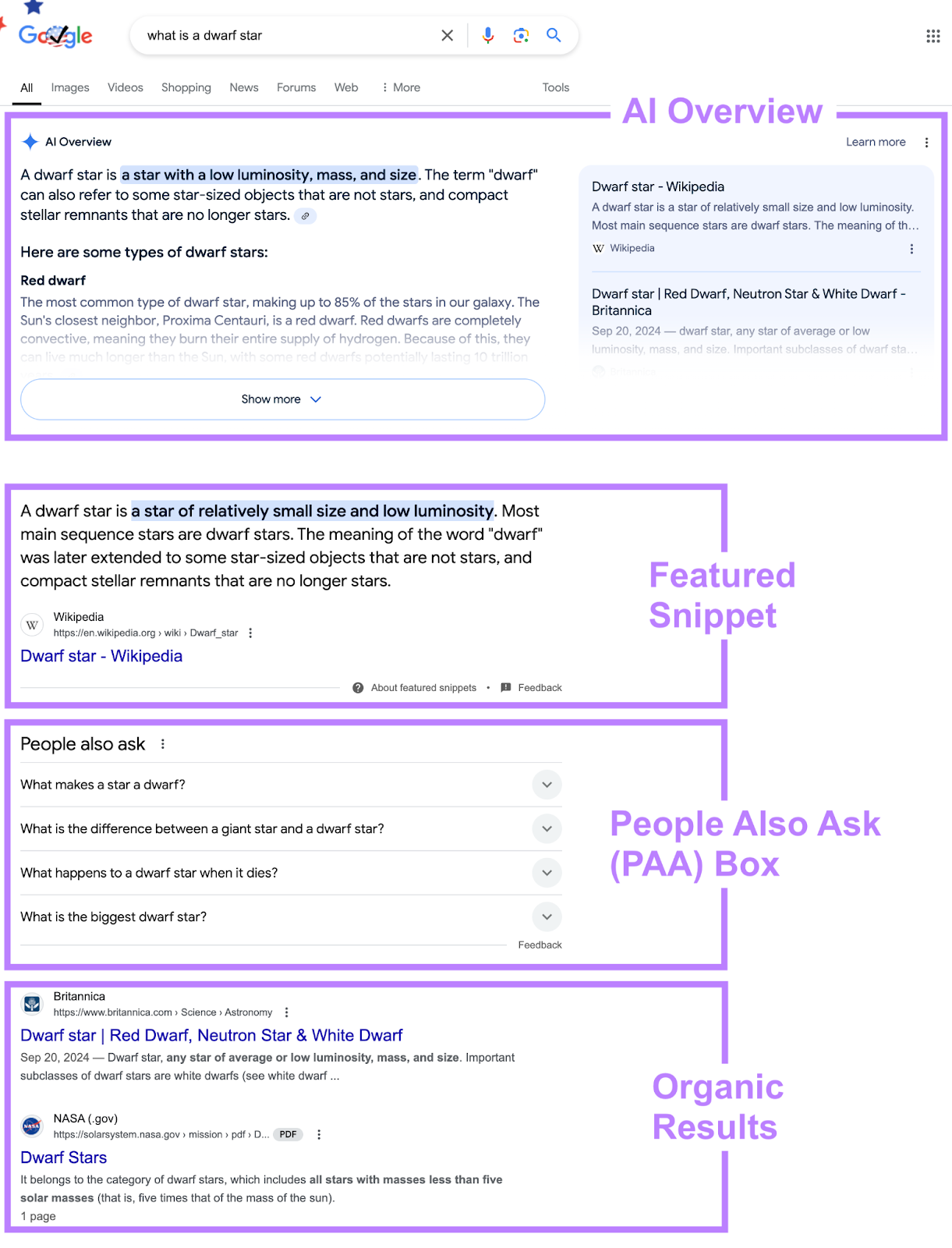
This concept is especially critical with the rise of Google's AI Overviews (formerly Search Generative Experience or SGE), which act as a new, dominant layer at the top of the SERP.
2. Identifying Your Primary Targets
While there are many SERP features, our focus for today is on three of the most impactful and attainable ones for content-driven strategies: Featured Snippets, 'People Also Ask' (PAA), and Knowledge Panels.
Featured Snippets: "Position Zero"
The featured snippet is arguably the most coveted piece of SERP real estate. It's a block that directly answers a user's query, pulled from a page that ranks in the top 10.
How to get Featured Snippets on Google (this really works)
To understand the immense value of a featured snippet, let's look at a quick case study from SEO expert Jaume Ros. He demonstrates the dramatic impact on click-through rate (CTR).
Watch the first 1 minute and 27 seconds of this video. Note the difference in CTR between a page ranking #1/#2 and a page that owns the featured snippet.
A 40% CTR is a game-changer. To identify opportunities, you first need to recognize the different formats Google uses for featured snippets.
- Paragraph Snippets: The most common format, providing a concise, text-based answer. Often used for "what is" or "who is" queries.
- List Snippets: Can be numbered (for steps in a process) or bulleted (for lists of items).
- Table Snippets: Google pulls data directly from an HTML table on a webpage, which is great for comparisons or data-heavy queries.
- Video Snippets: Often shows a specific clip from a video that answers the query.
People Also Ask (PAA) Boxes
PAA boxes are expanding accordions of related questions that appear within the SERP. Each question, when clicked, reveals a short answer and a link to the source.
Winning PAA placements is an excellent strategy because:
- They have a lower barrier to entry than featured snippets.
- They help establish your site as a topical authority by answering multiple related questions.
- They provide invaluable insight into user intent and can be a goldmine for new content ideas.
Knowledge Panels
Knowledge panels appear on the right side of the SERP (on desktop) and contain information about a specific entity—a person, place, or organization.
You don't "win" a knowledge panel in the same way you win a featured snippet. Instead, you influence it by ensuring Google has accurate, consistent information about your brand entity across the web. This connects directly to the E-E-A-T principles we've discussed; a well-structured Knowledge Panel is a powerful signal of authoritativeness and trust.
3. A Practical Process for SERP Analysis
Now, let's get to the hands-on process. Your goal is to systematically find keywords where you have a realistic chance of capturing a SERP feature. Since you're already familiar with Ahrefs and SEMrush, we can integrate them directly into this workflow.
Step 1: Identify "Quick Win" Opportunities with SEO Tools
The lowest-hanging fruit is to find keywords for which you already rank on page one, but a competitor (or no one!) owns the SERP feature.
How to get Featured Snippets on Google (this really works)
Let's return to Jaume Ros's video, where he demonstrates exactly how to use Ahrefs to find these 'quick win' opportunities. This is a highly actionable technique you can apply immediately.
Watch the segment from 10:12 to 11:32. He walks through filtering for keywords that rank in the top 10, have significant volume, and trigger a featured snippet that the site doesn't currently own.
This process is your starting point. You can build a target list by exporting keywords from Ahrefs or SEMrush that meet these criteria:
- Position: 1-10
- SERP Features: Has a feature (e.g., Featured Snippet, PAA)
- Your site does not own the feature.
Step 2: Analyze the SERP Manually
Tools give you scale, but manual analysis reveals the nuance. For your top 5-10 target keywords from Step 1, perform a manual check in an incognito browser window.
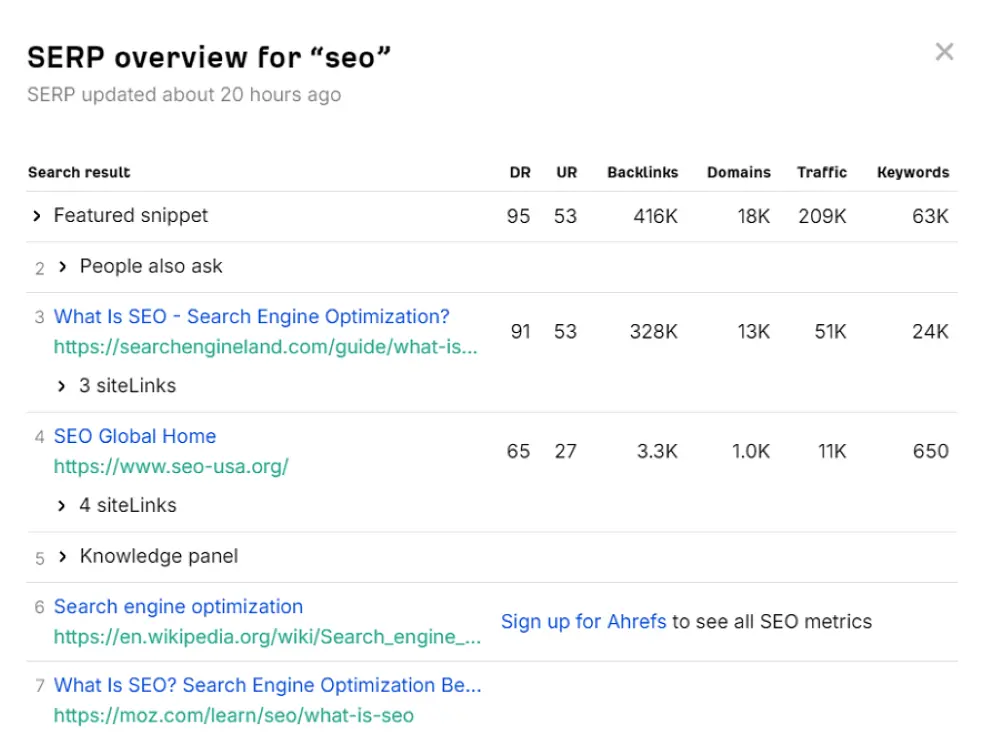
As you analyze the SERP, document the following for each keyword in a spreadsheet:
- Keyword: The query you searched.
- Featured Snippet Owner: The URL that currently has the snippet.
- Featured Snippet Format: Is it a paragraph, numbered list, bulleted list, or table?
- PAA Questions: List the top 3-4 questions in the PAA box.
- Knowledge Panel: Does one appear? If so, what entity is it for?
This creates a "battle map" that tells you exactly what you need to do to compete.
Step 3: Deconstruct Your SERP Competitors
Your SERP competitors are not just your business rivals; they are any site that occupies the SERP real estate you want. A powerful technique to analyze this competition is to see who else is in line for the featured snippet.
How to get Featured Snippets on Google (this really works)
Here's a fantastic practical trick for competitor analysis. This clip shows how to use a simple search operator to see who Google might choose for the featured snippet if the current winner were removed.
Watch from 03:32 to 05:49 and then again from 11:32 to 12:27. Pay close attention to the use of the -domain.com search operator to reveal the next competitor in the queue. This is a brilliant way to analyze the content and structure of multiple top contenders.
By using the -[domain] operator, you can peel back the layers of the SERP and analyze the structure, formatting, and content of the top 2-3 pages that Google considers eligible for the featured snippet. This gives you a much richer understanding of what it takes to win.
Test your understanding!
You are the SEO specialist for a website called coffeenerd.com. Using Ahrefs, you discover that you rank in position 3 for the keyword "how to make a pour over".
You perform a manual SERP analysis and find the following:
- A competitor,
baristadaily.com, owns the featured snippet with a 5-step numbered list. - The PAA box includes the questions: "What is the best coffee to water ratio for pour over?", "Why does my pour over coffee taste bitter?", and "Is pour over better than drip?".
- There is no knowledge panel.
Based on this lesson, identify three distinct opportunities for coffeenerd.com and describe the first analytical step you would take for each.
Show answer
Here are three distinct opportunities and the analytical steps:
-
Opportunity: Steal the Featured Snippet. The most direct opportunity is to take the featured snippet from
baristadaily.com.- Analytical Step: I would use the
-baristadaily.comsearch operator to see if another competitor is in the queue for the snippet. Then, I would analyze the structure of the top 2-3 pages vying for the snippet to understand the optimal number of steps, heading structure, and level of detail needed to create a better, more comprehensive numbered list than the competition.
- Analytical Step: I would use the
-
Opportunity: Dominate the 'People Also Ask' Box. The PAA questions represent clear user intent that can be targeted.
- Analytical Step: I would check my existing "how to make a pour over" article to see if it already answers these questions. If not, I'd plan to add a dedicated FAQ section to the page. I would click on each PAA question to see the current answers and analyze their format and word count to ensure my answers are more direct and comprehensive.
-
Opportunity: Build Topical Authority and Capture Long-Tail Traffic. The PAA questions suggest related topics that users are interested in.
- Analytical Step: I would treat each PAA question as a potential new article or a significant section within a larger content hub. For example, "Why does my pour over coffee taste bitter?" is a great topic for a dedicated troubleshooting guide. I would perform keyword research on these long-tail queries to assess their search volume and SERP landscape, planning new content to support my main "pour over" pillar page.
Conclusion
You now have a systematic process for dissecting the SERP and identifying high-value opportunities beyond traditional organic rankings. By analyzing SERP features, you can develop a precise, data-driven strategy to capture more visibility and traffic.
Key Takeaways:
- Modern SEO is a competition for visibility surfaces, not just ranking positions.
- Featured snippets, PAA boxes, and knowledge panels are primary targets for content-driven SEO strategies.
- Your analysis should start by identifying "quick wins": keywords where you already rank on page one but don't own the SERP feature.
- A combination of tool-based analysis for scale and manual analysis for nuance provides the most complete picture.
- Use advanced search operators like
-domain.comto deconstruct the competition and understand what it takes to win.
In this lesson, you've learned how to find the opportunities. In our next lesson, we will focus on how to capture them. The topic will be: "Structure content specifically to capture featured snippet positions using optimal formatting techniques." We'll dive into the specific on-page tactics for creating "snippet-bait" that Google loves.