Hello and welcome to your next lesson!
In our last session, we mastered the human-in-the-loop (HITL) workflow for perfecting a single piece of AI-generated content. You learned how to verify facts, enhance quality, and check for originality. But what happens when you need to manage not just one article, but a hundred? How do you maintain that same level of quality at scale?
Today, we'll answer that question. Our learning outcome is to implement quality control mechanisms to uphold E-E-A-T and brand voice in AI-generated content at scale. This lesson moves from ad-hoc editing to building robust systems. You'll learn how to create frameworks that ensure every piece of AI-assisted content is accurate, authoritative, and perfectly aligned with your brand, no matter the volume.
1. The Challenge: Why Quality Erodes at Scale
When teams first start using AI for content, they often plug it into existing workflows without changing the process. This leads to predictable problems. As the ForesightFox article "Maintaining Brand Voice With Generative AI" explains, without proper guardrails, your content's quality will degrade by default.
Maintaining Brand Voice With Generative AI
To understand the common failure points of scaling AI content, let's review a section from the ForesightFox guide. It clearly explains why simply 'adding AI' leads to a loss of brand identity.
Read the section titled 'Why Brand Voice Erodes When You “Just Add AI”'. Pay close attention to the descriptions of 'Tone flattening', 'Inconsistent persona', and 'Unmoored claims'.
As the article highlights, large language models are designed to find the statistical average. Your brand, however, is not average. To avoid this drift toward generic, low-value "workslop," you need a deliberate, scalable quality control framework.
2. A Framework for Quality Control at Scale
To tackle this challenge systematically, we will use a framework that breaks the quality control process into distinct, manageable stages. This approach ensures quality is considered at every step, not just as a final check.
The article "Quality Control in AI-Produced Content: A Complete Guide" from Rellify provides an excellent model. We will adapt its core ideas into a three-part framework:
- Pre-Generation Setup (The Foundation): Building quality in from the start by codifying your brand voice and E-E-A-T requirements.
- Post-Generation Analysis (The Validation): Implementing a scalable human-in-the-loop workflow with clear roles and checklists.
- Performance Monitoring (The Feedback Loop): Using data to continuously refine your process and improve AI outputs over time.
Let's dive into each stage.
3. Stage 1: The Foundation (Pre-Generation Setup)
The most effective way to ensure quality at scale is to define it before you ever click "generate." This means translating your brand voice and E-E-A-T standards into instructions the AI and your team can consistently follow.
Codifying Your Brand Voice
You need to move beyond simple prompts and create an AI-ready voice kit. This is a central document that codifies your brand's personality into machine-readable instructions.
Maintaining Brand Voice With Generative AI
The ForesightFox article offers a fantastic blueprint for creating an 'AI ready voice kit.' This is the foundational document for maintaining brand voice at scale.
First, read the section 'Layer 2: Voice Kit' to understand the components, such as personality sliders, tone by context, lexicon, examples, and guardrails. Then, skim the section 'Turning Brand Voice Into AI Instructions' for a practical process on how to build one.
Your voice kit acts as the "source of truth" for your brand's communication style. When embedded into system prompts or used as a guide for your team, it drastically reduces "tone flattening" and ensures consistency.

Systematizing E-E-A-T
Just as with brand voice, you can build E-E-A-T signals into your content process at a foundational level.
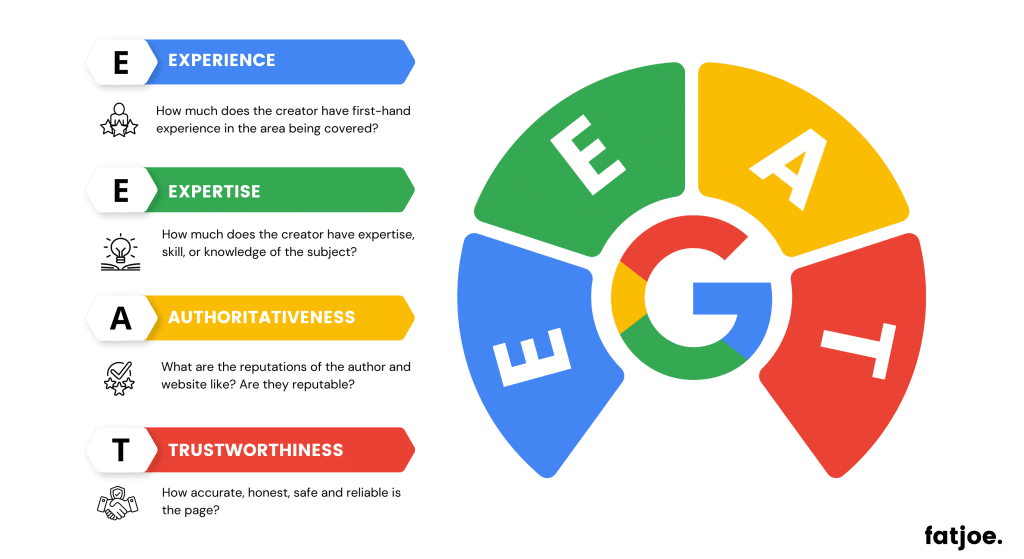
To scale E-E-A-T, focus on sitewide and templated elements that reinforce your credibility.
Make Google LOVE Your AI Content - E-E-A-T Hacks
Caleb Ulku's video 'Make Google LOVE Your AI Content - E-E-A-T Hacks' provides actionable on-page and off-page tactics for establishing E-E-A-T. We'll focus on the on-page elements that are easiest to scale.
Watch the segment from 04:18 to 07:03. Pay attention to the scalable on-page elements like creating a comprehensive 'About' page, implementing author bio boxes with schema, and building out social media profiles.
Based on the video, here are key E-E-A-T mechanisms you can implement at scale:
- Standardized Author Bios: Create a template for author bios that includes their credentials, experience, and links to their social media profiles (e.g., LinkedIn).
- Author Schema: Programmatically add
Personschema markup to every article, clearly attributing the work to a real expert. - Fact-Checking Policy: Establish a clear internal policy for verifying all claims, statistics, and data points, as mentioned in the Rellify article. You can even create an internal library of pre-approved statistics and sources.
- Transparent Sourcing: Enforce a rule that all external data must be linked to the original, primary source.
By defining these elements upfront, you're building a scalable foundation for trust and authority.
4. Stage 2: The Validation (Post-Generation Analysis)
This stage is the scaled-up version of the HITL process we covered in the last lesson. Instead of one person doing everything, you create a structured workflow with defined roles and responsibilities.
Quality Control in AI-Produced Content: A Complete Guide
The Rellify article outlines a comprehensive set of post-generation checks. This serves as an excellent checklist for a scalable validation process.
Read the section 'Step 3: Post-generation analysis (validation)'. Note the different layers of review: technical (links, SEO), factual (fact-checking), brand (alignment), and expert (SME review).
A robust validation workflow typically involves two key roles:
- Subject Matter Expert (SME): This person is responsible for factual accuracy and depth. They verify claims, add unique insights from their experience, and ensure the content is technically correct and provides real value beyond summarizing existing information.
- Editor / Brand Steward: This person is responsible for quality and consistency. They check for brand voice alignment (using the voice kit), readability, grammar, flow, and on-page SEO optimization.
Case Study: An Automated Quality Workflow in Action
To see how these concepts come together, let's look at a real-world example of an automated content pipeline that includes built-in quality controls.
I Built an AI Content Agent With N8N and Claude (Step-by-Step)
Greg Isenberg's video, 'I Built an AI Content Agent With N8N and Claude,' demonstrates a sophisticated workflow that incorporates many of the principles we've discussed. It shows how you can systematize prompt engineering and human review.
Watch the following key segments: Prompting for Brand Voice (14:16 - 17:32): Notice how he provides the AI with specific instructions on brand voice, tone (direct, no jargon), and even negative constraints (no hashtags, no m-dashes). This is an application of a voice kit. Ensuring Factual Grounding (09:37 - 11:12): See how he uses a research agent (Perplexity) to feed the AI factual data, reducing the risk of hallucinations and improving trustworthiness. The Human Review Checkpoint (18:08 - 20:16): Observe how the final draft is sent to Slack for a human to review in a Google Doc before publishing. This is the critical HITL validation step.
This workflow is a powerful example because it doesn't just rely on a final edit. It builds quality into the process by:
- Guiding the AI with a detailed "voice kit" in the prompt.
- Grounding the AI with real research to ensure accuracy.
- Implementing a clear human checkpoint for final approval.
5. Stage 3: The Feedback Loop (Performance Monitoring)
Publishing the content isn't the final step. To maintain quality at scale, you must create a feedback loop where performance data is used to refine your entire process.
Quality Control in AI-Produced Content: A Complete Guide
The final step in our framework is performance monitoring. The Rellify guide provides a clear list of metrics to track and actions to take.
Read 'Step 4: Performance monitoring (optimization)'. Focus on how you can use engagement metrics, SEO performance, and A/B testing to create a feedback loop that improves your prompts and voice kit over time.
To make this feedback loop a formal part of your operations, consider establishing a governance model. As suggested in the ForesightFox article, this can include:
- Designating a "Brand Steward": A senior writer or strategist who owns the AI voice kit and is responsible for updating it based on performance data and team feedback.
- Conducting Regular Audits: Periodically review a sample of AI-generated content to check for "brand drift" and ensure adherence to the guidelines.
- Tracking Quality Metrics: Measure not just output volume, but also metrics like brand consistency scores, engagement rates, and customer feedback on AI-mediated content.
This turns quality control from a reactive task into a proactive, data-driven system of continuous improvement.
Test your understanding!
Imagine you are hired to scale the content production for a new finance blog that targets millennials. You need to produce 50 articles in the next quarter using AI assistance.
Based on this lesson, outline the first three steps you would take to establish a quality control framework. Specifically:
- Describe two key components you would include in your "AI-ready voice kit" for this brand.
- Define the distinct responsibilities of the Subject Matter Expert (SME) and the Editor in your post-generation validation workflow.
Show answer
Here’s a sample response:
-
AI-Ready Voice Kit Components:
- Brand Personality Sliders: I would define where the brand sits on key spectra. For a finance blog for millennials, this might be:
Formal(3) <---> Casual(7);Playful(2) <---> Serious(8);Assertive(6) <---> Modest(4). This ensures a tone that is approachable but still authoritative. - Lexicon (Words to Avoid): I would create a list of words to avoid, such as traditional, stuffy financial jargon ("heretofore," "diversify your portfolio") and overly simplistic, condescending terms. I'd also ban AI-favored fluff like "unlock the secrets," "supercharge," and "game-changer."
- Brand Personality Sliders: I would define where the brand sits on key spectra. For a finance blog for millennials, this might be:
-
Role Responsibilities in Validation:
- Subject Matter Expert (SME): This person, likely a certified financial planner (CFP), is responsible for accuracy and E-E-A-T. Their job is to review the AI draft to ensure all financial advice is sound, compliant with regulations (e.g., SEC guidelines), and factually correct. They would also add their own unique insights, personal anecdotes about financial planning, and real-world examples that an AI cannot generate.
- Editor: This person is responsible for brand voice and readability. They take the SME-approved draft and polish it according to the voice kit. They ensure the language is clear, engaging for a millennial audience, free of jargon, and structurally optimized for online reading (short paragraphs, subheadings, etc.). They are the final guardian of the brand's personality.
Conclusion
Congratulations! You've now moved from editing single articles to designing a complete system for maintaining quality at scale. You have the strategic frameworks and practical tools to lead an AI-assisted content program that is both efficient and excellent.
Key Takeaways:
- Systems Over Ad-Hoc Effort: To maintain quality at scale, you must move from individual editing to a systematic framework.
- Codify Your Voice: An "AI-ready voice kit" is the single most important document for ensuring brand consistency in AI-generated content.
- Systematize E-E-A-T: Implement scalable, sitewide elements like author schema, transparent sourcing policies, and detailed author bios to build trust.
- Define Roles Clearly: A successful validation process relies on distinct roles for Subject Matter Experts (focused on accuracy) and Editors (focused on brand voice).
- Close the Loop: Use performance data to continuously audit your outputs and refine your prompts, voice kit, and overall process.
In this module, we've focused on creating high-quality, on-brand content. Now that you know how to produce it, the next step is to ensure it performs optimally in search.
Our next lesson begins a new module, Advanced SERP Feature & Voice Search Optimization. The first lesson, "Analyze SERP features to identify opportunities for featured snippets, 'People Also Ask', and knowledge panels," will teach you how to deconstruct the search results page to find high-visibility opportunities for the great content you now know how to create.