Introduction
Welcome back! In our last lesson, we explored how broad economic indicators like GDP, inflation, and unemployment provide a "macro" context for the stock market. We saw how the market, being forward-looking, reacts to the direction of these indicators, using the recent Sri Lankan economic turnaround as a powerful case study. We noted that policy responses from institutions like the Central Bank and the government are critical in shaping these economic trends.
Today, we will dive deep into one of these policy areas. This lesson focuses on the learning outcome: Describe how government fiscal policy (taxation, spending) affects businesses and markets in Sri Lanka.
We will define fiscal policy, identify its two primary tools—taxation and government spending—and examine how the Sri Lankan government uses them to manage the economy. Most importantly, we'll connect these government actions directly to the performance of businesses and the potential impact on stock prices on the Colombo Stock Exchange (CSE).
Part 1: Understanding Fiscal Policy and Its Mechanisms
To begin, let's establish a clear definition of fiscal policy and distinguish it from monetary policy, which we will cover in the next lesson.
Difference between Fiscal policy and Monetary policy #fiscalpolicy #monetarypolicy
This short video from Educationleaves provides an excellent overview of fiscal policy, explaining what it is, who implements it, and what tools they use.
Please watch the following segments: What is Fiscal Policy? (00:25 - 01:00) Who Implements It? (01:31 - 01:41) Tools and Techniques (01:49 - 02:10) Direct vs. Indirect Impact (03:09 - 03:20) \nFocus on understanding that fiscal policy is the government's domain and its primary tools are spending and taxation.
To summarize the key points from the video:
- Definition: Fiscal policy refers to the use of government spending and taxation to influence the economy.
- Implementer: It is enacted by the government, typically through its Ministry of Finance.
- Objective: The primary goals are to foster economic growth, manage employment levels, and maintain stability.
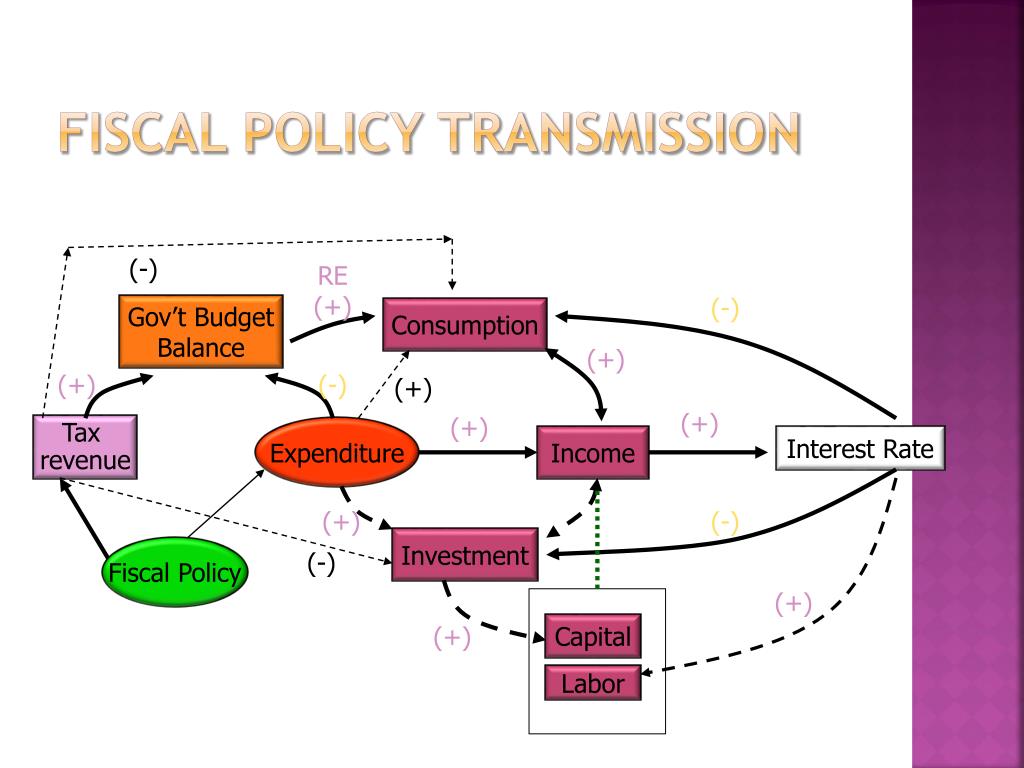
Fiscal policy has two main levers the government can pull:
- Government Spending: Increasing or decreasing the amount of money the government injects into the economy.
- Taxation: Raising or lowering taxes on individuals and corporations.
Let's examine how each of these levers affects the Sri Lankan stock market, based on specific research conducted on the CSE.
[PDF] The Impact of Fiscal and Monetary Policy Changes on Investors ...
This research paper, 'The Impact of Fiscal and Monetary Policy Changes on Investors...', looks specifically at how investors on the Colombo Stock Exchange react to fiscal policy. It provides direct evidence of the impact in our target market.
Please read two key sections from the 'Results and Discussion' part of the paper: The section discussing government expenditure. Look for the paragraph that begins "Table 4 shows that government expenditure impacts positively on investor performance." (Page 24). The section discussing taxes. Find the paragraph starting with "The results also show that all the taxes in one dimension have significant negative effects on individual investors expected returns." (Page 24). \nFocus on the main conclusion for each: does it help or hurt investor returns, and why?
Based on this research, we can see a clear pattern on the CSE:
-
Government Spending (Generally Positive for the Market): The paper finds that increased government expenditure has a positive impact on investor returns. When the government spends on things like infrastructure development (roads, ports), public services, and public servant salaries, it creates a ripple effect.
- Construction and material companies get more contracts.
- Increased salaries lead to higher consumer spending, benefiting retail and consumer goods companies.
- A stable, secure environment encourages business activity.
This is consistent with the Keynesian economic model, which suggests that government spending stimulates business output and economic growth.
-
Taxation (Generally Negative for the Market): The study shows that taxes collectively have a negative effect on investor returns.
- Corporate Taxes: A higher corporate tax rate directly reduces a company's net profit. This leaves less money for dividends and reinvestment, making the stock less attractive.
- Income & Withholding Taxes: Higher personal taxes reduce the disposable income of households. This means less money is available for both consumption (hurting company revenues) and investing in the stock market.
To visualize how these levers work, consider the following diagram. Given your background in IT, you can think of this as a system flowchart, showing how inputs (fiscal policy changes) travel through the economy to produce outputs.
(This is a good point to take a break. The first part covers the core concepts of fiscal policy and its theoretical impact on the stock market, taking approximately 30 minutes.)
Part 2: Fiscal Policy in the Real World: The Sri Lankan Context
Theory provides the "how," but the real world adds the "why" and "what." Government fiscal decisions are not made in a vacuum; they are shaped by the country's specific economic reality.
The Constraint: Sri Lanka's Fiscal Reality
A government's ability to spend is limited by its revenue and its ability to borrow. The recent Sri Lankan economic crisis provides a stark example of these constraints.
Understanding The Sri Lankan Debt Crisis In 9 minutes
To understand the context behind Sri Lanka's recent fiscal policy decisions, it's helpful to watch this short explainer on the debt crisis. It highlights the difficult choices the government faced.
Please watch the following clips: The Scale of the Problem (01:05 - 02:57): This sets the scene on the massive debt repayments Sri Lanka faced. The Hard Choices (06:35 - 07:41): This explains the difficult borrowing decisions and the conditions attached, such as the need to 'cut fiscal expenditure'. The Path Forward (08:18 - 09:08): Note the call for 'fiscal responsibility,' 'spending less,' and 'improving tax revenues.'
This video powerfully illustrates that fiscal policy is often a series of trade-offs. The call for "fiscal responsibility" meant the government had to make tough decisions to increase its revenue (via taxes) and control its spending, directly impacting citizens and businesses.
A Practical Case Study: Sri Lanka's National Budget
The most direct way to see fiscal policy in action is to analyze the government's annual budget. The budget is a detailed plan of expected revenue (taxes) and planned expenditure. As an investor, it is one of the most important documents to be aware of.
Let's look at the highlights of a recent budget proposal to see concrete examples.
[PDF] National Budget 2025 Highlights - Ceylon Chamber of Commerce
This presentation from the Ceylon Chamber of Commerce summarizes the key proposals from Sri Lanka's National Budget for 2025. It's a perfect real-world example of fiscal policy decisions.
Please scan the slides titled 'Key Proposals of the Budget.' You don't need to memorize them, but get a feel for the types of decisions made. \nNotice the specific categories: Tax, Export Development, Logistics, Agriculture, SME Development, etc. These are all direct applications of fiscal policy.
Let's connect a few of these real budget proposals to potential impacts on CSE-listed companies:
-
Spending Proposal: "Allocate Rs. 1,000 million to support the initial development and establishments of advanced scanning systems for Port of Colombo and Bandaranayake International Airport."
- Potential Impact: This is positive for companies in the logistics, construction, and technology sectors. For example, a company involved in infrastructure projects or providing the tech for these systems would directly benefit.
-
Spending Proposal: "Rs. 35,000 million for fertilizer subsidy for paddy farmers."
- Potential Impact: This supports the agri-sector. While it primarily helps farmers, it can have a secondary positive effect on banks that lend to the agricultural community (reduced risk of default) and companies that sell other agricultural products.
-
Taxation Proposal: "Increase corporate tax on cigarettes, liquor, and gaming."
- Potential Impact: This is a direct negative for specific companies. For example, Ceylon Tobacco Company (CTC.N) and Distilleries Company of Sri Lanka (DIST.N) would see their profitability directly reduced by such a tax hike, likely putting downward pressure on their stock prices.
-
Taxation Proposal: "Increase tax-free threshold for personal income tax."
- Potential Impact: This is a broad positive for the market. It increases the disposable income of the public, which can lead to higher spending. This benefits companies in the retail, consumer goods, and banking sectors (e.g., Cargills, Singer, Commercial Bank).
By analyzing the budget, you can identify which sectors are likely to face tailwinds (from government support and spending) and which will face headwinds (from new taxes or regulations).
Conclusion
In this lesson, we've unpacked the concept of government fiscal policy and its direct relevance to you as an investor in the Sri Lankan market. We've moved from the general definition to the specific, real-world application within the CSE.
Key Takeaways:
- Fiscal Policy is the government's toolkit for influencing the economy, using spending and taxation.
- In general, for the Sri Lankan market, increased government spending (especially on infrastructure) has been found to be a positive driver for stock returns.
- Conversely, increases in taxes (both corporate and personal) tend to have a negative impact on company profits and investor returns.
- A government's fiscal policy operates within real-world constraints, such as national debt levels, which dictate the need for fiscal discipline.
- The National Budget is the key document outlining fiscal policy. By analyzing its spending priorities and tax changes, investors can identify potential winning and losing sectors in the market.
Preview of the Next Lesson:
The government is not the only powerful economic actor. The Central Bank of Sri Lanka (CBSL) wields its own powerful set of tools to manage inflation and stabilize the economy. This is known as monetary policy. In our next lesson, we will answer the question: "Explain how monetary policy by the Central Bank of Sri Lanka (e.g., interest rate changes) affects stock prices."