Hello! Welcome to the next lesson in your journey to becoming a confident investor.
In our previous session, we opened the doors to the trading floor, learning what a stock exchange is and how the high-level process of buying and selling shares works. We established that prices fluctuate based on supply and demand. Now, we'll answer the crucial question that follows: how does an investor actually make money from owning these shares?
This lesson will focus on a core principle of investing. We will describe the two primary ways shareholders earn returns: dividends and capital appreciation. Understanding these two concepts is fundamental to evaluating any stock as a potential investment.
1. The Two Primary Paths to Profit
When you own a share, you own a piece of a business. As an owner, there are two main ways you can be rewarded financially. A short video will introduce both concepts clearly.
Dividends Vs Capital Gains For Building Wealth
This video from the 'On Cash Flow' channel provides concise definitions for both dividends and capital gains (also known as capital appreciation).
Please watch from 00:28 to 01:08. The first part defines dividends, and the second part defines capital gains.
Let's break these two concepts down in more detail.
1.1 Capital Appreciation: The Growth Engine
As the video explained, capital appreciation is the increase in the value of your investment over time. If you buy a share for 100 Sri Lankan Rupees (LKR) and its market price later rises to 150 LKR, the 50 LKR increase is your capital appreciation.
- Realized vs. Unrealized: This gain is "unrealized" as long as you hold the stock. It only becomes a "realized" capital gain—actual profit in your pocket—when you sell the stock.
- The Goal of Growth Investing: Investors who prioritize capital appreciation are often called "growth investors." They seek out companies they believe will grow significantly, leading to a substantial increase in the share price.
The following image of the Colombo Stock Exchange's performance provides a powerful real-world example of the market movements that create the potential for capital appreciation.

For a more formal definition and a concrete example, let's turn to a trusted financial education resource.
Understanding Capital Appreciation: Key Concepts and Examples
Investopedia's article 'Understanding Capital Appreciation' clearly defines the term and distinguishes it from other forms of return.
Please read the section 'What Is Capital Appreciation?'. This will solidify your understanding of the concept.
A key piece of information for you, as a potential investor in Sri Lanka, comes directly from the Colombo Stock Exchange.
Invest with the COLOMBO STOCK EXCHANGE
The CSE's official brochure highlights a major benefit of investing in the Sri Lankan market.
On page 7, please read the short section titled 'Capital Gains (Tax Free)'. Note the definition and the crucial point about its tax status in Sri Lanka.
As you just read, capital gains from trading on the CSE are currently exempt from tax, which significantly enhances potential returns.
1.2 Dividends: Sharing the Success
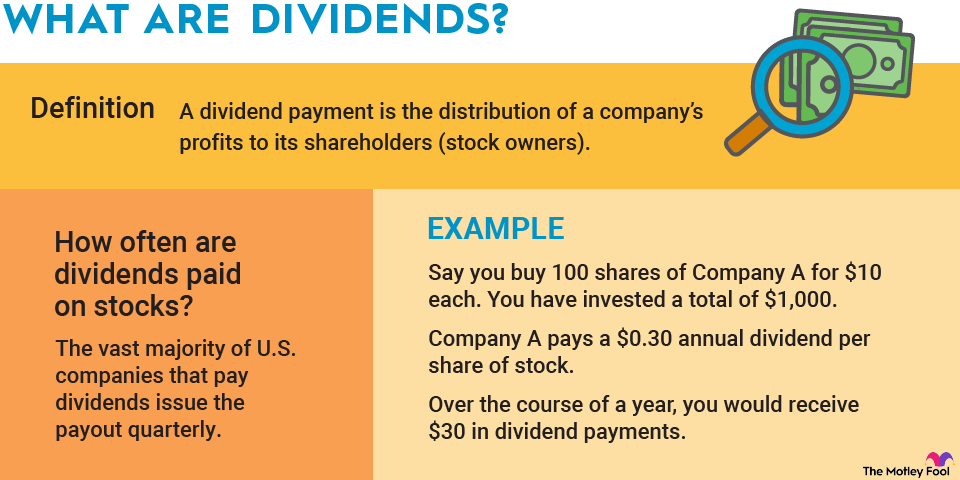
The second way to earn a return is through dividends. A dividend is a payment made by a company to its shareholders, usually as a distribution of its profits.
- A Reward for Ownership: Think of it as the company sharing its success with you, its part-owner. These are typically paid in cash directly into your account.
- Not a Guarantee: A company's board of directors decides whether to pay a dividend and how much it will be. Profitable, stable companies are more likely to pay dividends, but they are never guaranteed.
This infographic provides a simple, clear summary of what dividends are.
Just like with capital gains, the CSE brochure has important, locally-relevant information on dividends.
Invest with the COLOMBO STOCK EXCHANGE
Let's return to the CSE brochure to see how it describes dividends and their tax treatment.
On page 7, please read the section 'Dividends' right below the one on capital gains. Pay attention to how it defines dividends and their tax status.
You'll note that, like capital gains, dividends paid by listed companies in Sri Lanka are also currently exempt from withholding tax. This tax-friendly environment is a significant advantage for local investors.
2. Growth vs. Income: Contrasting the Strategies
Investors often have different goals, which leads them to favor one type of return over the other. The choice between focusing on capital appreciation (growth) or dividends (income) depends on factors like your age, financial goals, and tolerance for risk.
This video explains the typical investor profiles for each strategy.
WHY IS CAPITAL APPRECIATION BETTER THAN DIVIDEND INVESTING?
The 'Stock Smarts' channel discusses which strategy might be better suited for different types of investors.
Please watch the following segments: 01:33 - 03:26: This explains who typically pursues capital appreciation (younger investors, longer time horizons, higher risk tolerance). 06:03 - 07:00: This describes who favors dividend investing (older investors, desire for passive income, capital preservation). 08:14 - 11:16: This part discusses a hybrid approach and recaps the key differences based on age, risk tolerance, and portfolio size.
To summarize the key distinctions discussed in the videos and readings:
| Feature | Capital Appreciation (Growth) | Dividends (Income) |
|---|---|---|
| Source | Increase in stock price | Distribution of company profits |
| Control | Investor decides when to sell and realize gain | Company decides when/if to pay |
| Potential | Theoretically unlimited | Capped by company profits/policy |
| Predictability | Low; subject to market volatility | High; often stable and predictable |
| Risk | Higher | Lower |
| Typical Company | Younger, high-growth firms (e.g., tech) that reinvest profits for expansion. | Mature, stable firms (e.g., utilities, banks) with consistent profits. |
3. Total Return: The Best of Both Worlds
You don't have to choose exclusively between growth and income. Most successful long-term investors benefit from a combination of both. The total return on an investment is the sum of the capital appreciation and the dividend income received over a period.
Let's look at a clear, numerical example of how this works in practice.
Understanding Capital Appreciation: Key Concepts and Examples
The Investopedia article on Capital Appreciation provides an excellent example that brings everything together.
Please read the section 'Real-Life Examples of Capital Appreciation'. It walks through a simple calculation showing how both capital appreciation and dividends contribute to an investor's total return.
As the example shows, a stock can provide returns through both its price increasing and by paying you a dividend, demonstrating the power of combining these two streams.
Conclusion
In this lesson, we have explored the two fundamental ways that owning stocks can generate wealth. This knowledge is essential for building an investment strategy that aligns with your personal financial goals.
Key Takeaways:
- Shareholders earn returns primarily through capital appreciation (the stock's price going up) and dividends (the company sharing its profits).
- Capital appreciation is associated with growth investing, involves higher risk, and the gains are only realized upon selling.
- Dividends are associated with income investing, offer more stability and predictability, but the payments are controlled by the company.
- Total Return is the combination of both capital gains and dividends, representing the overall profitability of an investment.
- Crucially for your goal, both capital gains and dividends from companies listed on the Colombo Stock Exchange are currently tax-exempt in Sri Lanka.
Preview of the Next Lesson:
We now know how investors make money. But are all companies the same? How do we compare a large, established bank to a small, emerging technology firm? In the next lesson, we will explore the concept of market capitalization, learning how companies are categorized by size and why this is important for an investor.