Welcome to our next lesson. In our previous session, we explored the Auction Algorithm, a dynamic method for assigning high-impact outfit-pose combinations to premium time slots. That was about deciding what gets done where. Today, we pivot from assignment to sequencing—deciding the order in which tasks are executed. This is a critical step in managing the flow and efficiency of any process.
Our learning outcome is to compare the outcomes of using Shortest Processing Time (SPT) vs. First-In, First-Out (FIFO) rules for sequencing outfit changes to minimize average completion time during a photoshoot. We will explore how these two fundamental priority rules can lead to vastly different results in terms of workflow efficiency, even when the total work remains the same.
The Language of Sequencing
Before we compare the rules, let's establish a common vocabulary for our photoshoot scenario. Your background in operations research will make these terms familiar, but framing them in our new context is key.
Scheduling I - Course Web Pages
This document provides a concise introduction to the core concepts of scheduling theory. We'll use it to define our terms formally.
Please read the introductory slides to familiarize yourself with the basic jargon. Focus on the definitions under Main jargon and More definitions.
Based on that reading, let's map these concepts to your boudoir photoshoot:
- Job: A distinct task to be completed. For us, this is an outfit-pose set. For example,
Job 1: Black lace teddy + standing poses. - Machine: The single resource that processes one job at a time. In this case, it's the "photoshoot system"—the combination of the model, photographer, and set, which can only focus on one outfit change and shoot at a time.
- Processing Time (): The time required to complete job . This includes the time to change into the outfit, perform any necessary touch-ups, and execute the planned series of shots for that look.
- Completion Time (): The clock time when job is finished.
- Flow Time (): The total time job spends in the system. Assuming all our outfits are ready at the start of the shoot (time zero), the flow time is simply the job's completion time ().
- Makespan (): The completion time of the very last job. This is the total duration of the photoshoot session.
Our goal is to minimize the average completion time (or equivalently, average flow time) for all our planned looks.
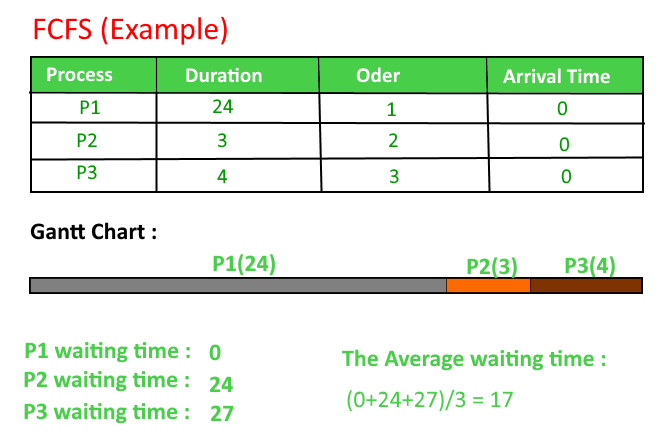
Rule 1: First-In, First-Out (FIFO) or First-Come, First-Served (FCFS)
This is the most intuitive sequencing rule. You process jobs in the order they arrive or are listed. In a service environment, this is often seen as the "fairest" approach.
Let's consider a simple photoshoot plan with four looks, all ready at time zero:
| Job (Outfit-Pose Set) | Processing Time (minutes) |
|---|---|
| A: Silk Robe | 20 |
| B: Leather Harness (complex) | 45 |
| C: Vintage Lingerie | 30 |
| D: Quick Accessory Swap | 10 |
If we use the FCFS rule, the sequence is simply A-B-C-D. Let's calculate the performance metrics.
- Job A starts at 0, finishes at 20. Flow Time = 20
- Job B starts at 20, finishes at 20 + 45 = 65. Flow Time = 65
- Job C starts at 65, finishes at 65 + 30 = 95. Flow Time = 95
- Job D starts at 95, finishes at 95 + 10 = 105. Flow Time = 105
The Total Flow Time is minutes.
The Average Flow Time is minutes.
The Makespan is 105 minutes.
Rule 2: Shortest Processing Time (SPT)
The SPT rule is a proactive approach. Instead of following the arrival order, you always select the job with the shortest processing time from the queue of waiting jobs.

Let's apply SPT to our same set of four jobs:
| Job (Outfit-Pose Set) | Processing Time (minutes) |
|---|---|
| A: Silk Robe | 20 |
| B: Leather Harness (complex) | 45 |
| C: Vintage Lingerie | 30 |
| D: Quick Accessory Swap | 10 |
The SPT rule dictates we reorder them by increasing processing time. The new sequence is D-A-C-B.
- Job D starts at 0, finishes at 10. Flow Time = 10
- Job A starts at 10, finishes at 10 + 20 = 30. Flow Time = 30
- Job C starts at 30, finishes at 30 + 30 = 60. Flow Time = 60
- Job B starts at 60, finishes at 60 + 45 = 105. Flow Time = 105
The Total Flow Time is minutes.
The Average Flow Time is minutes.
The Makespan is still 105 minutes.
To see these calculations in action, this video provides a clear, step-by-step walkthrough of a similar problem.
Sequencing: First Come First Served (FCFS) & Shortest Processing Time (SPT)
This video from The Business Doctor provides a worked example comparing FCFS and SPT for a single-machine sequencing problem.
First, watch the problem setup in the introduction. Then, see the step-by-step calculation for the FCFS rule and the SPT rule. Finally, note the direct comparison of the results.
Comparison and Optimal Strategy
Let's summarize our findings:
| Metric | FCFS (A-B-C-D) | SPT (D-A-C-B) |
|---|---|---|
| Makespan | 105 minutes | 105 minutes |
| Average Flow Time | 71.25 minutes | 51.25 minutes |
Notice a crucial result: the makespan is identical. The total time to complete all the jobs does not change regardless of the sequence (assuming no sequence-dependent setup times). However, the SPT rule dramatically reduced the average flow time by over 28%.
This isn't a coincidence. It is a well-established theorem in scheduling theory.
Scheduling I - Course Web Pages
Let's confirm our empirical finding with theory. This section of the previous PDF contains the relevant theorem.
In the "Single machine scheduling" section, locate and read the first theorem, which states that mean flow time is minimized by SPT.
The SPT rule is provably optimal for minimizing mean flow time. The intuition is that it clears short jobs out of the system quickly, preventing them from accumulating long waiting times behind longer jobs. This minimizes the total waiting time across all jobs, thereby minimizing the total (and average) flow time.
For a final comparative overview, including a discussion of the pros and cons, please consult the following resource.
Loading and Sequencing - Tutorial - Vskills
This tutorial provides a practical comparison of several priority rules, with a good summary of their effectiveness.
Start by reviewing the list of priority rules and the performance measures. Then, follow the example that calculates metrics for FCFS and for the SPT rule. Finally, read the summary comparison at the end, which discusses the strengths and weaknesses of both methods.
Implications for Your Scenarios
1. Boudoir Photoshoot:
Using SPT to sequence your outfit changes means the session feels more productive. You achieve completed "looks" faster on average. This reduces the "work-in-process" inventory—fewer half-ready outfits or mental notes about what's next. It can also be a great strategy for managing the model's energy, as delivering several "quick wins" early on can build momentum before tackling a more time-consuming setup. The main drawback to watch for is that a very long, complex look (like one involving body paint) could get pushed to the very end, which might not be ideal if it's the centerpiece of the shoot.
2. Hotwife Intimacy:
The same logic applies to sequencing activities during an encounter with your bull.
- Jobs: Desired intimacy acts (e.g., conversation, massage, specific sexual activities).
- Processing Times: The typical duration of each act.
- FCFS: Addressing desires in the order they come to mind. This can feel organic, but a long-duration activity early on might delay other, quicker-to-satisfy desires, reducing the overall "flow" of satisfaction.
- SPT: Prioritizing quicker activities first can rapidly build intimacy and clear the "to-do list" of desires, leading to a higher average rate of satisfaction throughout the encounter. It ensures that short, pleasurable moments aren't stuck waiting for a longer one to conclude.
Conclusion
Today, we delved into the fundamentals of single-machine sequencing by comparing two core priority rules. While makespan remained constant, the choice of rule had a significant impact on efficiency.
Key Takeaways:
- FIFO/FCFS is simple, intuitive, and often perceived as fair, but it is not optimized for efficiency and can lead to long average wait times if short jobs get stuck behind long ones.
- SPT is the optimal strategy for minimizing average completion time (flow time). By prioritizing short tasks, it reduces the overall time jobs spend waiting in the system.
- For a photoshoot, using SPT to sequence outfit changes can increase the perceived pace and efficiency of the session, even though the total time remains the same.
In our previous lessons, we've assigned tasks and now sequenced them. But what happens when each task has multiple steps? In our next lesson, we will address this by applying Johnson’s Rule, which is designed to find the optimal sequence for jobs that must be processed across two consecutive "workstations"—for instance, sequencing poses that each require a 'styling' step followed by a 'shooting' step.