In our last lesson, we explored the structure of financial markets, their core functions, and the key players involved. We established that these markets exist to channel funds from investors to issuers. Now, we will examine the specific "contracts" or "promises," as one of our resources called them, that are exchanged: the financial instruments themselves.
This lesson directly addresses the second learning outcome for this module by defining the three main classes of financial instruments: equities (stocks), bonds, and derivatives. Understanding the fundamental nature of each—what they represent and what rights they confer—is the essential next step before we can analyze how they are priced and how their prices behave, which will be the focus of much of this course.
Equities: A Share of Ownership
The first and perhaps most well-known type of financial instrument is equity, commonly known as a stock or share. At its core, a stock represents a share of ownership in a company. When you buy a company's stock, you become a part-owner, or shareholder, and have a claim on a fraction of that company's assets and profits.
Companies issue stock primarily to raise capital for growth, expansion, or new projects without taking on debt. For an investor, buying stock offers a way to participate in the potential success of a business.
To get a clear overview of how stocks work, please watch the following short video clip.
The Basics of Investing (Stocks, Bonds, Mutual Funds, and Types of Interest)
This video from the "Professor Dave Explains" channel provides a concise and clear definition of stocks and the two primary ways investors can profit from them.
Please watch the segment from the introduction. Pay attention to the definitions of dividends and capital gains.
As the video explained, there are two main ways for a shareholder to make money:
- Capital Gains: If the company performs well and its perceived value increases, the market price of its stock will rise. A shareholder can then sell their shares for more than they originally paid, realizing a profit known as a capital gain.
- Dividends: The company may choose to distribute a portion of its profits directly to its shareholders. These payments are called dividends.
Unlike a lender, a shareholder is not guaranteed a return. The value of a stock can fall, leading to a capital loss, and companies are not obligated to pay dividends. This makes equity a higher-risk investment compared to some alternatives, but it also offers the potential for higher returns if the company thrives.
For a more detailed explanation of how companies issue stock and the role of the stock market, please review the following text.
A Scholar's Introduction to Stocks, Bonds and Derivatives
This reading delves a bit deeper into the mechanics of issuing stock and how stock prices are determined in the market.
Please read the first three paragraphs of Section 2, "Stocks". Start from the beginning of the section and focus on the distinction between an initial offering and secondary market trading, and the factors that influence a stock's market price.
Bonds: A Form of Debt
Now, let's contrast equity with the second major financial instrument: the bond. While a stock represents ownership, a bond is essentially a loan, or an IOU. When an investor buys a bond, they are lending money to an issuer, which could be a corporation or a government. In return for this loan, the issuer promises to make periodic interest payments and then repay the original loan amount at a future date.
The investor, or bondholder, is a lender to the issuer, not an owner. This is a crucial distinction. Bondholders have a senior claim on a company's assets compared to shareholders; if the company faces financial trouble, it must pay its bondholders before its shareholders receive anything. This generally makes bonds a less risky investment than stocks.
The following video from Khan Academy does an excellent job of illustrating the fundamental difference between financing a company's expansion with equity versus with debt (bonds).
Introduction to bonds | Stocks and bonds | Finance & Capital Markets | Khan Academy
This video uses a simple company expansion example to highlight the core difference between equity and debt, and then introduces the key terminology for bonds.
First, watch the introductory segment from the beginning. Focus on the two scenarios presented: financing with new shares (equity) versus borrowing money (debt). Next, watch the explanation of bond components. This will introduce you to the essential terms: face value (or par value), coupon, and maturity. Finally, watch the short segment on payment schedules, which explains the common practice of semi-annual coupon payments.
To solidify these concepts, here are the key terms for any bond:
- Face Value (or Par Value): The amount of the loan that will be repaid at the end. This is typically $1,000 for a corporate bond.
- Coupon Rate: The annual interest rate the issuer pays to the bondholder, expressed as a percentage of the face value. A 5% coupon on a $1,000 face value bond means the investor receives $50 in interest per year.
- Maturity Date: The date on which the issuer repays the face value of the bond, ending the loan.
An essential concept in the bond market is the inverse relationship between a bond's price and its yield. The coupon rate is fixed, but the market price of a bond can fluctuate. The yield to maturity (YTM) is the total return an investor will receive if they buy the bond at its current market price and hold it until it matures. When the market price of a bond goes down, its yield goes up, and vice-versa.
The following reading provides an excellent numerical example demonstrating how bond prices are calculated and how they react to changes in market yields. This connects directly to your preference for practical, numerical applications.
[PDF] 1 Understanding Bonds, Stocks, and Derivatives Basics By Andrew ...
This document by Andrew W. Lo and Stephen R. Foerster provides a clear, step-by-step example of bond pricing using a Walmart bond.
Please read the section titled "Bonds", starting from the initial definition. Then, carefully study the numerical example involving the Walmart bond, from the pricing dynamics section to the end. Focus on how the present value of the bond's future cash flows (coupons and principal) determines its price, and what happens to that price when the yield changes from 5% to 6%.
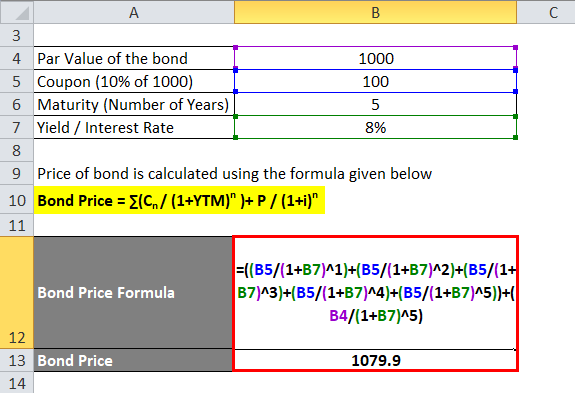
The calculation in the reading is an application of the present value formula. The price of a bond is the sum of the present values of all future coupon payments and the present value of the final face value payment. The formula is:
Where:
- = Coupon payment per period
- = Face Value of the bond
- = Yield to maturity (as a periodic rate)
- = Number of periods to maturity
Derivatives: Contracts on Other Assets
Finally, we arrive at the third major class of instruments: derivatives. As their name suggests, derivatives are financial contracts whose value is derived from an underlying asset or group of assets. These underlying assets can be stocks, bonds, commodities (like oil or gold), or even interest rates.
Unlike buying a stock or a bond, entering into a derivative contract does not mean you own the underlying asset. Instead, you have a contract that specifies an exchange to be made in the future, with the terms of that exchange dependent on the price of the underlying asset at that time.
The two main purposes of derivatives are:
- Hedging: To manage or reduce risk. For example, a farmer might use a derivative to lock in a selling price for their wheat crop today, protecting them from a potential price drop in the future.
- Speculation: To bet on the future direction of an asset's price. Because derivatives often require a smaller initial outlay than buying the asset itself, they can provide leverage, amplifying both potential gains and losses.
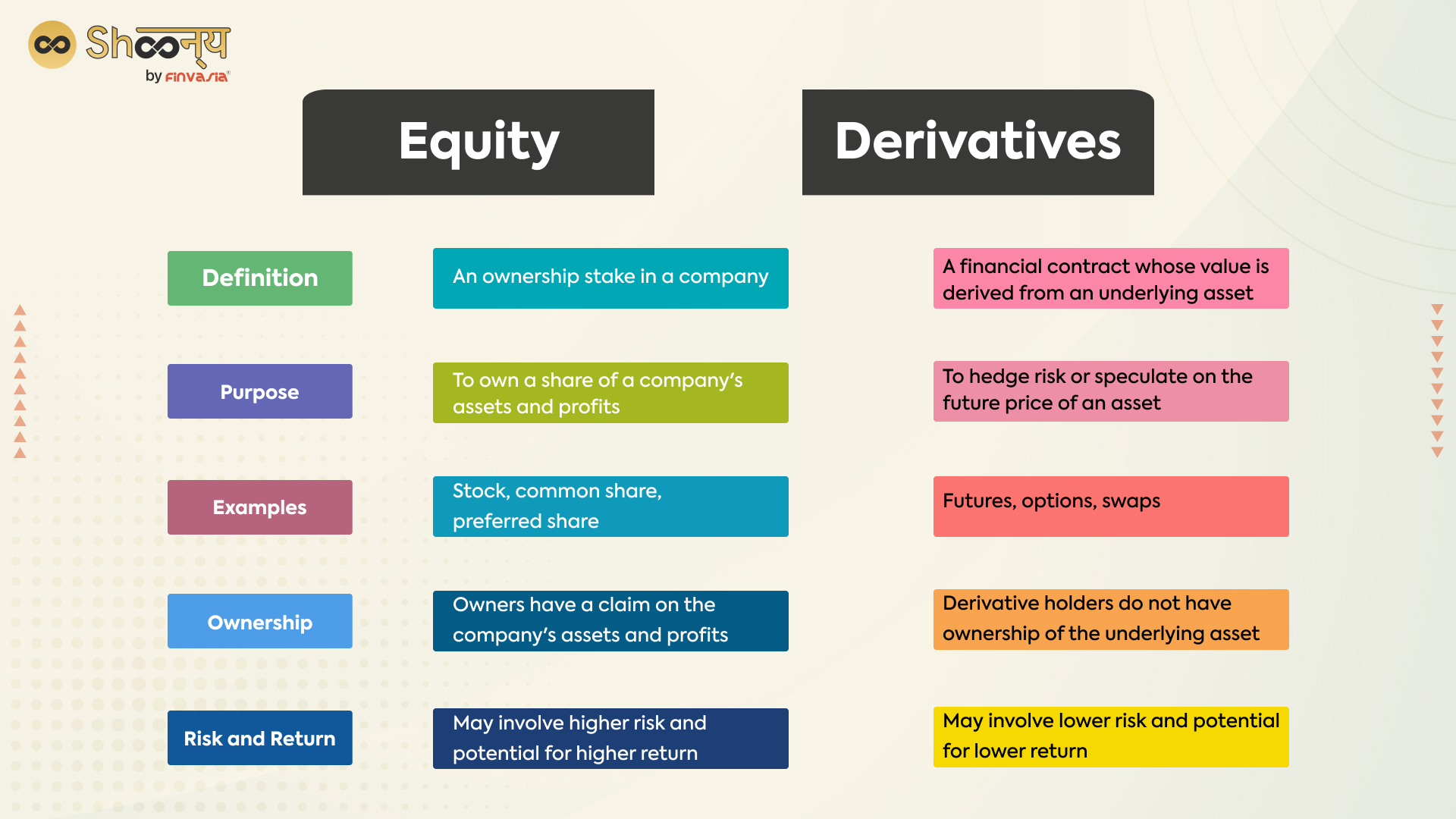
The most common types of derivatives are forwards, futures, and options.
- Forwards and Futures: These are contracts that obligate the buyer to purchase an asset (and the seller to sell that asset) at a predetermined price at a specified time in the future.
- Options: These contracts give the holder the right, but not the obligation, to buy or sell an asset at a predetermined price on or before a specified date.
- A call option is the right to buy.
- A put option is the right to sell.
We will dedicate several future modules to the mathematics of pricing these instruments. For now, the goal is to understand what they are. The following reading provides a concise introduction.
[PDF] 1 Understanding Bonds, Stocks, and Derivatives Basics By Andrew ...
This final section from the Lo and Foerster paper gives a brief but clear overview of derivatives, defining the main types.
Please read the entire section on "Derivatives", from the beginning to the end of the section. Focus on the definitions of call options, put options, and forward/futures contracts.
Conclusion
In this lesson, we have defined the three fundamental building blocks of financial markets. It is crucial to be absolutely clear on the distinction between them.
Here are the key takeaways:
- Equity (Stock): Represents an ownership stake in a company. Returns come from capital gains and dividends and are not guaranteed. It is a claim on the residual profits and assets.
- Bond: Represents a loan to an issuer (a debt instrument). Returns come from fixed coupon payments and the repayment of the principal. It is a senior claim on assets and cash flows, making it generally lower risk than equity.
- Derivative: A contract whose value is derived from an underlying asset like a stock or bond. It does not represent ownership of the asset itself but is an agreement about a future transaction. Its primary uses are hedging and speculation.
We have now established what is being traded in the financial markets we discussed in the first lesson. The next logical question is: how do the prices of these instruments behave? In our next lesson, we will begin to answer this by exploring one of the most important and debated theories in all of finance: the Efficient Market Hypothesis (EMH).