Hello! Welcome back to your journey into the world of liquid drum and bass.
In our last lesson, we deconstructed the architecture of a D&B track, identifying the key sections like the intro, drop, and breakdown. You learned to read a track's energy flow, which is the "map" for DJing. Today, we're going to get the "territory" itself. A DJ is defined by their music collection, and this lesson is all about how to start building yours with intention and quality.
Our learning outcome is to find and acquire high-quality digital music files from reputable sources. We'll cover two critical questions:
- What makes a music file "high-quality" and why does it matter?
- Where are the best, most reliable places to get music for DJing, especially for a specialist genre like liquid drum and bass?
This is a fundamental step. To eventually mix and produce like Makoto, you need to start collecting the raw materials he and other artists in the scene use: pristine, powerful audio files.
Part 1: The Importance of "High-Quality" Audio
Before we go shopping, we need to know what we're looking for. When you download music, it comes in different file formats. For DJing, the quality of these files is not a minor detail—it's crucial. Playing a low-quality file on a powerful club sound system can sound thin, distorted, and lack impact. It's like projecting a low-resolution image on a huge cinema screen; the flaws become obvious.
The main distinction you need to understand is between uncompressed/lossless and lossy audio formats.
- Uncompressed (WAV, AIFF): These are the original, master-quality files. They contain all the audio information, but they are very large.
- Lossless Compressed (FLAC, ALAC): These formats cleverly reduce the file size without discarding any audio information. Think of it like a ZIP file for music. When you play it, it's perfectly reconstructed to its original quality.
- Lossy Compressed (MP3, AAC): These formats make files much smaller by permanently removing parts of the audio that the human ear is less likely to notice.
While lossless is technically the best, a high-quality lossy file is often perfectly acceptable for DJing. The key is the bitrate, which measures how much data is used to represent one second of audio. It's measured in kilobits per second (kbps).
Let's watch a video that explains these concepts from a DJ's practical perspective.
This video from Club Ready DJ School clearly explains the difference between MP3 and WAV files and, most importantly, why bitrate is critical for DJs.
Watch from the beginning to 3:52. Pay close attention to the discussion of bitrate (specifically 320kbps vs. 128kbps) and the warning against using files from unreliable sources like YouTube converters. This is vital for your future as a DJ.
As the video emphasizes, files from non-reputable sources (like YouTube-to-MP3 converters) are often low-bitrate (e.g., 128kbps) or are falsely labeled as high-bitrate. They will sound terrible on a proper sound system.
Your Golden Rule: As a DJ, you should only acquire music in one of two formats:
- Lossless: WAV, AIFF, or FLAC. This is the best-case scenario.
- High-Quality MP3: Specifically, 320kbps. This is the highest standard for MP3s and is widely used by professional DJs.
Anything less is a compromise you shouldn't make.
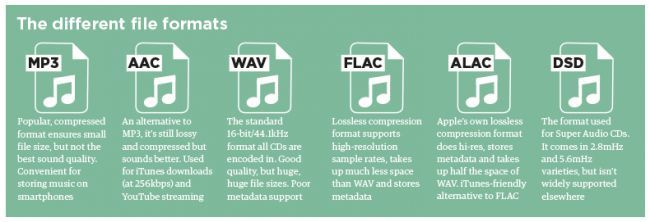
For a more detailed breakdown, you can reference the article "What Format Should DJs Buy Music In?" from DJTechTools (LINK). It contains helpful tables comparing file sizes, pricing, and software compatibility, which will be useful as you start building your library.
Part 2: Where to Find Your Music
Now that you know what to look for, let's explore where to find it. Building a unique music collection is an art form known as "crate digging" (a term from the vinyl era). Here are the primary digital stores where you'll do your digging.
Beatport: The Industry Standard
Beatport is the largest and most popular online music store for DJs. It's focused entirely on electronic music and is an essential resource for finding new releases, exploring charts, and discovering artists and labels.

The best way to learn Beatport is to see it in action.
How to find music for a DJ set - My secret hack
In this clip, popular DJ James Hype demonstrates his workflow for finding new music on Beatport. He shows how to go beyond just the top charts to discover more interesting tracks.
Watch from 0:24 to 3:04. Notice how he doesn't just look at the Top 10. He finds a track he likes and then investigates the artist and the record label to find related music. This is a core technique for developing a unique sound.
Bandcamp: The Independent Hub
If Beatport is the supermarket, Bandcamp is the farmer's market. It's a platform where artists and independent labels can sell their music directly to fans. For genres like liquid drum and bass, it's a goldmine. You'll often find music here that isn't available anywhere else. A huge advantage is that you can almost always download in lossless formats (like WAV or FLAC) for no extra cost. Plus, more of your money goes directly to the artist.
Makoto's own label, Human Elements, has a presence on Bandcamp, making it a perfect place for you to start.
Other Key Platforms
While Beatport and Bandcamp will be your primary sources, it's good to be aware of a few others:
- Juno Download: A UK-based store with a massive catalog, particularly strong in D&B and other UK-centric genres.
- SoundCloud: Excellent for discovery, listening to DJ mixes, and finding free downloads from up-and-coming artists. However, be cautious about quality and always prefer to find an official purchase link.
- Spotify: A powerful discovery tool. You can't buy or download DJ-ready files from Spotify, but you can use its recommendation algorithms to find music, which you then locate on Beatport or Bandcamp to purchase.
To get a comprehensive overview of these platforms and more, the following guide is an excellent resource.
DJ Pro Tips for Digital Crate Digging on Beatport ...
The article 'DJ Pro Tips for Digital Crate Digging' from DJTechTools is a fantastic guide to the modern DJ's toolkit for finding music. It details the pros and cons of each platform.
Read the sections on Beatport, Bandcamp, and Soundcloud. You don't need to memorize everything, but get a feel for the strengths of each platform. This will help you decide where to start your search.
Test your understanding!
You find a brand new track from an artist you like on SoundCloud. The artist has provided a "Free Download" link. When you download it, you see it's an MP3 file. What should be your next step before adding it to your main DJ library?
Show answer
Your first step should be to check the quality of the MP3 file. Use your music software (we'll cover this soon) or your computer's file information to check the bitrate. If it's 320kbps, it's likely okay. If it's lower (like 192kbps or 128kbps), you should not use it for DJing.
A better approach is to treat the SoundCloud find as a discovery. Look for the track on Bandcamp or Beatport, where you can purchase a guaranteed high-quality WAV, FLAC, or 320kbps MP3 file. This ensures you have the best possible quality and also supports the artist financially.
Conclusion
Fantastic work today! You've tackled a crucial, practical part of becoming a DJ. Building a great music collection is a continuous, rewarding process that will define your unique style.
Here are the key takeaways:
- Quality is King: Always acquire your music as lossless files (WAV, AIFF, FLAC) or 320kbps MP3s. Never use low-quality rips from streaming sites.
- Know Your Stores: Beatport is your go-to for major releases and charts, while Bandcamp is your destination for independent artists and directly supporting the scene.
- Dig Deeper: The best tracks are rarely in the Top 10. Follow the trail from a track you like to its artist and label to uncover hidden gems.
- Support the Artists: Buying music is an investment in the culture you love. It enables artists like Makoto to keep creating the music that inspires you.
Next Time
You now have the knowledge to find and acquire your tools. In the next lesson, you'll put this into practice. Your task will be to build a starter collection of 20-30 liquid drum and bass tracks for analysis and practice. We'll give you a list of key artists and labels (including Makoto's) to kickstart your digging expedition. Happy hunting