Hello! Let's get started with your next lesson.
In our last session, we looked at how to evaluate affiliate and CPA offers using the three pillars: payout, market demand, and rules. You learned how to use metrics like EPC and ClickBank's Gravity score to find promising products.
We briefly touched on the importance of an offer's rules, but this topic is so critical to your success that it deserves its own lesson. Ignoring the rules is the fastest way to have your commissions voided and your accounts banned.
Today, we will focus exclusively on how to read and interpret offer restrictions and compliance requirements. By the end of this 60-minute lesson, you'll be able to confidently analyze an offer's terms and understand exactly what you can and can't do to promote it. This skill protects your time, your money, and your business relationships with affiliate networks.
Why Rules Exist and Where to Find Them
Every affiliate and CPA offer comes with a set of rules. These aren't meant to make your life difficult; they serve several important purposes for the advertiser:
- Brand Protection: They don't want their product associated with spam or misleading claims.
- Legal Compliance: They must abide by advertising laws (e.g., in finance or health).
- Traffic Quality: They want customers who are genuinely interested, not people who were tricked or incentivized to click a link.
- Avoiding Channel Conflict: They don't want to compete with their own affiliates for ads (e.g., brand bidding).
You will typically find these rules in two main places:
- The Offer Description Page: This is on the affiliate/CPA network itself. It's your first and most important source for day-to-day operational rules like allowed countries and traffic types.
- The Affiliate Program Terms and Conditions (T&C): This is the formal legal agreement. It's often a longer document that covers everything in more detail.
To get a sense of what's covered in a formal T&C document, let's look at a breakdown of the typical sections.
Affiliate Program Terms and Conditions
This article from ReferralCandy provides an excellent overview of the components that make up an affiliate program's terms. Understanding these components will give you a mental checklist of what to look for.
Read the section 'What to include in your affiliate agreement'. You don't need to memorize it, just familiarize yourself with the different types of rules, such as 'Content and brand guidelines', 'Traffic sources and bidding rules', and 'Coupon and code policy'.
The Most Common—and Critical—Restrictions
While a T&C document can be long, most restrictions fall into a few key categories. Let's break down the ones you'll encounter most often, especially as you explore paid ads and forum marketing.
1. Traffic Source Restrictions
This is the most fundamental rule. The advertiser dictates how you're allowed to generate clicks. Since your goal is to use forums, SEO, Facebook Ads, and Native/Push ads, paying close attention to this is vital.
To get a comprehensive overview of different traffic types and whether they are typically allowed, the following resource is incredibly helpful.
Allowed and prohibited traffic sources
This article from Travelpayouts breaks down nearly every type of online traffic, from social media ads to push notifications, and explains the common rules associated with each.
Skim through this article, paying special attention to the traffic types you're interested in. Focus on these sections: 'Contextual advertising' (for brand bidding rules) 'Targeted ads in social networks' (for Facebook Ads) 'Native ads' and 'Push traffic' (your other paid methods) 'Promotional codes (coupons)' 'Motivated traffic', 'Cashback traffic', 'Pop traffic', and 'Auto-redirect' (to understand what 'low quality' traffic is) 'Adult traffic'
Here is a summary of key traffic restrictions based on that reading:
| Traffic Type | Common Restriction / What to Know |
|---|---|
| Paid Ads (General) | Brand Bidding is usually prohibited. This means you cannot run ads targeting the product's name (e.g., bidding on the keyword "Bluehost" to promote Bluehost). |
| Facebook Ads | Often allowed, but many networks have strict rules for certain niches (e.g., weight loss, finance) to comply with Facebook's own policies. |
| Native & Push Ads | Often allowed for CPA offers. However, be wary of making sensational claims in your ads, as this can be a violation. |
| Email Marketing | Usually allowed, but only to your own opt-in list. Sending unsolicited emails (SPAM) is always forbidden. |
| Forum / Q&A Sites | Generally acceptable as "content" traffic, but spamming links will get you banned by the forum and the affiliate network. |
| Incentivized Traffic | Offering users a reward (cash, points, a gift) for signing up is almost always prohibited, unless the offer is specifically marked as "incentive-allowed." |
| Adult Traffic | Only allowed for offers that explicitly permit it. Running a mainstream offer on an adult website is a fast way to get banned. |
2. Promotional Content and Method Restrictions
This category governs what you say and how you present the offer.
- Misleading Claims: You cannot make unsubstantiated claims. For example, you can't say "Make $1,000 tomorrow!" for a business opportunity offer, or "Lose 30lbs in one week!" for a diet pill.
- Use of "Free": Many sweepstake or contest offers prohibit you from using the word "free" because it can be misleading. The user gets a chance to win, but the prize itself isn't guaranteed.
- Direct Linking: This is a big one. Many traffic sources (like Facebook and Google Ads) and many offers forbid you from sending traffic directly to the affiliate link. They require you to send the user to your own landing page first. This is a crucial concept that we will build on in the next lesson.
The following video provides a great real-world example of an affiliate manager analyzing these exact rules inside a CPA network.
MaxBounty Offer Selection (2020) - $300/day | Step By Step Picking The Best Offer
Watch this segment from Solopreneur to see how a professional affiliate marketer dissects an offer's description to find critical rules about targeting and ad copy.
Watch from 14:30 to 20:26. Notice how he reads the description carefully to find: Age targeting suggestions (e.g., 'target users 23+'). Prohibited keywords ('Any usage of the word free...is strictly prohibited'). Details about the conversion type (email submit, one field). This demonstrates why you can't just look at the payout; the description holds the key to running a compliant campaign.
3. Legal and Disclosure Requirements
This is non-negotiable. In many countries, including the US, you are legally required to disclose that you may earn a commission if someone clicks your link and makes a purchase.
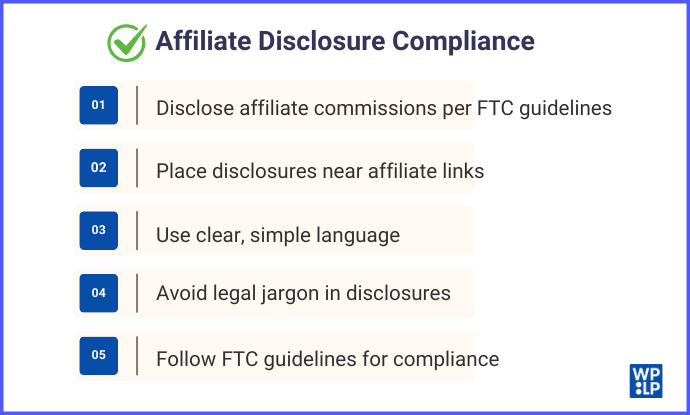
How to do it: A simple statement near your affiliate link is usually sufficient.
- "As an affiliate, I may earn a commission from qualifying purchases."
- "This post contains affiliate links. If you use these links to buy something, we may earn a commission."
Failure to disclose can lead to legal trouble and is a violation of almost every affiliate program's terms.
Your Compliance Checklist
When you look at a new offer, mentally run through this checklist. All the information should be on the offer page or in the T&C.
- GEOGRAPHICAL RESTRICTIONS: Which countries are allowed?
- ALLOWED TRAFFIC: Can I use my intended traffic source (Facebook Ads, Forums, etc.)?
- PROHIBITED TRAFFIC: Is brand bidding forbidden? Is incentivized traffic forbidden?
- AD COPY RULES: Are there any words I can't use (e.g., "free")? Are there claims I can't make?
- LANDING PAGE: Is direct linking allowed, or must I use a landing page?
- DISCLOSURE: Am I ready to add a clear disclosure statement to my promotion?
If you can't find a clear answer to one of these questions, always ask your affiliate manager. It's their job to help you. A quick email asking "Is forum traffic from Reddit allowed for offer #12345?" can save you a lot of wasted effort.
Conclusion
Congratulations on completing this essential lesson. While not as exciting as launching a campaign, understanding and respecting the rules is the foundation of a sustainable and profitable affiliate marketing business. It's the difference between being a professional and being a gambler.
Key Takeaways:
- Always read the rules. The offer description page is your primary guide.
- Pay close attention to traffic restrictions. Make sure your chosen method (forums, paid ads, etc.) is allowed.
- Avoid prohibited practices like brand bidding, making false claims, and using incentivized traffic unless explicitly permitted.
- Disclose your affiliate relationship. It's a legal requirement and good business practice.
- When in doubt, ask. Your affiliate manager is there to provide clarity.
Next Up:
We've mentioned several times that "direct linking" is often prohibited and that you need a landing page. In the next lesson, we will begin Module 2 by explaining exactly what a landing page is, why it's a critical tool for compliance and increasing conversions, and how you can build one for free.