Hello! Welcome to your next lesson on the path to becoming a set-piece coach.
In our last session, you learned the fundamental principles of organizing a defensive wall and the surrounding defensive shape. We covered everything from deciding on the wall's size based on location to the specific roles and responsibilities of each player.
Today, we will build directly on that knowledge. The objective of this lesson is to analyse a team's free kick patterns (attacking and defending) from video footage. You will learn how to move from being a passive viewer to an active analyst, breaking down what a team is trying to achieve with their free kicks and, just as importantly, where they might be vulnerable. This is the core work of an opposition scout and a crucial skill for your goal of coaching at the professional level.
1. The Analyst's Framework: What to Look For
Analysing video footage is not about aimlessly watching games. It's a systematic process of evidence gathering. You need a framework to identify recurring actions, or patterns, that a team uses.
A formal research approach, like the one described in the "Comparative Tactical Analysis on the defensive phase" paper, involves observing numerous matches and using recordings to stop, sketch, and describe recurring behaviours. For your purposes as a coach, we can translate this into a practical scouting checklist. When you analyse a team's free kicks, you're looking for answers to these questions:
For Attacking Free Kicks:
- Delivery: Who takes the kick? What is their preferred foot? Is the delivery an in-swinger, an out-swinger, driven, or floated? Do they play short?
- Target Area: Where does the ball consistently go? The near post, central area, or back post?
- Player Movement: How do they create space? Look for:
- Blocks/Screens: Players impeding defenders to free up a teammate (like a screen in basketball).
- Decoy Runs: Players making runs to draw defenders away from the real target area.
- Overloads: Creating a numerical advantage in a small zone.
- Key Personnel: Who is the main aerial target? Who makes the key decoy run?
For Defending Free Kicks:
- Wall Organisation: How many players are in the wall? How quickly do they form it? Do they jump? Is there a "draught excluder" (player lying down)?
- Defensive System: How do the players not in the wall defend? Are they man-marking, defending zones, or using a mix (hybrid)?
- Vulnerabilities: Where is the space? Does the defensive line hold firm or drop too early? Are individual players easily blocked or drawn out of position?
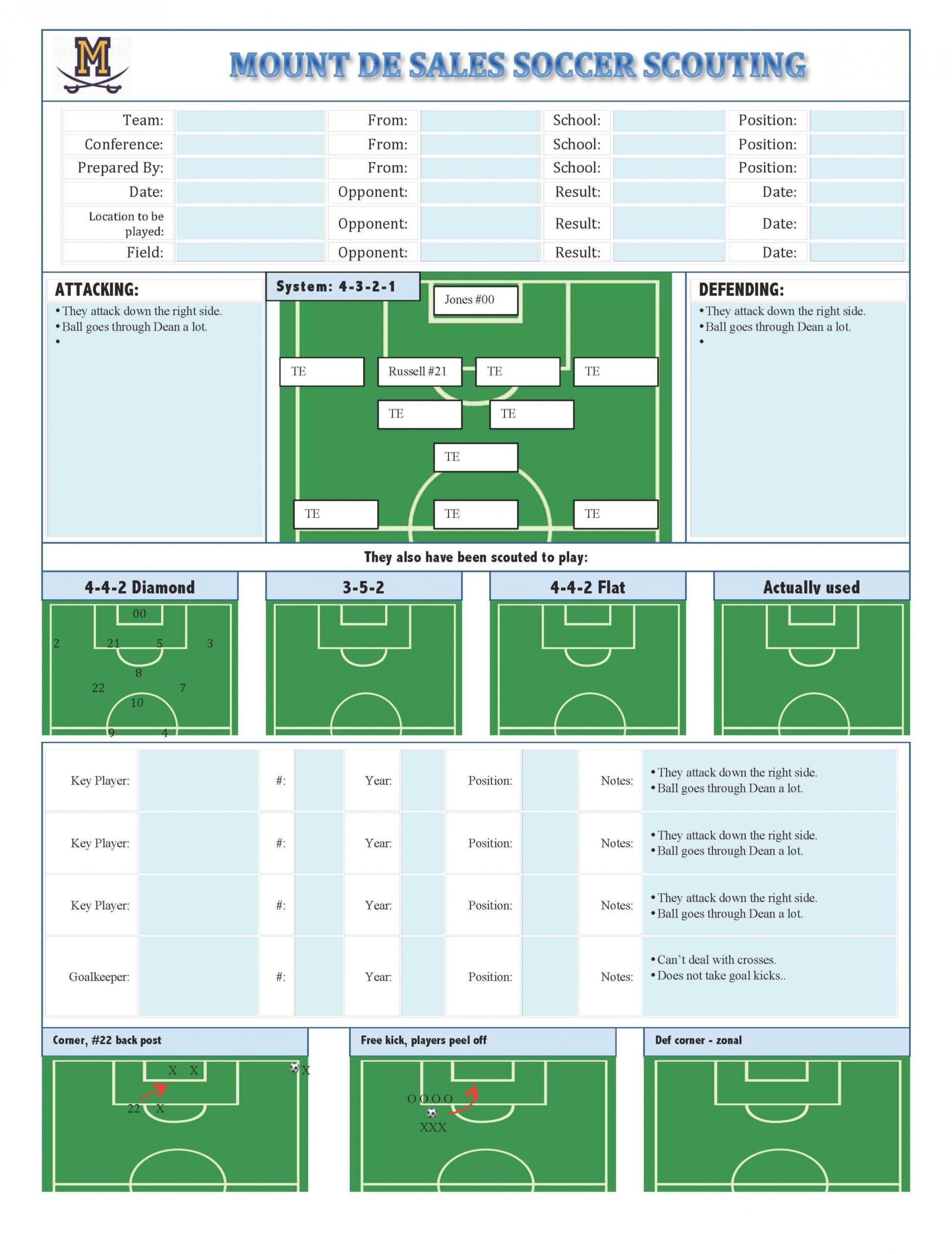
This scouting report template gives you a practical way to structure your notes.
2. Deconstructing Attacking Free Kick Patterns
Let's apply this framework to analyse some attacking patterns. We'll start with a detailed written breakdown of Brentford's tactics, a team renowned for their set-piece innovation.
Brentford Set Pieces Tactical Analysis 22-23 [Analysis of Attacking Corner Kicks & Free Kicks]
The article 'Brentford Set Pieces Tactical Analysis' from Football Bunseki offers an excellent look at the principles behind their attacking routines. We'll focus on their free kick strategies.
Please read the sections 'Attacking Free Kicks' (including its 'Final Third' subsection) and 'Long Free Kicks'. As you read, notice how they use a consistent 'blocking strategy' and adapt their delivery (in-swing vs. out-swing) based on the location. Pay attention to how they create opportunities even from the halfway line.
As you saw, Brentford's approach is built on a clear principle (blocking) but has multiple variations to remain unpredictable. Now, let's see these kinds of movements in action.
Analysis of Chelsea's Set-Piece Routine | Tactical Analysis by Nouman
This analysis of Chelsea's set pieces by analyst Nouman visually breaks down the same concepts of blocking and decoy runs that we just read about.
Watch from 00:37 to 03:22. From 00:37 to 02:09, focus on how one player (Zouma or Giroud) acts as a 'blocker' to free the other to attack the ball. From 02:09 to 03:22, observe how decoy runs by Abraham and Chilwell to the posts create central space for Thiago Silva, whose run is then enabled by another block from Zouma. Note the commentator's point that Zouma's sole focus is the block, not the ball.
These two resources show you how to identify a core attacking pattern. An analyst would note: "Chelsea frequently uses a blocking scheme from wide free kicks. Zouma (Player A) blocks the two most central defenders to create a free run for Giroud (Player B). They also use decoy runs to clear central space for a third player arriving."
3. Identifying Defensive Patterns and Vulnerabilities
Analysing a defence follows the same process. You use the principles of good defending (which we covered in the last lesson) as a benchmark to judge the opponent.
[PDF] Comparative Tactical Analysis on the defensive phase of the football ...
Let's return to the 'Comparative Tactical Analysis' paper. It provides an excellent example of how to describe a team's defensive system and pinpoint its weaknesses.
Read the sections describing Real Madrid's defensive organisation. Start with the paragraph under the 'Results' section that begins 'The analysed fixed phases...'. This describes their general approach. Then read the paragraph that starts 'Concerning the negative points in the defensive organization of the Real Madrid team...', focusing on the specific weaknesses identified at corners (which share principles with free kicks). Finally, read the first paragraph of the 'Conclusion' which summarises their vulnerabilities. Focus on phrases like 'mixed defence system', 'poor positioning', and 'misinterpretation of the opponents' actions'.
The paper identifies that Real Madrid, despite being a top team, has occasional vulnerabilities: poor positioning and misreading opponent runs. This is the "gold dust" you look for as an analyst. The ultimate goal of analysis is to find something you can exploit.
The next video provides a perfect example of a coach doing exactly that.
WHAT ARE THE BEST WAYS TO COACH SET-PIECES??
In this clip from Modern Soccer Coach, Swansea City's set-piece coach Andy Parlo breaks down a routine they designed specifically to exploit weaknesses they found in their opponent's defensive pattern.
Watch the segment from 09:10 to 13:06. Pay close attention to how Andy Parlo explains their analysis and resulting strategy: Analysis (12:19): They knew Swindon were 'inconsistent in when they dropped' and didn't act as a unit. Exploitation (10:27 & 12:33): They use a 'stutter' run by one player to trigger the disorganized drop from the defensive line, creating space in behind. Targeting a Weakness (11:05): They use a block to create a 2v1 at the back post, matching their two best headers against a winger who is 'not brilliant in the air'.
This is the pinnacle of set-piece analysis: identifying a defensive pattern (inconsistent drop), finding a trigger (stutter run), and designing a routine to exploit the resulting weakness with a favourable matchup.
4. Integrating Data with Video
While your primary tool is video, professional clubs supplement this with statistical data. Data can tell you what happens, and video tells you how it happens.
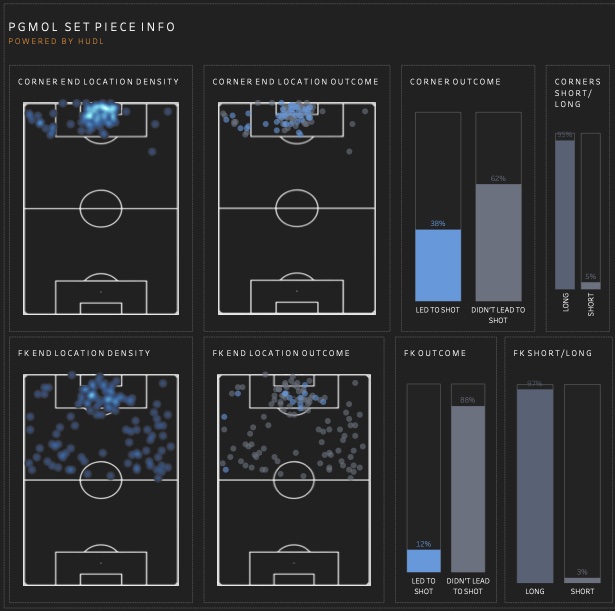
For now, just be aware that these two forms of analysis—qualitative (video) and quantitative (data)—work together to form a complete picture of an opponent's tendencies.
Conclusion
You have now learned how to systematically break down free kick routines from video footage. This process transforms you from a spectator into an investigator, looking for the tactical clues that can decide a match.
Key Takeaways:
- Analyse with a framework: Don't just watch the ball. Use a checklist to analyse delivery, movement, and personnel for both attack and defence.
- Identify attacking principles: Look for the core ideas behind a team's attack, such as blocking schemes, decoy runs, and overloads, which are used in multiple variations.
- Benchmark the defence: Use the principles of sound defending to identify an opponent's system (wall setup, marking scheme) and find its flaws (exploitable space, disorganisation, poor individual habits).
- Analysis drives action: The goal of identifying patterns is to create routines that exploit an opponent's weaknesses, as demonstrated by the Swansea City example.
Preview of the Next Lesson:
Now that you can identify an opponent's free kick threats through analysis, what do you do with that information? In our next lesson, we will focus on the practical application: Design defensive adjustments to counter an opponent's specific free kick threats. You will learn how to take your scouting report and turn it into a concrete defensive game plan for your team.