Hello! Welcome back to your advanced study of Gian Lorenzo Bernini.
Introduction
In our last lesson, we deconstructed the Cathedra Petri, marvelling at how Bernini fused bronze, stucco, and pure light into a singular, overwhelming vision of divine authority. The sheer scale and multi-media complexity of that work, along with the Baldacchino we examined earlier, begs a fundamental question: how could one artist possibly execute such colossal projects? The simple answer is, he didn't—not alone.
Today, we shift our focus from the artworks themselves to the machine that produced them. We will examine Bernini not just as an artist, but as a master manager, a CEO of a large and complex artistic enterprise. Your background in change management and digital transformation gives you a unique lens through which to appreciate this aspect of his genius.
Today's Learning Outcome: By the end of this lesson, you will be able to examine the organization and management of Bernini's large workshop and its role in the execution of major commissions like those in St. Peter's.
Time to complete: Approximately 55 minutes.
Recap from previous lessons: We've seen how Bernini's works in St. Peter's, like the Baldacchino and the Cathedra Petri, involved immense logistical challenges, multiple materials, and years of labour. This scale of production was only possible through a highly organized and delegated system.
1. The Artist as "General Contractor"
Our modern conception of the artist as a solitary genius, responsible for every mark on the canvas or chip in the stone, is largely a 19th-century invention. In the 17th century, the reality was far more collaborative. For an artist as inundated with commissions as Bernini, running a large workshop was not just a convenience; it was a necessity.
To begin, let's watch a short segment that provides an excellent overview of this operational model.
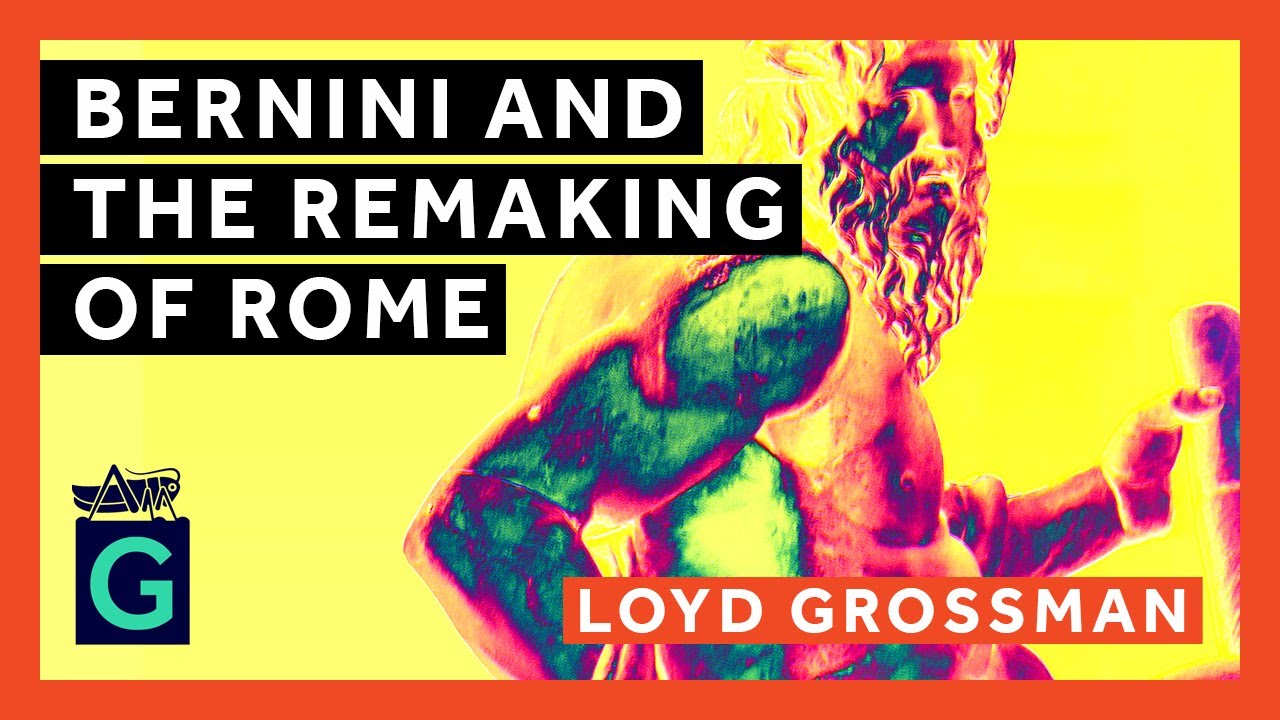
- Watch: From 50:47 to 52:56.
- Focus on: The lecturer's explanation of how Bernini's workshop functioned. He had a "huge workshop" of "specialists" and provided the "design and the control" before delegating different parts of the work.
As the video explains, Bernini's primary role was often that of the visionary and the quality controller. The art historian Franco Mormando uses a very apt modern analogy for this role.
Please read the following short entry from his website.
Bernini Updates 1 - FRANCO MORMANDO
- Read: Entry #63, "Rediscovery of the skull commissioned by Pope Alexander VII."
- Focus on: Mormando's argument about whether Bernini carved the skull himself. Note his description of Bernini's role as what "we would today call a 'general contractor'," who would commission items and then contract them out to competent experts, guaranteeing the quality.
- Reading time: ~5 minutes.
This "general contractor" model is key. Bernini's genius lay not only in his technical skill but in his concetto (the core idea or concept) and his ability to orchestrate a large team to realize that vision on a monumental scale. This separation of vision from pure technical execution was well understood at the time.
For a deeper look at this distinction, please read this brief analysis.
- Read: The first section, "Bernini's Workshop and Collaborative Art Production."
- Focus on: The idea that Bernini's "genius" was his "artistic sensibility and vision," and that other sculptors in his own workshop, like Giuliano Finelli, were sometimes considered more technically virtuosic.
- Reading time: ~3 minutes.
This establishes our core theme: the major commissions were the products of "Bernini, Inc.," an enterprise where the master's vision was the guiding principle, but the execution was a team effort.
2. The Workshop Structure: A Hierarchy of Talent
Bernini's workshop was not an undifferentiated mass of helpers. It was a sophisticated, hierarchical organization with distinct roles, much like a modern corporation or a large-scale project team.
-
The Master (CEO/Creative Director): Bernini himself was responsible for securing commissions, client relations, the initial design (disegno), creating preparatory clay models (bozzetti and modelli), overseeing all stages of production, and applying the final, decisive touches to bring a work to life.
-
Senior Sculptors (Project Leads): These were highly accomplished artists in their own right, trusted to execute major figures or significant portions of a commission based on Bernini's models. Figures like Giuliano Finelli, Ercole Ferrata, and Antonio Raggi were among his most important collaborators.
-
Specialists (Subject Matter Experts): Some assistants had particular expertise. For example, Niccolò Sale was known for carving delicate floral ornamentation, as seen on the Raimondi Chapel.
-
Architectural Assistants: For large projects integrating architecture and sculpture, Bernini relied on assistants like Mattia de' Rossi, who could translate his architectural concepts into practical plans.
-
Capomastri (Foremen/Engineers): These were the unsung heroes—the master builders and engineers who handled the formidable logistical and engineering challenges of moving massive stone blocks, casting enormous bronzes, and assembling the final work on site. Giacomo Borzacchi, who oversaw the assembly of the Fountain of the Four Rivers, is a prime example.
The resource from Franco Mormando you looked at earlier provides bibliographic details on many of these key players, underscoring their significance as individual artists who contributed to the "Bernini" brand.
3. The Process: From Clay Sketch to Monumental Marble
How did this team turn a concept into a colossal work like the Cathedra Petri? The process was systematic, allowing for control and delegation at each stage. A key part of this process was the use of terracotta (fired clay) models.

- Watch: From 31:03 to 34:34.
- Focus on: The discussion of the small clay model of an angel and cherub for the celestial Gloria of the Cathedra Petri. Notice the incredible level of detail Bernini provided in this model for a tiny, almost invisible part of the final stucco work.
This clip perfectly illustrates Bernini's management style. He would produce detailed models—from rough sketches (bozzetti) to more finished presentation models (modelli)—which served as three-dimensional blueprints for his assistants.
 Terracotta 'bozzetti' or 'modelli' like these were the crucial link between Bernini's initial concept and the final work executed by the workshop. They allowed him to refine the composition and provide a clear guide for his assistants.
The general workflow was as follows:
- Concept & Bozzetto: Bernini would create small, quick clay sketches (bozzetti) to work out the composition and energy of the piece.
- Modello & Approval: A larger, more detailed modello would be prepared for the patron's approval. Assistants might help in its creation.
- Scaling and Blocking Out: The workshop used pointing systems (a grid of measurements) to scale the model up to the full-size marble block. Junior assistants would then "rough out" the block, removing the bulk of the waste marble—a laborious and less artistically demanding task.
- Carving & Execution: Senior assistants would take over, carving the figures and drapery, following the clay model closely.
- The Master's Touch: Finally, Bernini himself would step in to carve the most critical parts, especially faces and hands, and to apply the final polish and textures that gave the sculpture its "speaking likeness" and distinctive energy.
4. A Philosophical Aside: The Ship of Theseus in the Workshop
Your studies of philosophy, particularly the Ship of Theseus paradox, provide a fascinating framework for thinking about Bernini's workshop. If an assistant like Giuliano Finelli carved the delicate, transforming leaves on Apollo and Daphne, and Ercole Ferrata carved the entire elephant for the Pulcino della Minerva in front of Santa Maria sopra Minerva, at what point, if any, does it stop being "a Bernini"?
The video below dives into the technical analysis used by art historians to distinguish the master's hand from that of an assistant, essentially tackling a real-world version of this paradox.
- Watch: From 24:16 to 31:03.
- Focus on: The comparison between the Hermitage angel and Ercole Ferrata's angel, and the analysis of the Sea Deity and the reliefs on the Cathedra Petri. Notice how specific tool marks, modeling habits, and construction methods are used to attribute work to different hands within the workshop.
The evidence shows that Bernini's authorship was rooted in the design and intellectual ownership of the work. He was the "author," even if others were the "scribes." The final piece was considered a Bernini because it originated from his concetto and was realized under his direct supervision, bearing the imprint of his unifying vision. This is a topic we will revisit in the final module of the course.
Conclusion
Today we've pulled back the curtain on Bernini's artistic production, revealing a complex and brilliantly managed organization. The image of the lone genius is replaced by that of a master orchestrator, a "general contractor" who fused his visionary concepts with the diverse talents of a large workshop to change the face of Rome.
Key Takeaways:
- Bernini's major commissions were not solo efforts but the products of a large, highly organized workshop.
- His role can be likened to a modern "general contractor" or CEO, focused on the initial concept (concetto), overall design, and quality control.
- The workshop had a hierarchical structure that included senior sculptors (Finelli, Ferrata), specialists (Sale), architectural assistants (de' Rossi), and engineers (capomastri like Borzacchi).
- The production process was systematic, relying heavily on terracotta models (bozzetti and modelli) to guide the execution from a small sketch to a monumental work.
- The question of authorship in the workshop connects to the Ship of Theseus paradox, with Bernini's claim to the work resting on his intellectual ownership and final, decisive intervention.
Preview of the Next Module:
Having explored Bernini's grand public stage in St. Peter's, we will next enter a more intimate, but no less revolutionary, space. In our first lesson of the next module, we will travel to the Cornaro Chapel to analyze the Ecstasy of Saint Teresa. There, we will see how Bernini applies his workshop's collective skill and his concept of the bel composto to create a complete, private theatrical experience, manipulating sculpture, architecture, and a hidden light source to make a mystical vision shockingly real.