Introduction
In our last module, you learned how to build a bridge between a web application and its database, culminating in a lesson on the single most important defensive technique: using parameterized queries to separate code from data. You saw how this method acts as a shield, preventing malicious input from altering a query's logic.
Now, we pivot from defense to offense. This lesson marks the beginning of our deep dive into foundational SQL injection (SQLi) attacks. We will formally define what SQL injection is and, more importantly, explore the reasons it has remained one of the most critical security vulnerabilities for decades. As a security analyst, you are likely familiar with the term; this lesson will solidify the fundamental theory, setting the stage for the hands-on attacks you will perform throughout the rest of this module.
What is SQL Injection?
At its core, SQL injection is a web security vulnerability that allows an attacker to interfere with the queries that an application makes to its database. It occurs when an application insecurely incorporates user-supplied data into a SQL query. The attacker provides specially crafted input that is interpreted not as simple data, but as part of the SQL command itself.
Let's start with a short, high-energy introduction to set the scene.
SQL Injections are scary!! (hacking tutorial for beginners)
The video "SQL Injections are scary!!" from NetworkChuck provides a quick, engaging overview of the potential of this attack.
Watch the first 38 seconds of this video. The key takeaway is how a simple login form can become a gateway for an attacker to dump an entire database.
The attack flow generally looks like this: the attacker submits malicious input through a web form, which the web application then concatenates into a SQL query and sends to the database. The database, unable to distinguish the attacker's code from the intended query, executes the combined command.
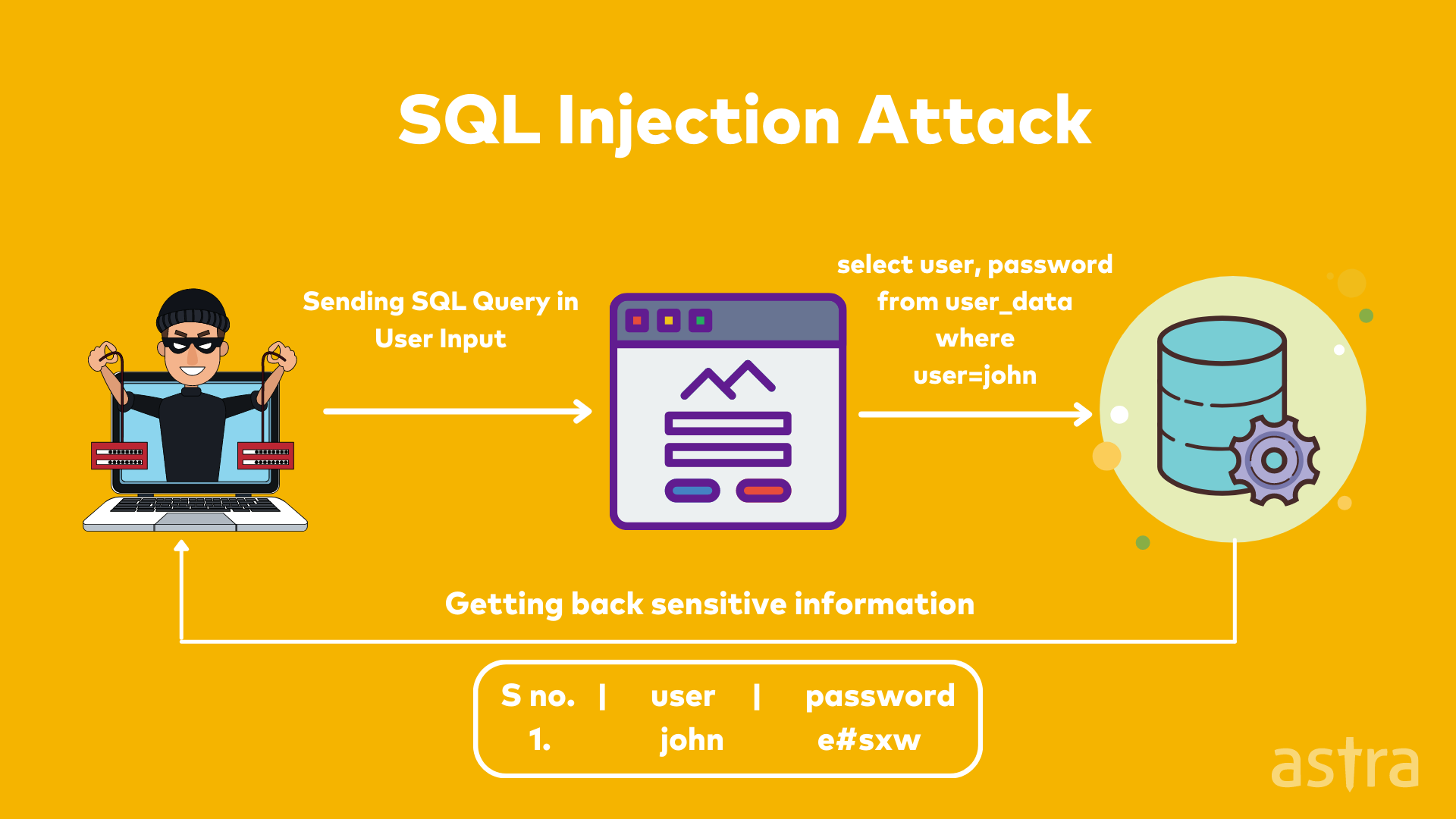
To get a more formal definition, let's turn to two authoritative sources in web security.
What is SQL Injection? Tutorial & Examples | Web Security Academy
This article from PortSwigger, the creators of Burp Suite, provides a clear and concise definition.
Read the sections titled "What is SQL injection (SQLi)?". This gives a precise definition of the vulnerability and its potential outcomes.
This is the OWASP community's main page on SQL injection, offering another foundational definition.
Focus on the "Overview" section. It reinforces the idea that the attack consists of injecting SQL commands into the "data-plane" to affect the "control-plane" execution.
With the formal definition established, let's watch a practical explanation of how this plays out in a common scenario: bypassing a login page.
SQL Injection | Complete Guide
The video "SQL Injection | Complete Guide" by security professional Rana Khalil offers a very clear, step-by-step explanation.
Watch the segment from "What is SQL injection". Pay close attention to how the attacker's input (admin'--) changes the structure of the backend query. The single quote (') closes the string for the username, and the double-dash (--) comments out the rest of the query, effectively removing the password check.
This example perfectly illustrates the core problem you learned about in the previous module: the commingling of code and data. The database has no way of knowing that the -- was not part of the developer's intended query.
Why is SQL Injection a Critical Vulnerability?
Understanding what SQLi is only half the story. The reason it's consistently ranked as a top security risk is its devastating potential impact. This impact is best understood through the lens of the CIA Triad—Confidentiality, Integrity, and Availability—a cornerstone of information security.
- Confidentiality Breach: Attackers can read sensitive data they are not authorized to access. This includes user credentials, personal identifiable information (PII), credit card numbers, and proprietary business data.
- Integrity Violation: Attackers can modify or delete data in the database. This could involve altering user account details, changing financial records, or defacing a website's content.
- Availability Disruption: Attackers can delete data, drop tables, or even issue commands to shut down the database server, rendering the application unusable for legitimate users (Denial of Service).
In the most severe cases, SQL injection can be escalated beyond the database to achieve Remote Code Execution (RCE) on the underlying server, giving the attacker complete control over the system.
The same video from Rana Khalil provides an excellent breakdown of these impacts.
SQL Injection | Complete Guide
This segment of "SQL Injection | Complete Guide" maps the attack's consequences directly to the CIA triad.
Now, watch the section on the impacts of SQL injection. The speaker gives concrete examples for each part of the triad, such as hijacking a user account (Integrity) and taking it offline (Availability), which will resonate with your security analyst background.
The enduring criticality of SQL injection is reflected in its consistent high ranking on the OWASP Top 10, a standard awareness document for web application security risks.
SQL Injection | Complete Guide
This final segment explains the historical and current relevance of injection vulnerabilities.
Watch the discussion of the OWASP Top 10 list. Note that "Injection" has remained the number one category for many years. While modern frameworks have helped reduce the frequency of SQLi, its potential for a full system compromise from a single flaw ensures it remains a critical risk.
Conclusion
In this lesson, you have established the foundational knowledge for our offensive security module. You now have a formal understanding of what SQL injection is and, crucially, why it represents such a severe threat to applications and organizations.
Key Takeaways:
- Definition: SQL injection is a vulnerability where an attacker's input is executed by the database as a command, stemming from the application's failure to separate data from code.
- Impact (The "Why"): The criticality of SQLi is due to its potential to compromise the Confidentiality, Integrity, and Availability of data. Successful attacks can lead to data theft, unauthorized modification, denial of service, and even full server takeover.
- Relevance: Despite being a well-understood vulnerability, SQL injection remains a top-tier threat, as evidenced by its persistent placement on the OWASP Top 10 list.
You now understand the theory behind the attack. In our next lesson, you will put this theory into practice. You will launch your first, most fundamental probe: using a single quote to intentionally break a SQL query and analyze the application's response to discover a vulnerability.