Welcome back. The previous lesson separated practical health measures from promises to “optimize” a hormone number. This final lesson in the module applies that distinction to testosterone boosters. You will examine whether a claim rests on good human evidence, whether the study measured an outcome that matters, and whether the product’s safety is adequately understood.
A supplement claim can contain a true statement about one ingredient and still give a misleading impression about the product being sold. The task is to keep those two levels of evidence separate.
Pin down the claim before judging the study
Imagine a product advertised as “clinically proven to boost testosterone, restore energy and libido, and support fertility.” That sentence makes several different promises. A change in a blood-test result would not, by itself, establish better energy, sexual function, or sperm production. A study of one ingredient would not necessarily establish that a multi-ingredient product has the same effect.
The first distinction is between correcting a deficiency and boosting beyond an adequate baseline. Zinc is needed for normal physiology; correcting inadequate zinc intake may help someone whose testosterone is affected by that shortage. It does not follow that extra zinc will raise testosterone in someone who already gets enough. Nor would a result in people with a nutrient deficiency show that zinc treats low testosterone caused by a testicular or pituitary disorder.
The Institute of Human Anatomy video gives a concise comparison of nutrient claims and several popular botanical claims. Watch the specified segments rather than the intervening workshop announcement.
Do Testosterone "Boosters" Actually Work?
Watch “Do Testosterone ‘Boosters’ Actually Work?” from the Institute of Human Anatomy to see how the interpretation changes with the participant’s starting condition and the supplement studied.
Watch nutrient claims for the distinction between correcting a shortage and adding more zinc or vitamin D when levels are adequate. Skip the workshop announcement, then watch other ingredients for the smaller and less consistently reproduced findings discussed for tongkat ali, ashwagandha, and D-aspartic acid. Treat proposed mechanisms as hypotheses to test, not proof that a product works.
The video’s examples suggest a useful rule: the population in a study is part of the result. An effect observed in people with a particular deficiency, under stress, or doing resistance training cannot simply be transferred to everyone with fatigue—or to everyone with confirmed testosterone deficiency.
Separate a hormone measurement from a health benefit
Testosterone is a biomarker: a measurable biological quantity. It can help diagnose deficiency when appropriately tested and interpreted alongside symptoms. But a higher value after taking a supplement is not automatically a meaningful improvement in health.
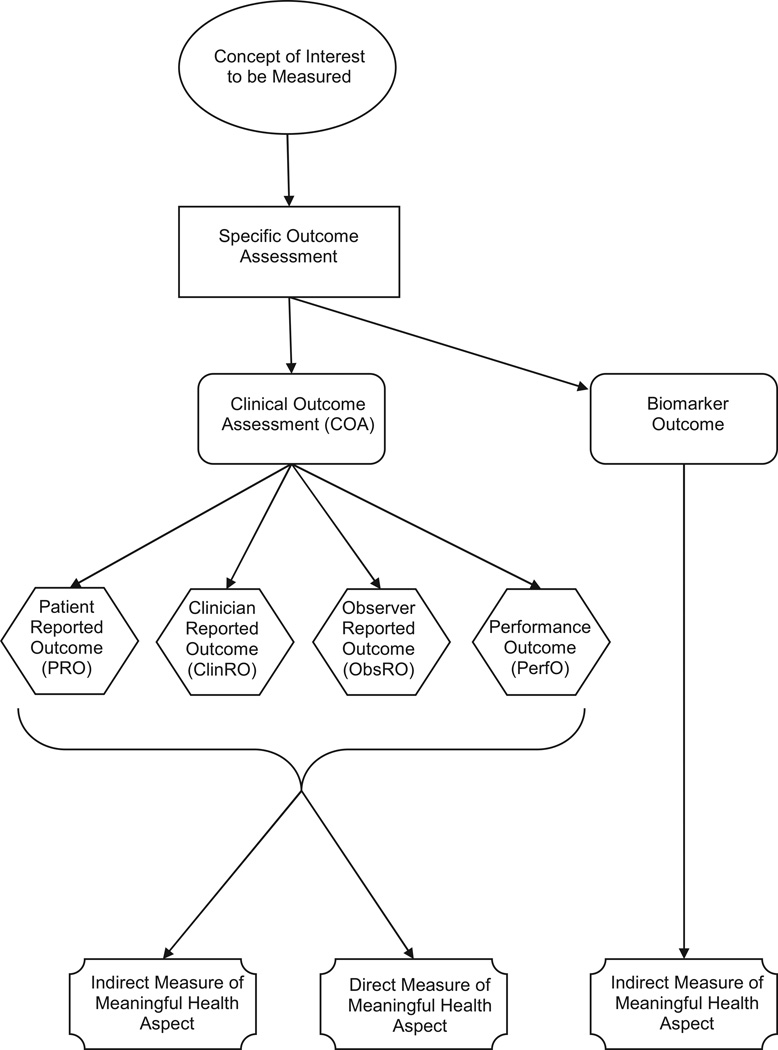
Suppose a small study reports a rise in free testosterone. An evaluation needs to establish how free testosterone was measured or calculated and whether changes in sex hormone-binding globulin (SHBG) affected the result—an issue from the earlier lesson on interpreting hormone tests. It also matters whether the change persisted and was large enough to matter clinically. A striking percentage can describe a small absolute change, and one short-term measurement cannot show that a person’s underlying deficiency has resolved.
The advertised outcome needs its own evidence. Improved libido requires a credible measure of libido; improved strength requires a measure of strength. A claim to “support fertility” calls for fertility-relevant evidence, such as appropriately assessed sperm outcomes—not merely a testosterone result. Patient-reported outcomes can be valuable when collected systematically in a well-designed study. Uncontrolled testimonials and product reviews are much weaker: changes in sleep, expectations, concurrent treatments, and selective posting can all shape what appears online.
This distinction cuts both ways. A product might affect how someone feels without demonstrably treating testosterone deficiency. Conversely, a laboratory value could move without a detectable improvement in symptoms. Neither finding licenses the other claim.
Check the human evidence—and whether it matches the bottle
Evidence is strongest when a study directly tests the relevant product in people like those targeted by the claim, compares it with a suitable control, measures the promised outcomes, and follows participants long enough to assess them. Random assignment and blinding help reduce differences in expectations and other influences between groups. Replication matters because one small positive trial can be an unrepresentative result.
Animal experiments, cell studies, and proposed biological mechanisms can suggest what to investigate. They cannot establish clinical benefit in humans. Even a human trial of an ingredient leaves a further gap if the marketed bottle uses a different dose, preparation, or combination.
Read how researchers compared advertised products with published studies of their components. Pay particular attention to the unit being counted: an ingredient with some published data is not the same thing as a finished product shown to work.
This study by Clemesha, Thaker, and Samplaski examines the distance between product claims and evidence for the ingredients listed on their labels.
In “MATERIALS AND METHODS,” read the search method, beginning with how the researchers selected 50 products and ending with their comparison of listed vitamin quantities against intake limits. In “RESULTS,” start at the paragraph about the PubMed review and read the ingredient findings. Notice both the missing or conflicting testosterone data and the amounts of vitamins and minerals on the labels.
The researchers identified 109 distinct components across 50 products. For 67 of those components, their review found no study of its effect on testosterone; some other components had conflicting findings. These are counts about components and their published literature, not results from a trial showing that a stated fraction of the 50 finished products succeeds or fails. They also do not show whether any product improves fatigue, sexual symptoms, or fertility.
A second analysis illustrates why the phrase “studies exist” needs unpacking.
Testosterone Imposters: An Analysis of Popular Online Testosterone Boosting Supplements
This analysis of popular online boosters provides a closer look at the types of studies behind commonly used ingredients and at limitations of product labeling.
Under “Ingredient Analysis,” read the study breakdown. Focus on how many studies involved people and how varied the human findings were. Later, in “Discussion,” begin at the paragraph identifying five online products and read the labeling discussion, ending with the distinction between a registered facility and product approval.
Only 37 of the 191 studies the authors found for the ten common ingredients involved humans. Of those 37, 11 reported increased testosterone; others reported no effect, a decrease, or an indeterminate result. The studies used different supplementation protocols and sampling times, so those counts cannot be combined into a reliable prediction for an individual buyer. A positive study deserves examination, not automatic dismissal—but it must be read for its participants, comparison group, formulation, dose, duration, and measured outcomes.
Treat safety as an evidence question too
“Natural” describes an ingredient’s origin or marketing, not its safety. A label may omit exact quantities of active ingredients; a multi-ingredient formula makes it harder to know which substance caused a benefit or adverse effect. Research on one preparation may not apply to a differently manufactured product.
The composition study found products with vitamin or mineral amounts above established upper intake levels. More is not necessarily better, particularly when several products containing the same nutrient are taken together. The online-product analysis also notes manufacturing and labeling concerns, including reports of banned substances in products sold as boosters. Such reports warrant caution; they do not mean every booster contains a steroid.
Regulatory wording matters. In the United States, a claim that a supplement was made in an “FDA registered facility” does not mean the FDA reviewed and approved that supplement for effectiveness or safety. And a lack of reported harm in a small, short study is not evidence that long-term use—or use by someone taking other medicines—is safe.
A sensible safety appraisal therefore considers the stated dose and full ingredient list, other supplements and medications, how long the product was studied, and whether the actual product has trustworthy quality testing. Those checks can reduce some uncertainties; they cannot turn missing evidence of benefit into evidence of benefit.
Reach a claim-sized conclusion
Return to the hypothetical promise to boost testosterone, restore energy and libido, and support fertility. Ingredient studies showing a hormone change in a selected group might support further investigation. They would not establish all four promises, particularly if the finished product was never tested and fertility was never measured.
The defensible conclusion is narrower than either “all boosters work” or “no supplement can ever help.” Correcting an identified nutrient deficiency may be appropriate for health reasons. Some other ingredients have limited human findings worth studying further. Over-the-counter boosters are not established treatments for confirmed testosterone deficiency, and an unverified product should not delay assessment of persistent symptoms and appropriately repeated low results.
The key habit is to compare each advertised benefit with a human study that measured that benefit in a relevant population, using a relevant preparation—and then examine the safety evidence separately. In the next module, this same discipline will help weigh the documented benefits and important risks of prescription testosterone treatment.