Introduction
In our last lesson, we focused on position sizing, the critical decision of how much capital to allocate to a single idea. We established that managing the size of your bets is often more important than your entry point for long-term success. Now, we zoom out from the single stock to the entire portfolio. This brings us to one of the most celebrated, and misunderstood, concepts in finance: diversification.
Everyone has heard the mantra "don't put all your eggs in one basket." But for someone aiming to generate an edge, this advice can feel unsatisfying. At what point does prudent risk management become "diworsification"—a lazy, unfocused approach that dilutes your best ideas into mediocrity? This lesson is about drawing that line. We will dissect when spreading your risk helps you survive and thrive, and when it just ensures you'll never achieve exceptional returns.
The Two Faces of Risk
To understand diversification, you must first understand that not all risk is created equal. In the market, risk can be broken down into two fundamental types:
-
Systematic Risk: Also known as market risk, this is the risk inherent to the entire market. It's the danger that a broad event—a recession, a change in interest rates, a geopolitical shock—will drag down most assets. This risk is un-diversifiable. No matter how many different stocks you own, you cannot eliminate your exposure to the overall economy.
-
Unsystematic Risk: Also known as idiosyncratic or company-specific risk, this is the risk associated with a single company or industry. Think of a key product failing, a CEO scandal, or a factory burning down. This risk is diversifiable. By owning stocks from different companies in different industries, the bad news from one can be offset by the good or neutral news from others.
This is the so-called "free lunch" of investing: you can reduce your portfolio's unsystematic risk without necessarily giving up expected return. The relationship is not linear, as the following graph illustrates.

As you can see, the biggest risk-reduction benefits come from the first few stocks you add. After a certain point, adding more stocks does little to reduce the portfolio's total risk, which asymptotically approaches the level of systematic market risk. The key question, then, is what that "certain point" is.
How Many Stocks Are Enough? The Myth vs. The Data
A common rule of thumb, based on research from the 1970s, suggests that owning 20-30 stocks is sufficient for diversification. This advice is dangerously outdated. Let's start by understanding why it's wrong.
How Many Stocks Should Be In Your Portfolio? A Practical Guide to Portfolio Construction -
This article from Alpha Architect directly confronts the "20-stock myth" and explains its critical flaw.
Read the section titled "The 20-Stock Myth (and What It Misses)". Focus on the distinction the authors make. The old rule only considers reducing volatility around a mean return. It completely ignores the more important risk: the uncertainty that your portfolio's mean return itself could be terrible.
The old research missed a crucial, brutal feature of stock markets: positive skewness. Your IT background will help you grasp this immediately. It's a power-law distribution. Most individual stocks are duds. A very small number of "mega-winners" are responsible for the majority of the market's total gains over time.
Let's look at the hard data on this.
The Risk of (Individual) Stocks
In this video, Ben Felix presents sobering data from a famous JP Morgan study on the performance of individual stocks.
Watch from the start of the discussion on idiosyncratic risk. Pay close attention to these staggering statistics for stocks in the Russell 3000 index between 1980 and 2020: 44% of stocks suffered a "catastrophic loss" (a 70% decline without recovery). 42% had negative absolute returns. 66% (two-thirds!) underperformed the index. This data is the reason why simply picking 20 stocks at random is a high-stakes gamble; the odds are high that you will pick a majority of losers and miss the few big winners that drive the market.
Because of this positive skew, picking only a few stocks dramatically increases your odds of underperforming the market, not because of volatility, but because you are likely to miss the rare mega-winners. Newer research that considers the full range of long-term wealth outcomes, not just volatility, suggests that the diversification benefits continue well beyond 30 stocks. For a retail investor, holding 50-100 stocks strikes a much safer balance.
The Operator's Dilemma: Concentration vs. "Diworsification"
This presents a dilemma. If you need 100 stocks to be "safe," how can you ever generate returns that beat the market? Your best ideas will be diluted to a fraction of a percent. This is the origin of the term "diworsification."
Legendary investor Peter Lynch coined this term to describe the practice of buying too many stocks without understanding them, resulting in a portfolio that is both complex and mediocre.
Peter Lynch: How to invest in the stock market for beginners
Listen to Peter Lynch himself explain his view on diversification. His take is provocative and provides a crucial counterpoint to the academic view.
Watch the segment from where he is asked about concentration vs. diversification. Lynch states bluntly, "I don't believe in diversification at all... I call it diworsification." Notice his actual strategy, however. He doesn't just put all his money on one bet. He says if he finds 10 equally good stories, he buys all 10. He then watches them like "10 poker games" and loads up on the ones where the story improves, especially if the stock price has fallen.
Lynch's method reveals the professional's approach: it's not a static choice between concentration and diversification. It's a dynamic process of earning the right to concentrate. He starts diversified across his best ideas and increases his bet size (concentrates) only as his conviction is validated by unfolding events.
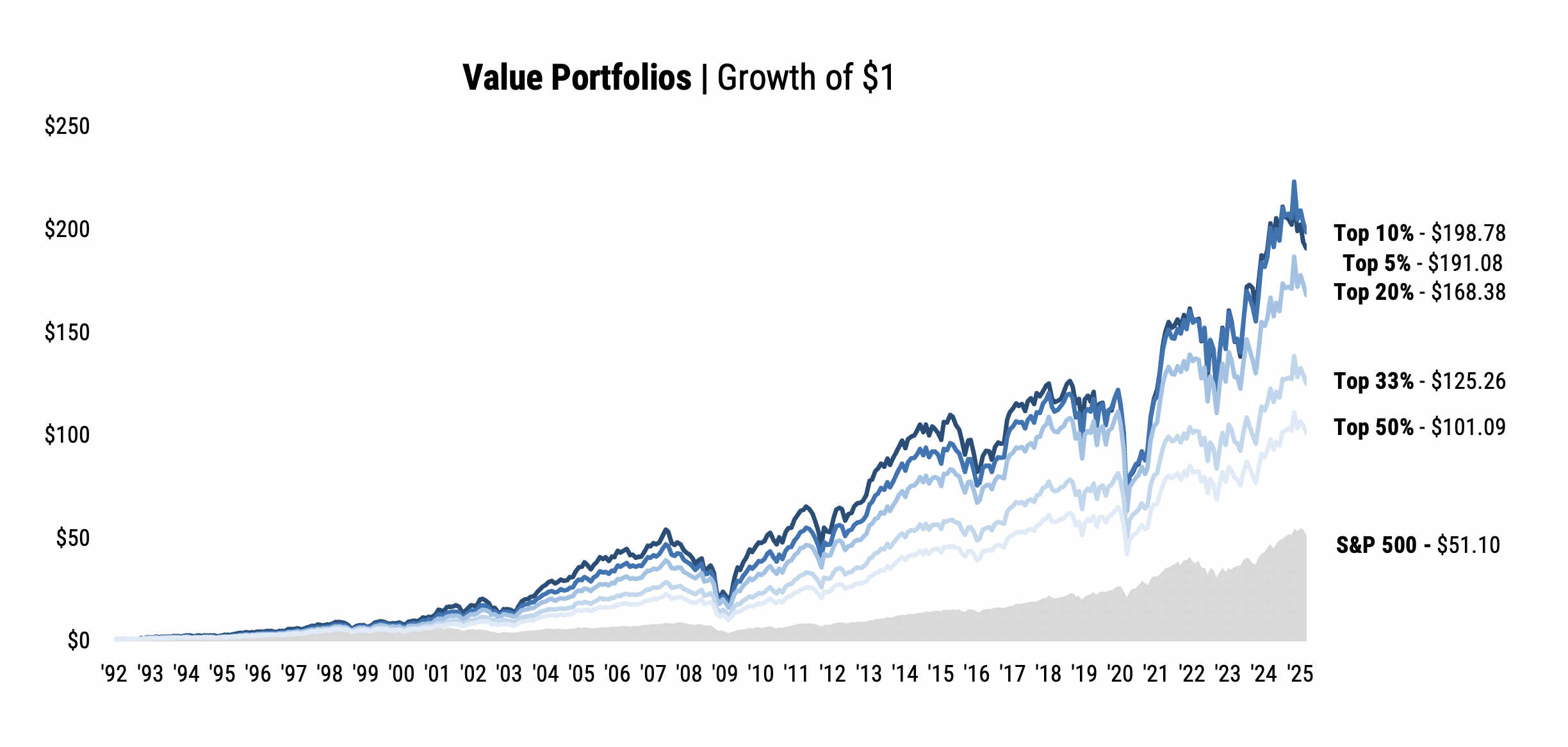
The potential payoff from successful concentration is enormous. It's how fortunes are made.
Smart Diversification: The Best of Both Worlds
So, how do we build a portfolio that avoids diworsification but is still robust enough to survive mistakes? The key is to move from naive diversification (just adding more stocks) to smart diversification.
1. Diversification Is Style-Dependent
First, recognize that the "right" number of stocks isn't universal. It depends on what you're buying.
Peak Diversification: How Many Stocks Best Diversify an Equity Portfolio?
This CFA Institute article analyzes how diversification benefits vary across different types of stocks.
Read the introduction and then skip to the findings. Read the sections on small-cap vs. large-cap and the final summary. The key takeaway is that for a portfolio of stable, large-cap companies, risk-reduction benefits diminish quickly, with little gain beyond ~15 stocks. For more volatile small-cap stocks, you need more holdings (~26 stocks) to achieve peak diversification.
2. Diversify by Factor and Geography
Second, and more importantly, smart diversification is less about the number of stocks and more about owning different types of risk. Adding a 10th banking stock to a portfolio of nine banks does very little for diversification. Adding a commodity producer or a healthcare company does a lot more.
How Many Stocks Should Be In Your Portfolio? A Practical Guide to Portfolio Construction -
Let's return to the Alpha Architect article to see how to expand your investment universe intelligently.
Read the section "But What If That Still Feels Risky?". The author proposes two powerful strategies: Target Both Factors: Instead of just owning "value" stocks, combine them with "momentum" stocks. Because these two factors are relatively uncorrelated, combining them provides a powerful diversification benefit without diluting your expected returns. Go Global: Adding international stocks gives you exposure to different economic cycles, currency movements, and political environments.
This is the core of effective portfolio construction. You are diversifying across economic drivers, not just company names.
Conclusion
In this lesson, we have moved beyond the simplistic platitudes about diversification to build a more robust, operator-focused framework.
Key Takeaways:
- Diversification's Goal: The primary purpose of diversification is to eliminate uncompensated, company-specific (unsystematic) risk. It cannot protect you from broad market (systematic) risk.
- The 20-Stock Myth: The old rule of thumb is dangerously insufficient because stock market returns are positively skewed. You need more holdings (50-100 is a better benchmark) to increase your odds of owning the few "mega-winners" that drive returns.
- Concentration vs. Diworsification: Concentration (betting big on a few ideas) is how you generate outsized returns. "Diworsification" is owning too many stocks without conviction, leading to mediocre, index-like performance.
- Smart Diversification: The solution is not just to add more stocks, but to add different kinds of risk. Effective portfolios are diversified across factors (like value and momentum), industries, and geographies.
You have now learned how to size a position and how to think about blending those positions into a portfolio. However, we've hinted at a crucial hidden risk. Adding stocks from different companies isn't always true diversification. In our next lesson, "Correlation and Hidden Concentration," we will explore why ten different stocks can secretly be the same trade, and how to identify and manage this hidden risk before it blows up your portfolio.