Hello! Welcome to the sixth lesson in our module on PCOS management strategies.
In our last lesson, we focused on women with PCOS who are not seeking pregnancy, exploring anti-androgen medications like spironolactone and finasteride to manage the clinical signs of hyperandrogenism. We stressed that those medications are teratogenic and require reliable contraception.
Today, we shift our focus entirely. Many women with PCOS face challenges with infertility due to chronic anovulation (the absence of ovulation). This lesson addresses a critical aspect of their care: pharmacological approaches for ovulation induction in women with PCOS seeking fertility.
Our goal is to understand how we can medically intervene to help the ovaries release an egg, thereby creating an opportunity for conception. We will explore the first-line oral medications, the role of adjuvant therapies, and what to do when initial treatments are unsuccessful.
The Goal of Ovulation Induction
Before we discuss the drugs, it's essential to understand the objective. Unlike the aggressive stimulation used for in-vitro fertilization (IVF) where the goal is to produce many eggs, the primary goal of ovulation induction (OI) for women with PCOS trying to conceive via timed intercourse or insemination is monofollicular development. We want to coax the ovary into maturing and releasing just one egg per cycle. This is crucial for maximizing the chance of a healthy singleton pregnancy and minimizing the risk of multiple pregnancies (twins, triplets, etc.).
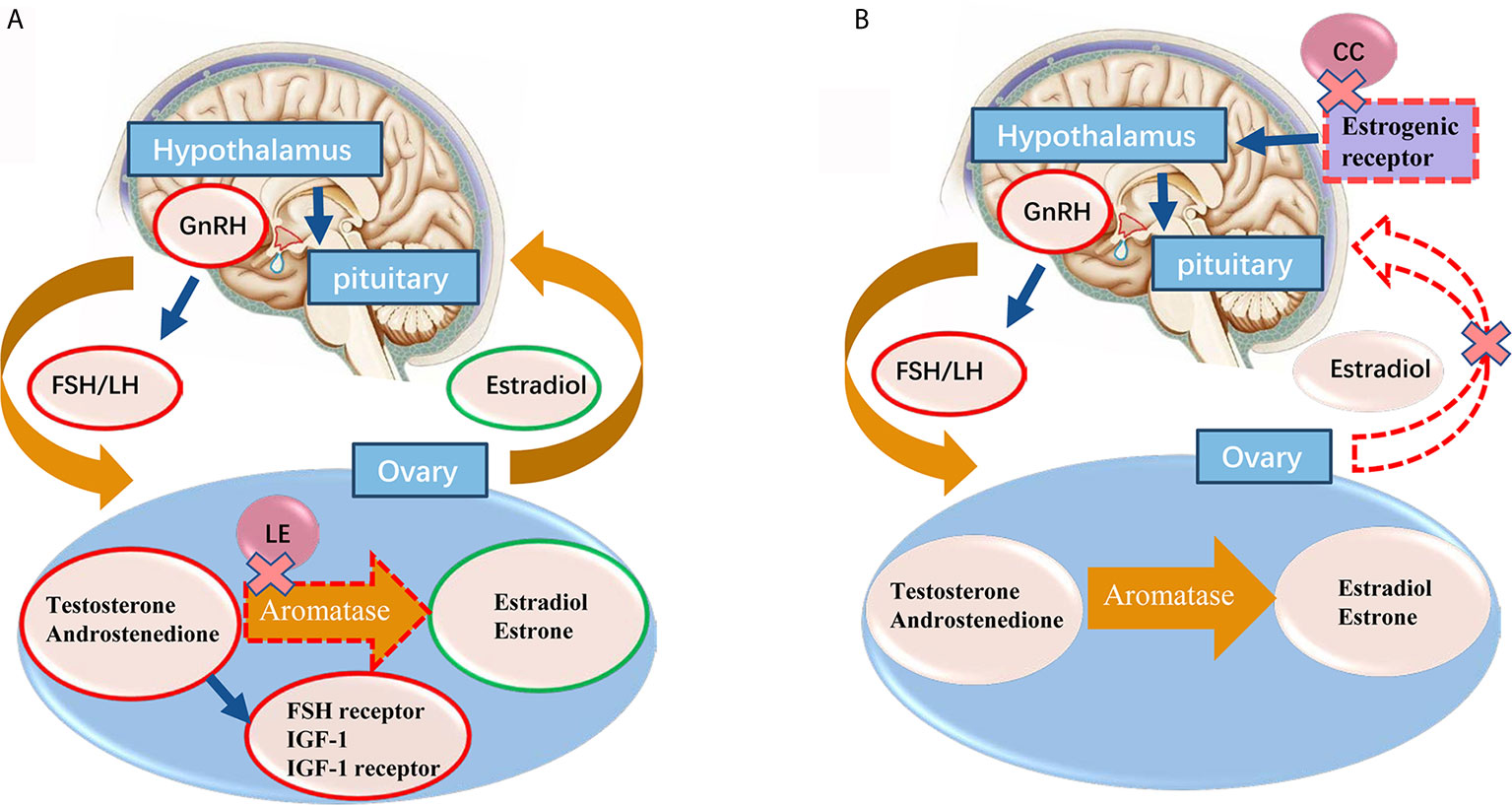
These medications work by manipulating the Hypothalamic-Pituitary-Ovarian (HPO) axis, which we've discussed in previous modules. By altering the hormonal feedback signals, we can overcome the follicular arrest that characterizes PCOS.
First-Line Oral Agents for Ovulation Induction
For decades, the standard approach to OI has involved oral medications. We will explore the two main players and the evidence that has shifted clinical practice in recent years.
The following video from Dr. Natalie Crawford, a reproductive endocrinologist, provides an excellent overview of the key medications and the landmark studies that guide their use.
PCOS & Ovulation Induction: How Can You Ovulate With PCOS?
This video, 'PCOS & Ovulation Induction,' clearly explains the mechanisms and clinical evidence for the most common OI agents used in PCOS. We will watch it in segments to break down each medication.
First, please watch the segment on Letrozole from 11:58 to 14:39. Then, watch the segment on Clomiphene (Clomid) from 07:53 to 09:17. Finally, watch the part discussing Metformin and the comparison study from 09:17 to 11:58. Pay close attention to how each drug works and the study results comparing their effectiveness.
Let's now analyze these medications in more detail, integrating information from the video and our other resources.
1. Letrozole (Aromatase Inhibitor) - The New First-Line Standard
As you saw in the video, letrozole (Femara) is now recommended as the first-line treatment for ovulation induction in PCOS.
- Mechanism: Letrozole is an aromatase inhibitor. Aromatase is the enzyme that converts androgens (like testosterone) into estrogens in the ovarian follicles and peripheral tissues. By temporarily blocking this enzyme, letrozole significantly lowers circulating estrogen levels. The hypothalamus and pituitary gland sense this drop in estrogen and, in response, increase the secretion of FSH. This "boost" of FSH is often sufficient to overcome the follicular arrest in PCOS and drive a single follicle to maturity and ovulation.
- Why it's preferred: A major clinical trial published in the New England Journal of Medicine (and discussed in the video) directly compared letrozole to clomiphene in women with PCOS. The study found that letrozole resulted in significantly higher live birth rates (27.5% vs. 19.1%) and higher ovulation rates compared to clomiphene. It is particularly more effective in women with a higher Body Mass Index (BMI). It also has a shorter half-life and is less likely to negatively affect the uterine lining.

2. Clomiphene Citrate (SERM) - The Traditional Choice
For over 50 years, clomiphene citrate (Clomid) was the go-to medication. While still used, it is now generally considered a second-line oral agent after letrozole.
- Mechanism: Clomiphene is a Selective Estrogen Receptor Modulator (SERM). It works by binding to and blocking estrogen receptors in the hypothalamus. This tricks the brain into perceiving a low-estrogen state, even though estrogen levels are normal. Similar to letrozole, this disrupts the negative feedback loop and causes the pituitary to release more FSH and LH to stimulate the ovaries.
- Drawbacks: Clomiphene has a long half-life and can remain in the system for a while. Its anti-estrogenic effects are not just limited to the brain; it can also affect other tissues. This can sometimes lead to a thinner endometrial lining, which may hinder implantation, and thickened cervical mucus, which can impede sperm. Common side effects include hot flashes, mood swings, and headaches.
Test your understanding!
A patient asks you, "I've heard of both Letrozole and Clomid for making you ovulate. Don't they both just trick your brain into making more hormones?" Based on your understanding, how would you explain the fundamental difference in their mechanisms of action?
Show answer
You could explain it this way: "That's a great question. While both drugs lead to the same outcome—more follicle-stimulating hormone (FSH) from your brain—they get there in two different ways.
- Clomid acts like a lock-blocker. It sits in the estrogen receptors in your brain, so your brain can't 'see' the estrogen that's actually in your blood. Your brain thinks estrogen is low and sends out more FSH.
- Letrozole acts like a factory-stopper. It temporarily stops the 'factory' in your ovaries and fat tissue from making estrogen in the first place. Your brain senses the genuinely lower estrogen levels in the blood and sends out more FSH.
So, one blocks the signal reception (Clomid), while the other blocks the signal production (Letrozole). Letrozole's approach has been shown to lead to higher live birth rates in women with PCOS."
3. The Role of Metformin
As we discussed in a previous lesson, metformin is key for managing insulin resistance. But can it induce ovulation on its own?
As the video explained, studies have shown that while metformin alone can restore ovulation in some women with PCOS (especially those with insulin resistance), it is significantly less effective at achieving a live birth compared to letrozole or clomiphene. Therefore, it is not recommended as a primary, standalone fertility treatment. However, it remains an important adjuvant therapy. By improving the underlying metabolic environment, it can potentially improve the response to other ovulation induction agents.
When Oral Medications Fail: Second-Line Therapies
About 15-25% of women with PCOS may be "resistant" to oral agents, meaning they do not ovulate even at the highest doses. For these women, we move to more direct and potent treatments.
Ovulation induction techniques in women with polycystic ovary ...
For a detailed, systematic overview of all OI techniques, including protocols and success rates, the review article 'Ovulation induction techniques in women with polycystic ovary...' is an excellent resource.
Please read the sections titled 'Exogenous Gonadotropins' and 'Laparoscopic ovariann drilling'. Focus on the mechanism, the general protocol, and the main risks associated with each approach.
1. Injectable Gonadotropins (FSH)
- Mechanism: This approach bypasses the brain entirely and involves direct stimulation of the ovaries using injections of FSH (with or without LH).
- Protocol for PCOS: Women with PCOS have ovaries that are very sensitive to FSH. To prevent an excessive response, a specific protocol called "chronic low-dose step-up" is used. Treatment starts with a very low dose of FSH, which is maintained for about a week. If there is no response (checked via ultrasound), the dose is increased by a small amount. This process is repeated until the ovaries show a gentle response, ideally with only one or two follicles starting to grow.
- Risks: This method is highly effective but carries significant risks:
- Ovarian Hyperstimulation Syndrome (OHSS): A potentially severe and dangerous over-reaction of the ovaries to stimulation.
- High-Order Multiple Pregnancy: A much higher risk of twins, triplets, or more.
- Due to these risks, treatment with gonadotropins requires intensive monitoring by a fertility specialist, involving frequent ultrasounds and blood tests.
2. Laparoscopic Ovarian Drilling (LOD)
- Mechanism: LOD is a surgical procedure where a surgeon uses laparoscopy (keyhole surgery) to make a few small punctures on the surface of the ovaries using heat or a laser. This process destroys some of the androgen-producing tissue (theca cells) in the ovarian stroma. The reduction in intra-ovarian androgens can help break the cycle of follicular arrest and may restore spontaneous ovulation in about 50% of cases.
- Place in Therapy: LOD is typically reserved for women who are clomiphene-resistant and are already undergoing laparoscopy for another reason (e.g., to check for blocked fallopian tubes). It is an alternative to gonadotropin therapy, with the main advantage being the avoidance of OHSS and a lower risk of multiple pregnancies in subsequent spontaneous cycles. However, it is an invasive surgery with its own risks, including potential damage to the ovarian reserve.
Conclusion
Successfully managing infertility in PCOS requires a thoughtful, stepwise approach that balances efficacy with safety. The goal is always to achieve a healthy singleton pregnancy.
Key Takeaways:
- The goal of ovulation induction (OI) in PCOS is to achieve monofollicular ovulation to minimize risks.
- Letrozole is the evidence-based first-line pharmacological treatment, as it leads to higher live birth rates than clomiphene.
- Clomiphene citrate is a second-line oral agent.
- Metformin is not a primary OI agent but can be a useful adjuvant therapy, especially in women with insulin resistance.
- For women who do not respond to oral agents, injectable gonadotropins (using a low-dose protocol) or laparoscopic ovarian drilling (LOD) are second-line options. These treatments are managed by fertility specialists.
- If these methods fail, In Vitro Fertilization (IVF) becomes the next step.
Preview of the Next Lesson:
Having addressed lifestyle, medical management of symptoms, and now fertility, we will conclude our module on management strategies by turning to the direct treatment of skin manifestations. Our next lesson will cover the learning outcome: "Describe cosmetic and topical approaches for the management of hirsutism and acne." We will explore treatments that can be used alongside the systemic therapies we've discussed to improve these often-distressing symptoms.