Hello! Welcome to the first lesson in your journey to becoming a skilled storyteller. The goal of this course is to equip you with the foundational principles of narrative, which you can apply to both filmmaking and video game design.
This first lesson focuses on a crucial starting point: developing a method for actively analyzing stories. Before we can build our own compelling narratives, we must first learn to deconstruct and understand the stories we love. We'll shift our perspective from that of a passive audience member to an active, critical analyst, learning to see the deliberate choices that shape a narrative experience.
By the end of this lesson, you will have a structured approach to breaking down films and games to understand how their narrative elements work together to create meaning and emotional impact.
From "What" to "Why": The Core of Analysis
When we finish a movie or a game, our first instinct is often to judge it—was it "good" or "bad"? For a storyteller, however, the more interesting questions are "how?" and "why?". How did it make me feel that way? Why did the creator make that specific choice?
Every element in a story—a line of dialogue, a camera angle, a character's costume, a game mechanic—is a deliberate choice made by the creators. Your first task as an analyst is to notice these choices and question their purpose.
To explore this foundational idea, let's watch a segment from a video on film analysis. It lays out the basic two-step process that is at the heart of all narrative deconstruction.
How To Analyze Movies – Film Studies 101
In this clip from 'How To Analyze Movies – Film Studies 101' by Patrick (H) Willems, you'll learn the single most important rule for analyzing any work of art. Pay close attention to the simple two-step process he outlines.
Watch the segment from 01:52 to 07:15. The key takeaway is the shift from simply describing what's on screen to questioning the intent and effect of each element.
As the video explains, the process is:
- Observe and Describe: What are you seeing and hearing? State the facts of what is happening in the story, what a character looks like, or how a scene is shot.
- Ask "Why?": Why did the artist make this choice? What purpose does it serve? What is its effect on you, the audience?
This simple but powerful shift in thinking is the engine of analysis. It moves you beyond a surface-level summary and into a deeper understanding of the craft.
A Framework for Analysis: The Three Lenses of Film
Now that we have our core question ("Why?"), we need a structured way to apply it. It can be overwhelming to try and analyze everything at once. A helpful approach is to look at a film through three distinct but interconnected lenses.
The following resource provides a clear breakdown of these analytical categories.
Resource Materials on the Learning and Teaching of Film
This document, 'Resource Materials on the Learning and Teaching of Film', provides a simple framework for analysis. We'll focus on the section that introduces these categories.
Please read Part I, section 'A. Key Aspects of Film Analysis' on page 3. Focus on understanding the three main categories: Literary, Dramatic, and Cinematic aspects.
Let's summarize that framework:
-
Literary Aspects: This is the what of the story. It includes the core components you might find in a novel or a short story:
- Plot: The sequence of events.
- Characters: The individuals who drive the plot.
- Theme: The central idea or message.
- Setting: The time and place.
-
Dramatic Aspects: This is how the story is performed and embodied. It’s about bringing the literary elements to life:
- Acting: Facial expressions, body language, and vocal delivery.
- Costumes & Make-up: What a character's appearance tells us about them.
- Set Design: The physical environment that makes up the setting.
-
Cinematic Aspects: This is the unique language of film—how the story is told through a camera and microphone:
- Cinematography: Camera angles, shots, and movements.
- Editing: The pacing and sequence of shots.
- Sound & Music: Sound effects and musical score that create mood and emotion.
- Lighting: How light and shadow are used to guide our eye and create atmosphere.
By separating your observations into these categories, you can begin to analyze a film in a more organized and thorough way.
Test your understanding!
Imagine a scene where a detective is interrogating a nervous suspect in a dark, shadowy room. Categorize the following observations into Literary, Dramatic, or Cinematic aspects.
- The detective wants to get a confession, while the suspect wants to hide the truth.
- The scene is lit with a single, harsh light from above, casting deep shadows on the suspect's face.
- The actor playing the suspect is constantly fidgeting and avoids eye contact.
- The scene cuts back and forth between a close-up of the detective's intense eyes and the suspect's sweaty brow.
Show answer
- Literary: This describes the characters' conflicting goals, which is a core part of the plot and character development.
- Cinematic: This is a choice related to lighting, a key cinematic technique used to create a tense mood.
- Dramatic: This describes the actor's performance choices (body language) to convey the character's nervousness.
- Cinematic: This describes an editing choice (cross-cutting between close-ups) to build tension and show the psychological battle between the characters.
Adapting the Framework for Video Games
Video games share many narrative elements with film, but they add the crucial dimension of interactivity. As a player, you are not just an observer; you are a participant. This requires us to adapt our analytical framework.
The next video introduces a simple way to think about the core components of game narratives.
The Three Pillars of Game Writing - Plot, Character, Lore - Extra Credits
The team at Extra Credits breaks down game writing into 'The Three Pillars'. This will help us adapt our analytical method for interactive stories.
Watch from the beginning to 03:01. Focus on the definitions of Plot, Character, and Lore.
As the video explains, the three pillars of game writing are:
- Plot: The main storyline. What happens from beginning to end.
- Character: The people (or creatures!) who inhabit the world, their personalities, their struggles, and their relationships.
- Lore: The background story of the world itself. Its history, cultures, rules, and conflicts that exist outside of the immediate plot.
How does this connect to our film framework?
- Plot and Character are a perfect match for the Literary aspects.
- Lore is a super-charged version of Setting. In games, the world can be so vast and detailed that it becomes a central pillar of the narrative experience itself (think of games like Elden Ring or The Elder Scrolls V: Skyrim).
- The Dramatic and Cinematic aspects of film are expressed in games through art style, animation, voice acting, sound design, cutscenes, and—most importantly—game mechanics. How a character moves, what abilities they have, and what the player does moment-to-moment are all powerful storytelling tools.
Your Analytical Toolkit: A Practical Method
So, we have the "why" mindset and frameworks for film and games. How do you put it all together into a practical method?
Step 1: The First Pass
Watch a film or play a game once without taking any notes. Just experience it. Let the story wash over you and pay attention to your own reactions. What parts excited you? Confused you? Moved you? Your initial emotional response is a valuable clue about what the story is doing effectively.
Step 2: The Analytical Pass
Now, go back for a second pass. This is where you become the analyst. Your goal is to dig deeper and understand how the story achieved those effects. The flowchart below illustrates this iterative process.
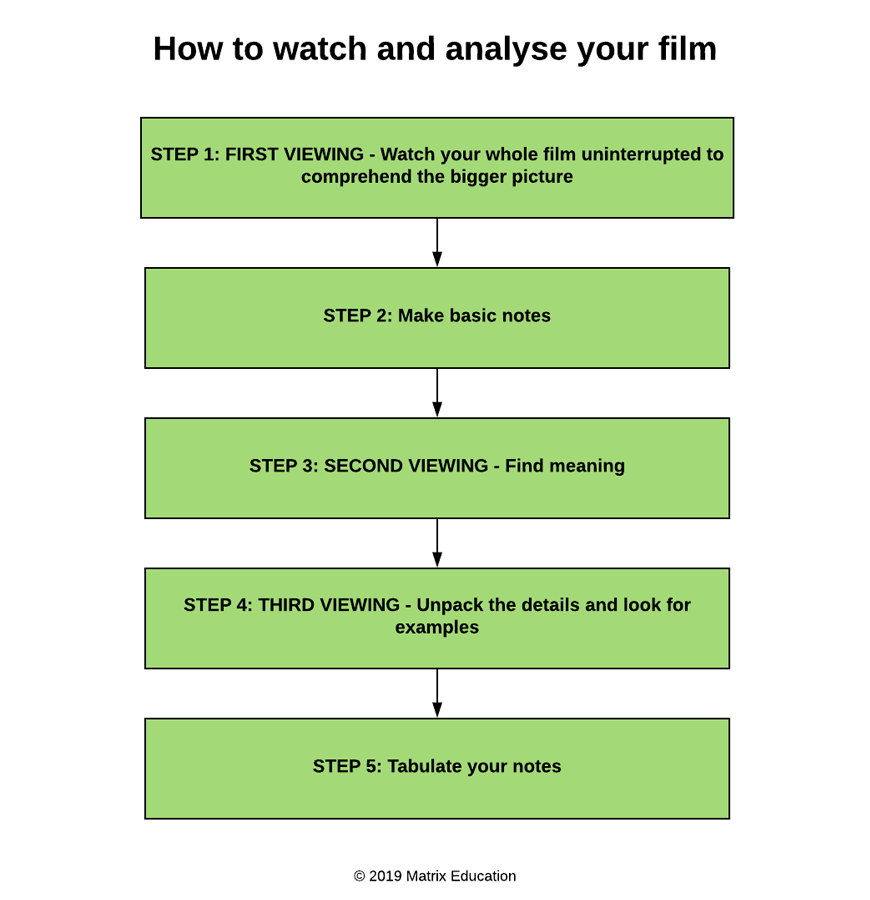
During this second pass, use a set of guiding questions to focus your attention. You don't need to answer every single one, but they will help you notice details you might have missed.
Guiding Questions for Analysis:
-
Story & Theme (Literary)
- What is the story about in one sentence?
- Who is the protagonist? What do they want? What do they need?
- What is the central conflict driving the story?
- What is the main theme or message? How do you know?
-
Character & Performance (Dramatic)
- How are characters introduced? What does their appearance (costume, art style) tell us?
- How does an actor's performance or a game character's animations reveal their personality?
- How do relationships between characters change over time?
-
Presentation (Cinematic / Mechanics)
- Film: How do camera angles, lighting, and color create a specific mood? How does the editing control the pace?
- Game: How does the gameplay loop (the core actions the player repeats) reinforce the story? How is the world's history (lore) revealed to the player?
- Both: How is sound and music used to build tension, create emotion, or define the world?
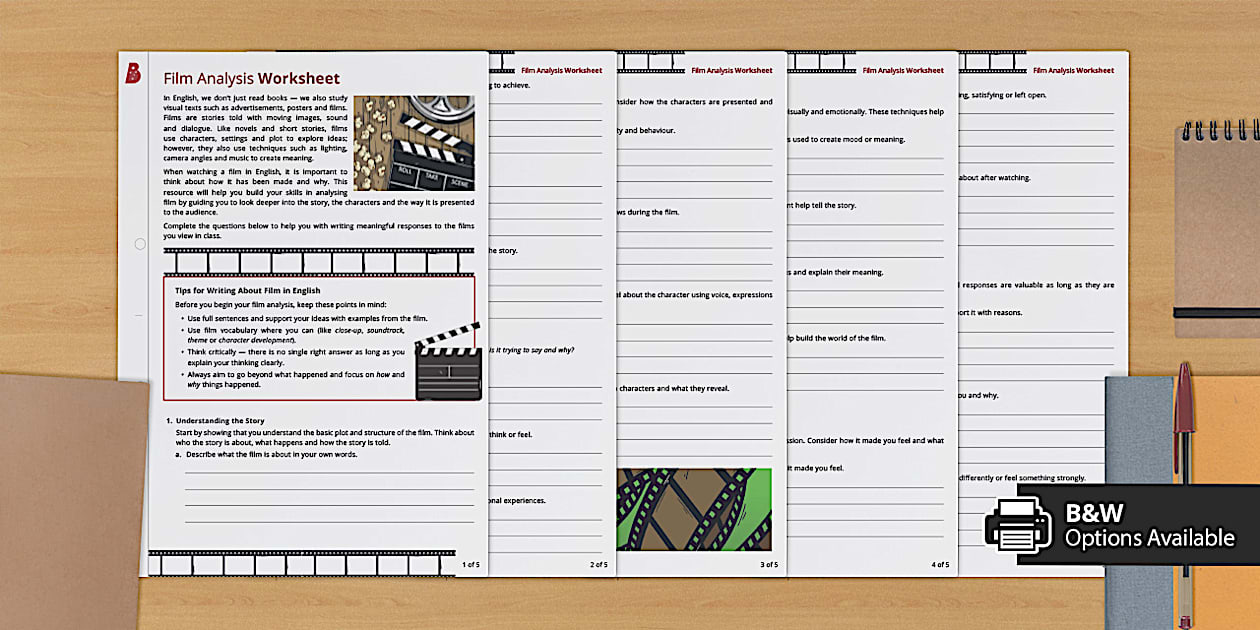
This worksheet gives a good summary of the mindset you should adopt as you answer these questions.
Conclusion
In this lesson, we've laid the groundwork for all the storytelling work to come. You've learned that active analysis isn't about judging a story, but about understanding the deliberate choices behind it.
Key Takeaways:
- The foundation of narrative analysis is shifting your thinking from "what happened?" to "why was it presented this way?"
- You can structure your analysis of films using the Literary, Dramatic, and Cinematic lenses.
- For games, a useful framework is the three pillars of Plot, Character, and Lore, with an added focus on how game mechanics contribute to the narrative.
- A practical method involves multiple viewings/playthroughs: a first pass for experience, and subsequent passes for focused, question-driven analysis.
Preview of the Next Lesson:
Now that you have a method for analysis, we'll start using it to break down one of the most fundamental narrative elements. In the next lesson, we will focus on how to identify the core theme or central message of a story. You'll get to practice applying these new skills to uncover what a story is really about beneath the surface of its plot.