Hello! Welcome to your next English lesson.
In our last lesson, you did a great job learning to count from 1 to 100. That's a very important skill for everyday life.
Today, we will take a big step towards your goal of having conversations. We will learn how to build your first complete sentences in English. To do this, you will learn to use subject pronouns (like I, you, he, she) with the most important verb in English: 'to be' (am, is, are). By the end of this lesson, you'll be able to say who you are, who other people are, and describe simple situations, like "I am a student" or "They are friends."
1. What Are Subject Pronouns?
First, what is a subject pronoun? It is a small word that we use to talk about a person, a thing, or a group without using their name or title.
Look at this picture. It shows the seven subject pronouns in English and what they mean.
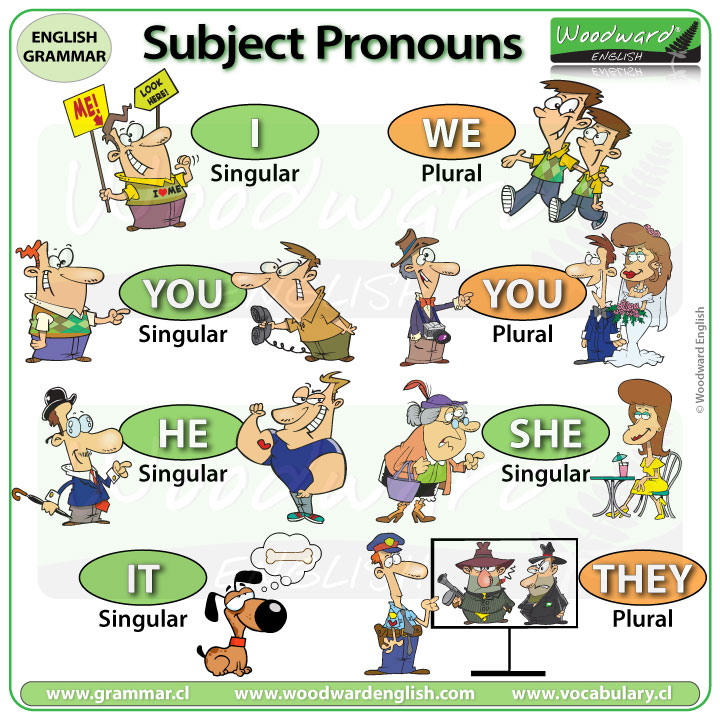
Here is a simple list:
- I - me, the person speaking
- You - the person I am speaking to (can be one person or many people)
- He - one man or boy
- She - one woman or girl
- It - one thing or animal
- We - a group that includes me
- They - a group of other people, things, or animals
To understand these pronouns better, let's watch a short video.
Personal Pronouns 🤩 and The Verb To Be in the Present Simple Affirmative 💫
This video from ABA English clearly explains the subject pronouns, distinguishing between singular (one) and plural (more than one).
Watch from 00:30 to 02:00. Pay attention to the explanation for 'he', 'she', and 'it'.
2. The Verb 'To Be': Am, Is, Are
The verb 'to be' is probably the most used verb in English. We use it to talk about identity, states, and descriptions. In the present, it has three forms: am, is, and are.
Which form you use depends on the subject pronoun. The rule is very simple and never changes.
3. Pairing Pronouns with 'To Be'
Let's learn how to match the pronouns with the correct form of 'to be'. This chart shows you exactly how they go together.
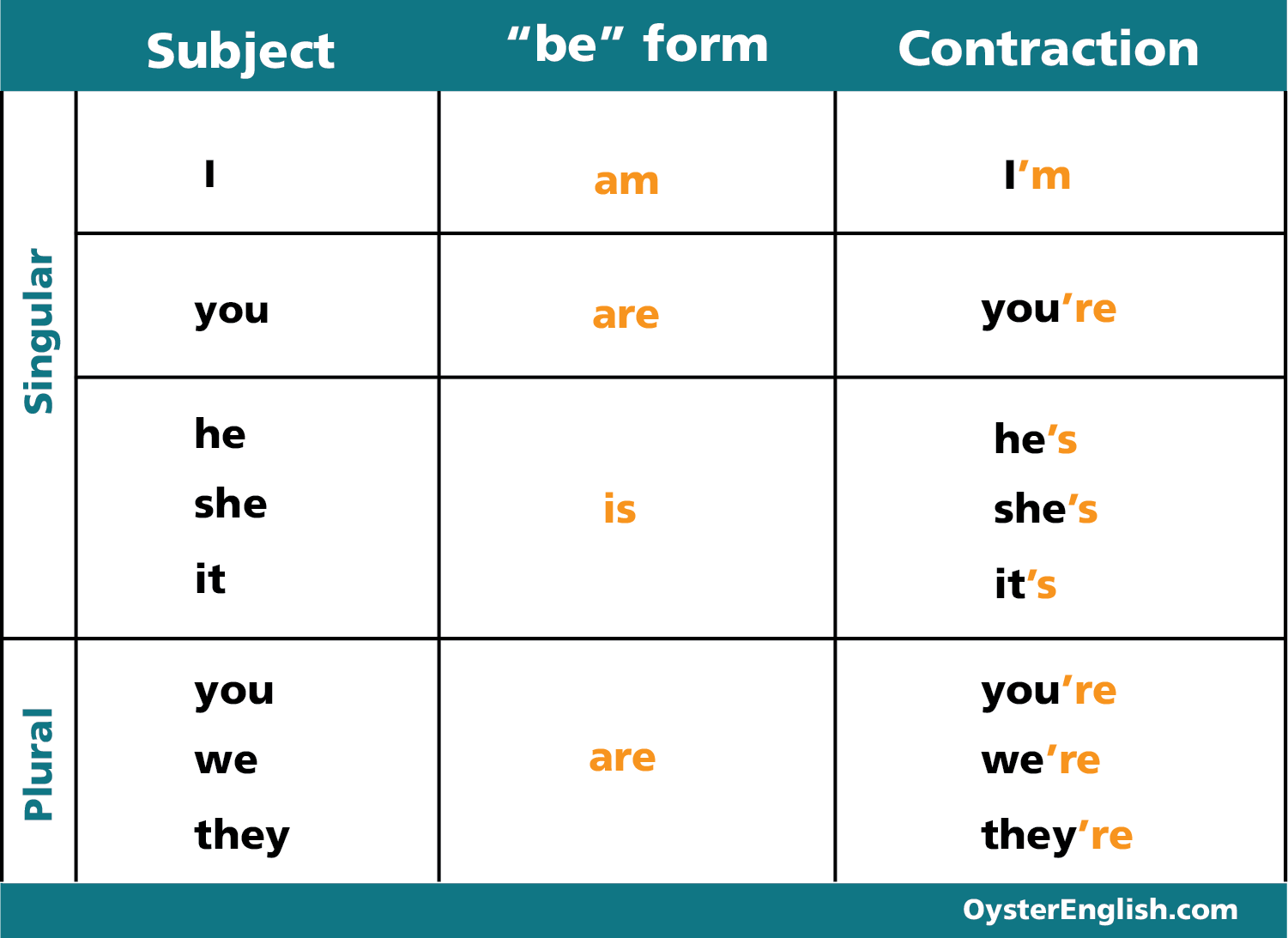
As you can see in the chart, the pairs are:
- I → am (I am)
- He / She / It → is (He is, She is, It is)
- You / We / They → are (You are, We are, They are)
In spoken English, we almost always use the short forms, called contractions (like "I'm" instead of "I am"). Learning these is key to sounding natural.
This next video will help you practice these pairs and their contractions.
Learn Subject Pronouns + 'be' verb ( am, is, are ) | Basic English Grammar Course
The instructor in this Shaw English Online video will walk you through each pronoun and 'be' verb pair. Listen carefully and repeat the contractions.
Watch from the beginning (00:00) to 01:42. Focus on how 'I am' becomes 'I'm', 'He is' becomes 'He's', and so on. Repeat the words out loud.
4. Making Your First Sentences
Now you have all the pieces to build a sentence! The structure is:
Subject Pronoun + 'be' verb + description
For example:
- I am a student. → I'm a student.
- She is happy. → She's happy.
- They are friends. → They're friends.
Let's watch the rest of that video to see more examples and practice saying full sentences.
Learn Subject Pronouns + 'be' verb ( am, is, are ) | Basic English Grammar Course
This video provides many examples of simple sentences. The instructor repeats them, which is great practice for you. Try to say the sentences with her.
Watch from 01:42 to 05:42. Listen to how the words link together, like 'I'm a...' sounds like one word. Repeat the sentences to practice your pronunciation.
Test your understanding!
Complete these sentences with the correct form of the verb 'to be' (am, is, or are).
- She ____ a doctor.
- We ____ happy.
- I ____ a student.
- They ____ from Brazil.
- It ____ cold today.
Show answer
- She is a doctor.
- We are happy.
- I am a student.
- They are from Brazil.
- It is cold today.
5. Seeing it in a Conversation
Grammar rules are important, but it's even more important to see how they are used in real conversations. This helps you understand how to use English to make friends and talk to people.
Let's read some short dialogues. Look for the pronouns and the 'be' verbs you've learned today.
Beginner English - A1 - Be Verbs - Present Simple
This resource from ELLO shows four short conversations between new students. Reading them will help you see how 'am', 'is', and 'are' are used naturally.
Read the four conversations at the top of the page. As you read, notice phrases like 'Are you a new student?', 'Yes, I am.', 'My name is Tony.', 'They are fun!'. This shows you how these simple sentences start and connect a conversation.
Did you notice how often people use these words? For example, when Tony says, "My name is Tony," and Beth replies, "I'm Beth." These are the exact structures we are practicing today!
Conclusion
Fantastic work! You have just learned the most fundamental sentence structure in the English language. This is a major step in your learning journey.
Let's review the key points:
- Subject pronouns (I, you, he, she, it, we, they) replace nouns.
- The verb 'to be' has three present forms: am, is, are.
- Each pronoun has a specific partner: I am, he/she/it is, you/we/they are.
- Using contractions (I'm, he's, you're) is very common and natural in conversation.
In our next lesson, we will continue with this topic and learn how to make these sentences negative (for example, "She is not a doctor") and how to ask simple questions. See you then