Introduction
In the last module, we concluded by analyzing how technical choices made throughout the AI lifecycle—from data collection to model decommissioning—create or mitigate legal risks. We established a clear link between a line of code and a potential legal liability. Now, we shift our focus from the technical causes of risk to the legal framework used to define and adjudicate that risk.
Welcome to the first lesson in our module on Foundational Legal Principles for AI Governance. This lesson addresses a fundamental question for any legal study: where does the law come from? We will explore the primary sources of law and the pivotal role of judicial interpretation, specifically within a common law system like India's.
For you, this is a crucial starting point. As you begin your formal legal education, mastering these concepts is non-negotiable. Furthermore, your experience working in both India (a common law country) and Japan (a civil law country) gives you a unique perspective to appreciate the profound differences in how legal systems operate. Understanding this "legal operating system" is essential before we can analyze how it handles the complex challenges posed by AI.
The Two Great Legal Traditions: Common Law and Civil Law
Globally, most legal systems are based on one of two traditions: common law or civil law. Understanding their core difference is key to understanding the role of judges and the sources of law in India.
THE COMMON LAW AND CIVIL LAW TRADITIONS
This short introductory text from Berkeley Law provides a clear and concise distinction between the two traditions. As you read, focus on the fundamental difference in the primary source of law in each system.
Please read the first page of the document, up to the heading 'Historical development of English Common Law'. Pay close attention to the definitions of 'common law' as largely uncodified and based on precedent, and 'civil law' as codified with comprehensive legal codes.
As the reading highlights:
- Civil Law (prevalent in continental Europe, Japan): The law is primarily found in comprehensive, written codes created by a legislature. A judge's role is to investigate the facts and apply the relevant provisions of the code.
- Common Law (prevalent in England, USA, India, Australia): The law is found in two main sources: written laws from the legislature (statutes) and, crucially, the decisions of judges in past cases (case law or precedent).
In a common law system, judges don't just apply the law; they are a source of law themselves. Let's now examine these two sources in detail.
Source 1: Legislation (Statutes)
The most authoritative source of law in any modern legal system is legislation passed by a parliament or state legislature. These are known as statutes or Acts.
A guide to reading and interpreting statutes
This video from Oxford University Press provides an excellent guide to what statutes are and how lawyers read them. It explains their structure and, importantly, the task of interpretation.
Please watch the following segments: What are statutes? (00:08 - 01:29): Focus on the definition of a statute as a law passed by Parliament and its status as the most important source of law, capable of overriding judge-made law. How lawyers interpret statutes (05:40 - 08:26): Pay close attention to the idea that interpretation involves more than just reading words. It includes looking at the context of the whole Act, its objective (the 'mischief' it was meant to fix), and applying established presumptions.
Key points on legislation:
- Supremacy: A validly enacted statute is the highest form of law (subordinate only to the Constitution) and can change or replace any rule established by a prior court decision.
- Interpretation: The text of a statute is often general. The role of judges is to interpret its meaning and apply it to the specific facts of a case. This act of interpretation is critical. For example, if a statute creates liability for a "defective product," a court will have to decide if a flawed AI algorithm qualifies as a "product" and what makes it "defective." That judicial interpretation then clarifies the law.
Source 2: Case Law (Judicial Precedent)
This is the defining feature of the common law system. The idea is that cases with similar facts should be decided in a similar way to ensure consistency, predictability, and fairness. This is governed by the doctrine of stare decisis.
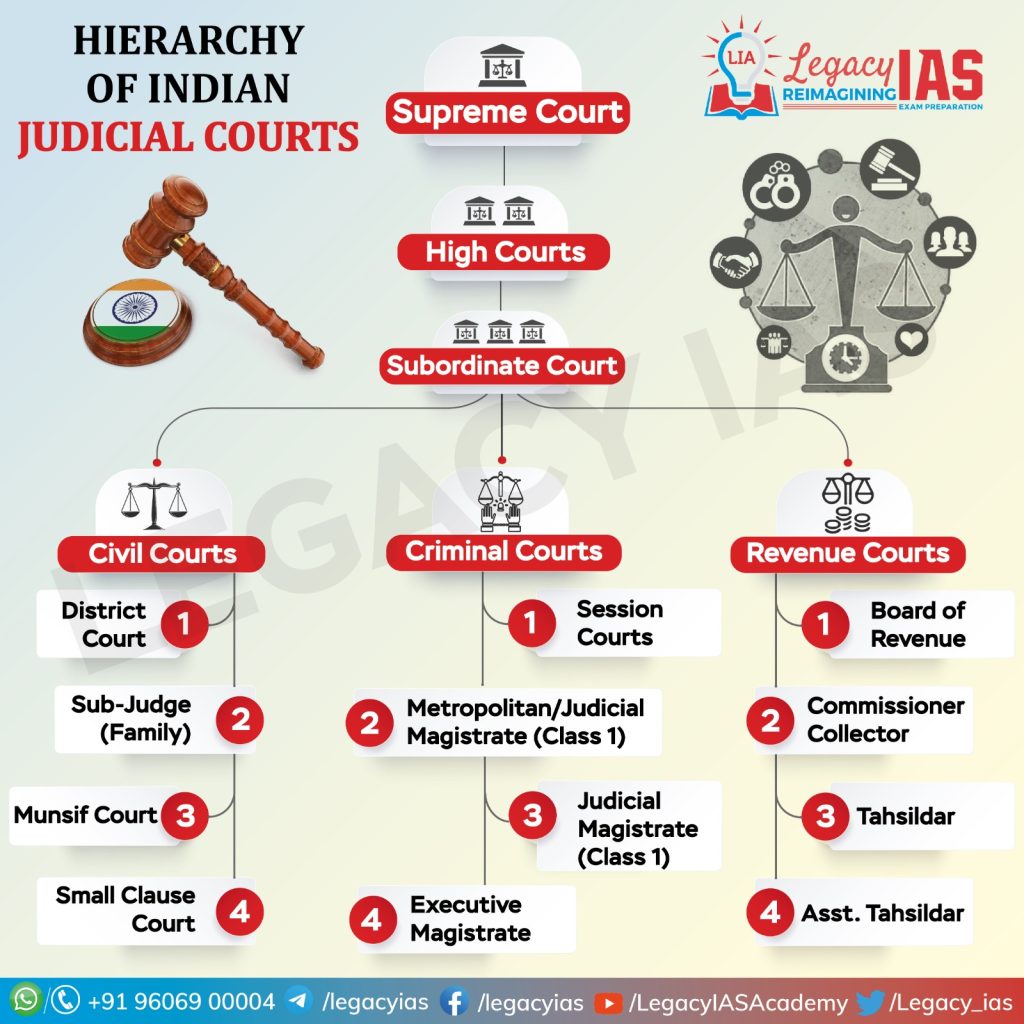
Let's break down how this works.
The blog iplawders offers a detailed article, 'Doctrine of precedent', aimed at law students in India. It provides a comprehensive look at the key concepts, including the constitutional basis in Article 141.
Please read the following sections from the article: Introduction and What is doctrine of precedent: To understand the concept of stare decisis and its constitutional backing under Article 141. Historical growth of precedent in India: For context on its evolution. What is ratio decidendi: To learn about the binding part of a judgment. What is obiter dicta: To understand the non-binding part. Stare Decisis: To reinforce the definition and purpose of the doctrine. High Court cannot overrule the Supreme Court’s Decision: To understand the hierarchical nature of precedent.
To complement the reading, this video explains the core concepts in a lecture format.
Jurisprudence- Precedent | Stare Decisis -Ratio Decidendi, Obiter Dicta |Position in UK & India
This video from Xpert Law School, 'Jurisprudence- Precedent', explains the same concepts visually. It's particularly useful for its clear distinction between ratio decidendi and obiter dicta.
Please watch: Doctrine of Stare Decisis (03:00 - 06:54): This explains the principle, the importance of the court hierarchy, and the goals of consistency and uniformity. Ratio Decidendi and Obiter Dicta (06:54 - 11:20): This is a critical segment. Focus on the definitions and examples that distinguish the binding legal rule from the judge's other observations.
Key Concepts of Judicial Precedent
Let's consolidate the crucial terminology from these resources:
-
Stare Decisis: A Latin term meaning "to stand by things decided." It is the core doctrine that obligates a court to follow the decisions of higher courts (and often its own prior decisions) in cases with similar legal issues and facts. In India, this is given constitutional force by Article 141 of the Constitution, which states that the law declared by the Supreme Court is binding on all other courts in India.
-
Ratio Decidendi: Latin for "the reason for the decision." This is the core legal principle or rule of law that was necessary to resolve the case. The ratio is the part of the judgment that forms the binding precedent. It is the abstract legal rule that can be applied to future cases.
-
Obiter Dictum (plural: Obiter Dicta): Latin for "a thing said by the way." These are observations, opinions, or hypothetical scenarios mentioned by a judge that are not essential to the final decision. Obiter dicta are not binding precedent, but they can be highly persuasive, especially if they come from the Supreme Court. They often provide valuable insight into a judge's thinking and can influence future legal development.
How Judges Work with Precedent
When faced with a new case, a judge doesn't just blindly follow the past. They engage in a sophisticated analytical process:
- Applying: If the material facts of the new case are sufficiently similar to a binding precedent, the judge must apply the ratio from that precedent.
- Distinguishing: If the judge can identify a meaningful difference in the material facts between the new case and the precedent, they can "distinguish" the precedent and are not bound to follow it.
- Overruling: A higher court can declare that a precedent set by a lower court (or even its own previous decision) was wrongly decided and therefore is no longer good law. This is done sparingly to maintain stability in the law. For example, the Indian Supreme Court can and does overrule its own prior decisions to correct errors or adapt the law to changing societal values.
Test your understanding!
A person is injured when their new autonomous car misidentifies a shadow as a clear road and fails to brake. They sue the car manufacturer. The Supreme Court hears the case and rules in favor of the injured person.
In the judgment, the Chief Justice writes:
"(A) The legal principle is that a manufacturer of a complex product, which includes sophisticated software, owes a duty of care to the end-user. If a flaw in that software leads to foreseeable harm, the manufacturer is liable for negligence. (B) In this case, the AI's failure to brake was a direct result of a flaw in its perception algorithm, making the manufacturer liable. (C) It is my personal view that in the near future, Parliament should consider creating a special no-fault compensation scheme for all AI-related accidents, as court cases are slow and expensive."
Which part of this judgment is the ratio decidendi and which is obiter dictum?
Show answer
-
(A) is the ratio decidendi. It is the abstract principle of law that forms the basis of the decision—that manufacturers are liable for foreseeable harm from software flaws. This is the rule that will be binding on all lower courts in future cases involving harm caused by software or AI.
-
(B) is the application of the ratio to the specific facts of the case.
-
(C) is obiter dictum. It is a personal opinion and a suggestion to the legislature. It is not necessary for the decision in the case itself. While influential, it is not a binding rule of law that a lower court must follow.
Conclusion: A Dynamic Legal System

In a common law system, the law is a dynamic conversation between the legislature and the judiciary.
- The legislature creates broad rules through statutes.
- The judiciary interprets these statutes and applies them to specific facts, creating case law (precedent) that clarifies the rules.
- The judiciary also develops entire areas of law (like the law of negligence) purely through a long line of precedents.
This dynamic is exactly why understanding sources of law is critical for AI governance. Some AI regulation will come from new statutes (like the EU's AI Act or India's DPDP Act). But a vast amount of AI law will be shaped by judges in courtrooms applying and adapting centuries-old principles from case law to this new technology, one precedent at a time.
Key Takeaways:
- India operates under a common law system, where law originates from both legislation and judicial decisions.
- Legislation (statutes) is the primary source of law, created by Parliament or state legislatures.
- Case Law (precedent) is judge-made law. The doctrine of stare decisis makes the decisions of higher courts binding on lower courts, ensuring consistency.
- Only the ratio decidendi (the core legal principle) of a case is binding precedent. Obiter dicta (other remarks) are merely persuasive.
- Judges play an active role in shaping the law by interpreting statutes and by applying, distinguishing, or overruling precedents.
Preview of the Next Lesson:
Now that we understand how case law is made, our next lesson will dive into one of the most important areas of law built almost entirely on precedent: Tort Law. We will explore core principles like negligence, strict liability, and causation. These are the very principles that courts will use to decide who is at fault when an autonomous AI system causes harm, directly connecting today's foundational theory to the practical legal risks of AI.