In our previous lesson, we established the five foundational pillars of any story: character, plot, setting, conflict, and theme. Now, we'll explore how different types of stories—or genres—combine these elements in distinct and recognizable ways. Understanding genre is crucial because it acts as a contract between you and your reader, setting expectations for the kind of journey they're about to undertake.
This lesson is designed to help you distinguish between three major fiction genres that align closely with your interests: fantasy, mystery, and adventure. We will dissect their key conventions, which are the typical ingredients readers expect to find in each. This knowledge will not only help you categorize your own ideas but also empower you to use, bend, or even break these conventions deliberately to create fresh and exciting narratives.
What Makes a Genre?
Think of genre as a recipe. While every cake uses flour, sugar, and eggs (the core elements of a story), a chocolate cake uses cocoa and has a rich, dense texture, while a lemon drizzle cake uses citrus and has a light, tangy flavour. They are both cakes, but they offer very different experiences. Similarly, genres use the same core elements but combine them to create unique experiences for the reader.
These combinations result in a set of conventions—recurring characteristics that define a genre.

A core part of these conventions is the use of tropes. A trope is a common, recurring device, character, or situation in storytelling. They are the shorthand language of genre. For example, a "wise old mentor" is a common trope in fantasy. Tropes are not inherently bad; they become clichés only when they are overused and unoriginal.
To start, it's important to grasp the difference between a trope, a cliché, and an archetype.
Book Tropes: The Ultimate List of 70+ Tropes in Literature
This article from Scribophile provides excellent, clear definitions that will form the basis of our discussion.
Please read the introductory part of the article. Focus on the three sections that define and differentiate these key terms: "What is a trope", "trope and a cliché", and "trope and an archetype".
Understanding this distinction is vital. Archetypes are universal (the Hero), tropes are genre-specific patterns (the Chosen One), and clichés are tropes that have lost their power through overuse (the damsel in distress). As a writer, your goal is to use tropes effectively, often by giving them a fresh twist.
1. Fantasy: Worlds of Wonder and Magic
The fantasy genre is defined by the presence of magic and supernatural elements that do not exist in the real world. This is the genre of Harry Potter and Septimus Heap, where the impossible becomes the bedrock of the story.
The Ultimate List of Book Genres: 35 Popular Genres - Reedsy
The Reedsy blog offers a concise definition of the fantasy genre.
Please read the short section titled "Fantasy." Pay attention to the distinction between high fantasy (set in a completely fictional world) and low fantasy (magic woven into our world). The Lord of the Rings is high fantasy; Harry Potter is low fantasy.
The conventions of fantasy are built from a rich collection of tropes that readers have come to love and expect. The following video offers an excellent deep-dive into the DNA of the fantasy genre.
Ultimate Guide to Fantasy Tropes
The "Ultimate Guide to Fantasy Tropes" from the Captured in Words channel is a fantastic resource for understanding the building blocks of the genre.
We'll focus on the plot and character tropes that are most relevant to the epic stories you enjoy. Please watch these two segments: Plot Tropes: from Good vs. Evil up to the end of the Prophecy/Destiny section. Notice how many of these apply to stories like Harry Potter. Character Tropes: from The Chosen One up to the end of the Mentor section. Think about how characters like Harry, Voldemort, and Dumbledore perfectly fit these trope descriptions.
Key Conventions of Fantasy:
- Setting: Often features elaborate world-building, with unique maps, histories, cultures, and magical systems. This is a huge draw for the genre.
- Characters: Common archetypes are transformed into tropes like the Chosen One (Harry Potter), the Dark Lord (Voldemort), and the wise Mentor (Dumbledore).
- Plot: Frequently revolves around an Epic Quest or a monumental struggle of Good vs. Evil, often driven by a prophecy.
- Themes: Explores grand ideas like destiny, courage, sacrifice, and the nature of power.
- Tone: Can range from dark and gritty to lighthearted and whimsical, but often carries a sense of epic scale and wonder.
2. Adventure: The Thrill of the Quest
The adventure genre is propelled by a journey. The protagonist goes somewhere exciting and often dangerous to achieve a specific, high-stakes goal. This genre powers many of the action movies you enjoy, as well as stories like Young Bond and Young Sherlock.
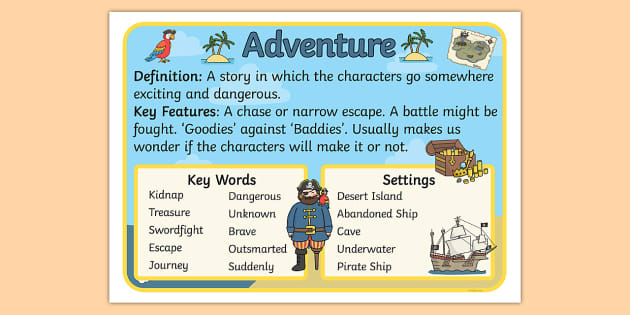
While fantasy often contains an adventure, a story can be a pure adventure without any magic. The focus is on the external journey and the obstacles encountered along the way.
Book Tropes: The Ultimate List of 70+ Tropes in Literature
Let's return to the Scribophile article to look at the specific tropes of this genre.
Please read the section titled "Action and adventure book tropes." Pay special attention to "The treasure hunt" and "Puzzles and riddles," as you've expressed a strong interest in incorporating these very elements into your own writing.
Key Conventions of Adventure:
- Setting: Takes place in exotic, remote, or dangerous locations—ancient tombs, uncharted islands, dense jungles, etc. The setting itself is often an antagonist.
- Characters: The protagonist is often an "everyman" or a capable hero thrust into a perilous situation, driven by a clear goal.
- Plot: Fast-paced and plot-driven, centered on a treasure hunt, a rescue mission, or an escape. Expect chases, traps, and narrow escapes.
- Themes: Core themes include bravery, exploration, perseverance, and triumphing against the odds.
- Tone: Primarily exciting, tense, and full of suspense. The central question is always, "Will they make it?"
3. Mystery: The Allure of the Puzzle
At its heart, a mystery is a puzzle. The story revolves around a central question—usually "whodunit?"—that the protagonist and the reader must solve by piecing together clues. This is the home ground of Young Sherlock and the perfect genre for your interest in misdirection, red herrings, and twists.
Your Definitive Guide to Novel Genres
This video, "Your Definitive Guide to Novel Genres" by Alyssa Matesic, gives a quick and clear overview of the main commercial genres.
Watch the brief definitions of Mystery and Thrillers. The key distinction is that in a mystery, the protagonist is an investigator solving a crime that has already happened. In a thriller, the protagonist is often the potential victim, trying to survive a threat as it happens. We're focusing on the classic mystery structure.
Mystery writers play a game with their readers. They must present all the necessary clues but use misdirection to hide the truth in plain sight.
Book Tropes: The Ultimate List of 70+ Tropes in Literature
The tropes of mystery are all about setting up this game between the writer and reader.
Read the section "Mystery book tropes." Focus on how tropes like "The unreliable narrator" and "The hidden affair" are used specifically to mislead the audience, creating the red herrings and twists you're interested in.
Key Conventions of Mystery:
- Setting: Often a constrained environment (a country house, a small town) to limit the number of suspects and intensify the investigation. This is often called a "closed circle" mystery.
- Characters: A brilliant (or doggedly persistent) detective—professional or amateur. A cast of suspects, each with a potential motive and secrets to hide.
- Plot: Follows the structure of an investigation: a crime is discovered, clues are gathered, suspects are interrogated, and the solution is revealed in a climactic scene.
- Themes: Explores themes of justice, deception, and the dark side of human nature.
- Tone: Suspenseful, intellectual, and intriguing. The mood is one of questions and secrets.
Blending Genres: Creating Your Unique Story
Very few stories fit neatly into a single box. In fact, many of the most successful books, including the ones you love, are blends.
- Harry Potter is a Fantasy novel that uses a Mystery plot in each book (e.g., Who is trying to steal the Sorcerer's Stone?) and culminates in a grand Adventure quest.
- Young Sherlock is a Mystery series, but his investigations often lead him on dangerous Adventures far beyond a typical detective's beat.
Think of genres and their conventions as tools in your writer's toolkit. You can pick and choose elements to build something that is uniquely yours. Want to write a story about a detective who solves a murder in a magical city? That's a Fantasy Mystery. A quest for a lost artifact that involves solving a series of ancient riddles? That's an Adventure with Mystery elements.
Your Definitive Guide to Novel Genres
The "Definitive Guide" video concludes by explaining how these labels are combined.
Watch the final segment from "let's put it all together". This will solidify your understanding of how to describe a blended-genre story.
Conclusion
In this lesson, we've moved from the universal elements of story to the specific recipes of genre. You now have a framework for understanding how stories are categorized based on the expectations they create for the reader.
Key Takeaways:
- Genre is a category of fiction defined by a set of shared conventions in setting, character, plot, theme, and tone.
- Tropes are the recurring patterns that make up these conventions. They are powerful tools when used creatively.
- Fantasy is defined by magic and supernatural elements, often featuring epic quests, chosen heroes, and extensive world-building.
- Adventure is defined by a perilous journey to achieve a goal, characterized by fast-paced action, exotic settings, and high stakes.
- Mystery is defined by a central puzzle or crime to be solved, focusing on investigation, clues, and suspense.
- Most modern stories are genre blends, combining conventions to create new and exciting reader experiences.
In our next lesson, we will put this knowledge into practice. We will analyze the opening of a published novel to see how the author masterfully establishes genre, hooks the reader, and sets up the core elements of the story, further exploring the engaging qualities that make a narrative compelling.