Welcome back! In our last two lessons, we explored the building blocks of narrative suspense. First, we learned to plant true clues through foreshadowing, and then we practiced deception by creating red herrings to lead readers down false trails. You're building a powerful toolkit for crafting the kinds of mysteries you enjoy in series like Young Sherlock.
Today, we'll assemble these pieces into a grander design. Our focus is to use misdirection techniques to set up surprising but logical plot twists. A plot twist is more than just a false clue; it's a fundamental shift in the reader's understanding of the entire story. Misdirection is the intricate stagecraft required to pull off this illusion, making the final reveal feel both shocking and brilliantly inevitable.
The Anatomy of a Great Twist
A plot twist is a narrative "reversal" that turns the story on its head. Suddenly, everything the reader (and protagonist) thought they knew is re-framed in a new, dramatic light. What separates a masterful twist from a cheap trick is the delicate balance between surprise and logic. The reader shouldn't feel cheated, but rather impressed by the cleverness of the construction.
The Art of the Perfect Plot Twist: Keeping Readers Guessing
This article by Jennifer Dornbush clearly outlines the essential qualities of an effective plot twist. It will help you understand the "why" behind this powerful narrative device before we get into the "how."
Please read the section titled "The Anatomy of a Great Plot Twist." As you read, focus on the three key ingredients: being surprising yet inevitable, enhancing character development, and being emotionally resonant.
The golden rule, "surprising yet inevitable," is the core of our lesson. To achieve this, you can't simply lie to the reader. Instead, you must master the art of misdirection.
Misdirection is not about withholding information. It is about strategically controlling the reader's attention. You provide all the necessary information—both true clues and red herrings—but you shine a spotlight on the misleading parts, while the real clues remain quietly in the shadows.
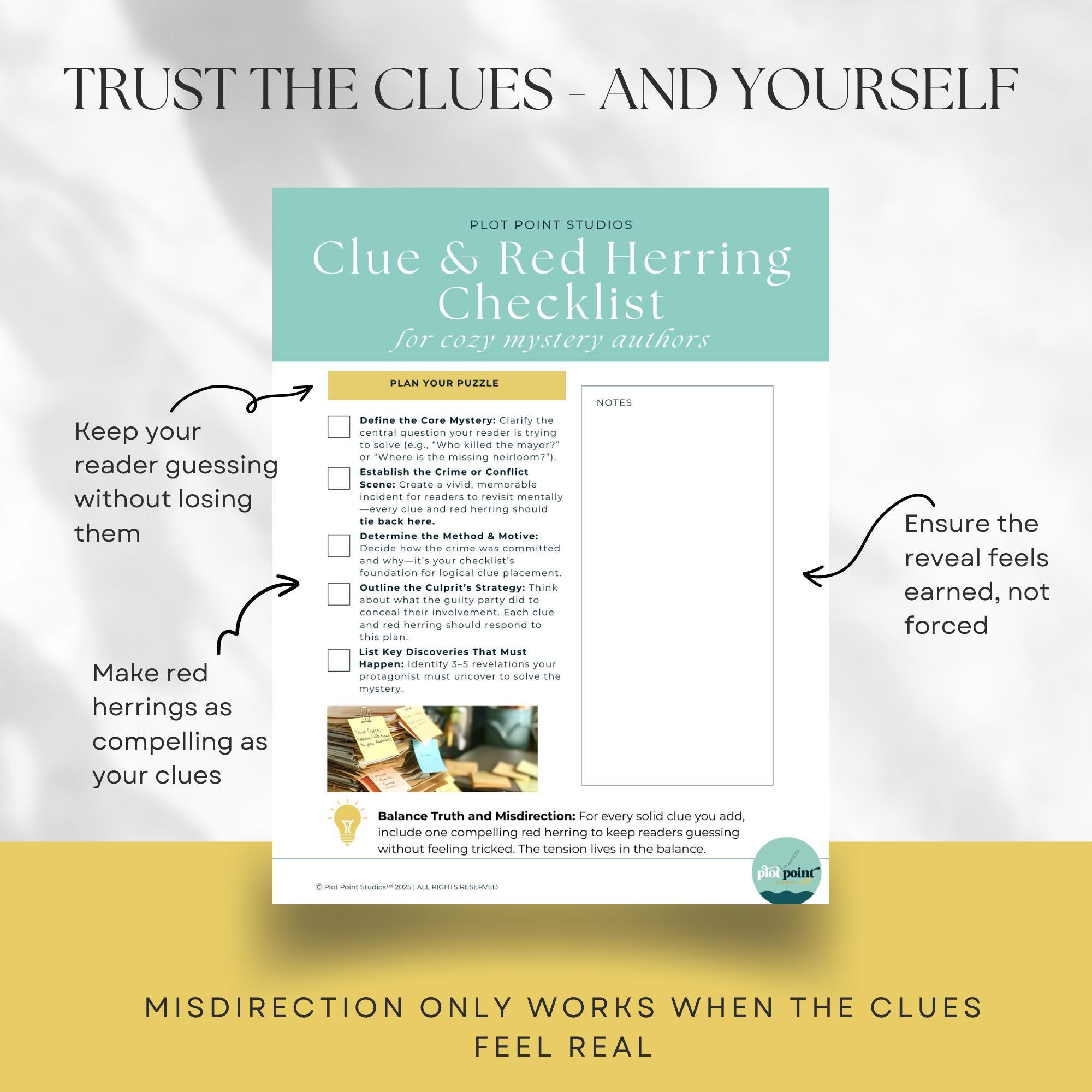
Think of yourself as a stage magician. The audience sees everything you do, but you direct their focus to your right hand while your left hand prepares the trick. In writing, you might distract the reader with a dramatic action sequence or an emotional argument right after you've subtly planted a crucial clue.
A Framework for Twists
Plot twists can feel like lightning strikes of genius, but they often follow established patterns. Understanding these patterns can help you structure your own surprising reveals.

Let's briefly look at these types:
- Reversal of Identity: A character is not who they seem. This is one of the most classic twists. Think of Darth Vader's reveal in The Empire Strikes Back or the truth about Malcolm Crowe in The Sixth Sense.
- Reversal of Motive: A character's reasons for their actions are completely different from what we assumed. In the movie Scream, the killers' motives are a subversion of typical horror movie logic.
- Reversal of Perception: The fundamental reality of the story or setting is not what it appears to be. This is the twist in films like The Village or The Truman Show.
- Reversal of Fortune: A character's status or situation changes drastically and unexpectedly. The famous shower scene in Psycho is a brutal reversal of fortune that also shifts the entire focus of the film.
- Reversal of Fulfillment: A character achieves their goal, only to find it brings disastrous and unforeseen consequences.
Techniques of Misdirection
Now, let's explore the "how." The following video from StudioBinder is a fantastic resource that breaks down several advanced misdirection techniques using famous film examples. We'll focus on three specific strategies.
The Secret to Writing Compelling Plot Twists — The Art of Misdirection Explained
The video "The Secret to Writing Compelling Plot Twists" analyzes how masterful storytellers use misdirection. We'll watch a few key segments that demonstrate distinct techniques.
Unreliable Narrator: First, watch the segment on Memento from this section. Notice how the protagonist's memory loss is used to misdirect the audience. We trust his version of events because it's all we have, but he is unknowingly lying to himself and to us. Playing with Expectations: Next, watch the analysis of Scream from this part. This demonstrates a "meta" form of misdirection. The film knows the audience is familiar with horror tropes (like "the obvious suspect is never the killer"), and it uses that expectation to create a double bluff. Strategic Placement: Finally, watch the section on story structure from this segment. Pay attention to how the timing of a twist—whether at the midpoint like in Psycho or as the climax like in The Village—radically changes its impact and the narrative that follows.
One of the most powerful examples of misdirection comes from a story you're fond of: Harry Potter.
How to Write a Plot Twist That Leaves Readers Stunned
This video from Your Story Coach discusses a technique called the "false ending," using a perfect example from Harry Potter and the Goblet of Fire.
Please watch the segment from the false ending. Notice how the story seems to reach its climax with Harry's escape from Voldemort. The main conflict (the Triwizard Tournament) is over. This lulls the reader into a false sense of resolution, making the subsequent reveal of Professor Moody's true identity even more shocking. It's a second climax hidden behind the first.
The Payoff: Playing Fair with Breadcrumbs
The difference between a satisfying twist and a frustrating "gotcha" moment lies in the setup. A twist feels earned when, in hindsight, the reader can see the clues they missed. These subtle hints are often called "breadcrumbs."
The master of the breadcrumb twist is M. Night Shyamalan. In The Sixth Sense, he masterfully misdirects the audience by making us believe Dr. Crowe's wife is giving him the silent treatment. We interpret her behavior through the lens of a failing marriage. The truth—that she can't see or hear him—is perfectly logical and consistent with every scene, but our assumptions hide it in plain sight.
The StudioBinder video we watched earlier explains this beautifully in its analysis of The Sixth Sense and Shutter Island, showing how clues can be hidden in dialogue, character interactions, and even small physical actions. The key is that the clues are there. This is how you "play fair."
Exercise: Architect of Surprise
Now it's your turn to design a twist. This exercise is about planning the architecture of surprise, focusing on the interplay between misdirection and subtle clues.
-
The Twist: Choose a simple story concept and define the twist. Use the "Types of Twists" mind map for inspiration.
- Example Concept: A young knight is on a quest to retrieve a stolen royal sword.
- Example Twist (Identity Reversal): The wise old mage who sent the knight on the quest is actually the thief. He believes the royal family is unworthy of the sword's power.
-
The Misdirection: How will you mislead the reader? Create a strong red herring.
- Example Misdirection: You will make the leader of a rival kingdom the obvious suspect. This leader has openly coveted the sword and has a history of aggression. The protagonist will find several "clues" pointing to this rival kingdom.
-
The Breadcrumbs: List 2-3 subtle clues that hint at the true culprit (the mage). These should be details that seem insignificant on a first read.
- Example Breadcrumb 1: Early in the story, the mage mentions that "power is only for those with the wisdom to wield it," which the knight interprets as encouragement, but is actually the mage's core belief.
- Example Breadcrumb 2: The mage knows an unusual amount of detail about the vault from which the sword was stolen, explaining it away as "ancient knowledge."
- Example Breadcrumb 3: When the knight finds a clue pointing to the rival kingdom, the mage is a little too quick to confirm the knight's suspicions.
-
The Reveal: Write a short paragraph (150-200 words) describing the moment the twist is revealed. The knight has cornered the rival leader, only to find the leader has no idea what he's talking about. Then, the mage appears, holding the sword, and explains his actions. Focus on the knight's internal shift as he re-evaluates everything the mage ever told him.
Take your time with this exercise. The goal is to think like a puzzle-maker, carefully constructing a maze for your reader that has only one, surprising, exit.
Conclusion
You've now moved from planting individual clues to orchestrating a full-scale narrative illusion. A great plot twist isn't just an event; it's a re-contextualization of the entire story that came before it. It rewards attentive readers and elevates your plot from a simple sequence of events to a complex and memorable experience.
Key Takeaways:
- A plot twist is a reversal that should be both surprising and, in hindsight, logically inevitable.
- Misdirection is the art of controlling the reader's attention, not by lying, but by emphasizing false leads while subtly planting true clues.
- Twists often fall into patterns, such as reversals of identity, motive, or perception.
- Techniques like unreliable narrators, false endings, and subverting genre tropes are powerful tools for misdirection.
- To "play fair," you must leave breadcrumbs—subtle hints that make the final twist feel earned and satisfying.
In our next lesson, we will focus on the final piece of the puzzle: constructing a narrative payoff that resolves previously planted foreshadowing in a satisfying manner. We'll learn how to tie all these threads—true clues, red herrings, and twists—together to create a truly memorable conclusion for your reader.