In our last lesson, we built the engine of your story by defining the crucial relationship between a protagonist and antagonist through their opposing goals. You learned that a story ignites when a character with a clear goal, high stakes, and powerful motivation clashes with a formidable opponent. We now have the core dynamic, the 'who' versus 'who'.
Today, we're going to add flesh and blood to those characters. We'll move beyond their function in the plot to explore their inner lives, histories, and contradictions. The goal for this lesson is to learn how to create detailed character profiles including backstory, motivation, and flaws. This process is like an actor preparing for a role; it’s about understanding your character so deeply that their actions on the page feel not just plausible, but inevitable.
What is a Character Profile?
A character profile is essentially a dossier you create for your character. It's a collection of notes—from basic facts to deep psychological insights—that helps you, the writer, understand who this person is beyond the confines of the plot. It is your private reference document for building a consistent and believable character.
How to Create a Character Profile: A Step-by-Step Guide ...
This article by Jerry Jenkins provides a clear introduction to what character profiles are and why they are so valuable, especially for writers who like to plan.
Please read the first two sections, "What Is a Character Profile?" and the introduction to the 5-step process. As you read, pay close attention to the crucial warning: "don’t dump every detail into your story." This is a tool for you, not an info-dump for the reader.
Think of a character profile as the blueprint for a person. It can be a simple form or a detailed document.

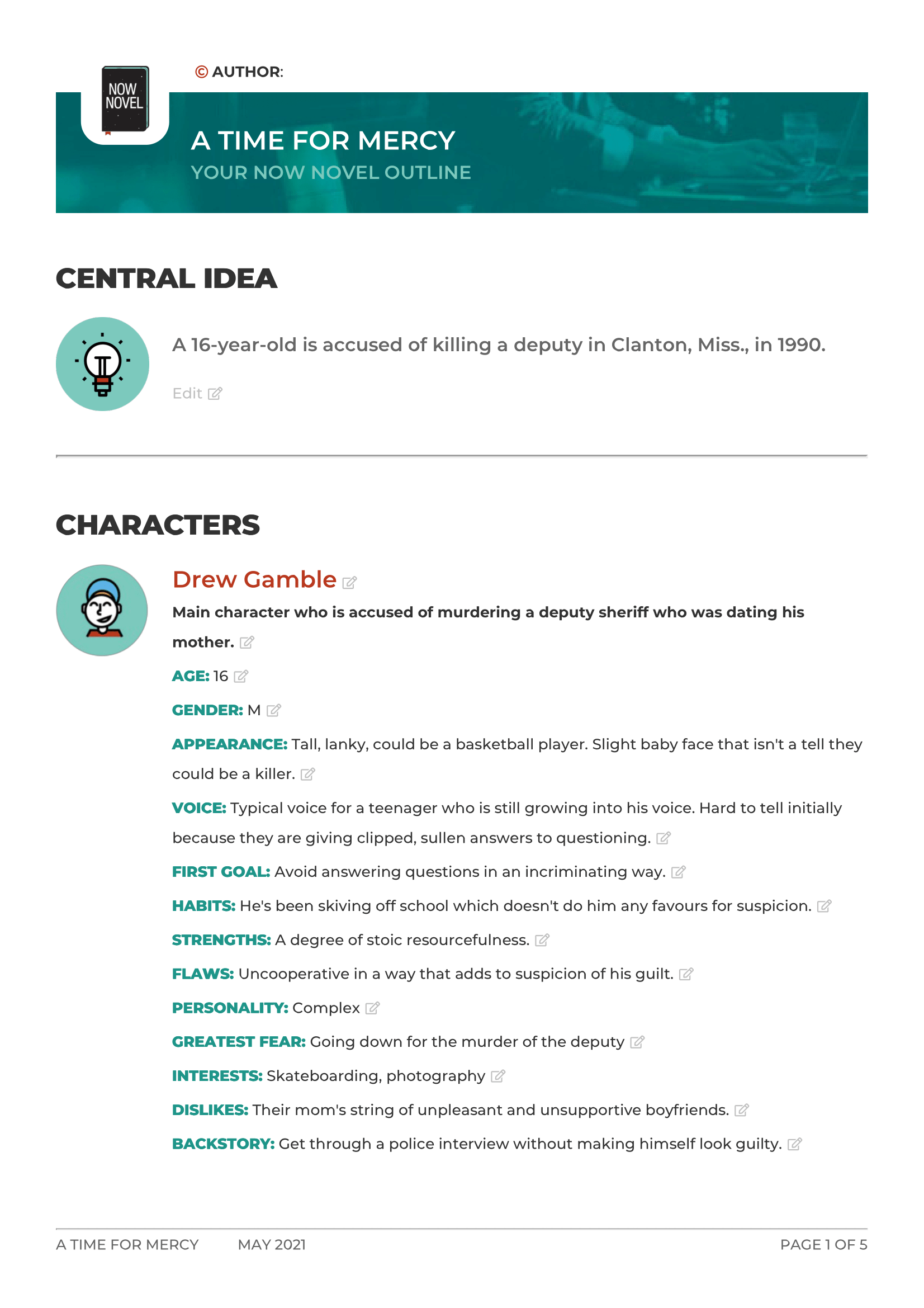
As the article mentioned, the profile is the submerged 7/8ths of the iceberg. The reader only sees the tip, but the massive, hidden bulk is what gives the visible part its weight and stability.
The Heart of Character: The Ghost, The Flaw, and The Lie
So, what goes into this hidden bulk? While details like eye color and favorite foods can be useful, the true engine of a character's personality is found in their past. Specifically, we're looking for the moments that shaped them.
A powerful concept for this is what story theorist John Truby calls the "Ghost" or "Wound." This is a negative event from your character's past that haunts them and continues to influence their actions in the present. This Ghost is often the origin of their deepest flaw.
A Writer's Comprehensive Guide to Backstory
This guide from K.M. Weiland offers a deep dive into the function of backstory. We'll focus on how it forges the link between a past event and present motivation.
First, read the section "Backstory Creates Character Motivation," which explains why backstory is the source of cause-and-effect for your character's actions. Next, read the section "The Ghost in Your Character’s Backstory." Focus on how the Ghost creates a "Lie They Believe"—a limiting or dysfunctional perspective about the world.
This "Lie They Believe" is the character's fatal flaw. It’s a misbelief that dictates their behavior and prevents them from achieving true happiness. For example, a character whose "Ghost" is being abandoned by a parent might adopt the "Lie" that "you can't trust anyone but yourself." This flaw will then drive their actions throughout the story, causing them to push away allies and try to solve every problem alone.
The following video offers a fantastic, practical framework for connecting these ideas: a past event (Ghost) leads to a misbelief (Lie/Flaw), which in turn creates their present situation and goals.
How to Write Character Backstory (Prompts for Writing Relatable Characters)
In this video, "How to Write Character Backstory," author Abbie Emmons presents a clear, four-question method for developing a character's core psychology.
Watch these two key segments: Why Backstory Matters: This section explains that backstory isn't about cataloging a life, but about finding the pivotal moments that solve the mystery of who your character is today. The Four Questions: Here, she introduces her framework and provides a brilliant case study using the character Harry Selfridge. Pay close attention to how his father's abandonment (the Ghost) leads to his fear-based need for success (the Lie and resulting motivation).
To recap Emmons' powerful four-question framework:
- What is my character's biggest misbelief (The Lie)?
- What happened in their past to make them believe this (The Ghost)?
- How are they dissatisfied with their life today because of this Lie?
- What do they think will make them happy (The Goal)?
Answering these four questions gives you the psychological core of your character. It directly connects their backstory, flaws, and motivation in a clear cause-and-effect chain.
Building Your Character Profile: A Practical Questionnaire
Now that you have the theoretical foundation, let's get practical. A character profile questionnaire is an excellent tool to prompt you to think about different facets of your character. It helps you move from the abstract core to concrete details.
The Ultimate CHARACTER PROFILE for NaNoWriMo (new and improved!)
Let's return to Abbie Emmons for "The Ultimate CHARACTER PROFILE," which breaks down the process into a series of targeted questions.
Watch from the start of the questionnaire. You don't need to write anything down just yet. Simply absorb the types of questions she asks and how they build upon each other. Notice how she organizes them into categories: Basics and Skills: The surface-level details. The Internal World: Questions about fear and misbelief, which we just discussed. This is where you'd document the Ghost and the Lie. Values and Attachments: Questions about what they value or objects they cherish. These details are excellent for revealing character through action later. Goals: Questions that connect their current dissatisfaction to what they decide to pursue in the story.
Your Turn: Profile a Character
Let's put this all together. Take the protagonist or antagonist you started brainstorming in the last lesson and let's build their profile. Spend about 15-20 minutes answering the following questions. Don't worry about writing beautiful prose; just get the ideas down.
Part 1: The Core (The Ghost and the Lie)
- The Ghost: Describe the single most important event from your character's past that still affects them today. What happened? Who was involved?
- The Lie: What misbelief about themselves or the world did they internalize because of this event? (e.g., "I am unlovable," "Power is the only thing that brings security," "I must be perfect to be worthy of respect.")
- The Fear: What is their greatest fear, which is directly related to their Lie? (e.g., Fear of intimacy, fear of being powerless, fear of failure.)
Part 2: The Present (Dissatisfaction and Goals)
4. Dissatisfaction: How does their Lie make them unhappy or unfulfilled in their life at the start of the story?
5. The (False) Solution: What external goal do they believe will solve this feeling of dissatisfaction? (This should be the goal you identified in the previous lesson.) Why do they think this specific goal will fix their internal problem?
Part 3: The Details (Personality and Texture)
6. Values: What are the top two things this character values most? (e.g., Loyalty, freedom, order, wealth, knowledge.) How do these values sometimes conflict with their Lie?
7. Quirk/Habit: Describe one distinctive habit, mannerism, or verbal tic. (e.g., Taps their fingers when impatient, always quotes from a certain book, avoids eye contact.)
8. Cherished Object: What is one object they can't bear to part with? What memory or meaning (related to the Ghost) is attached to it?
This exercise will give you a solid, multi-dimensional foundation for your character, connecting their past trauma, their present flaws, and their future actions in a logical and emotionally resonant way.
Final Thought: Revealing the Iceberg
Remember, the profile is for you. The art of writing is in deciding how and when to reveal these details to the reader. You rarely state, "Harry was afraid of failure because his father abandoned him." Instead, you show it through his actions, his dialogue, and his reactions.
The "Helping Writers Become Authors" article you read earlier mentions three primary methods for conveying backstory: the "backstory drip" (tiny, integrated details), prologues, and flashbacks. It also offers the single most important rule: "do not share backstory until... it’s crucial for readers to know." We will explore these techniques in great detail in later modules on scene construction and prose, but for now, the most important thing is simply to know the story that exists beneath the surface.
Conclusion
In this lesson, we moved from character function to character psychology. You've learned how to look into a character's past to find the source of their defining flaws and motivations.
Key Takeaways:
- A character profile is a writer's tool for building a deep, consistent character, not an information sheet for the reader.
- A character's backstory is most powerful when focused on a "Ghost" or "Wound"—a key past event that shaped them.
- This Ghost creates a "Lie They Believe," a fatal flaw that drives their behavior.
- A character's external goal is often their flawed attempt to solve the internal dissatisfaction caused by their Lie.
- Answering a structured set of questions can help you connect a character's past, present, and future into a coherent whole.
We now have a character with a goal, a motivation, and a deep-seated flaw. What happens when the events of the plot force them to confront that flaw? The answer lies in their character arc. In our next lesson, we will define and differentiate the types of character arcs: positive change, negative change, and flat, exploring the transformative journey your character is about to undertake.