Welcome to your first lesson in Marketing Management. Given the urgency of your "block week," our goal today is to quickly establish a solid foundation in the core principles of marketing. This lesson addresses the first learning outcome of your course: defining marketing, the marketing process, customer value, and customer-centricity.
Think of this as the initial phase of a project. Before you can create a detailed project plan (like a marketing strategy), you must first understand the project's fundamental purpose, its key stakeholders (customers), and the ultimate measure of success (value). Your extensive background in project management, with its emphasis on structured processes and delivering value to clients, will provide an excellent framework for understanding these concepts. We will approach marketing not as an abstract art, but as a strategic business function with clear, manageable components.
What is Marketing?
Let's begin by establishing a clear definition of marketing. It's common to equate marketing with advertising or sales, but these are merely components of a much broader and more strategic discipline. At its heart, marketing is the entire process of understanding customer needs and creating offerings that satisfy those needs, ultimately driving business success.
To formalize this, please read a short section from the Principles of Marketing textbook by OpenStax.
1.1 Marketing and the Marketing Process - Principles of Marketing | OpenStax
This reading provides the formal definition of marketing from the American Marketing Association (AMA) and then simplifies it into a more practical concept focused on satisfying customer needs profitably.
Please read the section titled Marketing Defined. As you read, focus on how the definition moves beyond just promotion to include the entire process from organization to consumer. Pay close attention to the four-part breakdown of this process: identifying, anticipating, and satisfying customer needs profitably.
The core idea is that marketing is a value-exchange process. A business creates and delivers value to customers, and in return, it captures value in the form of revenue and profit. The image below provides a simple visual summary of this concept and introduces the key steps in the marketing process, which we will explore next.
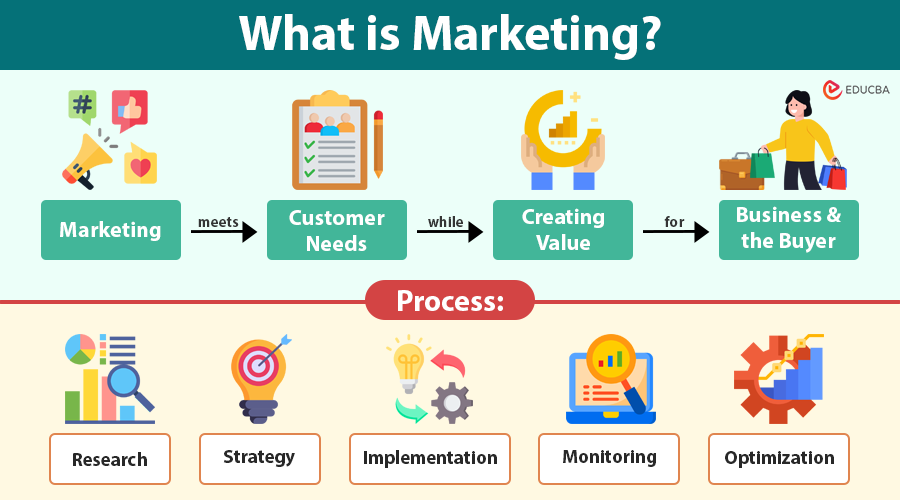
The Marketing Process: A Strategic Framework
Your experience with frameworks like PRINCE2 and Scrum has shown you the power of a structured process to manage complexity and achieve goals. Marketing operates on a similar principle. A well-defined marketing process provides a roadmap for a business to understand its market, formulate a strategy, and execute its plans effectively.
We will use a common 5-step model. This model is logical and sequential, much like a project lifecycle, moving from understanding and planning to implementation and value capture.
1.1 Marketing and the Marketing Process - Principles of Marketing | OpenStax
This reading details the 5-step marketing process, which provides a strategic framework for all marketing activities.
In the same OpenStax chapter, please read the subsection The Marketing Process Defined and the descriptions for all five steps. Note how the process begins with understanding and strategy before moving to execution. This parallels the initiation and planning phases of a project. The final steps focus on building relationships and capturing value, which are the long-term objectives.
To see this process explained with practical examples, watch the following video segment. The speaker discusses the same fundamental steps, reinforcing the logic of starting with market understanding and ending with capturing value.
Chapter 1 - Marketing creating and capturing customer value - 08/26/21
This video provides a lecture-style overview of the marketing process, framing it as a strategic sequence for creating and capturing customer value.
Watch the section where the marketing process is presented on a slide. Pay attention to the explanation of each step, from understanding the marketplace to designing a strategy, constructing a program, engaging customers, and finally, capturing value in the form of profits and customer equity.
Understanding Customer Value
The concept of "value" is central to the entire marketing process. In Step 3, we "Deliver High Customer Value," and in Step 5, we "Capture Customer Value." But what exactly is it?
From a customer's perspective, value is a simple trade-off: it's the relationship between the benefits they receive from a product or service and the costs they incur to obtain it. These costs are not just monetary; they also include time, effort, and psychological costs.
A successful marketing strategy aims to increase this value by either enhancing the benefits, reducing the costs, or both. Let's break this down further.
1.1 Marketing and the Marketing Process - Principles of Marketing | OpenStax
This section defines customer value using a simple formula and breaks down "value" into four distinct types that contribute to the customer's overall perception.
Please read the section Step 3: Deliver High Customer Value. Focus on the four types of value presented: functional, monetary, social, and psychological. Think about a recent significant purchase you made and try to identify how each of these value types played a role in your decision.
Creating value is more than just having a good product. It’s about the entire experience. This is the shift from a product-centric view to a customer-centric one. The following video segment illustrates this perfectly, contrasting the old "better mousetrap" model with the modern marketing approach.
Chapter 1 - Marketing creating and capturing customer value - 08/26/21
The presenter contrasts two business models: one where value is inherent in a superior product ("value communication") and a modern one where marketing adds value beyond the product itself ("value creation").
Please watch the segment from the evolution of business models. This explains the classic "better mousetrap" idea, where marketing's job is simply to communicate the product's value. Then, watch the explanation of the alternative business model, where marketing's role is to create additional value, as products themselves are often not uniquely differentiated.
Customer-Centricity: The Guiding Philosophy
This leads us to the final core concept for today: customer-centricity. While it sounds straightforward, it's a profound strategic choice. A truly customer-centric organization doesn't just offer good service; it fundamentally organizes its entire business—from data analysis to product development to service delivery—around understanding and serving its customers, particularly its most valuable ones.
Your work in "Client Experience" has already given you a practical sense of this, but in marketing management, we approach it as a formal strategy.
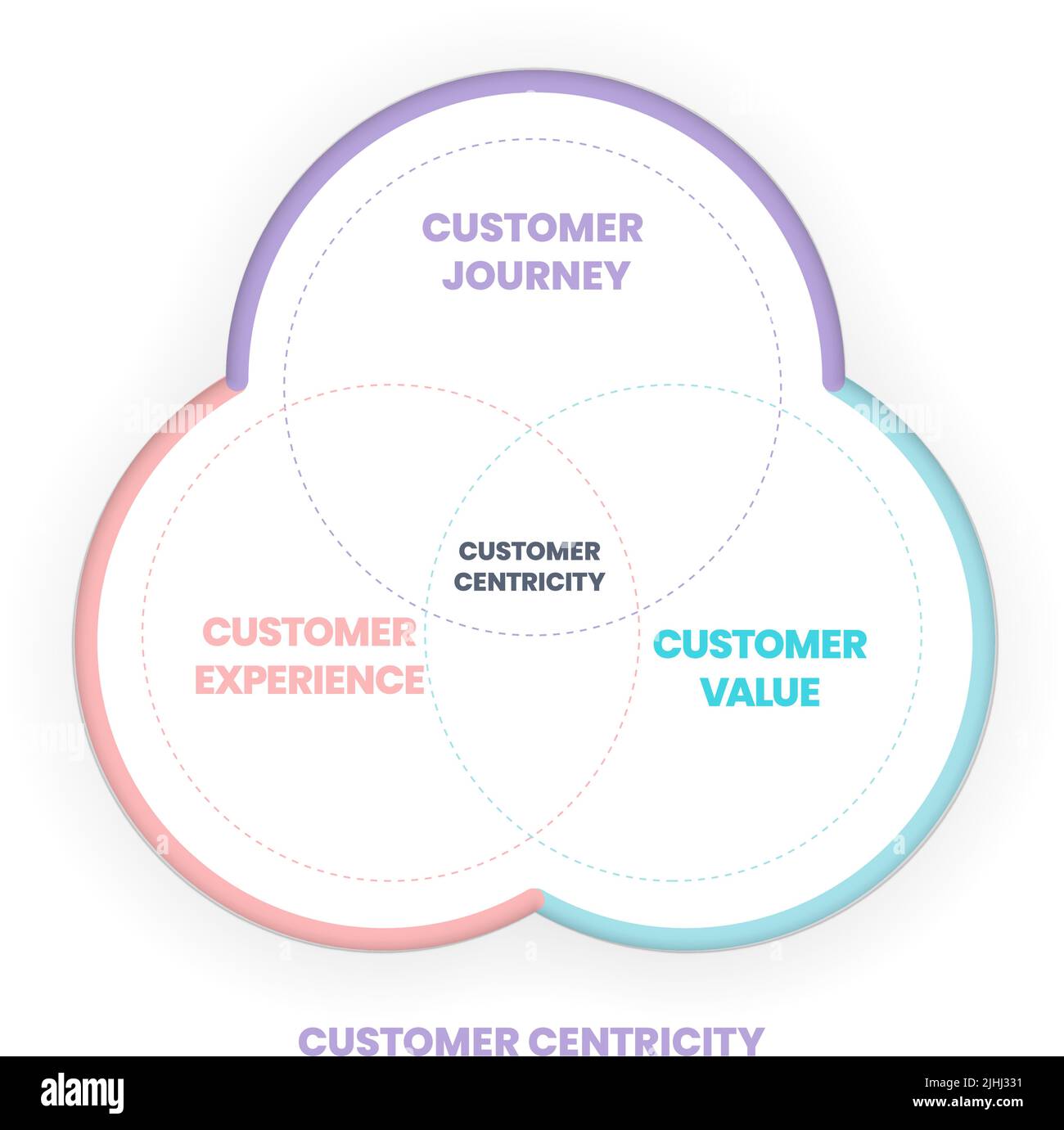
To grasp the strategic depth of this concept, it's crucial to distinguish it from simply being "customer-friendly." The following video featuring Wharton Professor Peter Fader provides a sharp, managerially-focused perspective on this distinction.
Customer Centricity: Wharton Professor Peter Fader on Prioritizing Relationships in Business
In this interview, Professor Peter Fader, a leading expert on the topic, explains what true customer-centricity means from a strategic business perspective.
This is a critical resource. Please watch these four short clips: First, watch the segment distinguishing between customer-friendly and customer-centric. Note the key idea of treating some customers better than others. Next, listen to the requirements for becoming a customer-centric company, which include granular understanding and the operational ability to deliver differentiated services. This connects directly to your interest in data analytics. Then, understand the fundamental difference between organizing a company around products versus customers. This highlights the shift in organizational structure and incentives. Finally, absorb the point about why "the customer" doesn't exist. This emphasizes the importance of recognizing and celebrating customer heterogeneity, which is the foundation for segmentation—a topic we'll cover soon.
Professor Fader's points are powerful. Customer-centricity is not about treating every customer like a king. It's a disciplined, data-driven strategy to identify your most valuable customer segments and systematically align your resources to create superior value for them, thereby maximizing long-term profitability. This requires the kind of analytical rigor and strategic resource allocation you are familiar with from your work in operations and project management.
Conclusion
In this foundational lesson, we have defined the core concepts that will underpin the rest of your study in marketing management.
- Marketing is a comprehensive business function focused on the process of creating, communicating, and delivering value to customers in order to capture value (like profit) in return.
- The Marketing Process is a strategic 5-step framework that guides a company from understanding the market to building profitable customer relationships.
- Customer Value is the customer's perception of the benefits they receive from an offering relative to the costs they incur. It is the ultimate currency of the marketplace.
- Customer-Centricity is a strategic commitment to align the entire organization around its most valuable customers, using data and insights to deliver differentiated experiences.
With these core definitions in place, you are now prepared to move to the next logical step. Our next lesson will focus on Market Situation Analysis, which corresponds to the first step of the marketing process: "Understand the Marketplace and Customers." We will explore how managers analyze customer needs and the competitive landscape to find strategic opportunities.