Hello! In our previous lessons, we built a solid theoretical foundation for solving the critical section problem. We started with Peterson's solution for two processes and then scaled up to the Bakery algorithm for n processes. We focused on why these algorithms work, dissecting them to understand how they guarantee mutual exclusion, progress, and bounded waiting.
Now, it's time to put that theory into practice. This lesson is dedicated to your primary goal: cracking GATE problems. We will focus exclusively on applying the concepts you've learned to solve questions that are representative of what you'll see on the exam. We'll analyze code snippets, identify race conditions, evaluate synchronization logic, and deconstruct complex problem statements. This is where your analytical skills come to the forefront.
A Quick Refresher: The Three Pillars of Correctness
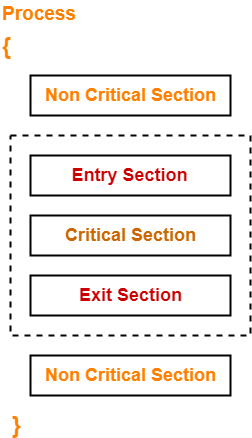
As you analyze the problems in this lesson, always evaluate the given solution or scenario against these three essential criteria. A correct synchronization solution must satisfy:
- Mutual Exclusion: If one process is executing in its critical section, no other processes can be executing in their critical sections.
- Progress: If no process is in its critical section and some processes wish to enter, then the selection of the next process to enter cannot be postponed indefinitely. This also implies that a process running in its non-critical section cannot prevent other interested processes from entering the critical section.
- Bounded Waiting: There must be a bound on the number of times that other processes are allowed to enter their critical sections after a process has made a request to enter its critical section and before that request is granted. This prevents starvation.
Let's dive into our first problem type.
Strategy 1: Analyzing Race Conditions for Final Values
A very common type of GATE question involves a shared variable being modified by multiple concurrent processes. Your task is to determine the range of possible final values for that variable. The key is to understand how different interleavings of instructions can lead to different outcomes.
A. Finding the Maximum and Minimum Value
To find the maximum possible value, you need to find an execution order where the operations that decrease the value are "lost" or nullified by a race condition. Conversely, to find the minimum value, you arrange the execution so that the increasing operations are lost.
Let's analyze a problem from a past GATE paper that exemplifies this.
Problem: A shared variable x, initialized to 0, is operated upon by four concurrent processes: W, X, Y, and Z.
- Processes W and X increment
xby 1. - Processes Y and Z decrement
xby 2. - A synchronization mechanism ensures that at most two processes can be in the critical section at any given time.
What is the maximum possible final value of x?
Think about how you would orchestrate the process execution to maximize x. You have two "slots" in the critical section. Which two processes would you send in first to create a race condition that favors a higher final value?
The video below provides a complete, step-by-step solution, explaining the logic for finding both the maximum and minimum values.
Process Synchronization GATE 2013-2021 | L 7 | Operating System GATE PYQs | GATE 2022
This video from Unacademy Computer Science walks through the exact problem described above. It demonstrates the thought process for creating race conditions to achieve the desired maximum or minimum value.
Watch from 07:11 to 22:29. The instructor first sets up the problem and then meticulously constructs the execution sequence to find the maximum value. He also explains the reverse strategy for finding the minimum value. Pay close attention to how he makes the effect of one process (the decrementer) get overwritten by another (the incrementer).
The core idea is to have an incrementer and a decrementer read the shared value simultaneously. Then, you let the decrementer write its result first, followed immediately by the incrementer writing its result. The incrementer's write will overwrite the decrementer's, effectively nullifying the decrement. By repeating this, you can maximize the final value.
B. Finding All Possible Distinct Values
A variation of this problem asks for the total number of distinct final values a shared variable can have. The strategy here is to be systematic:
- Calculate the result of serial execution (e.g., P1 then P2).
- Calculate the result of the other serial execution (P2 then P1).
- Calculate the result(s) of interleaved executions (i.e., where a race condition occurs).
Let's analyze a simple example.
Process Synchronization GATE 2013-2021 | L 7 | Operating System GATE PYQs | GATE 2022
This next segment from the same video analyzes a problem where two functions concurrently modify a shared variable. The goal is to find how many different values the variable can hold after execution.
Watch from 45:43 to 50:19. The instructor systematically explores the three main scenarios: P1 then P2, P2 then P1, and P1 and P2 interleaved. This clearly demonstrates how to arrive at all possible outcomes.
Strategy 2: Analyzing Synchronization Logic
In the previous lesson, we saw how a faulty implementation of the Bakery algorithm could lead to deadlock. GATE questions often present you with a piece of synchronization logic and ask you to evaluate its correctness based on the three pillars: Mutual Exclusion, Progress, and Bounded Waiting.
Let's revisit a classic software solution: the turn variable (strict alternation).
Process Synchronization GATE 2013-2021 | L 7 | Operating System GATE PYQs | GATE 2022
This video segment analyzes the standard 'turn variable' solution.
Watch the analysis from 52:50 to 55:48. Before watching, try to answer it yourself: Does this solution satisfy Mutual Exclusion? Progress? Bounded Waiting? Then, watch the video to see the correct analysis.
As you saw, the turn variable solution ensures Mutual Exclusion and Bounded Waiting (the wait is bounded to 1 turn). However, it fails the Progress requirement. If turn = 0 and process P1 is not interested in its critical section, process P0 is stuck waiting, even though the critical section is free. This is a key insight that is frequently tested.
Strategy 3: Deconstructing Complex GATE Problems
The most challenging questions combine multiple concepts: race conditions on shared data, flawed entry/exit protocols, and the potential for deadlock. Your strategy should be to break the problem down into smaller, manageable parts.
Let's analyze a problem from GATE 2021.
Problem:
Consider the following pseudocode, where S is a semaphore initialized to 5 and counter is a shared variable initialized to 0. The increment operation counter++ is not atomic.
1. counter = 0;
2. S = 5;

function parop() {
3.    //...
4.    wait(S);
5.    wait(S);
6.    counter++; // Not atomic
7.    signal(S);
8.    signal(S);
9.    //...
}
If five threads execute parop concurrently, which of the following behaviors are possible?
(A) The final value of counter is 5.
(B) The final value of counter is 1.
(C) The final value of counter is 0.
(D) There is a deadlock involving all the threads.
Let's deconstruct this together:
- Entry Protocol: Each thread must perform
wait(S)twice. SinceSstarts at 5, how many threads can be inside the critical section (line 6) at most? The first thread decrementsSto 3. The second thread decrementsSto 1. The third thread attemptswait(S)twice, butSwould go to -1, so it blocks. Thus, at most 2 threads can be in the critical section concurrently. - Vulnerability:
counter++is not atomic. This means it's composed ofread-modify-writesteps, and a thread can be preempted between these steps. This is a classic race condition setup.
Now let's evaluate the options:
- (A) Counter is 5: Is this possible? Yes, if all 5 threads execute sequentially (one after another), each will successfully increment the counter.
- (B) Counter is 1: Is this possible? This would be the result of a severe race condition. Imagine Thread 1 enters, reads
counter(value 0) into its register, and is then preempted. Threads 2, 3, 4, and 5 then execute fully, settingcounterto 4. Finally, Thread 1 resumes, increments its register value (which is still 0) to 1, and writes 1 back tocounter, overwriting the value of 4. So, yes, this is possible. - (C) Counter is 0: Is this possible? No. Each thread that successfully executes must increment the counter at least once. Even in the worst-case race condition above, the final value was 1. A final value of 0 is impossible.
- (D) Deadlock: Is this possible? Consider this interleaving: Each of the 5 threads executes the first
wait(S)(line 4) and is then preempted. The sequence ofSvalues would be: 4, 3, 2, 1, 0. Now,Sis 0. All 5 threads are ready to execute their secondwait(S)(line 5), but all of them will block becauseSis 0. No thread can proceed to thesignalcalls to increaseS. This is a deadlock. So, yes, this is possible.
The following resources provide a detailed walkthrough of this exact problem.
Process Synchronization GATE 2013-2021 | L 7 | Operating System GATE PYQs | GATE 2022
The Unacademy video also covers this GATE 2021 question, providing a concise explanation of why options A, B, and D are possible.
Watch from 01:09:16 to 01:15:19. This will reinforce the analysis we just did.
Operating System: GATE CSE 2021 Set 1 | Question: 46
For a different perspective, this GATE Overflow page offers multiple text-based explanations from the community. Reading through them can provide deeper insight into the different ways to think about the problem.
Read the second main answer on the page (by user 'ankitgupta.1729'). It provides a very clear breakdown of why options A, B, and D are possible, with step-by-step scenarios for the race condition and the deadlock. This is an excellent model for how to structure your reasoning on an exam.
Conclusion
Congratulations on completing the first module on synchronization fundamentals! We've moved from the basic definition of a critical section to analyzing complex, multi-threaded scenarios typical of the GATE exam.
Key Takeaways from this lesson:
- Master Race Condition Analysis: Be comfortable tracing non-atomic operations (
read-modify-write) to find the minimum, maximum, and all possible outcomes of a shared variable. - Evaluate Against the Pillars: Systematically check any given synchronization code for Mutual Exclusion, Progress, and Bounded Waiting. Know the classic failure modes, like the progress failure in strict alternation.
- Deconstruct Complex Problems: Break down problems by identifying the shared resources, the entry/exit protocols, and the key vulnerabilities (like non-atomic operations or flawed logic) to reason about possible behaviors, including deadlock.
The software-based solutions we've studied are foundational but often rely on inefficient busy-waiting. The GATE problems you solved also gave you a glimpse of semaphores. In our next module, we will formally dive into hardware and OS-level synchronization mechanisms. We'll start by exploring atomic hardware instructions like Test-and-Set and then use them to build more powerful and efficient tools like mutex locks and semaphores.