Introduction
Welcome to your next lesson on designing for aquatic scenes. In our previous session, you mastered the art of drafting a classic triangle bikini top, focusing on the geometric principles and the critical role of negative ease in achieving a secure, adjustable fit. We treated the pattern as a versatile block, ready for adaptation.
Today, we confront a new and fascinating engineering problem: the bandeau bikini top. Unlike the triangle top, which uses straps for support, the bandeau must defy gravity through its own structural integrity. This lesson will guide you through drafting a bandeau pattern that provides strapless stability, a crucial skill for creating the glamorous and seemingly effortless looks popular in Bollywood beach sequences. Our focus will be on the two pillars of strapless design: anatomical shaping and the strategic use of boning.
The Physics of a Strapless Garment
The fundamental challenge of any strapless design is to support and shape the bust without vertical support from the shoulders. The garment must rely entirely on horizontal tension and its internal structure. A simple rectangular tube of fabric will tend to slip, roll, or provide inadequate support, especially during the dynamic movements of a dance number.
To create a successful bandeau, we must address two key engineering aspects:
- Anatomical Contouring: The pattern must be shaped in three dimensions to conform closely to the body. This involves more than just calculating negative ease; it requires incorporating curves and seams that mirror the contours of the torso and bust.
- Structural Reinforcement: To prevent the band from collapsing or rolling under tension, we must add vertical supports. This is the primary function of boning.
Let's begin by tackling the pattern shape.
Drafting a Contoured Bandeau Pattern
Instead of starting with a simple rectangle, a professional approach involves adapting a fitted bodice pattern. This technique, borrowed from dressmaking and bra design, allows you to build shaping directly into the pattern pieces.
The resource below provides an excellent overview of converting a standard bodice block into a strapless design. While it discusses a full bodice, the principles of dart manipulation and seam placement are directly applicable to a bandeau bikini top.
How to Draft Fitted Bodice Patterns for Strapless Garments
This article from The Shapes of Fabric explains how to create fitted strapless patterns. We'll focus on the initial concepts of shaping and creating bra-style cups.
Please read the following sections: Start with the section Basic Princess Bodice Pattern. Pay close attention to how the waist and bust darts are enlarged and curved to remove excess fabric and create a snug fit. This is the core idea of contouring. Next, review the section Bra-Top Fitted Bodice. This demonstrates how to introduce a "bra styleline" under the bust and create separate cup and band pieces. This method gives you much more control over shaping the bust, which is essential for a supportive bandeau.
The key takeaway is that by creating seams (like princess seams) that run vertically through the bust, you can create a 3D shape out of 2D pattern pieces. For a bandeau bikini top, you would draft a shortened version of this, essentially creating a longline bra structure.
To refine this process with quantitative precision, we can use "contour guides," a method for systematically removing excess fabric at key points to ensure the garment hugs the body. The following video provides a clear, technical demonstration.
How to Draft the FRONT Strapless (Bustier / Tube) Pattern From A One-Dart Bodice Block Foundation 2
This video from Bobbin And Drew shows how to draft a strapless pattern from a bodice block using a highly structured, measurement-based method.
Watch the segment from this point. The instructor explains how to plot "contour guides" to remove fabric above the bust for a strapless design. Notice how specific measurements are used to eliminate gaping. This systematic approach of removing calculated amounts of ease is a practical application of the principles we've discussed and should resonate with your background in experimental design.
By combining these techniques—using princess seams for overall shape and contour guides for precision fitting—you can draft a bandeau pattern that is anatomically correct and inherently more stable than a simple fabric tube.
Incorporating Side Boning for Stability
Even with a perfectly contoured pattern, a bandeau top needs a rigid vertical element to resist rolling, especially at the side seams where forces from the back closure are concentrated. This is where boning comes in.
To understand the critical role of boning, it's helpful to see what happens when designers try to create strapless support without it. The following case study is a masterclass in the iterative process of engineering a supportive strapless garment.
Behind the scenes: how to design a strapless bra sewing pattern for ...
This article from Cashmerette details the development of a strapless bra. It offers a candid look at the challenges and solutions involved, particularly the introduction of foam and boning.
Read through the first few steps of their design journey: Step 1: Read about their initial attempt to simply remove the straps from an existing bra pattern, titled Sad puppies. This illustrates the immediate failure of a non-structured approach. Step 2 & 3: Skim through Step 2 and 3. Here, they introduce foam for shaping and then begin experimenting with boning. Note their comment, "the seams were collapsing especially in the middle part." This highlights the need for structural support along seam lines. Step 4: Finally, read Step 4. This is the breakthrough moment where they add boning to every seam and achieve the necessary lift and stability.
This case study powerfully demonstrates that boning isn't an optional extra; it's a foundational component of a functional strapless design. For our bandeau bikini top, placing boning at the side seams is the minimum requirement for stability during movement.
What is Boning?
Historically made from whalebone, modern boning is typically plastic or metal. For swimwear, flexible plastic boning is ideal as it's waterproof, lightweight, and resistant to corrosion.

How to Add Boning Channels to Your Pattern
You don't add the boning itself to the pattern, but you must create a casing or channel to hold it. This channel is typically placed along the side seam of the bandeau.
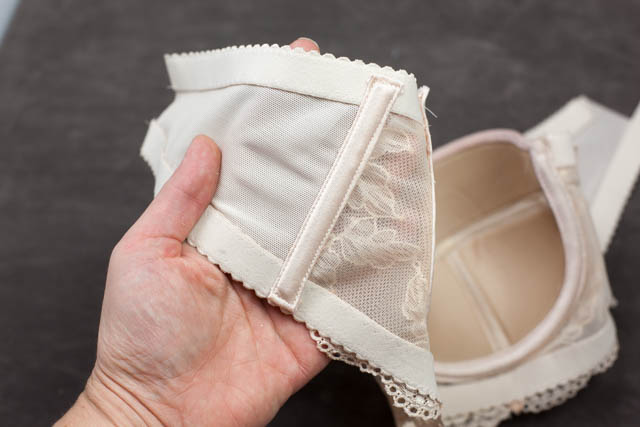
There are several methods to create these channels. The following video showcases a variety of professional techniques.
9 WAYS TO SEW IN BONING FOR CORSETS OR BUSTIERS
This video from Draping class 101 is a comprehensive tutorial on sewing techniques for boning. We'll focus on a few key methods that are easily adaptable for swimwear.
Watch the first section of the video (from the beginning), which covers several ways to create casings for plastic boning. Pay particular attention to these three methods: Method 2: Creating a casing on either side of a pressed-open seam allowance. Method 3: Using bias tape as an external, decorative channel. Method 4: Creating an "invisible" channel by sewing bias tape to the seam allowance only. While bias tape is shown, in swimwear you would use a strip of self-fabric (the main bikini fabric) or swimwear lining to create the channel for a cohesive and chlorine-resistant finish. The principle remains the same.
The most straightforward and durable method for a bandeau bikini is often to use the seam allowance itself, as described in the "How to Draft Fitted Bodice Patterns" article you read earlier. This involves cutting a wider side seam allowance (e.g., 1.5 cm), pressing it to one side, and stitching it down to form a channel. This creates a clean finish on both the inside and outside of the garment.
Case Study: A Bandeau for a High-Tempo Dance Number
Imagine you are tasked with creating a bandeau top for a lead actress in a high-energy song sequence like "Besharam Rang" from Pathaan. The design must be visually stunning, but more importantly, it must remain perfectly in place through vigorous choreography.
Here’s how you would apply today's principles:
- Pattern: You would draft a contoured bandeau with at least two vertical seams in the front to create shaped cups, ensuring zero gapping.
- Fabric and Fit: You’d use a high-compression swimwear fabric with excellent stretch recovery and apply a calculated negative ease for a firm, secure fit.
- Structure: You would incorporate vertical plastic boning into channels at both side seams to prevent the band from buckling or rolling as the actress moves.
- Security: You might also add a line of gripper elastic along the inside top and bottom edges of the bandeau to further anchor it to the skin.
This combination of anatomical patterning and structural reinforcement is what separates a professional, performance-ready garment from a simple beach bikini.
Conclusion
In this lesson, you've moved beyond the relative simplicity of a strapped top and tackled the engineering of strapless support. You have learned that a stable bandeau is not just a tube of fabric, but a carefully constructed garment built on principles of anatomical shaping and structural reinforcement.
Key Takeaways:
- A stable bandeau bikini top relies on anatomical contouring and structural reinforcement to stay in place without straps.
- Drafting the pattern by adapting a fitted bodice block allows you to build in shape using princess seams and darts.
- Side boning is a non-negotiable component that acts as a vertical support to prevent the band from rolling or collapsing during movement.
- Boning is inserted into casings or channels, which can be created using the seam allowance itself or by applying a separate strip of fabric.
- The combination of a precise, contoured fit and strategic boning is what ensures a bandeau will be secure enough for high-impact Bollywood dance sequences.
Next Lesson Preview
Having explored two distinct types of bikini tops—the adjustable triangle and the structured bandeau—we will now bridge the gap between swimwear and your core interest in bra design. In the next lesson, you will learn how to adapt a full bra block pattern into a structured bikini top, incorporating underwires to provide the ultimate level of support and shaping for an aquatic setting.